






Low Maintenance Garden Ideas: 12 Ways to Spend Less Time on Upkeep
The lowest maintenance garden surface is porcelain paving — it never needs sealing, staining, oiling, or treating, and stains wipe off with a damp cloth. Combine it with evergreen structural planting, gravel borders, and defined edging to create a garden that looks designed year-round with under 2 hours of maintenance per month. The key isn't removing everything — it's choosing materials and plants that take care of themselves.
Most people don't want a sterile garden — they want a beautiful one that doesn't eat every weekend. The good news: the highest-maintenance elements in a typical garden (lawn mowing, timber decking oiling, sandstone sealing, annual planting) all have low-maintenance alternatives that look just as good. Here are 12 changes that collectively cut garden upkeep by 80%.
Surfaces: choose materials that don't need treating
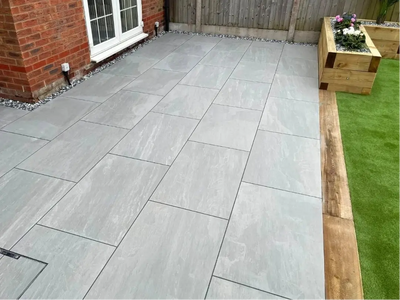
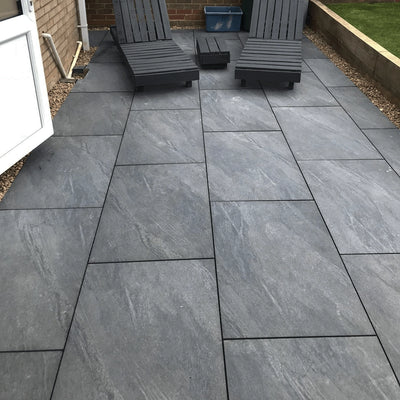
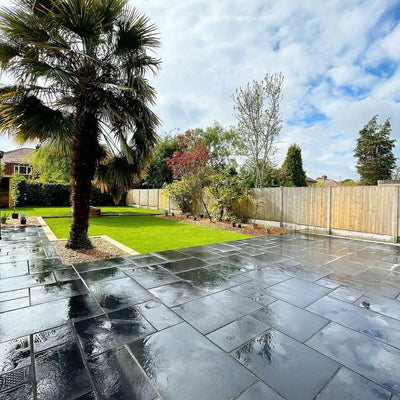
Porcelain paving is the single best material choice for a low maintenance garden. It never needs sealing (sandstone does, every 3-5 years). It never needs oiling (timber decking does, twice a year). Stains from food, wine, barbecue grease, and bird droppings wipe off with a damp cloth. Algae struggles to colonise the non-porous surface. A once-yearly hose-down is the only maintenance — and even that's optional.
Annual maintenance time: 30 minutes for a 20m² patio. Compare that to 4-6 hours for sandstone (clean + seal) or 8-10 hours for timber decking (clean + oil + repair).
Cost: from £19/m² delivered. Read our complete porcelain guide.
Decorative gravel over weed membrane is the ultimate low-effort surface for side passages, borders, and areas that don't need a hard surface. No mortar, no joints, no pointing to maintain. Gravel is self-draining (no puddles), permeable (no planning issues in front gardens), and can be refreshed by simply raking or adding a new bag.
Use for: borders around the patio, side passages, bin storage areas, under trees where paving would collect leaf debris. Combine with paving slabs as stepping stones through the gravel for clean access routes.
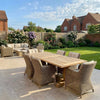
Timber decking is the most maintenance-intensive garden surface — oil twice a year, replace rotten boards, treat for algae, check for structural integrity. Porcelain paving provides the same outdoor living surface with zero ongoing maintenance. The upfront cost is similar, but over 10 years porcelain saves 80+ hours of maintenance and £300+ in oils, cleaners, and replacement boards.
Read our full paving vs decking comparison.
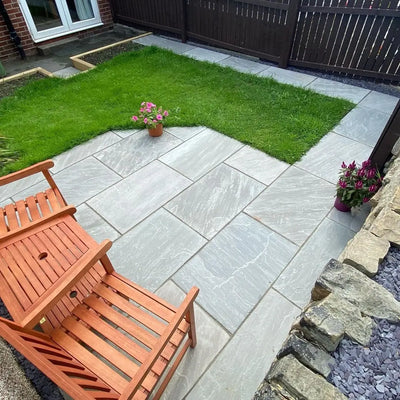
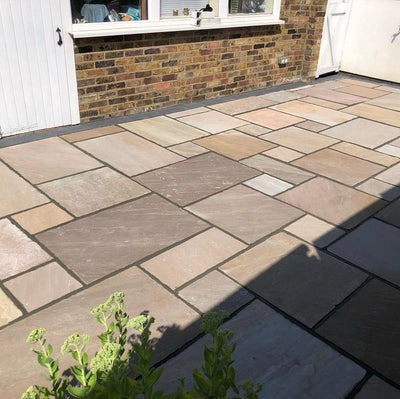
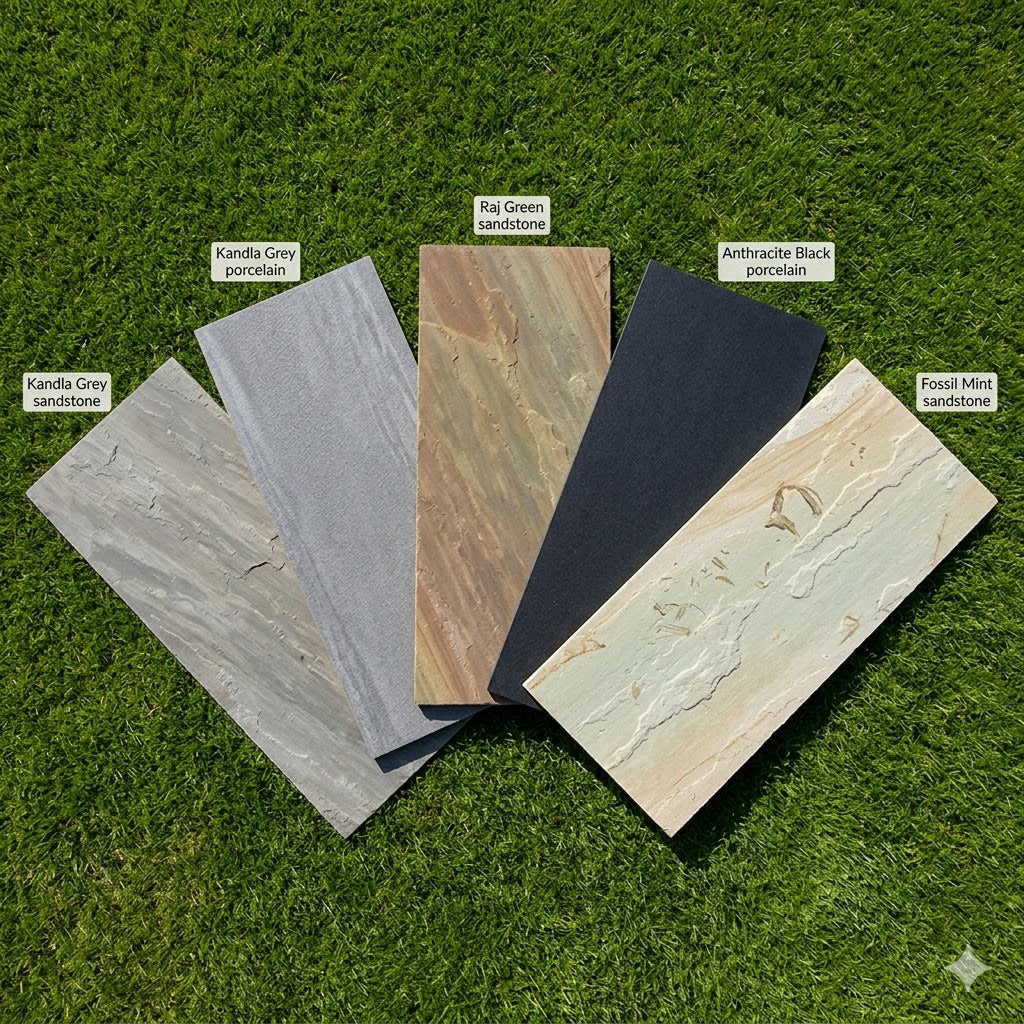
If you prefer natural stone character over porcelain's uniformity, Indian sandstone sealed with an impregnating sealer is a reasonable middle ground. Sealing takes 2-3 hours every 3-5 years and prevents most staining and algae colonisation. It's not zero maintenance — but it's far less work than unsealed stone or timber.
Read our sealing guide.
Planting: beauty without the weekly workload
Replace annual bedding (which needs planting, watering, deadheading, and replacing every season) with evergreen structural plants that look good year-round with minimal attention. Box hedging, lavender, phormiums, ornamental grasses (miscanthus, stipa), and fatsia provide permanent structure. One hard prune per year is all they need.
The rule: 80% evergreen structural planting, 20% seasonal interest (a few pots of seasonal colour). This ratio gives year-round presence without the constant replanting cycle.
Raised beds are easier to maintain than ground-level borders — less bending, better drainage, and a clear boundary between planting and paving. Fill with low-maintenance perennials and top-dress with a 50mm layer of gravel or slate chippings. The mulch suppresses weeds, retains moisture, and looks tidy without any effort.
Pair with: porcelain edging planks as a raised bed border — matching your patio material for visual continuity.
Ground-cover plants (creeping thyme, ajuga, vinca minor, geranium macrorrhizum) form a dense mat that suppresses weeds naturally. Once established (12-18 months), they need almost no attention — no weeding, no mulching, no watering. Plant them between raised beds, along path edges, and in any bare soil areas that would otherwise need weeding every fortnight.
Lawn alternatives: cut the mowing
A large lawn is the single biggest time drain in most gardens — weekly mowing, edging, feeding, aerating, scarifying. But you don't need to remove it entirely. Reduce the lawn to a smaller, manageable rectangle and replace the rest with paving, gravel, or planting. A 15m² lawn takes 10 minutes to mow. A 60m² lawn takes 40 minutes. The difference over a season is 20+ hours.
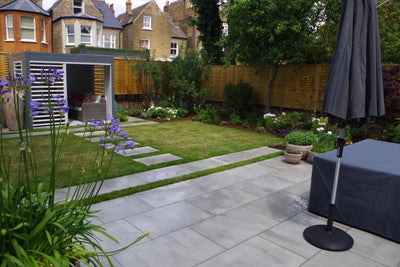
A mowing strip — a single row of paving slabs or setts laid flush with the grass around the lawn perimeter — eliminates the need for edge trimming. The mower wheel runs along the paving, cutting cleanly to the edge. This saves 15-20 minutes every mow and keeps the boundary crisp without manual edging.
Boundaries and edges: set it and forget it
Replace timber edging (which rots within 5-10 years) with porcelain edging planks or porcelain bullnose copings. These never rot, never need replacing, and never need treating. One installation, zero maintenance, permanent clean edges. Read our 10 edging ideas.
Traditional sand-and-cement pointing cracks within 2-3 years, allowing weeds to grow through the joints. Modern jointing compound (Ultrascape Flowpoint £55/tub or Porcelpoint £50/tub) lasts 10-15 years, inhibits weed growth, and doesn't crack. One application eliminates years of re-pointing and weed pulling. Read our jointing compound guide.
The big picture: design for low maintenance from the start
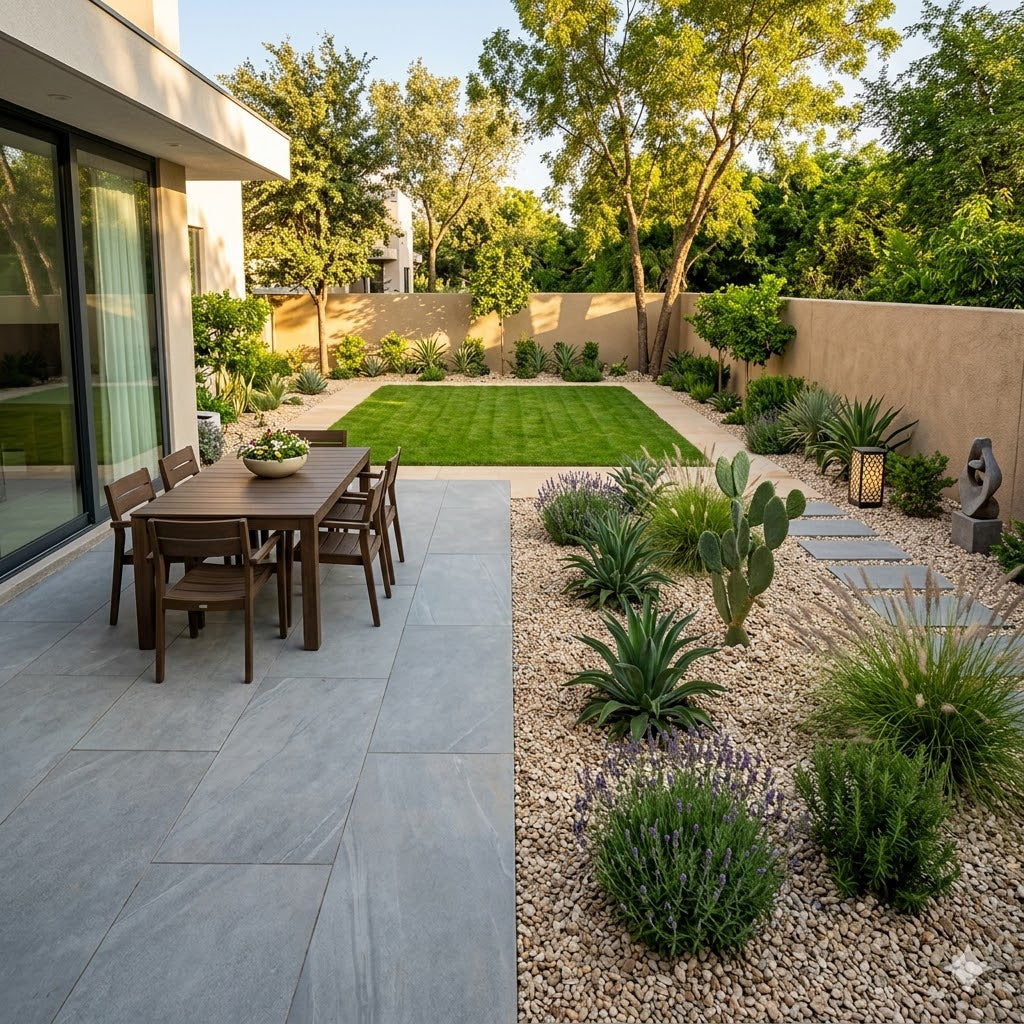
The smartest approach: divide your garden into zones based on how much time you're willing to spend on each. Near the house — porcelain paving (zero maintenance dining and cooking area). Middle zone — reduced lawn with mowing strip (10 minutes per week). Far end — gravel and structural planting (virtually zero maintenance). The closest areas get the most use and the least upkeep. The furthest areas need almost no attention.
This zoning approach means you spend your limited gardening time on the areas you actually enjoy — not on maintenance tasks across the entire garden.
Maintenance comparison by surface
| Surface | Annual hours (20m²) | Annual cost | Tasks |
|---|---|---|---|
| Porcelain paving | 0.5 hours | £0 | Optional hose-down |
| Gravel | 1 hour | £0 | Occasional raking, weed check |
| Sandstone (sealed) | 4 hours | £15-25 | Annual clean, seal every 3-5 years |
| Lawn (15m²) | 26 hours | £30-50 | Weekly mow, edge, feed, scarify |
| Timber decking | 10 hours | £40-80 | Oil 2x/year, clean, repair boards |
The difference is dramatic. Over 10 years, a porcelain patio needs 5 hours of total maintenance. Timber decking needs 100 hours. A lawn needs 260 hours. The upfront cost of porcelain pays for itself in reclaimed weekends.
Build a garden you enjoy — not one you maintain
Browse porcelain paving, edging, and jointing compound — everything for a low-maintenance outdoor space, delivered free.
Browse Porcelain Paving Order SamplesFrequently asked questions
What is the most low maintenance paving?
Porcelain paving is the lowest maintenance paving material available. It never needs sealing, staining, or treating. Stains wipe off with a damp cloth. Algae struggles to colonise the non-porous surface. The annual maintenance requirement is effectively zero — an optional hose-down once a year is all it needs.
How do I make my garden low maintenance?
Three changes make the biggest difference: replace timber decking with porcelain paving (eliminates oiling and board replacement), reduce lawn size and add a mowing strip (cuts mowing time by 60%+), and switch annual bedding to evergreen structural planting (eliminates seasonal replanting). Together these cut annual garden maintenance by approximately 80%.
Is sandstone high maintenance?
Sandstone needs more maintenance than porcelain but far less than timber decking or a lawn. An annual pressure wash (2-3 hours) and optional sealing every 3-5 years (2 hours) is the full maintenance requirement. Many homeowners leave sandstone unsealed and simply clean once a year — it develops a natural patina that some prefer. Read our cleaning guide.
What is the lowest maintenance garden surface?
Gravel over weed membrane requires the least effort of any garden surface — no cleaning, no sealing, no mowing, self-draining. For hard surfaces, porcelain paving requires the least effort — 30 minutes per year for a 20m² patio. Both are significantly less work than lawn, decking, or unsealed natural stone.
Is porcelain or sandstone better for low maintenance?
Porcelain is the clear winner for low maintenance — zero annual upkeep vs 4-6 hours for sandstone. But sandstone has natural character and warmth that porcelain can't replicate. If you want the lowest maintenance, choose porcelain. If you're willing to spend 4 hours a year for natural stone character, sealed sandstone is a reasonable compromise. Read our full comparison.