






Garden Edging Ideas: 10 Ways to Frame Your Patio Properly
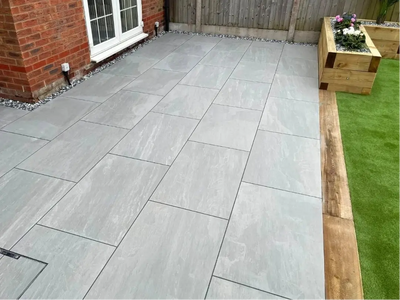
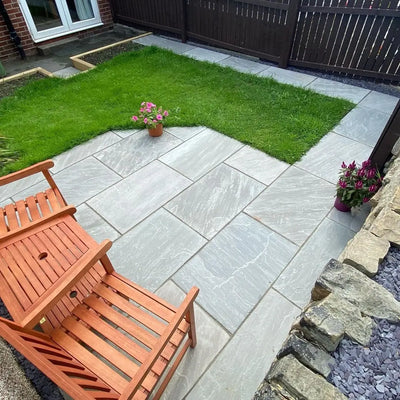
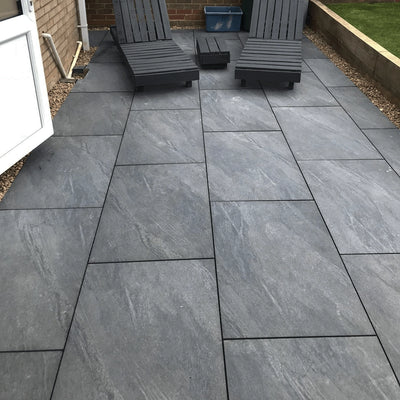
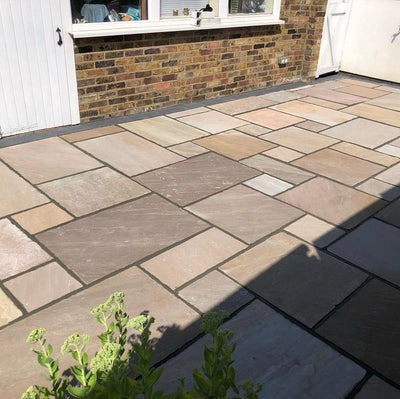
The best garden edging ideas for UK patios include porcelain edging planks for a modern frame effect, sandstone setts for traditional character, bullnose copings for steps and raised edges, cobblestones for cottage gardens, and contrasting colour borders for visual definition. Edging holds the outer row of paving in place, prevents lateral movement, and adds a design accent that frames the entire patio.
A patio without edging is like a painting without a frame — it works, but it doesn't look finished. The right border transforms a rectangle of paving into a designed outdoor space. And beyond aesthetics, edging serves a structural purpose: it holds the outer row of slabs in place and prevents them shifting outward over time. Here are 10 edging ideas using real products, with what each costs and how difficult it is to install.
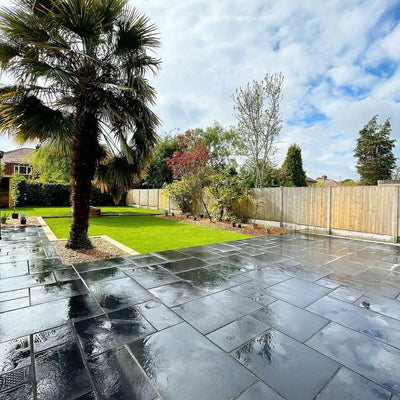
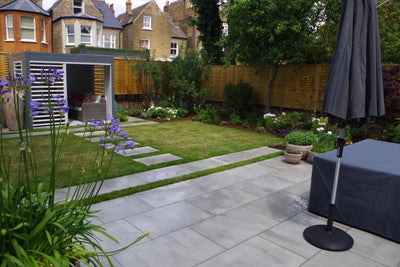
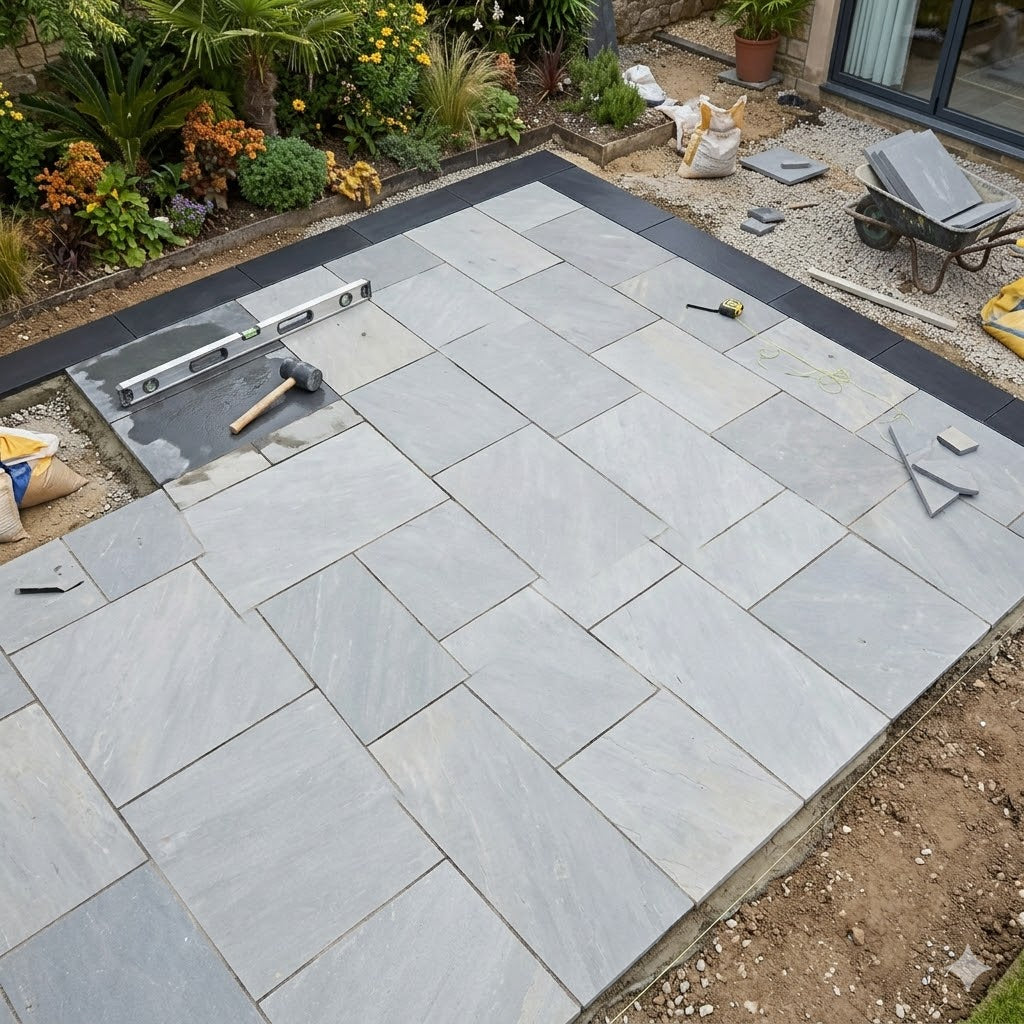
A single row of Anthracite Black porcelain edging planks (900×200mm) around a lighter patio creates a crisp, dark picture frame. This is the most popular edging combination we sell — Anthracite Black planks around Kandla Grey sandstone or Kandla Grey porcelain. The contrast is clean, contemporary, and instantly makes the patio look intentional rather than accidental.
Works with: Any grey, beige or light-coloured paving. The dark frame defines the boundary without competing with the main surface.
How to install: Lay the border planks first on a mortar bed, establishing the outer line. Then fill in the main patio area inside the frame. Planks are 900mm long — you need approximately 1.1 planks per linear metre of perimeter.
The reverse of idea #1 — Quartz White porcelain planks around a dark patio (Anthracite Black or Smoke Grey porcelain). The light frame on a dark field creates a dramatic, gallery-like effect. Particularly striking in modern gardens with architectural planting.
Works with: Dark grey, black or charcoal paving. Also effective around mid-grey porcelain for a subtle lightening effect at the boundary.
A row of Kandla Grey sandstone setts (200×100mm) around a sandstone patio adds texture and traditional character. The small cobbled border creates a tactile contrast against the larger flat slabs — the paving equivalent of a decorative picture frame. This is the classic British patio edging and suits period properties, cottage gardens, and traditional settings.
Works with: Any sandstone patio, particularly patio packs where the random pattern benefits from a defined, consistent boundary.
How to install: Lay the setts on a mortar bed in a soldier course (upright, long edge facing outward). You need approximately 5 setts per linear metre for a single row, 10 for a double row.
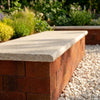
Bullnose copings have one rounded, finished edge designed for the perimeter of raised patios and the front of steps. The rounded edge is comfortable underfoot, safe for bare feet, and visually clean from every angle. If your patio is raised above the lawn or garden level, bullnose copings are the professional finish.
Works with: Any raised patio, steps, pool surrounds, or anywhere the edge of the paving is visible from the side. Match the bullnose colour to your main paving for a seamless look, or contrast it for definition.
A double row of 100×100mm sandstone cobbles creates a chunky, rustic border with strong traditional character. Cobbles have more visual weight than setts — the square format and natural stone surface give the border a heritage feel that suits cottage gardens, farmhouse properties, and patios next to old brick walls.
Works with: Riven sandstone in warm tones (Raj Green, Rippon Buff, Autumn Brown). The cobble border adds texture without clashing with the natural variation of riven stone.
Granite setts create the most durable border available. At 50mm thick with extreme hardness, granite edging handles foot traffic, wheelbarrow wheels, and even occasional vehicle crossings without flinching. The flamed surface provides excellent grip. If you want an edging that will outlast the patio it frames, granite is the answer.
Works with: Everything — granite is the universal border stone. Particularly effective around porcelain patios where the contrast between manufactured and natural stone adds visual interest.
Use the same material and colour as your main paving but in a smaller size for the border row. A 900×600 Kandla Grey patio with a perimeter row of 600×300 Kandla Grey creates a subtle size shift that defines the edge without introducing a second colour or material. The eye registers the change in scale as a border, but the colour continuity keeps the surface feeling unified.
Works with: Any material where multiple sizes are available. Particularly effective with sawn sandstone where the consistent colour makes the size difference the focal point.
The narrower 900×150mm porcelain edging strips create a thinner, more delicate border than the standard 200mm planks. The slimmer profile suits smaller patios where a 200mm border would feel disproportionately wide. Same principle as the plank border — contrasting colour, picture-frame effect — but more refined.
Works with: Small to medium patios (under 15m²) where a proportionally narrower border feels right.
Instead of a single soldier-course row, lay 3-4 rows of setts in a herringbone pattern as a wide decorative border strip. This creates a band of interlocking texture around the patio that's visually rich and structurally strong. The herringbone section becomes a design feature in its own right — like a decorative mat at the entrance to the patio.
Works with: Large patios (20m²+) where the wide border is proportional. Use the same colour setts as the main paving or a complementary tone. Read our laying patterns guide for herringbone technique.
Not every patio needs a visible border. A concrete haunch — a wedge of concrete applied against the outer edge of the paving slabs, hidden below the turf line — provides structural support without any visible edging product. The paving appears to stop cleanly at the lawn edge with no border material visible.
Works with: Minimalist designs where you want the paving to flow directly into the lawn without a visual break. Popular with sawn sandstone and porcelain where the clean aesthetic benefits from no additional materials at the boundary.
How to install: After laying the outer row of slabs, apply a 45° wedge of concrete (6:1 ballast-cement mix) against the outer edge, extending below the turf level. The haunch holds the slabs in place without being visible.
Installation tip: Whichever edging you choose, lay it FIRST — before the main patio slabs. The edging establishes the outer boundary line and level. Then fill in the main area working inward. This ensures your edges are perfectly straight and level, and the main slabs fit neatly within the frame. The only exception is the invisible haunch (#10), which is applied after the outer slabs are laid.
How much does patio edging cost?
Edging typically adds 10-15% to your total paving material cost. For a 20m² rectangular patio (approximately 18 linear metres of perimeter):
Porcelain edging planks: ~20 planks at approximately £5 each = ~£100
Sandstone setts (single row): ~90 setts = approximately £80-120
Bullnose copings: ~20 copings = approximately £100-150
Granite setts (single row): ~90 setts = approximately £100-140
Invisible haunch: ~£15-20 in concrete (cheapest option)
Check current prices for all edging products on our edging stones page.
Browse edging products
Porcelain planks, bullnose copings, sandstone setts, granite setts — all in stock with free UK delivery.
Browse All Edging Porcelain EdgingFrequently asked questions
Do I need edging on my patio?
Structurally, yes — the outer row of slabs needs something to prevent lateral movement. This can be a visible border (copings, setts, planks) or an invisible concrete haunch hidden below the turf line. Without any form of edging, the outer slabs will gradually shift outward over time.
Should I lay edging before or after the main paving?
Lay visible edging first. It establishes the outer boundary line and level, then you fill in the main patio working inward. This ensures straight edges and clean alignment. The only exception is an invisible concrete haunch, which is applied after the outer slabs are laid.
Can I use different materials for edging and main paving?
Yes — mixing materials is one of the most effective edging approaches. Porcelain planks around a sandstone patio, or granite setts around porcelain, creates visual definition. Keep the colour palette cohesive (e.g. grey paving with grey edging in a different material) and the combination works beautifully.
What is the most popular patio edging?
Anthracite Black porcelain edging planks around Kandla Grey paving (sandstone or porcelain) is the most popular edging combination in the UK right now. The dark frame around a lighter patio creates a clean, contemporary contrast that suits modern gardens.