






Porcelain Patio Edging Ideas: 7 Ways to Finish Your Patio Properly
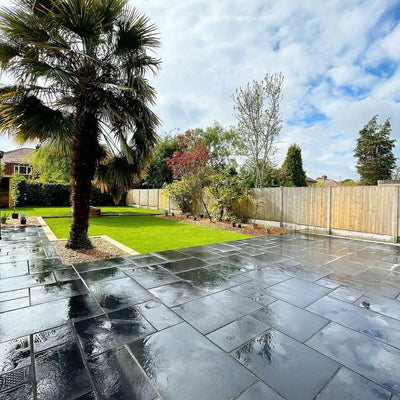
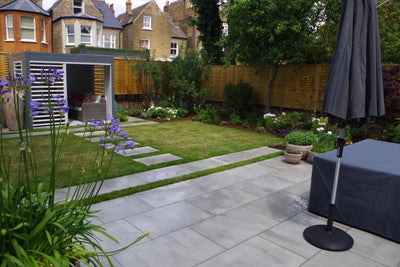
The edge of your patio is the detail most people forget until the last minute — and the one that separates a professional-looking installation from an unfinished one. A well-chosen porcelain patio edge creates a clean boundary between paving and lawn, prevents slab movement, and adds a design accent that frames the entire space. Here are seven practical edging ideas that work with porcelain paving slabs.
Why edging matters more with porcelain
Porcelain paving has clean, precise edges — which means the boundary where your patio meets the lawn or border is sharper and more visible than it would be with natural stone. A raw, unfinished edge looks noticeably unresolved. The right edging detail frames the patio, holds the slabs in place, and gives the whole project a polished, completed look.
Edging also has a structural purpose: it prevents the outer row of slabs from shifting outward over time, particularly on patios with a sand or mortar bed that could soften in very wet conditions.
Porcelain bullnose copings
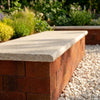
Bullnose copings have one rounded, finished edge designed to sit at the perimeter of a patio or the top of a step. The rounded edge creates a soft, finished line that's comfortable underfoot and visually clean. This is the most popular edging method for raised patios and any patio with visible edges.
Best for: Raised patios, steps, pool surrounds, any edge that's exposed and touchable.
Porcelain edging planks
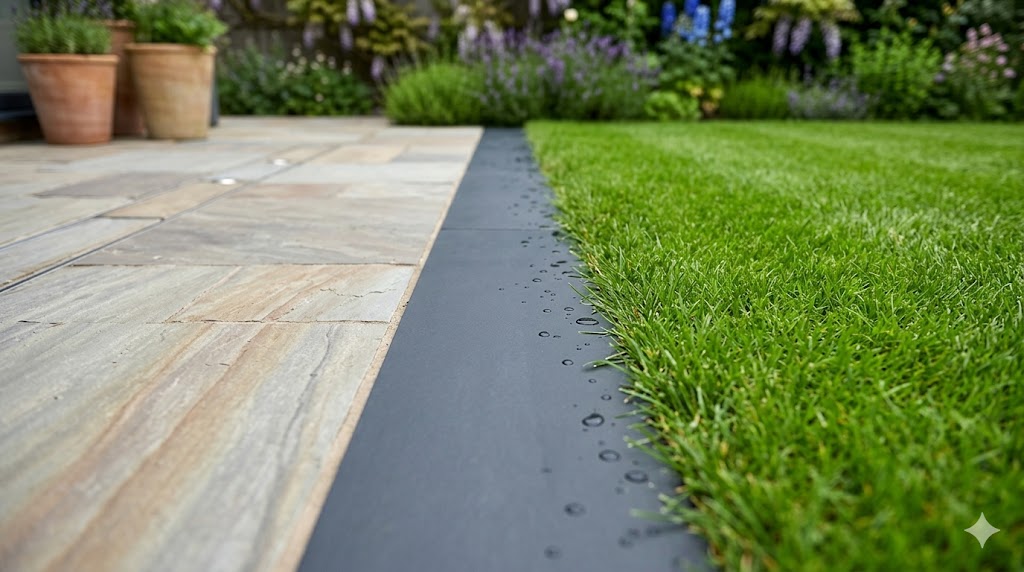
Narrow porcelain planks (typically 900×200mm) laid as a border around the perimeter of the patio. They create a frame effect — a contrasting band of narrower paving that defines the edge. You can match the colour of the main patio for a subtle border, or use a contrasting shade (dark border around light patio, or vice versa) for a more defined look.
Best for: Ground-level patios where you want a designed border without raising the edge. Creates a picture-frame effect around the patio.
Product: Browse porcelain edging planks →
Porcelain setts as a border
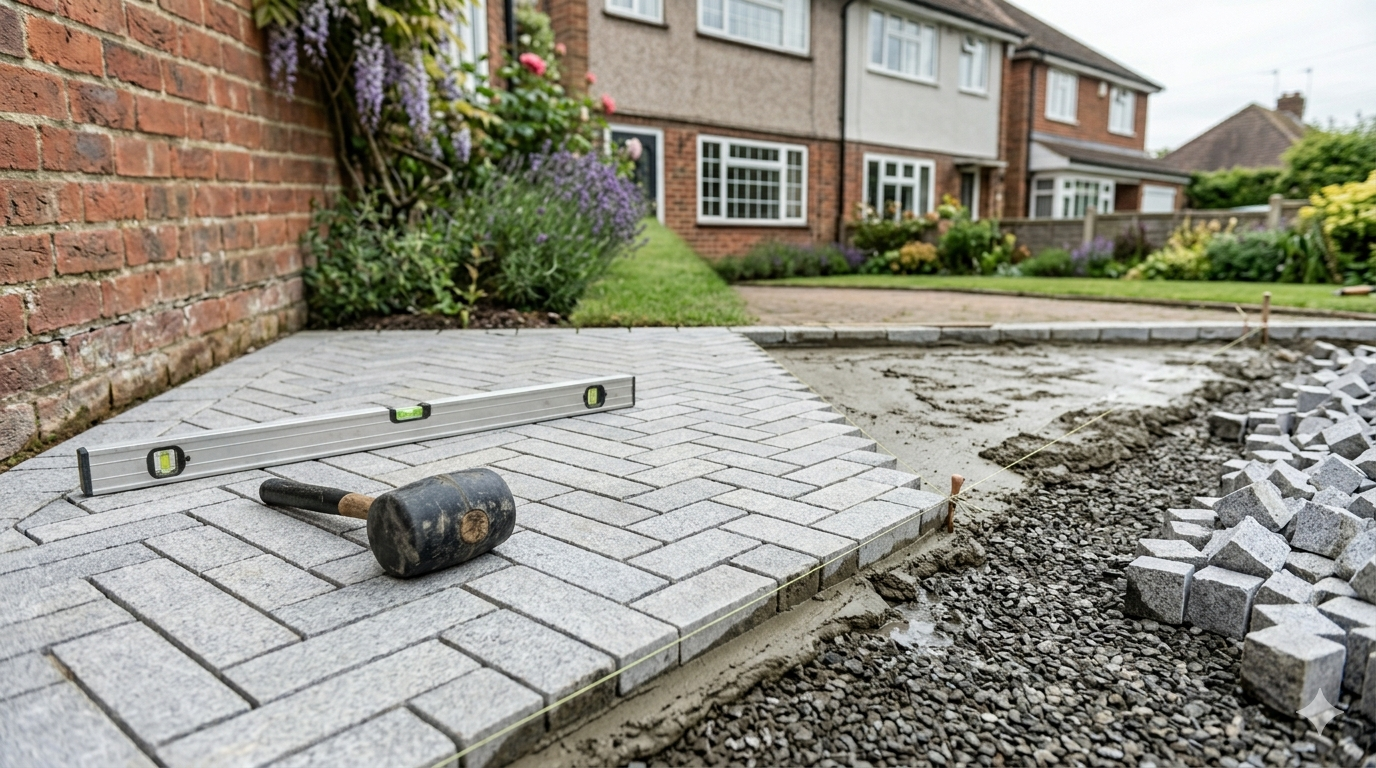
Small porcelain setts (200×100mm) laid in a single or double row around the perimeter of the patio. This creates a cobbled border effect that contrasts with the larger main slabs. Setts can be laid flat in a running bond or turned on their side in a soldier course for a taller, more defined edge.
Best for: Traditional-contemporary hybrid designs, driveways transitioning to patios, and any edge where you want texture contrast against large-format slabs.
Product: Browse porcelain setts →
Contrasting colour border
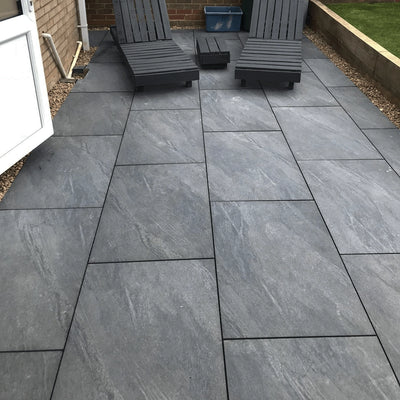
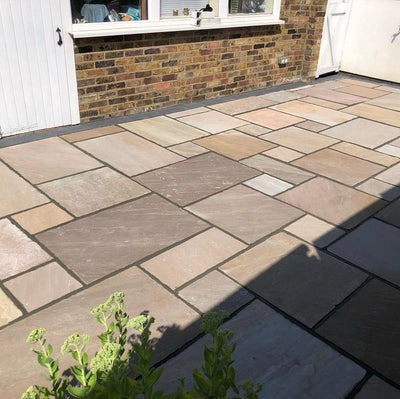
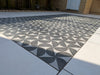
Use the same size slab as your main patio but in a contrasting colour for the outer row. For example, a Kandla Grey patio with an Anthracite Black border, or a light beige patio with a charcoal frame. This is the simplest edging approach — no additional products needed, just a second colour of the same slab.
Best for: Modern, minimalist patios where you want a defined edge without adding a different format or texture. Particularly effective with large-format 900×600 slabs.
Natural stone edging with porcelain paving
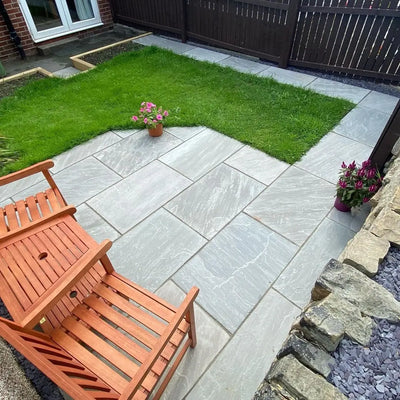
Mix materials: porcelain slabs for the main patio area with natural sandstone or granite setts as the border. This adds warmth and texture at the edges while keeping the low-maintenance porcelain surface where it matters most (the main entertaining and foot-traffic area).
Best for: Gardens where you want the practical benefits of porcelain but the natural character of stone at the boundaries. Works particularly well where the patio meets planting beds or lawn.
Product: Browse sandstone setts → or granite setts →
Flush edge into gravel
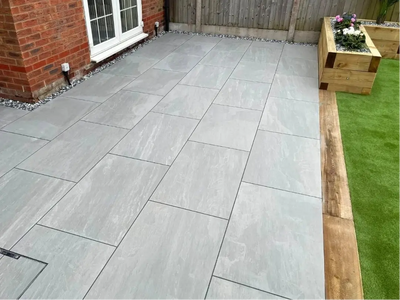
For a clean, contemporary look, run the porcelain slabs right to the edge and finish flush against a gravel border. The gravel (typically 10–20mm angular stone in a complementary colour) creates a soft transition between the hard paving and the garden. Use a metal or aluminium edge restraint beneath the gravel to prevent it migrating onto the patio.
Best for: Modern, minimalist gardens. Mediterranean-inspired courtyards. Any design where you don't want a visible raised border.
Hidden concrete haunch
The budget option: form a concrete haunch (a wedge of concrete) against the outer edge of the perimeter slabs, then backfill with soil and turf right up to the edge. The haunch is invisible once the lawn grows back but holds the slabs firmly in place. The patio edge appears to sit directly against the lawn with no visible border at all.
Best for: Budget projects, lawned gardens where you want a seamless patio-to-lawn transition, and any design where a visible border would look too formal.
Which edging should you choose?
Raised patio or steps: Bullnose copings. The rounded edge is both functional (comfortable, safe) and finished-looking.
Ground-level patio, modern design: Edging planks or contrasting colour border. Clean, geometric, contemporary.
Ground-level patio, traditional/mixed feel: Porcelain or natural stone setts. Adds texture and character at the boundary.
Minimal budget, simple lawn boundary: Hidden concrete haunch. Functional, invisible, cheap.
Contemporary courtyard: Flush into gravel. Soft, Mediterranean, no raised edges.
Don't forget colour matching. If you're using bullnose copings or edging planks, make sure they're from the same range and batch as your main patio slabs. Porcelain colours can vary slightly between production batches. Order your main slabs and edging products at the same time to ensure consistency.
Installation tips for porcelain patio edging
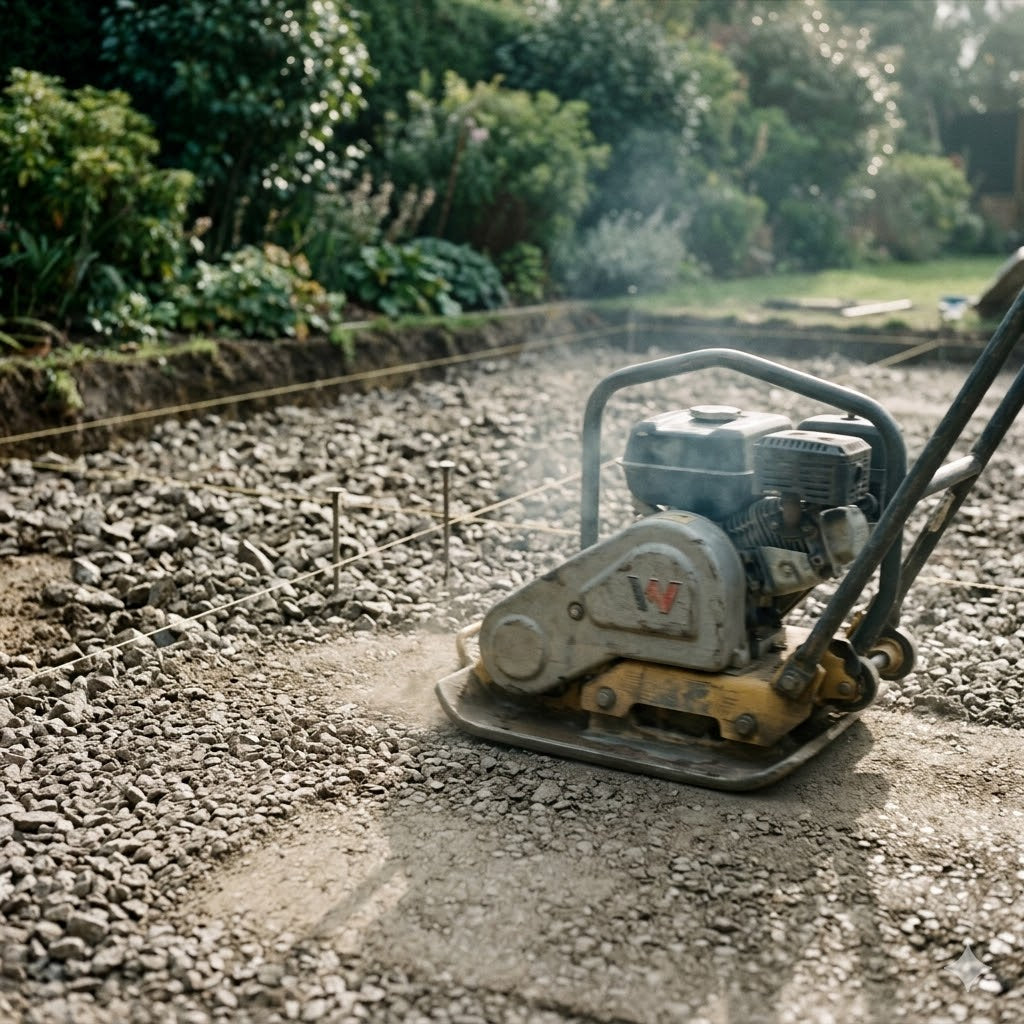
Lay edging first. Most professional landscapers lay the perimeter edging before filling in the main patio area. This establishes a fixed boundary and ensures the outer line is straight and level before you work inwards.
Prime everything. Porcelain edging pieces need the same SBR slurry priming on the back as your main slabs. The smooth porcelain surface doesn't bond naturally with mortar — skipping the primer means the edging will eventually loosen.
Use a full mortar bed. Edging pieces are the most structurally vulnerable part of the patio because they're exposed on one side. A full mortar bed (not spot-bedding) is essential. Back-butter the piece as well as laying mortar on the sub-base for maximum adhesion.
Haunch the outer edge. Even with bullnose copings or setts, apply a concrete haunch against the outer face to prevent lateral movement. This is especially important on patios that sit above the surrounding ground level.
Browse porcelain edging products
Bullnose copings, edging planks, and setts — all in stock with free UK delivery.
Bullnose Copings Edging PlanksFrequently asked questions
Do I need edging on a porcelain patio?
Structurally, yes — the outer slabs need something to prevent lateral movement. This can be a visible border (copings, setts, planks) or an invisible concrete haunch beneath the turf line. Aesthetically, a visible edging detail almost always improves the finished look of a porcelain patio.
Can I use the same porcelain slabs for edging?
Yes — you can cut slabs to size for a border, or simply use a contrasting colour of the same format as the outer row. However, dedicated edging products (bullnose copings, planks) are designed with finished edges that cut slabs won't have.
What's the difference between bullnose and standard porcelain?
Bullnose porcelain has one edge that's rounded and finished rather than square-cut. This rounded edge is designed to sit at the perimeter of a patio or the top of a step. Standard porcelain slabs have square-cut edges on all four sides.
Can I mix natural stone edging with porcelain paving?
Absolutely — it's one of the most effective design combinations. Porcelain for the main low-maintenance surface, natural stone setts or cobbles for the textured, characterful border. Just keep the colour palette cohesive (e.g. grey porcelain with grey granite setts).
How wide should a patio border be?
A single row of edging planks (200mm wide) or setts gives a subtle border. A double row (400mm) creates a more prominent frame. For bullnose copings, a single row is standard. There's no right answer — it depends on the scale of your patio and how prominent you want the border to be.