





Which Paving Gets Hottest in Summer? The Answer Might Change What You Buy
Porcelain paving gets the hottest in summer sun — surface temperatures can reach 50°C+ on a 30°C day, making it uncomfortable to walk on barefoot. Indian sandstone stays 10-15°C cooler because it's more porous and releases heat faster. Lighter colours stay cooler than dark across all materials. If barefoot comfort matters, choose riven sandstone in a light colour, or add shade to a porcelain patio.
Nobody thinks about how hot their patio gets — until the first barefoot walk to the barbecue in July. The truth is, different paving materials absorb and retain heat very differently, and the material you choose affects how usable your patio is on the hottest days of the year. This is the guide the paving industry doesn't write because it admits that their bestselling product (porcelain) has a genuine weakness.
How hot does each paving material get?
All paving absorbs heat from the sun. But how much heat it retains and how quickly it releases that heat depends on the material's density, porosity, and colour. Here's how the five main paving materials compare on a typical UK summer day (ambient temperature 28-30°C, direct afternoon sun):
| Material | Surface temp in sun | Barefoot comfort | Why |
|---|---|---|---|
| Indian Sandstone (riven, light) | 35-40°C | Comfortable | Porous — absorbs and releases heat. Riven texture reduces contact area with skin. |
| Indian Sandstone (sawn, light) | 38-43°C | Warm but tolerable | Smoother surface = more skin contact. Still porous, still releases heat well. |
| Limestone | 38-44°C | Warm | Denser than sandstone. Lighter colours stay cooler. Similar to sawn sandstone. |
| Porcelain (light colour) | 42-48°C | Hot | Non-porous and dense — absorbs heat and holds it. Light colours help but it's still noticeably warmer. |
| Porcelain (dark colour) | 48-55°C | Uncomfortable | Dark porcelain in direct afternoon sun is the hottest paving surface. Not safe for prolonged barefoot walking. |
| Granite | 42-48°C | Hot | Very dense, low porosity. Retains heat well. Similar to porcelain. |
| Slate | 45-52°C | Hot | Dark colour absorbs maximum heat. Riven texture helps slightly vs smooth. |
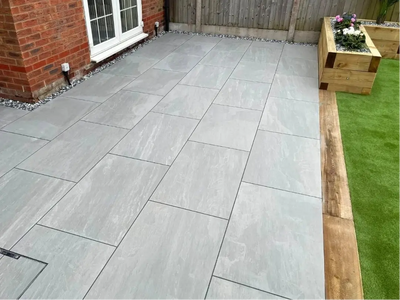
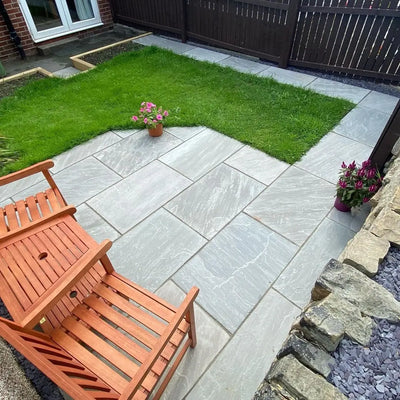
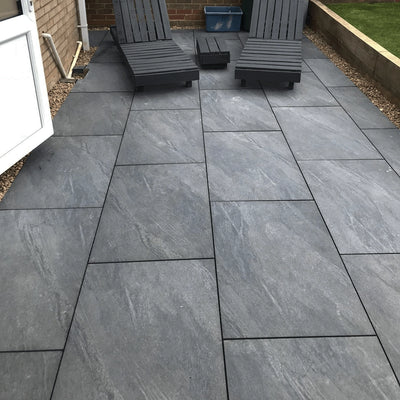
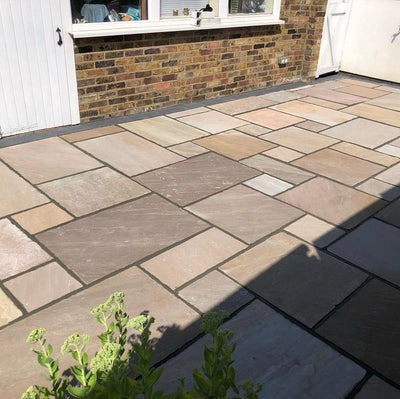
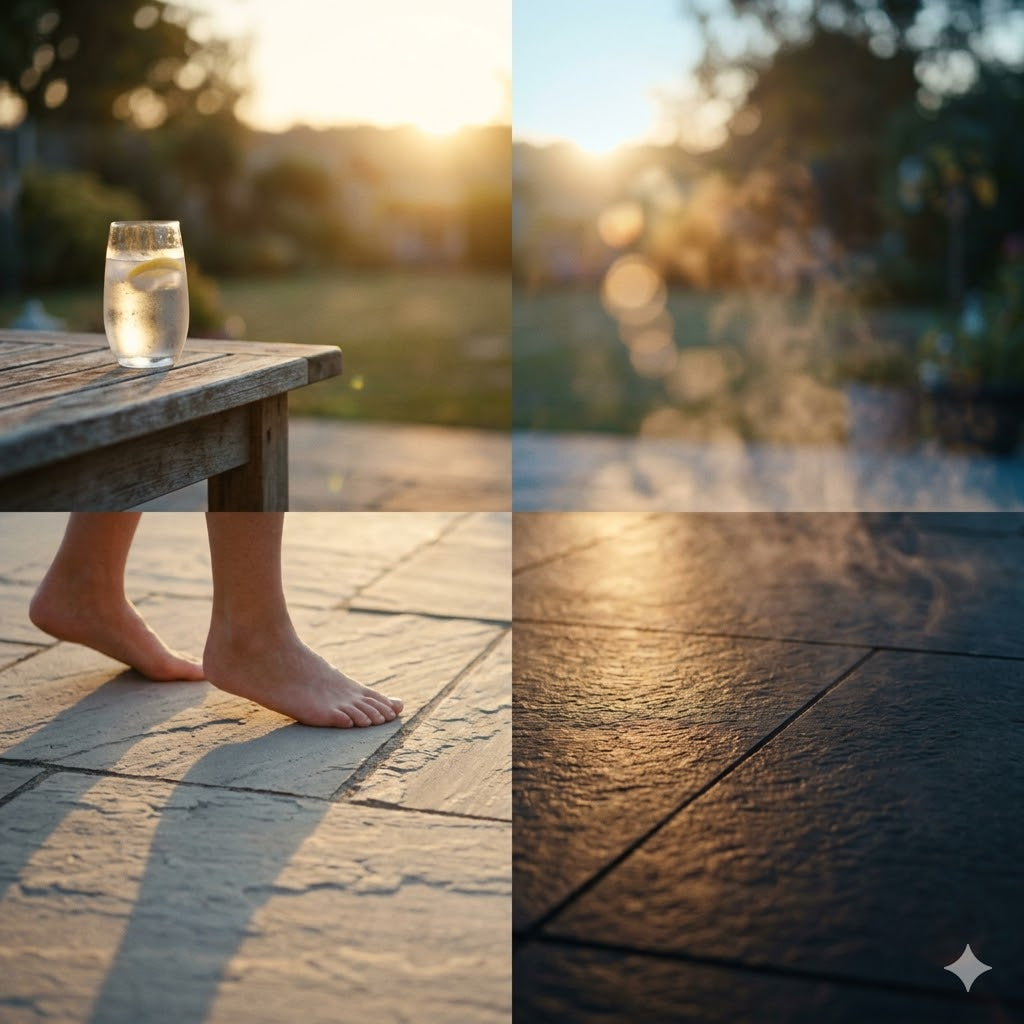
Visual comparison
Why is porcelain hotter? Porcelain is engineered to be non-porous (water absorption under 0.5%). That's why it's stain-proof and frost-proof — moisture can't penetrate the surface. But the same non-porosity means heat can't escape through evaporation. Natural stone is porous — it absorbs a small amount of moisture that evaporates in the sun, cooling the surface. Porcelain has no moisture to evaporate, so the heat just sits in the slab.
The two factors that matter most
1. Colour is more important than material
A light grey porcelain slab is cooler than a dark grey sandstone slab. Colour affects surface temperature more than the material itself. Light colours reflect sunlight; dark colours absorb it. On a 30°C day, the difference between a pale cream Fossil Mint sandstone and a dark Anthracite Black porcelain can be 15-20°C in surface temperature.
Coolest colours: Fossil Mint, Rippon Buff, Quartz White, Everest Pearl — pale creams and whites reflect the most heat.
Warmest colours: Anthracite Black, Blue-Black Slate, Dark Grey Granite — absorb the most heat.
Middle ground: Kandla Grey (sandstone or porcelain), Silver Grey — mid-tones that balance heat absorption with visual appeal.
2. Texture reduces barefoot heat
A riven (textured) surface feels cooler underfoot than a smooth (sawn or porcelain) surface at the same temperature. The reason is contact area — a textured surface touches less of your foot at any moment, so less heat transfers to your skin. Riven Kandla Grey sandstone at 40°C feels more comfortable than smooth porcelain at 40°C because the peaks and valleys of the riven surface reduce the heat transfer.
6 ways to keep your patio cool in summer
This is the single most effective decision — and you make it before the patio is laid. Light-coloured paving reflects significantly more heat than dark. If you have a south-facing patio that gets full afternoon sun and you plan to walk barefoot, choose Fossil Mint, Rippon Buff, or a light grey porcelain over Anthracite Black or dark slate.
This doesn't mean avoiding dark paving entirely — it means matching the colour to the conditions. A north-facing shaded patio can handle dark paving because it rarely gets sustained direct sun.
If barefoot comfort in summer is a priority, riven Indian sandstone is the coolest paving option. The porous surface releases heat through evaporation, and the textured finish reduces skin contact. A riven Kandla Grey sandstone patio on a 30°C day is comfortable to walk on barefoot all afternoon. A dark porcelain patio on the same day is not.
This is one of the reasons sandstone remains the UK's bestselling garden paving slab despite porcelain's rise — it's simply more comfortable to live on in summer.
A parasol, sail shade, pergola, or mature tree canopy over your seating area reduces the paving temperature by 15-20°C in the shaded zone. The unshaded paving still gets hot, but the area where you actually sit stays comfortable. This is the best solution for existing porcelain patios that run hot — you can't change the material, but you can shade the sitting area.
A permanent pergola with climbing plants (wisteria, jasmine, grape vine) creates natural shade that improves every summer as the plants mature.
A quick spray with a garden hose 15-20 minutes before you plan to use the patio drops the surface temperature immediately. On porous natural stone, the water soaks in and cools through evaporation. On porcelain, the water sits on the surface and cools by contact — it evaporates faster but still brings the temperature down by 10-15°C.
This is the simplest, cheapest, immediate solution. Takes 30 seconds. Works on any material.
An outdoor rug under the dining table or around the lounging area creates a comfortable barefoot zone without altering the paving. Outdoor rugs are designed for UV and moisture exposure — they won't stain or damage the paving beneath. This is particularly useful for dark porcelain patios where the surface gets too hot for comfortable barefoot use.
The cleverest approach: use different materials in different zones based on sun exposure. Porcelain for the shaded cooking zone near the house (stain-proof near the barbecue, doesn't get direct sun). Riven sandstone for the sun-exposed lounging area (stays cooler barefoot). Sandstone setts as the border between zones.
This gives you the best of both materials — porcelain's stain resistance where food and drink spill, sandstone's comfort where bare feet touch. Read our 2026 patio trends post — mixed-material zoning is one of the biggest trends this year.
Does this mean porcelain is bad for patios?
No. Porcelain is excellent for patios — it's stain-proof, frost-proof, maintenance-free and colourfast. The heat issue is real but it only matters in specific conditions: south-facing patios in direct afternoon sun where people walk barefoot. If your patio is shaded, north-facing, or you wear shoes outdoors, the heat difference is irrelevant.
The honest position is this: if barefoot comfort in summer sun is your top priority, choose light-coloured riven sandstone. If zero maintenance is your top priority and you can manage heat with shade or hosing, porcelain is still the right choice. We sell both because both are excellent — they just have different strengths. Read our full sandstone vs porcelain comparison for the complete picture.
Choose your material
Sandstone for summer comfort, porcelain for zero maintenance — or both for different zones. All in stock with free delivery.
Browse Sandstone Browse PorcelainFrequently asked questions
Does porcelain paving get hot in summer?
Yes. Porcelain paving in direct summer sun can reach 48-55°C on a 30°C day, especially in dark colours like Anthracite Black. Light-coloured porcelain runs 5-8°C cooler but is still noticeably warmer underfoot than natural stone. The non-porous surface retains heat because there's no moisture evaporation to cool it down.
Which paving is coolest underfoot?
Light-coloured riven Indian sandstone is the coolest paving surface in summer. The porous surface releases heat through evaporation, and the textured finish reduces skin contact. Fossil Mint and Rippon Buff sandstone are the coolest options in our range. Kandla Grey sandstone is a good middle ground — cool enough for barefoot use while offering the most popular colour.
Is sandstone cooler than porcelain?
Yes — sandstone stays 10-15°C cooler than porcelain in direct sun because it's porous. The small amount of moisture inside the stone evaporates in the heat, cooling the surface naturally. Porcelain has no porosity and no moisture to evaporate, so the heat sits in the slab. Riven sandstone is the coolest option; dark porcelain is the hottest.
Can I cool down a hot patio?
Yes. Hose the surface with water 15-20 minutes before use — this drops the temperature by 10-15°C on any material. For a permanent solution, add shade over the seating area with a parasol, sail shade, or pergola. Outdoor rugs create comfortable barefoot zones on hot surfaces. The most effective long-term solution is choosing lighter-coloured paving when you build the patio.
Should I avoid dark porcelain for a sunny patio?
Not necessarily — but be aware that dark porcelain in direct afternoon sun gets very hot (48-55°C). If you love the look of dark porcelain, plan for shade over the seating area, or use dark porcelain in the shaded zones and lighter material in the sunny zones. If you walk barefoot regularly and your patio gets all-day sun, a lighter material (sandstone or light porcelain) will be more comfortable.