







Paving Around a Pool: Which Material, What to Check, and What to Avoid
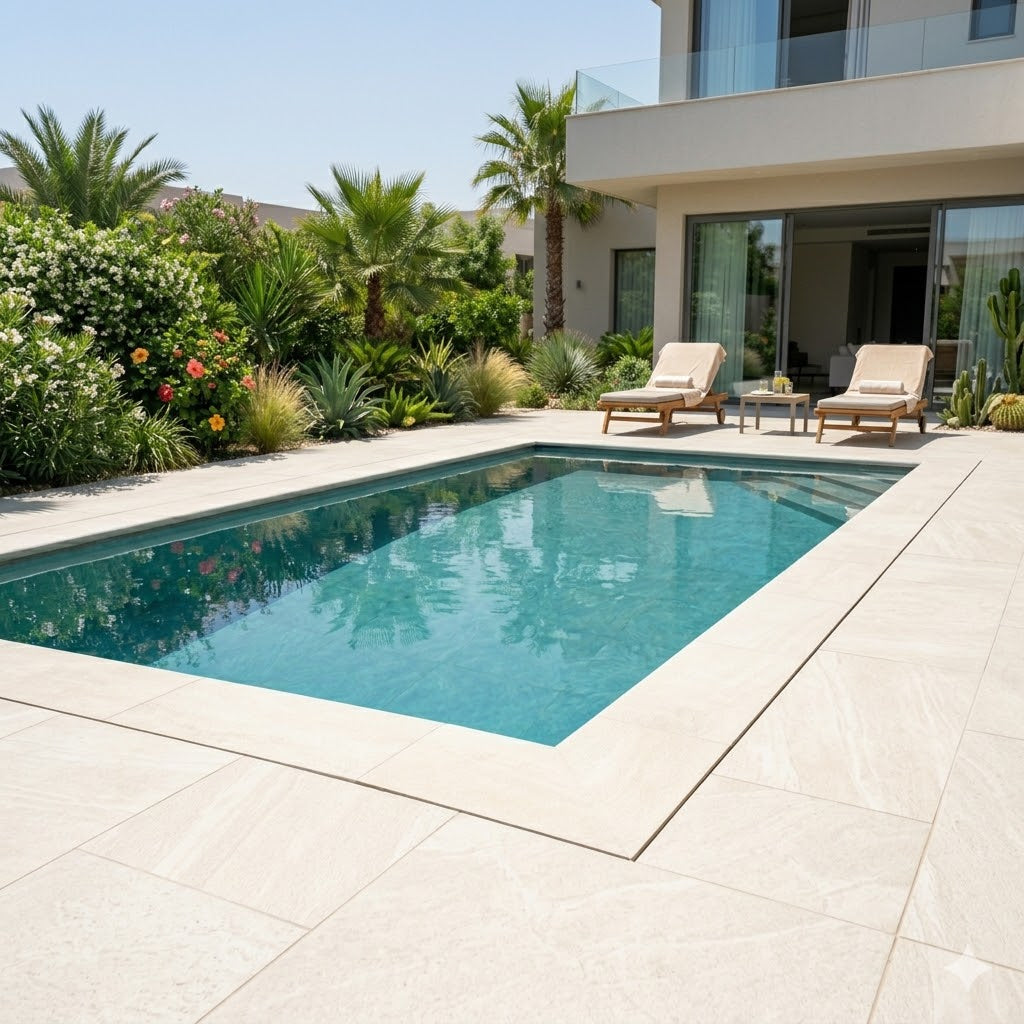
The best paving for pool surrounds is light-coloured R11-rated porcelain — non-porous (chlorinated water won't penetrate or stain), certified anti-slip when wet, and lighter colours stay cooler barefoot in summer. Edge the pool with porcelain bullnose copings for a safe, rounded finish. Avoid dark porcelain (gets dangerously hot), unsealed sandstone (absorbs pool chemicals), and any paving without a stated R-rating (slip hazard when constantly wet).
UK garden pools and swim spas are booming — but most pool installers focus on the pool itself and leave the surround as an afterthought. The wrong paving around a pool creates three problems that don't exist on a normal patio: constant wet-foot traffic (slip risk), daily chlorine exposure (chemical staining), and barefoot use in direct sun (burn risk). This guide covers what works, what doesn't, and why pool surround paving needs different thinking from a standard patio.
The 3 things pool surround paving must do
Normal patio paving needs to look good, drain properly, and last 20 years. Pool surround paving needs all of that plus three non-negotiable requirements:
A patio gets wet when it rains. A pool surround is wet every time someone gets out of the pool — dripping water, splashing, running children with wet feet. The surface around a pool is wet more often than it's dry during summer. Any paving without a certified anti-slip rating is a slip injury waiting to happen in this environment. R11 minimum. Non-negotiable.
Pool water contains chlorine, salt (in salt-chlorinated pools), pH balancers, and algaecides. These chemicals splash, drip, and pool on the surrounding paving daily throughout summer. Porous materials absorb these chemicals — causing discolouration, salt crystallisation (white deposits), and surface degradation over time. The surround material must be non-porous or sealed to resist this constant chemical exposure.
Nobody walks around a pool in shoes. The surround must be comfortable barefoot in the hottest conditions — which in the UK means 30°C+ air temperature with direct afternoon sun. Dark paving in these conditions reaches 48-55°C on the surface. That's uncomfortable at best, dangerous for children at worst. Light colours and natural stone stay 10-15°C cooler. Read our full heat comparison.
Best materials for pool surrounds
| Material | Wet grip | Chemical resistance | Barefoot heat | Pool suitability |
|---|---|---|---|---|
| Light porcelain (R11) | R11 certified ✓ | Non-porous ✓ | 35-42°C ✓ | Excellent |
| Dark porcelain (R11) | R11 certified ✓ | Non-porous ✓ | 48-55°C ✗ | Good — but hot barefoot |
| Sandstone (riven, sealed) | Naturally non-slip ✓ | Porous — needs sealing | 35-40°C ✓ | Acceptable — if sealed |
| Granite (flamed) | Naturally non-slip ✓ | Very low porosity ✓ | 40-46°C — moderate | Good |
| Limestone | Moderate | Acid-sensitive ✗ | 35-40°C ✓ | Poor — acid in pool chemicals damages surface |
| Timber decking | Slippery when wet ✗ | Absorbs water, rots ✗ | Warm but splinters | Dangerous |
The winner: light-coloured R11 porcelain
Light porcelain paving ticks every box for pool surrounds. Non-porous means chlorinated water can't penetrate — no staining, no salt deposits, no chemical degradation. R11 rated means certified safe for wet barefoot traffic. Light colours (white, cream, light grey) stay 10-15°C cooler than dark alternatives in direct sun.
This is why porcelain dominates pool surround installations worldwide — from UK garden pools to Mediterranean resort pools. The material was designed for this exact application.
Best choices from our range:
• Light porcelain — Everest Pearl, Quartz White — coolest barefoot, brightest around the pool
• Beige porcelain — warm cream tones, Mediterranean feel
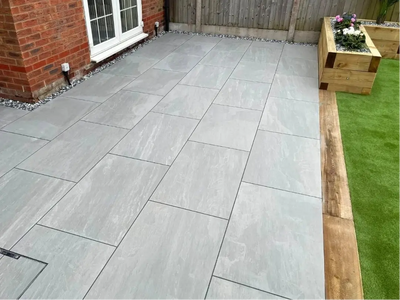
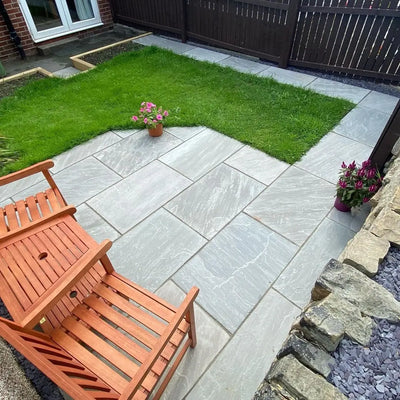
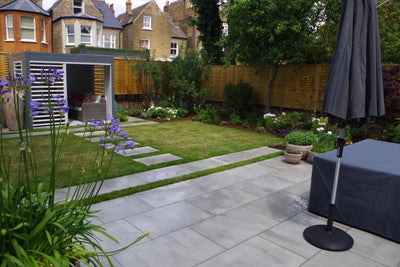
• Kandla Grey porcelain — mid-tone grey, the versatile choice if your house is grey-toned
The alternative: sealed sandstone
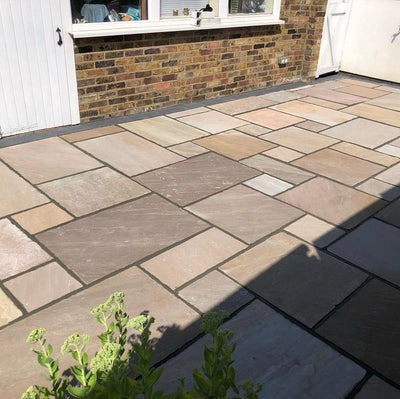
Riven sandstone works around pools if properly sealed with an impregnating sealer and resealed every 2-3 years (more frequently than a normal patio because of the constant chemical exposure). The advantages: cooler barefoot than porcelain, naturally non-slip riven texture, and warmer natural character. The trade-off: more maintenance and the ongoing commitment to resealing.
Fossil Mint sandstone is the best pool-surround sandstone — its pale cream colour reflects the most light, stays the coolest, and brightens the pool area.
Pool edge copings
The edge of the pool — where the paving meets the water — is the most important detail. This is where people sit, swing their legs in the water, and push off when getting out. It needs a rounded edge (no sharp corners to cut feet or catch swimwear) and certified anti-slip surface (this is the wettest point of the entire surround).
Porcelain bullnose copings are designed specifically for this application. The rounded front edge provides a safe, smooth finish that eliminates sharp corners. The R11-rated surface provides grip even when continuously wet. Available in colours matching the main porcelain surround for a seamless look.
Overhang: the coping should overhang the pool wall by 25-30mm to create a drip edge — water running off the coping falls into the pool rather than running down the pool wall and behind the liner.
Drainage around pools
Pool surround drainage is more demanding than patio drainage because the surface is wet constantly — not just after rain:
Gradient: the surround must slope AWAY from the pool, not toward it. A 1:60 gradient (steeper than the standard 1:80 patio gradient) ensures splashed water runs toward the garden or drainage channel rather than back into the pool — bringing dirt, leaves, and debris with it.
Channel drain: a linear drainage channel around the outer edge of the surround collects runoff before it reaches the lawn or planting beds. This prevents the garden becoming waterlogged during heavy pool use.
No standing water: puddles on a pool surround are slip hazards. The steeper gradient and non-porous porcelain surface ensure water moves off quickly. Any low spots that puddle should be addressed during installation — they're much harder to fix after the paving is laid.
Read our complete drainage guide for gradient calculations and drainage channel specifications.
What to avoid around pools
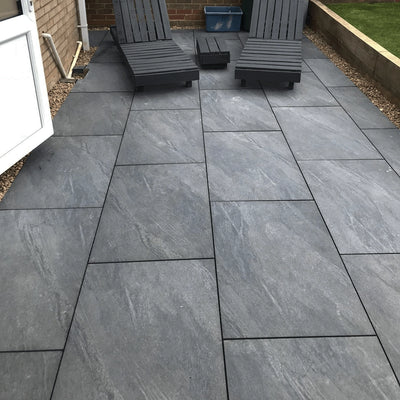
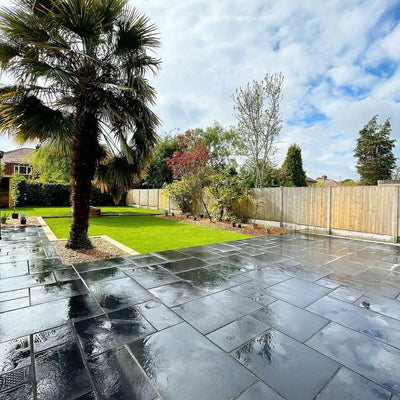
Anthracite Black, dark grey, and charcoal porcelain look striking but reach 48-55°C in direct summer sun. Around a pool where everyone walks barefoot, that's uncomfortable for adults and potentially dangerous for children. If you prefer dark aesthetics, use dark paving for the wider patio area away from the pool, and light paving for the immediate pool surround (2m minimum around all edges).
Unsealed sandstone and limestone absorb pool chemicals daily throughout summer. Chlorine causes bleaching and discolouration. Salt from salt-chlorinated pools crystallises inside the stone, causing surface spalling (flaking) over 2-3 seasons. If you use natural stone, seal it before the pool is filled and reseal every 2-3 years without exception.
Limestone is calcium carbonate — it reacts with acid. Pool chemicals include acids (pH reducers, algaecides). Even mildly acidic pool water splashing onto limestone repeatedly will etch and roughen the surface over time. Read our limestone guide for more on its acid sensitivity.
Decking around pools is dangerously slippery when wet, absorbs water and chemicals promoting rot, develops splinters that injure bare feet, and requires constant maintenance in a high-moisture environment. Decking is the worst possible choice around a pool — despite being commonly shown in lifestyle photography.
Any paving sold as "anti-slip" without an actual R-number is not independently tested. Around a pool where the surface is wet continuously and users are barefoot, an untested surface is a liability. Insist on R11 minimum with documentation. All porcelain in our range is R11 certified. Read our full anti-slip rating guide.
How much does pool surround paving cost?
Pool surrounds are typically 2m wide around all four sides of the pool. A standard 8m × 4m pool with a 2m surround needs approximately 48m² of paving:
| Material | Cost (48m² surround) | Add bullnose copings |
|---|---|---|
| Light porcelain (from £19/m²) | ~£912-1,060 | + copings for 24 linear metres of pool edge |
| Fossil Mint sandstone (from £23/m²) | ~£1,104-1,200 | + sealer (£30-50) every 2-3 years |
All prices include VAT and free UK delivery. For exact figures, use our patio cost calculator.
Browse pool surround paving
Light porcelain, bullnose copings, and Fossil Mint sandstone — all R11 rated or naturally slip-resistant. Free UK delivery.
Browse Light Porcelain Browse Bullnose CopingsFrequently asked questions
What is the best paving around a pool?
Light-coloured R11-rated porcelain is the standard choice worldwide. Non-porous (resists chlorine staining), certified anti-slip when wet, and lighter colours stay cooler barefoot. Edge with porcelain bullnose copings for safe, rounded pool edges. Our light porcelain range starts from £19/m² delivered.
Can you use sandstone around a pool?
Yes — if properly sealed and resealed every 2-3 years. Unsealed sandstone absorbs pool chemicals causing discolouration and potential frost damage. Fossil Mint sandstone is the best choice — lightest colour, stays coolest, and its riven surface provides excellent natural grip. Read our sealing guide.
Does porcelain get too hot around a pool?
Dark porcelain (black, dark grey) gets uncomfortably hot in direct sun — 48-55°C. Light porcelain (white, cream, light grey) stays significantly cooler at 35-42°C — similar to sandstone. For pool surrounds, always choose light-coloured porcelain. Read our full heat comparison.
What paving should I avoid around a pool?
Avoid limestone (acid in pool chemicals damages the surface), timber decking (dangerously slippery when wet, rots in high-moisture environment), dark-coloured paving (too hot barefoot), and any paving without a stated R-rating for anti-slip (untested = unsafe around constant water).
Do I need bullnose copings around a pool?
Strongly recommended. Bullnose copings provide a rounded edge at the pool perimeter — no sharp corners to cut feet or catch swimwear. They should overhang the pool wall by 25-30mm to create a drip edge that directs water into the pool rather than down the pool wall.
,%20certified%20anti-slip%20when%20wet,%20and%20lighter%20colours%20stay%20coole...)