







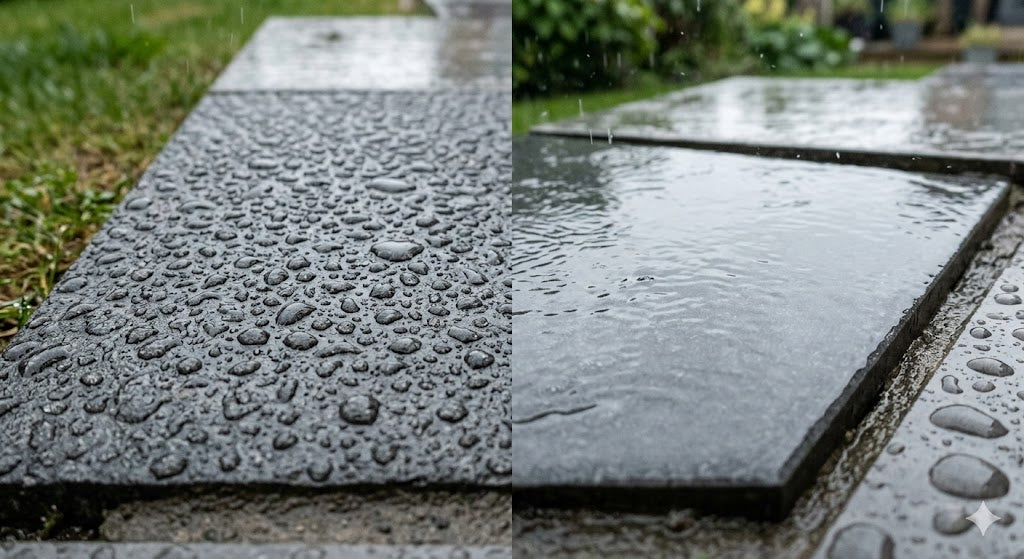
Non-Slip Paving Slabs: How to Choose a Safe Outdoor Surface
The safest non-slip paving options for UK gardens are R11-rated porcelain (tested and certified for wet outdoor use) and riven Indian sandstone (naturally slip-resistant due to its textured surface). Most patio slip incidents aren't caused by the paving material itself — they're caused by algae and moss growth on neglected surfaces. Choosing the right material helps, but annual cleaning matters more.
Every winter, thousands of UK homeowners slip on their own patio. It's not because they chose the wrong paving — it's usually because algae has built up on a surface that hasn't been cleaned in two years. That said, some paving materials are genuinely safer than others in wet conditions. This guide explains the ratings, ranks the materials, and covers the practical steps that actually prevent slippery patios.
What makes paving slippery?
Before choosing a "non-slip" product, it helps to understand what actually causes slippery patios. The material matters — but it's only one of three factors:
This causes more patio slip injuries than any material choice. Algae forms a thin, invisible biofilm on any paving surface — natural stone, porcelain, concrete — especially in shaded, damp areas. Moss grows in joints and spreads across the surface. Both create a dangerously slippery layer that no anti-slip rating can overcome. A patio with an R11 rating covered in algae is more slippery than an unrated patio that's been cleaned. Annual cleaning is the single most effective anti-slip measure.
Smooth paving — polished porcelain, honed limestone, or sawn sandstone — has less surface texture than textured alternatives. Less texture means less friction, especially when wet. This doesn't make smooth paving dangerous in itself, but it does mean grip depends more heavily on keeping the surface clean and free of biofilm.
Patios without adequate drainage hold puddles after rain. Standing water on any surface reduces grip. Proper installation with a slight fall (1:80 gradient away from the house) prevents water pooling. This is an installation issue, not a material issue — but it affects safety regardless of the paving type.
Anti-slip ratings explained
The R-rating system is a standardised European test that measures a surface's slip resistance under wet conditions. A test operator walks across the wet surface on a calibrated ramp, and the angle at which they begin to slip determines the rating:
| Rating | Slip angle | Suitable for |
|---|---|---|
| R9 | 6°–10° | Dry indoor areas only |
| R10 | 10°–19° | Covered outdoor areas, light foot traffic |
| R11 ✓ | 19°–27° | Open-air patios, paths, pool surrounds — UK recommended minimum |
| R12 | 27°–35° | Commercial kitchens, industrial wet areas |
| R13 | 35°+ | Heavy industrial, oil-contaminated areas |
R11 is the recommended minimum for outdoor residential paving in the UK. Every porcelain slab in our range is R11 rated — tested and certified. R10 is acceptable under covered areas (porches, carports) but not recommended for open-air patios exposed to rain.
Important: R-ratings apply to porcelain and manufactured products that undergo laboratory testing. Natural stone (sandstone, limestone, granite, slate) is not typically R-rated because it's quarried, not manufactured. Instead, natural stone slip resistance depends on the surface texture — riven (textured) finishes provide excellent grip naturally, while sawn (smooth) finishes provide less. Describing riven sandstone as "naturally slip-resistant" is accurate; claiming a specific R-rating without independent lab testing is not.
How each paving material compares for grip
| Material | Wet grip | Rating | Notes |
|---|---|---|---|
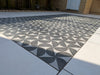
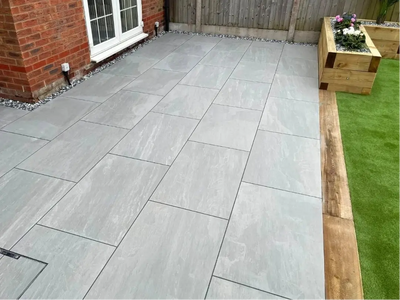
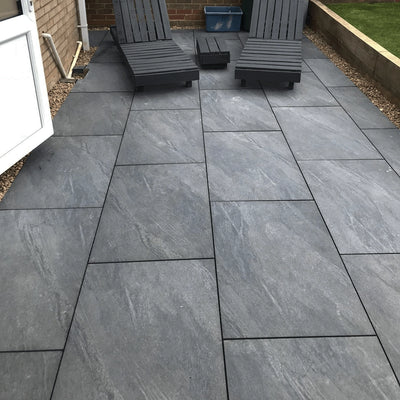
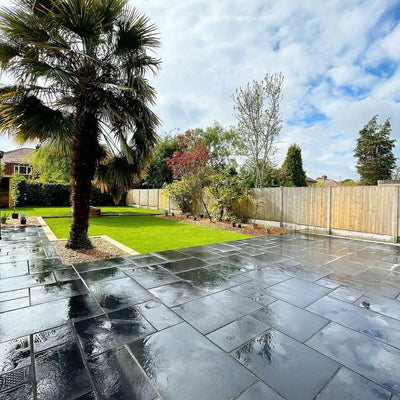
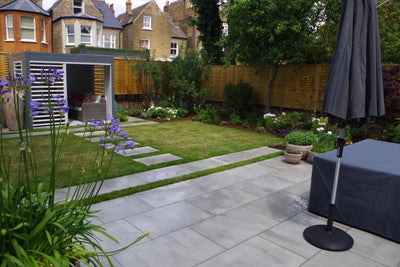
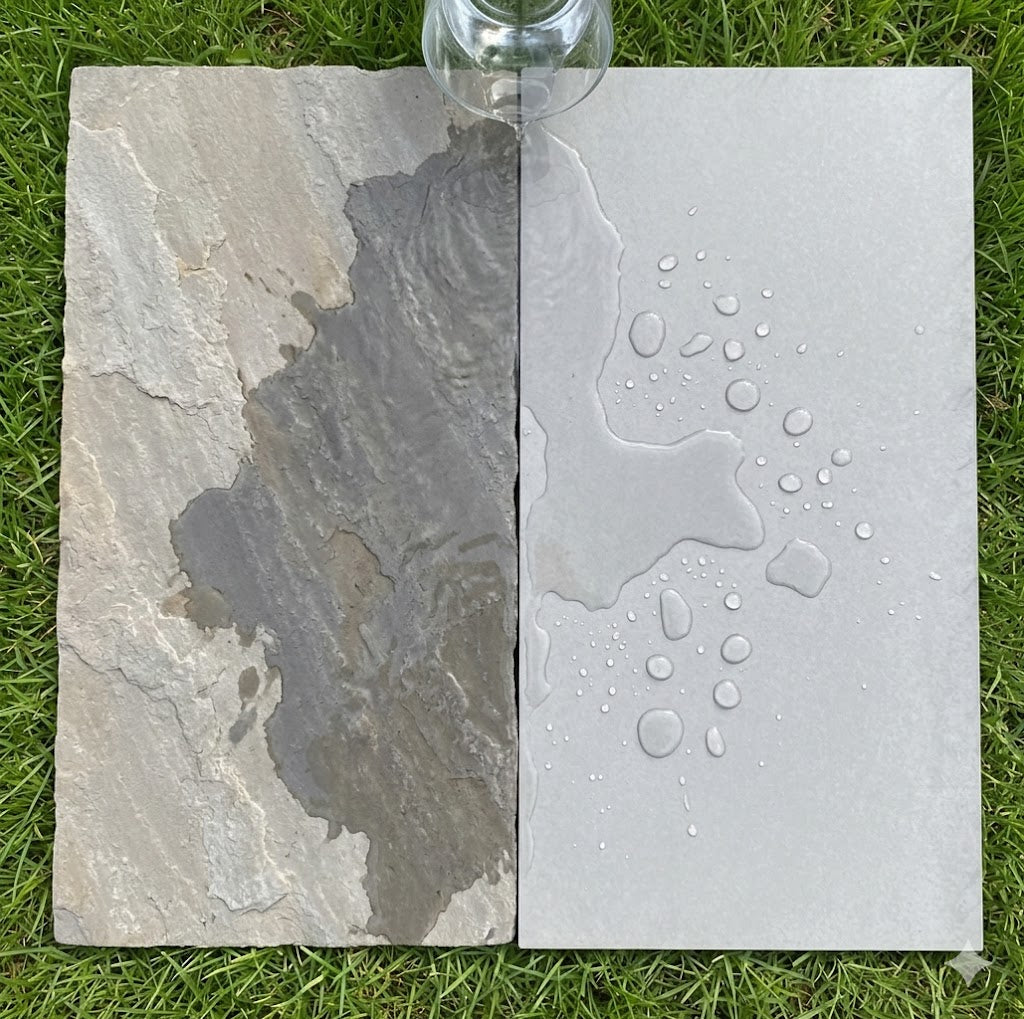
| Porcelain (textured) | Excellent | R11 certified | Lab-tested, certified safe. Non-porous surface resists algae buildup. |
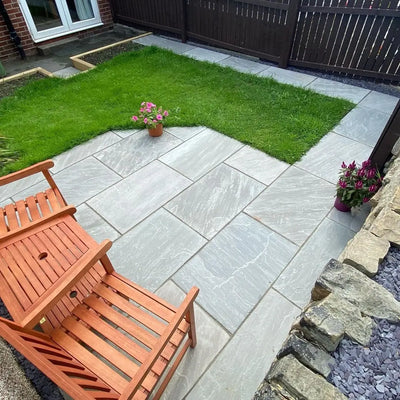
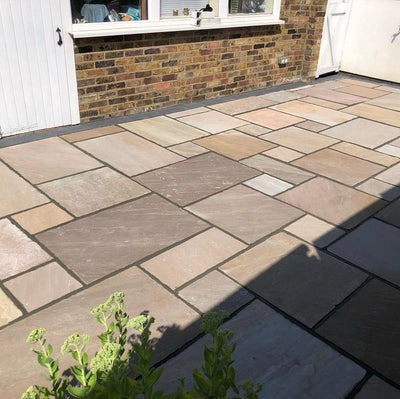
| Sandstone (riven) | Excellent | Naturally slip-resistant | Textured surface provides strong natural grip. Can develop algae in shade — clean annually. |
| Granite (flamed) | Excellent | Naturally slip-resistant | Flamed surface creates strong texture. Very low porosity resists algae. |
| Slate (riven) | Good | Naturally slip-resistant | Natural riven texture helps. Can feel slick when wet if algae present. |
| Sandstone (sawn) | Moderate | — | Smoother surface, less texture. Adequate when clean, slippery with algae. Regular cleaning essential. |
| Limestone (honed) | Moderate | — | Smooth, fine-grained surface. More prone to feeling slippery when wet. Clean and seal. |
| Porcelain (smooth) | Moderate | Check rating | Smooth-finish porcelain varies — always check the R-rating before buying. |
5 ways to make any patio less slippery
90% of patio slip hazards come from algae and moss, not the material itself. A once-yearly clean in spring with a pressure washer (1,500 PSI max, wide fan nozzle) or a dedicated paving cleaner removes the biofilm that makes surfaces dangerous. This single action prevents more slip injuries than any product choice.
If slip safety is a priority, choose riven sandstone over sawn, or textured porcelain over smooth. The surface texture creates micro-channels that break the water film underfoot and provide friction. This doesn't make smooth paving unsafe — but textured surfaces provide a measurable safety margin, especially in shaded areas prone to dampness.
Standing water on any paving surface is a slip hazard. Your patio should slope gently away from the house at a 1:80 gradient (approximately 12mm per metre). This prevents puddles forming and keeps the surface draining after rain. If your existing patio puddles, the issue is installation — not the paving material.
North-facing patios, areas under trees, and spots that rarely see direct sun are where algae thrives. If part of your patio is permanently shaded and damp, consider porcelain for that zone — its non-porous surface resists algae colonisation better than porous natural stone. Alternatively, clean shaded zones twice a year instead of once.
If you have an existing smooth patio that feels slippery, anti-slip treatments are available that etch microscopic texture into the surface without visibly changing the appearance. These are a retrofit solution — not a substitute for choosing the right material in the first place, but effective for patios already laid. Available from builders merchants and specialist suppliers.
Best non-slip paving for specific locations
Pool surrounds: R11-rated porcelain paving is the standard choice. Non-porous (chlorinated water won't penetrate or stain), certified slip-tested, and zero maintenance around splashing water. Light colours stay cooler barefoot.
North-facing shaded patios: textured porcelain — the non-porous surface resists the algae that thrives in permanently damp conditions. Natural stone in shade requires more frequent cleaning to maintain grip.
Garden paths: riven Indian sandstone — naturally slip-resistant texture, warm character, and the narrower path format means less surface area to maintain.
Steps and raised areas: porcelain bullnose copings for step fronts. Steps are the highest-risk slip zone — the R11-rated surface and rounded edge provide both grip and safety at the most critical point.
Driveways: flamed granite — the hardest, most durable surface with naturally excellent wet grip from the flamed texture. Handles both pedestrian and vehicle traffic safely. Read our driveway paving guide.
Browse non-slip paving
R11 porcelain and naturally slip-resistant sandstone — all in stock with free UK delivery.
Browse Porcelain (R11) Browse Sandstone (Riven)Frequently asked questions
What is the most non-slip paving?
R11-rated textured porcelain and riven Indian sandstone are the safest paving options for wet UK conditions. Porcelain has the advantage of a certified lab-tested rating. Riven sandstone provides excellent natural grip through its textured surface. Both outperform smooth or polished alternatives in wet conditions.
What does R11 mean on paving?
R11 is a standardised European anti-slip rating indicating the surface has been laboratory tested and provides safe grip at ramp angles between 19° and 27° under wet conditions. R11 is the recommended minimum for open-air residential paving in the UK. Our entire porcelain range is R11 rated. See our non-slip porcelain guide.
Is porcelain paving slippery when wet?
R11-rated textured porcelain is not slippery when wet — it's tested and certified safe. However, smooth-finish porcelain or porcelain with a lower rating (R9 or R10) can feel slippery when wet. Always check the R-rating before buying outdoor porcelain. Any porcelain surface can become slippery if covered in algae — annual cleaning prevents this.
Is Indian sandstone slippery?
Riven (textured) Indian sandstone is naturally slip-resistant — the irregular surface provides strong grip even when wet. Sawn (smooth) sandstone has less texture and can feel slippery when wet, particularly if algae has built up. If slip safety is a priority, choose riven over sawn and clean annually to prevent algae growth.
Why has my patio become slippery?
Almost always algae or moss. A thin biofilm of algae can form on any paving surface — natural stone, porcelain, concrete — especially in shaded, damp areas. It's often invisible until you step on it wet. The fix is a thorough clean with a pressure washer or dedicated paving cleaner. Read our cleaning guide for the safe method.
Can I make my existing patio less slippery?
Yes. Step one: clean it thoroughly to remove algae and moss — this alone solves most cases. Step two: ensure drainage is adequate (no standing water after rain). Step three: for persistently slippery smooth surfaces, anti-slip treatments are available that etch microscopic texture into the surface without changing the visible appearance.
%20and%20riven%20Indian%20sandstone%20(naturally%20slip-resistant%20due%20to%20its%20textured%20surfa...)