





Limestone Paving: The Complete UK Buyer's Guide
Limestone paving is a natural stone with a finer grain, subtler colour variation, and more refined surface than sandstone. It suits formal gardens, contemporary courtyards, and period properties. Our range starts from £21/m² (Kadapa Black) with five colours in stock. The honest trade-off: limestone is softer and more porous than sandstone, making it more prone to staining and weathering — sealing is strongly recommended, not optional.
Limestone is the natural stone that architects and garden designers reach for when they want understated elegance. It doesn't shout like sandstone's bold colour variation or porcelain's clinical precision. It simply looks refined — quietly, consistently, permanently. But that elegance comes with responsibilities that sandstone and porcelain don't demand. This guide covers everything: what limestone is, how it differs from your other options, which colour suits your property, and how to keep it looking its best.
What is limestone paving?
Limestone is a sedimentary rock formed from the compressed remains of marine organisms — shells, coral, and calcium-rich sediment — over millions of years. The high calcium carbonate content gives limestone its distinctive fine grain, smooth surface texture, and subtle, even colouring that sets it apart from coarser-grained sandstone.
Our limestone comes from two sources: Indian limestone (Kota Blue, Kadapa Black, Tandur Grey, Tandur Yellow) quarried in Rajasthan and Andhra Pradesh, and Egyptian limestone (Dijon Sinai) from the Sinai Peninsula. Indian limestone offers excellent value from £21/m². Egyptian Dijon Sinai is a premium product with warm cream tones and visible fossil detail.
Limestone is typically supplied with sawn edges (clean-cut, straight sides) giving it a precision that suits contemporary gardens. The surface ranges from natural riven texture (Kota Blue) to honed and tumbled (Dijon Sinai) depending on the variety.
Choosing a colour
We stock five limestone colours — each with a distinct character:
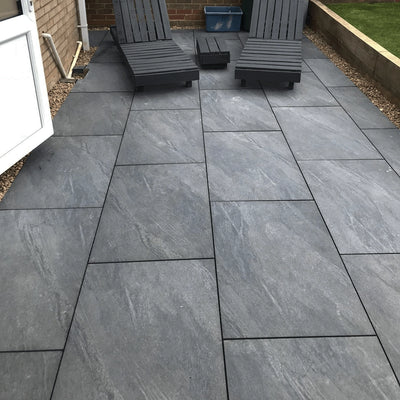
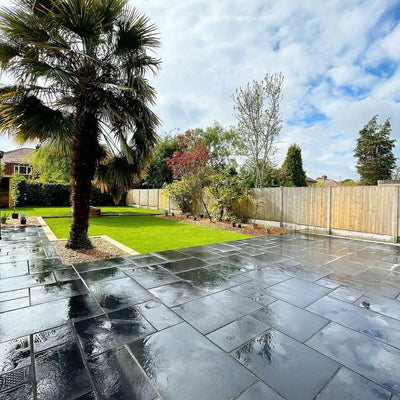
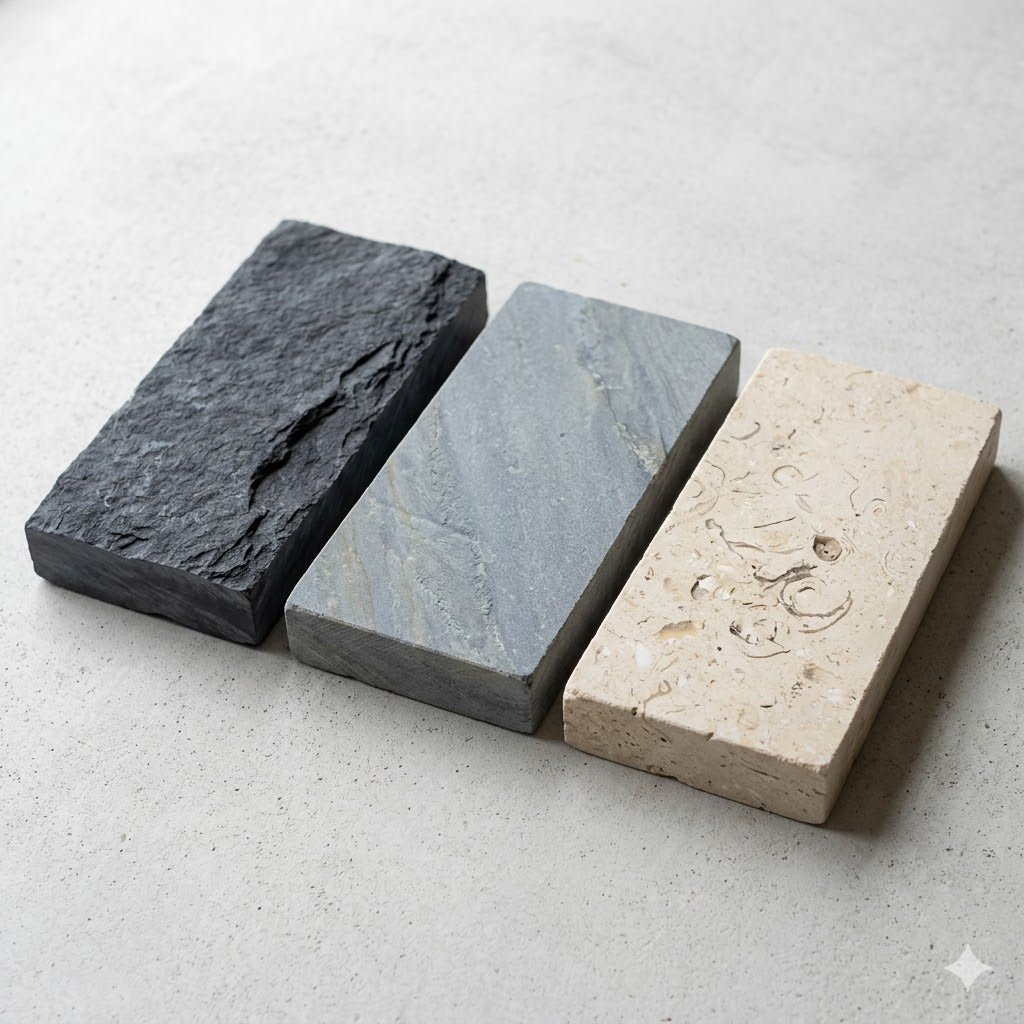
Kadapa Black — a deep charcoal-black limestone from Andhra Pradesh. Dramatic, contemporary, striking against green planting and white render. The darkest natural stone in our range. From £21/m².
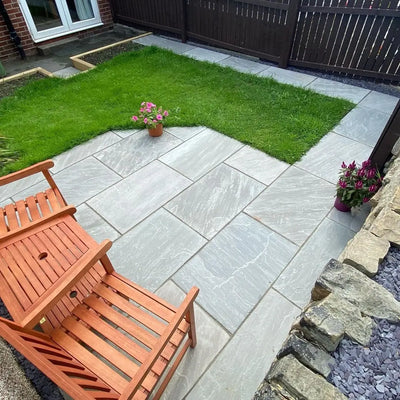
Kota Blue — blue-grey with subtle green undertones. The most popular Indian limestone in the UK. Stands out beautifully when wet, with the blue tones deepening in rain. Riven surface with hand-cut or sawn edges. Suits both modern and traditional gardens.
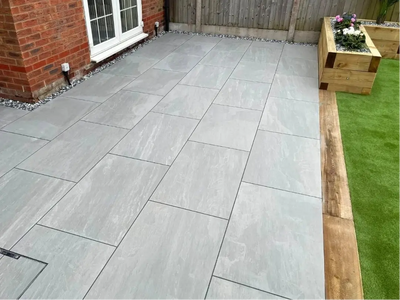
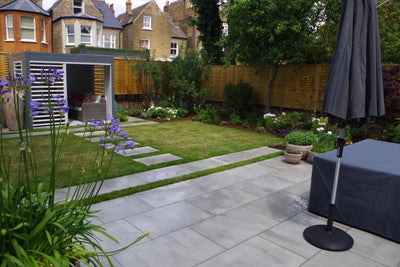
Tandur Grey — uniform grey with a smooth, tactile "orange peel" surface texture. Sawn edges for a clean, precise finish. The most understated colour in the range — quiet elegance for minimalist gardens. From £25.99/m².
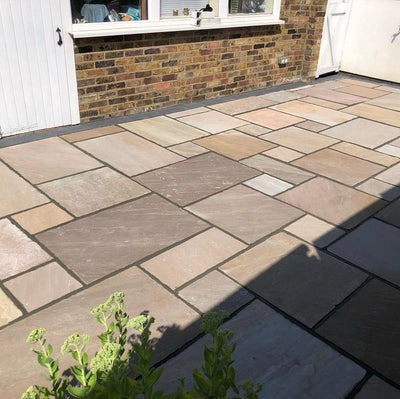
Tandur Yellow — warm golden-cream tones with an aged, tumbled finish. Suits period properties, honey-toned stone houses, and Mediterranean-inspired gardens. The warmest limestone in the range. From £26.15/m².
Dijon Sinai (Sinai Pearl) — premium Egyptian limestone in warm cream and beige with natural fossil detail visible in the surface. Honed and tumbled for a soft, aged appearance. The most refined limestone we stock — ideal for formal courtyards and architectural gardens. Premium price point.
Limestone colour is more consistent slab-to-slab than sandstone — there's natural variation, but it's subtle rather than dramatic. If you want uniform colour without going to porcelain, limestone is the middle ground. Order samples to see the colour in your garden.
Pros and cons — the honest assessment
Limestone has a finer grain and subtler colour variation than sandstone. It looks more formal, more architectural, more designed. For period properties, courtyard gardens, and contemporary minimalist spaces, limestone creates a sophistication that bolder materials can't match.
While still a natural product with variation, limestone's colour range within a single batch is narrower than sandstone. You get natural character without the dramatic colour swings that some homeowners find unpredictable in sandstone.
Most limestone has a naturally smoother surface than riven sandstone — pleasant underfoot and easy to clean. The sawn edges create tight, precise joints that suit contemporary designs.
Limestone scores 3-4 on the Mohs hardness scale vs sandstone's 6-7. Heavy furniture dragged across limestone can scratch the surface. Metal chair legs without protective caps leave marks. This doesn't affect structural integrity — it's cosmetic — but it means limestone needs more careful use than sandstone.
Limestone absorbs liquids faster than sandstone. Red wine, coffee, cooking oil, and even hard-water deposits from garden sprinklers can leave visible stains if not cleaned promptly. Sealing significantly reduces this risk, but unsealed limestone in a dining area is a maintenance challenge.
Limestone is calcium carbonate — it reacts with acid. Vinegar, lemon juice, cola, acidic cleaners, and even acid rain can etch the surface, leaving dull patches. Never use acid-based paving cleaners on limestone. This is the single biggest maintenance difference from sandstone, which tolerates mild acids without damage.
In fully exposed, unsheltered, high-traffic settings without sealing, limestone surfaces deteriorate faster than sandstone — 15-20 years vs sandstone's 30-50. In sheltered, well-maintained settings with proper sealing, limestone lasts 25-30+ years. The maintenance commitment is higher. Read our patio lifespan guide.
Limestone vs sandstone
| Feature | Limestone | Indian sandstone |
|---|---|---|
| Appearance | Fine grain, subtle variation, refined | Coarser grain, bold variation, characterful |
| Hardness | Softer (Mohs 3-4) | Harder (Mohs 6-7) |
| Porosity | More porous — stains faster | Less porous — more stain resistant |
| Acid sensitivity | Yes — acid etches the surface | No — tolerates mild acids |
| Sealing | Strongly recommended | Recommended but optional |
| Lifespan | 15-30 years | 20-50+ years |
| Starting price | From £21/m² | From £20/m² |
| Best for | Formal, sheltered, low-traffic patios | All-purpose patios, high-traffic, family gardens |
Choose limestone if: you want understated elegance, your patio is sheltered, you're willing to seal and maintain it, and the formal aesthetic suits your property.
Choose sandstone if: you want bold natural character, low maintenance, family-friendly durability, and a material that forgives neglect.
Read our full limestone vs sandstone comparison.
Sealing — why it matters more for limestone
Sealing is optional for sandstone and unnecessary for porcelain. For limestone, it's strongly recommended — closer to essential than optional. Here's why:
Limestone's higher porosity and acid sensitivity mean that without a sealer, everyday substances cause permanent damage. A spilled glass of wine at a barbecue, a splash of lemon juice, even acidic rainwater over time can etch or stain unsealed limestone in ways that don't affect sandstone.
An impregnating sealer soaks into the stone and creates an invisible barrier against moisture and stains without changing the appearance. Apply once after installation, then reapply every 3-5 years. Total application time: 2-3 hours for a 20m² patio.
Critical: never use acid-based cleaners on limestone. Standard patio cleaners often contain hydrochloric or phosphoric acid — safe for sandstone and porcelain, destructive for limestone. Use a pH-neutral paving cleaner specifically rated for limestone or marble. Check the label before applying anything.
Read our sealing guide — the method is identical for limestone.
How much does limestone paving cost?
| Colour | From (per m²) | Origin |
|---|---|---|
| Kadapa Black | £21/m² | India (Andhra Pradesh) |
| Kota Blue | £25/m² | India (Rajasthan) |
| Tandur Grey | £25.99/m² | India (Andhra Pradesh) |
| Tandur Yellow | £26.15/m² | India (Andhra Pradesh) |
| Dijon Sinai (Sinai Pearl) | Premium | Egypt (Sinai Peninsula) |
All prices include VAT and free UK mainland delivery. A typical 20m² limestone patio costs approximately £420-530 in materials depending on colour choice. For full project costs including sub-base, mortar, sealer, and labour, use our patio cost calculator.
Where limestone works best
Sheltered courtyards: protected from the worst weather, the refined surface stays cleaner and lasts longer than in fully exposed positions.
Formal gardens: the subtle colour and precision edges suit structured, symmetrical designs with clipped hedging and architectural planting.
Period properties: limestone's understated elegance matches Georgian, Regency, and Victorian architecture better than bolder sandstone.
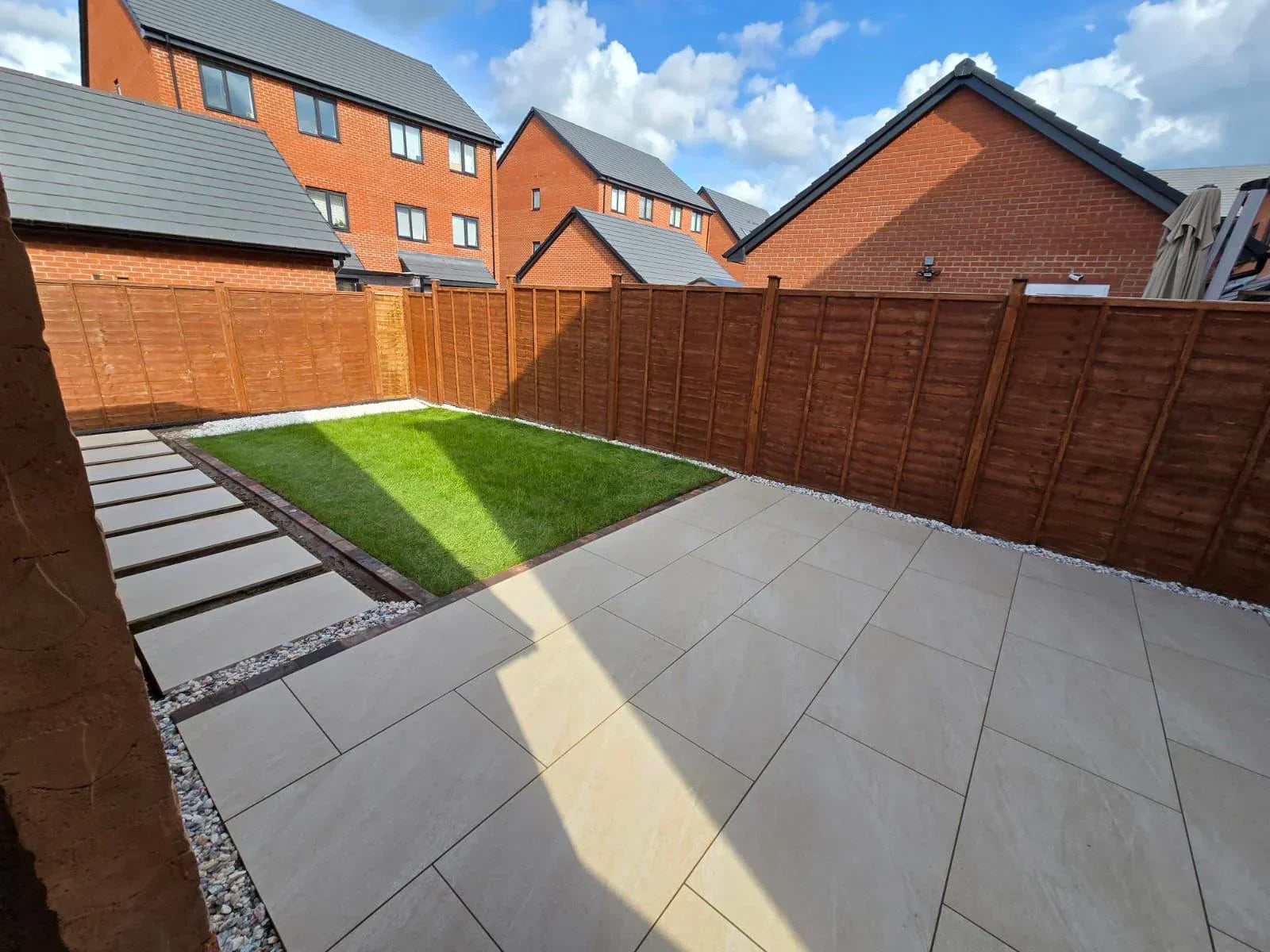
Indoor-outdoor transitions: limestone's smooth surface and precise edges create a natural transition from interior stone or tile flooring to the garden.
Where limestone is less ideal: fully exposed south-facing patios with heavy food/drink use (stain risk), high-traffic family gardens (scratch risk), and budget-priority projects (sandstone offers better value and durability).
Browse limestone paving
Five colours in stock — Kadapa Black, Kota Blue, Tandur Grey, Tandur Yellow, and Dijon Sinai. All prices include VAT and free UK delivery.
Browse Limestone Order SamplesFrequently asked questions
Is limestone good for patios?
Limestone is excellent for sheltered, low-traffic patios where its refined appearance is valued. It's less suitable than sandstone for high-traffic family gardens or unsheltered patios without regular maintenance. The key requirement is sealing — unsealed limestone in an exposed position deteriorates faster than sandstone or porcelain.
Does limestone paving need sealing?
Strongly recommended. Limestone is more porous and acid-sensitive than sandstone. Without a sealer, food stains, drinks, and even acidic rainwater can leave permanent marks. Apply an impregnating sealer after installation and reapply every 3-5 years. Read our sealing guide.
Is limestone more expensive than sandstone?
Slightly. Our limestone starts from £21/m² (Kadapa Black) vs sandstone from £20/m² (Kandla Grey patio pack). The £1-5/m² difference adds up on larger patios but isn't dramatic. The bigger cost consideration is maintenance — limestone requires sealing (£15-25 in sealer every 3-5 years), while sandstone sealing is optional.
What is the difference between limestone and sandstone paving?
Limestone has finer grain, subtler colour variation, and a smoother surface — it looks more refined and formal. Sandstone has coarser grain, bolder colour variation, and a more textured surface — it looks more natural and characterful. Limestone is softer and more porous, needing more maintenance. Sandstone is harder and more durable. Read our full comparison.
Can I use acid cleaner on limestone?
No — never. Limestone is calcium carbonate, which reacts with acid. Hydrochloric acid, phosphoric acid, vinegar, and lemon juice all etch the surface, leaving dull, rough patches. Use only pH-neutral cleaners specifically rated for limestone or marble. This is the single most important maintenance rule for limestone paving.
What colour limestone is most popular?
Kota Blue is the most popular Indian limestone in the UK — its blue-grey tone with subtle green undertones works well with British architecture and garden planting. Kadapa Black is increasingly popular for contemporary gardens. Dijon Sinai is the premium choice for formal, traditional settings.