








Cobbles and Setts: The Complete UK Guide to Natural Stone Paving
Cobbles (100×100mm) and setts (200×100mm) are small-format natural stone paving units used for driveways, path borders, patio edging, and full pathways. Sandstone setts start from £40/m², granite setts from £40-55/m², and porcelain setts are also available. The key choice: granite for driveways (hardest, most durable), sandstone for edging and paths (warmest, best colour range), and the size difference determines the look — setts for clean lines, cobbles for traditional character.
Cobbles and setts are the Swiss Army knife of paving — they do everything standard slabs can't. Edge a patio with a picture-frame border. Create a driveway that handles vehicle traffic without cracking. Lay a curved path that follows your garden's natural shape without a single cut. Build a transition strip between two different paving materials. No other format is this versatile, and no other paving has been used this successfully for this long — cobblestone streets in European cities are still in service after 200+ years.
Cobbles vs setts — what's the difference?
People use "cobbles" and "setts" interchangeably, but they're different sizes with different uses:
| Format | Typical size | Pieces per m² | Best for |
|---|---|---|---|
| Cobbles | 100×100mm | ~80-85 | Curved paths, decorative features, traditional driveways |
| Setts | 200×100mm | ~50 | Driveway edging, straight borders, patio frames, paths |
Cobbles are square, smaller, and suit curves and intricate patterns. Because each piece is small, they follow curves naturally without cutting — ideal for circular features, winding paths, and traditional cobbled surfaces.
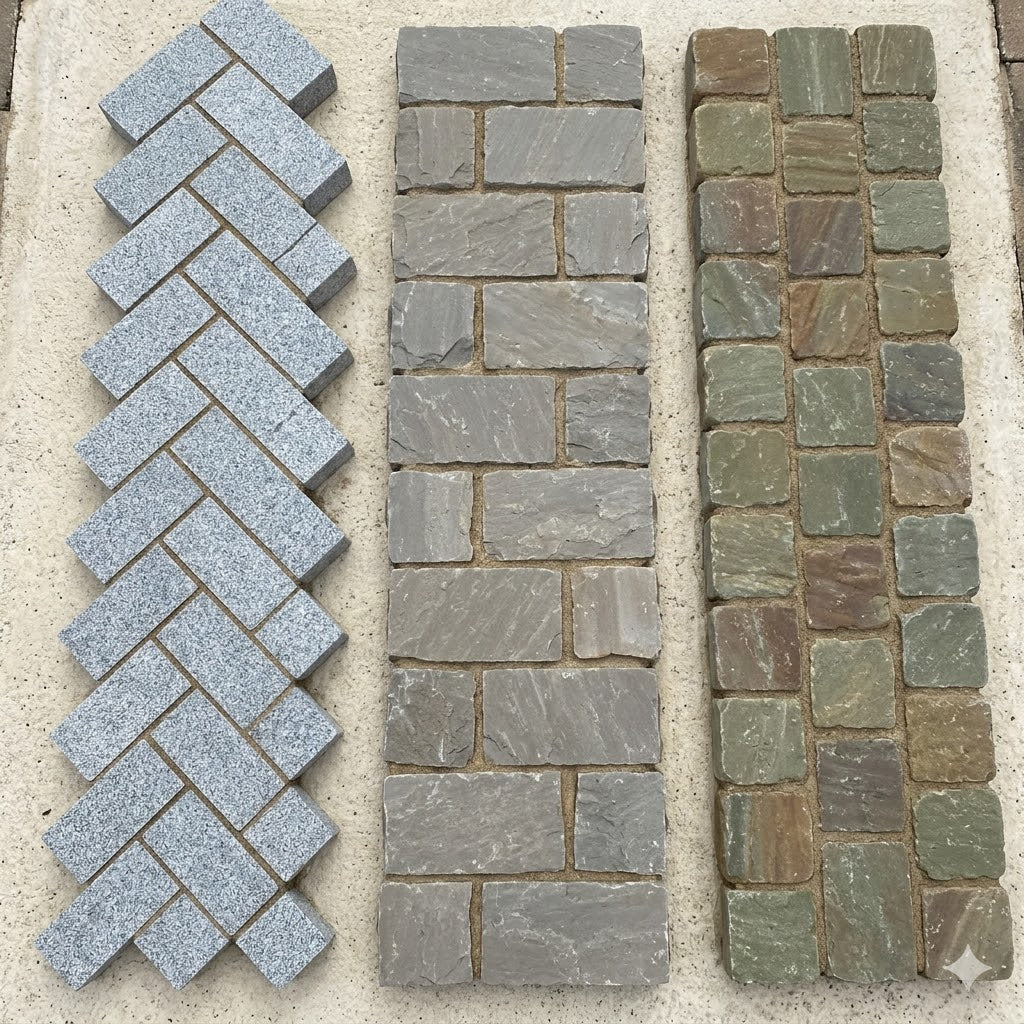
Setts are rectangular, larger, and suit straight lines and clean borders. The 2:1 ratio (200×100mm) enables herringbone and stretcher bond patterns. Fewer pieces per m² means faster laying than cobbles.
Both are typically 40-50mm thick — significantly thicker than standard 20mm paving slabs. This extra thickness is what makes them suitable for driveways and vehicular traffic.
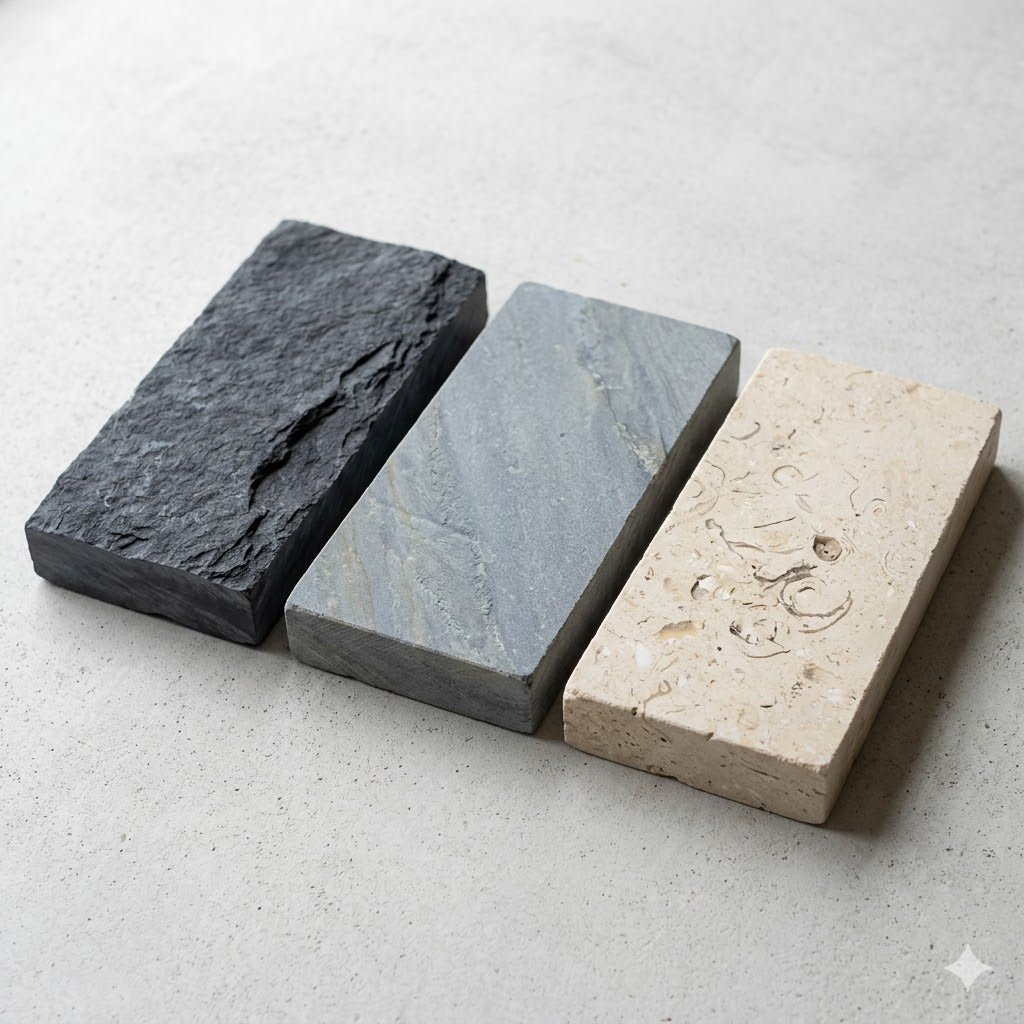
Materials: granite, sandstone, porcelain
Granite setts — the strongest option
Granite is the hardest natural stone available. Granite setts have been used on roads and driveways for centuries — many Victorian-era granite cobblestone streets are still in daily use 150+ years later. For driveways where vehicle weight, turning forces, and long-term durability matter, granite is the benchmark.
Surface: flamed finish creates a textured, naturally slip-resistant surface.
Colour: silver grey — neutral, architectural, suits any property.
Porosity: negligible — virtually maintenance-free, algae-resistant.
Price: £40-55/m² delivered.
Sandstone cobbles and setts — warmest character
Sandstone setts bring the same natural colour variation as sandstone paving slabs — warm tones, unique character in every piece, and a hand-cut texture that feels genuinely traditional. Available in Kandla Grey (cool silver-grey) and Raj Green (warm green-brown with rust accents).
Finishes: handcut (crisp, clean edges) or tumbled (aged, weathered appearance).
Thickness: 40-50mm calibrated.
Price: 100×100mm cobbles from £43.22/m² | 200×100mm setts from £40/m².
Important: sandstone cobbles and setts (40-50mm thick) are a completely different product from sandstone paving slabs (20-22mm thick). Sandstone slabs are NOT suitable for driveways — they're too thin to handle vehicle loads. Sandstone setts ARE suitable because the smaller format and greater thickness distribute vehicle weight effectively. Same stone, different application.
Porcelain setts — contemporary alternative
Porcelain setts offer the same zero-maintenance benefit as porcelain paving slabs — stain-proof, frost-proof, colourfast — in a small format suitable for edging, borders, and decorative features. Available in colours that match the main porcelain slab range for seamless patio borders.
Which type for which use
| Use | Best format | Best material | Why |
|---|---|---|---|
| Full driveway | 200×100mm setts | Granite | Hardest stone, handles vehicle loads, 50+ year lifespan |
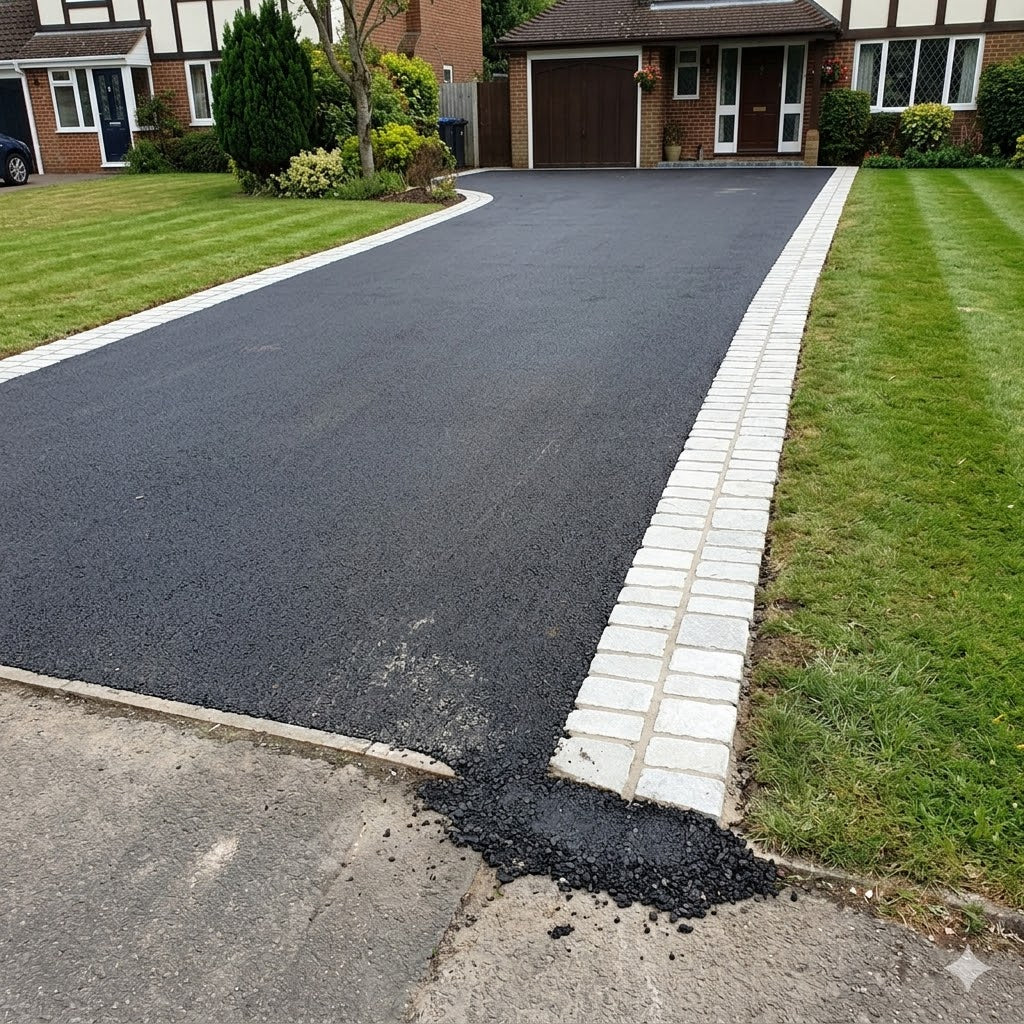
| Driveway edging | 200×100mm setts | Sandstone or granite | Clean border definition, soldier course layout |
| Patio border | 200×100mm setts | Match patio material | Picture-frame effect around slab paving |
| Garden path | 200×100mm setts | Sandstone or granite | Follows curves without cutting, traditional character |
| Curved features | 100×100mm cobbles | Sandstone | Smallest format follows tight curves naturally |
| Material transition strip | 200×100mm setts | Granite (neutral colour) | Separates porcelain from sandstone zones |
| Mowing strip | 200×100mm setts | Any | Flush with lawn, mower wheel runs along it |
Read our 10 garden edging ideas and 10 garden path ideas for more on using setts in these applications.
Laying patterns
Setts and cobbles offer laying pattern options that standard slabs can't achieve:
Stretcher bond — setts laid lengthways in staggered rows, like brickwork. The most common pattern for paths, edging, and borders. Clean, orderly, easy to lay.
Herringbone — setts laid at 45° or 90° in a zigzag pattern. The strongest pattern for driveways because the interlocking angles resist vehicle turning forces. Requires more cutting at edges but creates a premium visual result.
Soldier course — a single row of setts laid end-to-end as a border. The most common use: one or two rows framing a patio or driveway edge. Quick to lay, high impact.
Basketweave — pairs of setts laid alternating horizontal and vertical. Decorative traditional pattern, suits paths and feature areas. Slower to lay than stretcher bond.
Random/cobbled — 100×100mm cobbles laid without a strict pattern. Traditional cobblestone appearance, suits cottage gardens and period properties.
Read our 8 paving laying patterns guide for diagrams of each.
How to lay cobbles and setts
The installation method depends on the application:
For driveways (vehicular traffic)
Sub-base: minimum 200mm compacted MOT Type 1 (250mm on clay soil).
Mortar bed: full mortar bed, 30-40mm depth, 5:1 sharp sand to cement.
Joints: 8-10mm, filled with mortar or brush-in jointing compound.
Key point: every sett must sit on a full mortar bed — never spot-bed on a driveway. The concentrated tyre loads crack unsupported setts within months.
For edging and borders (pedestrian only)
Sub-base: 100mm compacted MOT Type 1 (same as adjacent paving).
Mortar bed: full mortar bed, 20-30mm depth.
Joints: 5-8mm, filled with jointing compound.
Key point: lay the sett border BEFORE the main paving slabs. The border acts as a frame that the slabs fit against — not the other way around.
For paths
Sub-base: 100mm compacted MOT Type 1 for paths with regular foot traffic. Stepping setts in lawn need only a mortar pad beneath each unit.
Width: 3-4 setts wide (600-800mm) for comfortable single-file walking.
Read our sub-base guide and mortar mix guide for the full method.
How much do cobbles and setts cost?
| Product | From (per m²) | Delivered |
|---|---|---|
| Sandstone setts 200×100mm (handcut) | £40.00/m² | Free UK delivery |
| Sandstone setts 200×100mm (tumbled) | £40.55/m² | Free UK delivery |
| Sandstone cobbles 100×100mm (handcut) | £43.22/m² | Free UK delivery |
| Granite setts | £40-55/m² | Free UK delivery |
Edging a 20m² patio (approximately 18 linear metres of border, one sett wide): 1.8m² of setts = approximately £72-80 in materials.
Full sett driveway (15-25m²): approximately £600-1,375 in materials. Professional installation adds £40-65/m² for labour — herringbone patterns cost more than stretcher bond due to additional cutting.
All prices include VAT and free UK mainland delivery. For full project costs, use our patio cost calculator.
Granite vs sandstone setts — quick comparison
| Feature | Granite setts | Sandstone setts |
|---|---|---|
| Hardness | Hardest natural stone | Moderately hard |
| Colour range | Silver grey only | Kandla Grey, Raj Green + more |
| Lifespan | 50-100+ years | 20-40 years |
| Maintenance | Virtually none | Annual clean recommended |
| Best for | Driveways, high-traffic | Edging, paths, decorative features |
| Character | Architectural, cool, minimal | Warm, characterful, natural variation |
Use granite when strength and longevity are the priority — driveways, heavy-traffic paths, and areas where you want zero maintenance forever.
Use sandstone when colour and character matter — matching your sandstone patio border, warm cottage garden paths, and decorative features where the natural colour variation adds visual depth.
Browse cobbles and setts
Sandstone, granite, and porcelain — all in stock with free UK delivery.
Sandstone Cobbles & Setts Granite & Slate SettsFrequently asked questions
What is the difference between cobbles and setts?
Cobbles are typically 100×100mm square — small format, suit curves and decorative patterns. Setts are 200×100mm rectangular — larger format, suit straight borders, herringbone driveways, and clean-lined paths. Both are 40-50mm thick and handle vehicle traffic. Same material, different shape and size.
Can you use sandstone setts on a driveway?
Yes — sandstone setts (40-50mm thick, 200×100mm) are suitable for domestic driveways. They're a completely different product from sandstone paving slabs (20mm thick) which are NOT suitable for driveways. The extra thickness and small format distribute vehicle loads effectively. Granite setts are the stronger choice for heavy-use driveways.
How many setts do I need per m²?
200×100mm setts: approximately 50 per m². 100×100mm cobbles: approximately 80-85 per m². For driveway or patio edging (one sett wide), calculate linear metres of border × 5 setts per metre for 200×100mm, or × 10 per metre for 100×100mm cobbles.
Which is better for a driveway — granite or sandstone setts?
Granite is harder, denser, and longer-lasting (50-100+ years vs 20-40 years for sandstone). For a primary driveway with daily vehicle use, granite is the stronger choice. For a decorative driveway with occasional use, or for driveway edging, sandstone offers warmer colour and more character at a similar price.
How much do granite setts cost?
Granite setts range from £40-55/m² delivered including VAT and free UK delivery. A typical single-car driveway (15-20m²) costs approximately £600-1,100 in granite sett materials. Professional installation adds £40-65/m² for labour. Read our driveway paving guide for full project costs.
What laying pattern is best for a driveway?
Herringbone is the strongest pattern for driveways — the interlocking 45° or 90° angles resist vehicle turning forces better than any other layout. Stretcher bond (staggered brickwork pattern) is simpler to lay but slightly less resistant to movement. Both work well for domestic driveways. Read our laying patterns guide.
%20and%20setts%20(200%C3%97100mm)%20are%20small-format%20natural%20stone%20paving%20units%20used%20for%20driveways,%20path%20borders,%20patio%20edging,%20and%20full%20pathways.%20Sandstone%20setts%20start%20from%20%C2%A340/m%C2%B2,%20gran...)