






Garden Path Ideas: 10 Designs from Simple to Stunning
The best garden paths use the same materials as your patio to create visual continuity, with a width of 600-900mm for comfortable single-file walking or 1200mm+ for side-by-side. Popular designs include single-slab stepping stone paths through lawn, full-width porcelain paths with tight joints, sandstone sett-bordered paths through planting, and mixed-material paths combining slabs with gravel.
A path is the spine of your garden — it guides movement, frames views, and connects your patio to the rest of the space. A well-designed path makes a garden feel considered. A forgotten one (or worse, a muddy track through the lawn) makes everything else look unfinished. Here are 10 path ideas that range from a single afternoon's work to a serious landscaping feature.
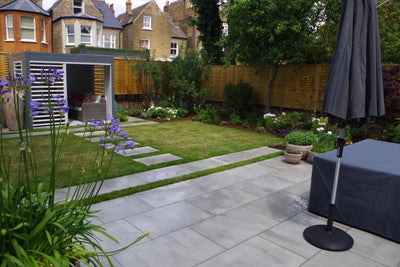
The simplest garden path: individual 600×600mm slabs set into the lawn at stride intervals (approximately 600-650mm gap between each slab). Cut the turf to shape, excavate 50mm, fill with mortar, and set each slab flush with the grass so the mower passes over them cleanly. Five to eight slabs creates a path from patio to shed, summerhouse, or garden gate.
Best materials: Kandla Grey sandstone 600×600 for a natural look, or Kandla Grey porcelain 600×600 for zero maintenance. Match the colour to your main patio for visual continuity.
Time: 2-3 hours for 6-8 slabs. No sub-base needed — the existing lawn acts as the foundation for individual slabs under foot traffic.
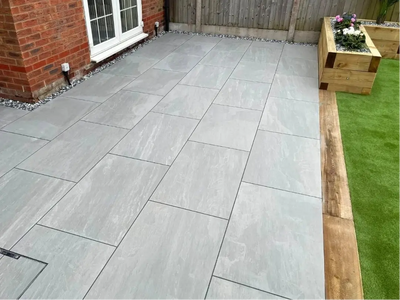
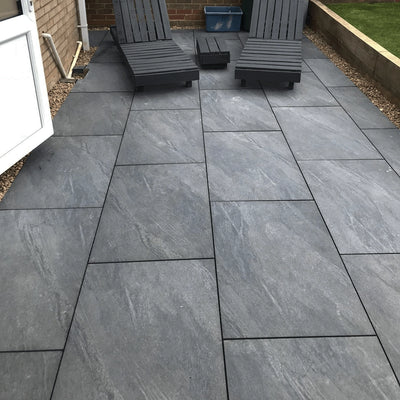
A straight 900mm-wide path in porcelain 900×600 slabs running from the back door to the end of the garden. Slabs laid lengthways (900mm dimension running along the path direction) with 5mm joints and dark pointing. The uniform colour and clean edges create a modern runway effect — particularly striking when the path leads to a focal point like a bench, water feature, or garden room.
Best materials: Kandla Grey porcelain or Anthracite Black porcelain. The tight joints and precise edges of porcelain make this design work — sandstone's wider joints give a different, more traditional feel.
Tip: Lay the slabs in a single row (900mm wide) rather than two rows of 600×600. Fewer joints means cleaner lines and faster drainage.
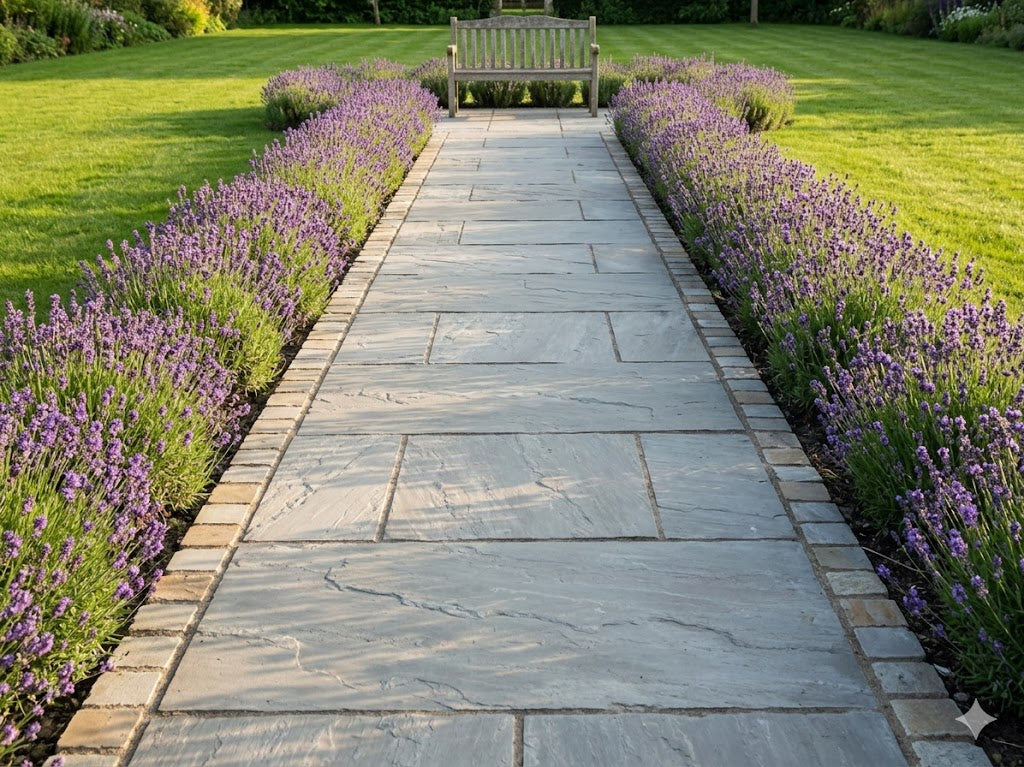
A central slab path with a soldier course of sandstone setts (200×100mm) on both edges, flanked by planting. The sett border creates a clean separation between path and soil — prevents soil washing onto the slabs, stops plants creeping over the edge, and adds a designed, intentional look that plain slabs alone don't achieve.
Best materials: Kandla Grey sandstone 900×600 slabs for the path, Kandla Grey setts for the border. Using the same colour in two formats (slab + sett) creates unity while the size change adds texture.
Planting partners: Low lavender, catmint, or hardy geraniums along both edges. The planting softens the stone and the sett border keeps everything in its place.
Lay paving slabs as stepping stones through a bed of decorative gravel instead of grass. The gravel fills the space between slabs, provides drainage, suppresses weeds (over membrane), and creates a Japanese-inspired aesthetic. Works beautifully in side passages, courtyard gardens, and areas where grass won't grow due to shade.
Best materials: Large-format slabs (900×600 or 1200×600) in a contrasting colour to the gravel. Dark slabs + light gravel or light slabs + dark gravel — the contrast is the design.
Practical benefit: Gravel paths are permeable — rainwater drains through rather than running off. No drainage planning issues, even in front gardens where the 5m² paving rule applies.
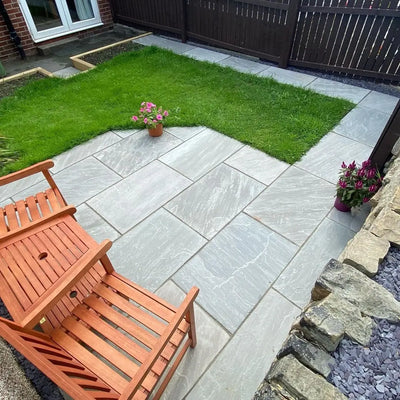
Not every path should be straight. A gently curving path through the garden creates a sense of journey — the destination isn't visible from the start, which makes even a small garden feel larger. Use smaller format slabs (600×600 or 600×300) to accommodate the curves — large-format slabs on tight curves require excessive cutting and waste.
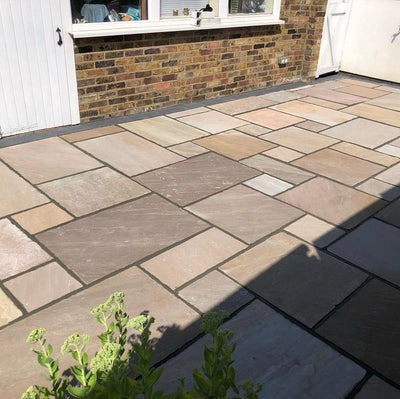
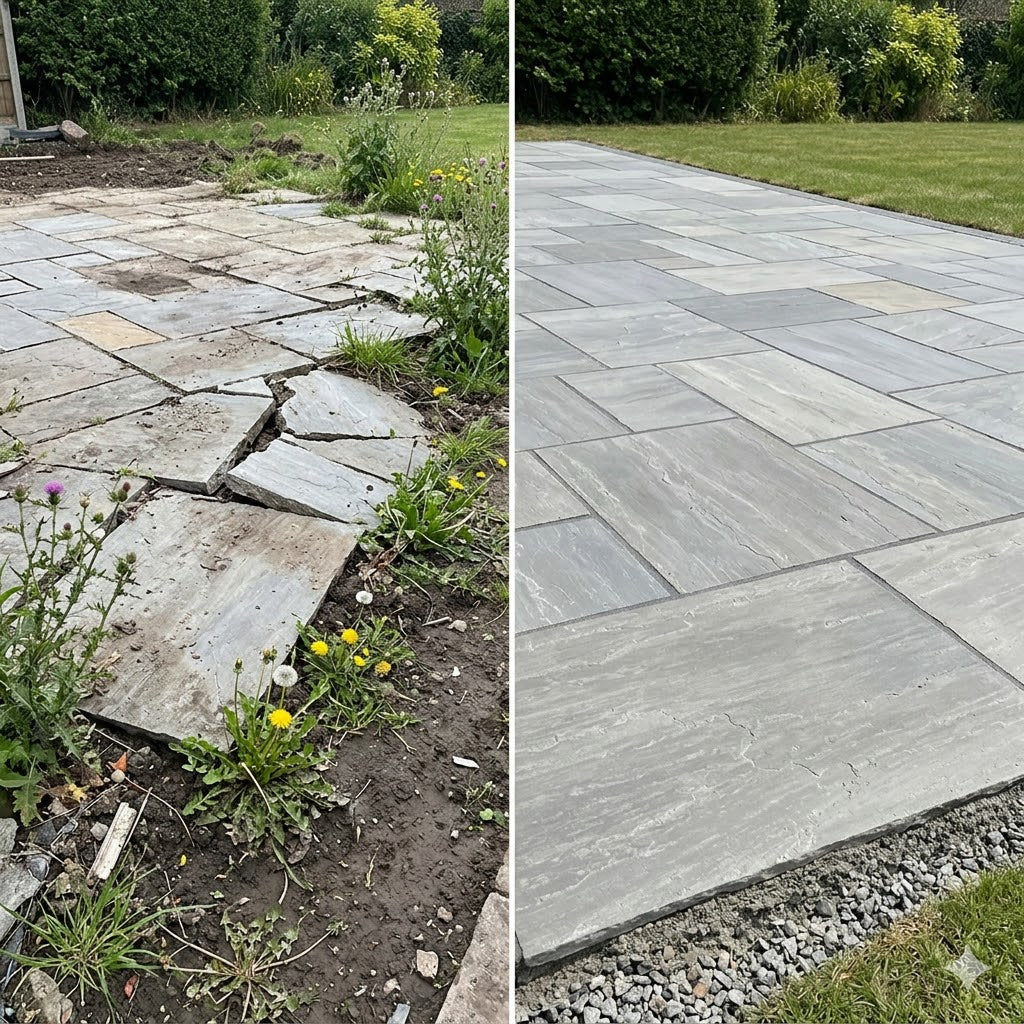
Best materials: Riven sandstone in a patio pack (mixed sizes). The random pattern and natural colour variation suit organic curves far better than uniform porcelain. Porcelain's precise edges fight against curves — sandstone's natural irregularity embraces them.
Design tip: Mark the curve with a garden hose laid on the lawn before committing. Walk it several times and adjust until the route feels natural — forced curves look worse than straight paths.
A full path laid entirely in Silver Grey granite setts (200×100mm) in a stretcher bond or herringbone pattern. Small-format setts follow curves naturally without cutting, handle wheelbarrow loads without cracking, and develop beautiful character with age. The traditional look suits period gardens and cottage properties.
Best for: Utility paths that need to handle heavy use — garden to shed, house to compost area, wheelchair access routes. Granite is the hardest natural stone and virtually indestructible underfoot.
Width: 600-900mm for foot traffic. Setts are small enough to create any width without cutting — just add or remove a row.
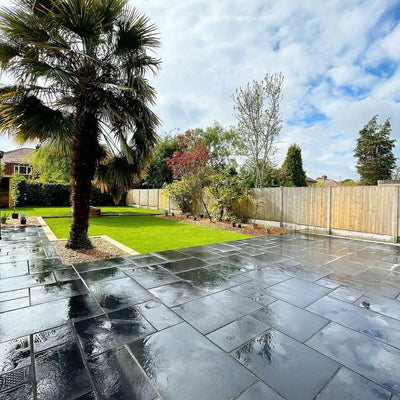
The most practical path: extend your patio material in a single row from the main seating area to wherever you need access — washing line, greenhouse, bin store, garden office. Using the exact same paving slab as your patio creates visual continuity and makes the whole garden feel cohesive rather than a collection of separate surfaces.
Best approach: Order your path slabs at the same time as your patio — same product, same batch, guaranteed colour match. Adding a path later from a different batch risks visible colour variation, especially with porcelain.
Width: One slab wide (600mm or 900mm depending on the format you've used for the patio).
Fossil Mint sandstone is the lightest, brightest natural stone in the range — pale cream with subtle fossil markings. As a path through a shaded garden or under tree canopy, the light colour catches and reflects available light, creating a visible trail through areas where darker stone would disappear. The fossil imprints in the surface add detail that reveals itself at walking pace.
Best for: Shaded gardens, woodland-edge settings, north-facing side passages, paths through mature planting where light is limited.
Porcelain edging planks (900×200mm) laid end-to-end create a narrow, elegant path that feels more refined than standard slabs. The plank proportions (long and narrow) suit linear paths perfectly — each piece spans the full path width, so there are no lengthways joints, only clean crossways lines at regular intervals.
Best for: Contemporary gardens, side passages, transitions between zones. Lay two planks side by side for a 400mm-wide stepping path, or three for a full 600mm walkway.
Colour combination: Anthracite Black planks through a light gravel bed, or Kandla Grey planks alongside a Kandla Grey patio — same family, different format.
Connect different garden zones with a path that transitions between materials — porcelain near the house (stain-proof dining zone), shifting to sandstone as the path moves into the garden (warmer, softer, cooler barefoot). Use a row of setts or a contrasting edging plank as the transition strip between materials. This creates intentional zones rather than an abrupt material change.
Best for: Larger gardens with distinct areas (dining, lounging, play, growing). The material change signals a shift in function without needing walls or hedges.
Read our sandstone vs porcelain comparison for more on mixing materials effectively.
How wide should a garden path be?
600mm — minimum comfortable width for single-file walking. Works for utility paths (to shed, bin store, compost). One 600×600 slab wide.
900mm — the standard garden path width. Comfortable walking, space to carry things past plants without brushing them. One 900×600 slab wide — the most popular format.
1200mm+ — side-by-side walking, wheelchair access, or paths that double as design features. Two 600×600 slabs or one 1200×600 slab wide.
For paths alongside planting, allow an extra 150mm on each side for plants to spill over without blocking the walkway.
How much does a garden path cost?
Paths use less material than patios — most are 5-15m² total:
Stepping stones (5-8 slabs): approximately £25-40 in sandstone, laid into existing lawn. No sub-base needed.
10m path, 900mm wide (9m²): approximately £180-210 in sandstone or £170-190 in porcelain for the slabs. Add £100-150 for mortar, sub-base material, and jointing compound. Total DIY: approximately £280-360.
Granite sett path (9m²): approximately £250-360 in granite setts. More expensive per m² but virtually indestructible and maintenance-free.
All our prices include VAT and free UK delivery — even for smaller orders. For full project costing, use our patio cost calculator.
Browse path paving
Sandstone, porcelain, granite setts, edging planks — all in stock with free UK delivery.
Browse All Paving Order SamplesFrequently asked questions
What is the best material for a garden path?
For most garden paths, riven sandstone offers the best combination of appearance, grip, and value. For zero-maintenance contemporary paths, porcelain is ideal. For heavy-use utility paths, granite setts are virtually indestructible. Match your path material to your main patio for visual continuity.
Do garden paths need a sub-base?
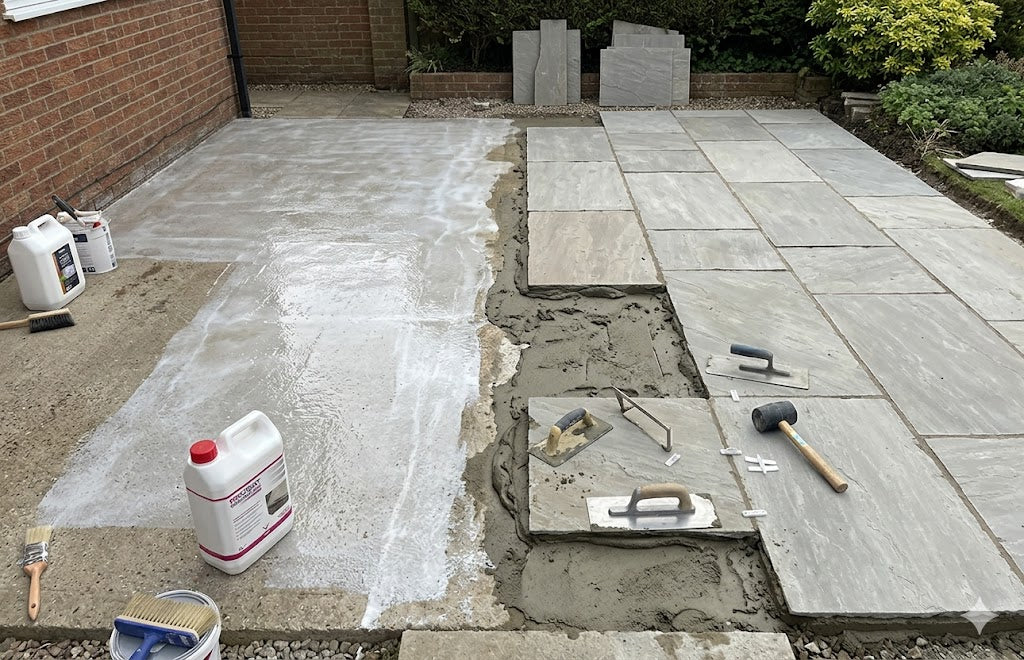
Full-width paths (600mm+ continuous paving) should have a compacted sub-base (100mm MOT Type 1) for stability under regular foot traffic. Individual stepping stones through lawn don't need a sub-base — a mortar pad under each slab is sufficient. Read our sub-base guide.
How wide should a garden path be?
600mm minimum for single-file walking, 900mm for comfortable everyday use, 1200mm+ for side-by-side walking or wheelchair access. The most popular format is one 900×600mm slab wide — practical, cost-effective, and visually proportionate in most gardens.
Can I lay a path without cement?
Stepping stones through lawn can be laid on sharp sand or a thin mortar pad without a full mortar bed. Granite setts and cobbles can be laid on compacted sand and secured with a brush-in jointing compound. Full slab paths should use mortar for long-term stability — sand-bedded slabs move over time under foot traffic.