






Front Garden Paving Ideas: 10 Designs That Add Kerb Appeal
The best front garden paving ideas combine kerb appeal with practicality — a clear path to the front door, space for bins and bikes, easy-access planting, and a surface that looks good year-round without constant maintenance. Popular choices include porcelain paths for modern homes, sandstone sett borders for period properties, mixed-material driveways that avoid the 100% hard-surface planning requirement, and statement entrance paths that frame your front door.
Back gardens get all the attention — the patios, the barbecues, the Instagram photos. Front gardens get forgotten, paved over with concrete, or left as cracked tarmac from the previous owner. But your front garden is the first thing visitors, neighbours, and potential buyers see. Ten minutes of design thinking and the right paving material turns it from an afterthought into a genuine asset. Here are 10 ideas that work.
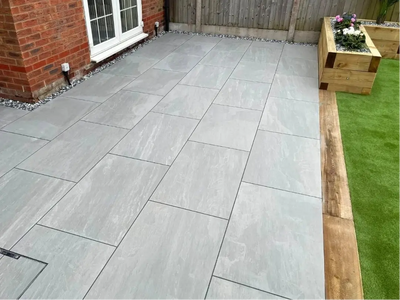
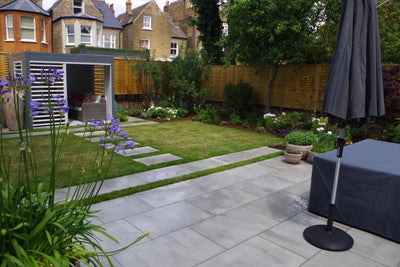
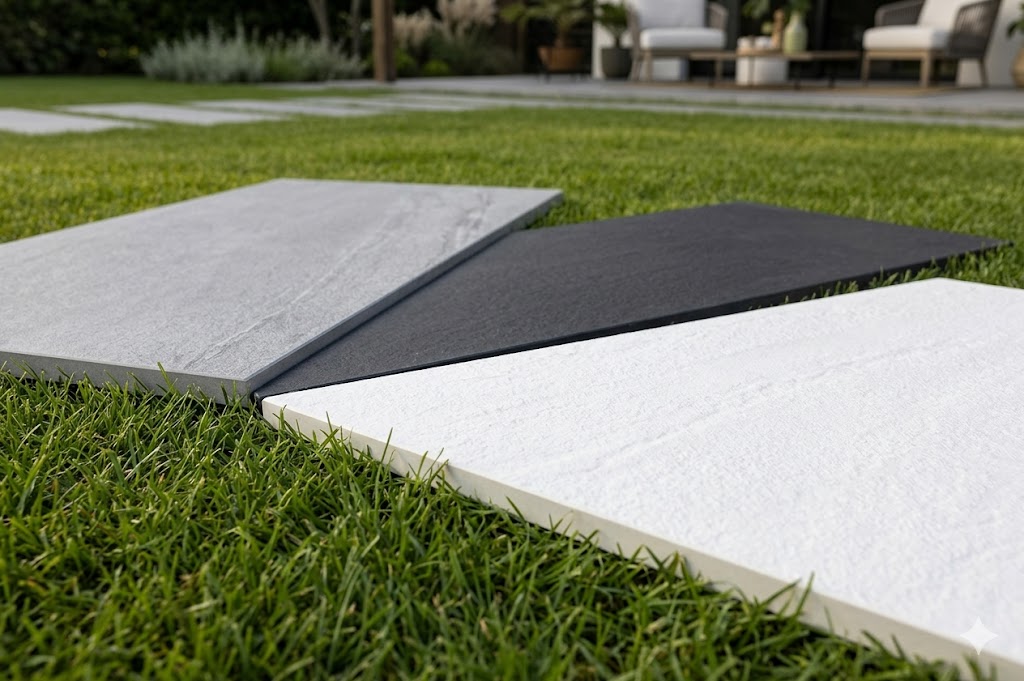
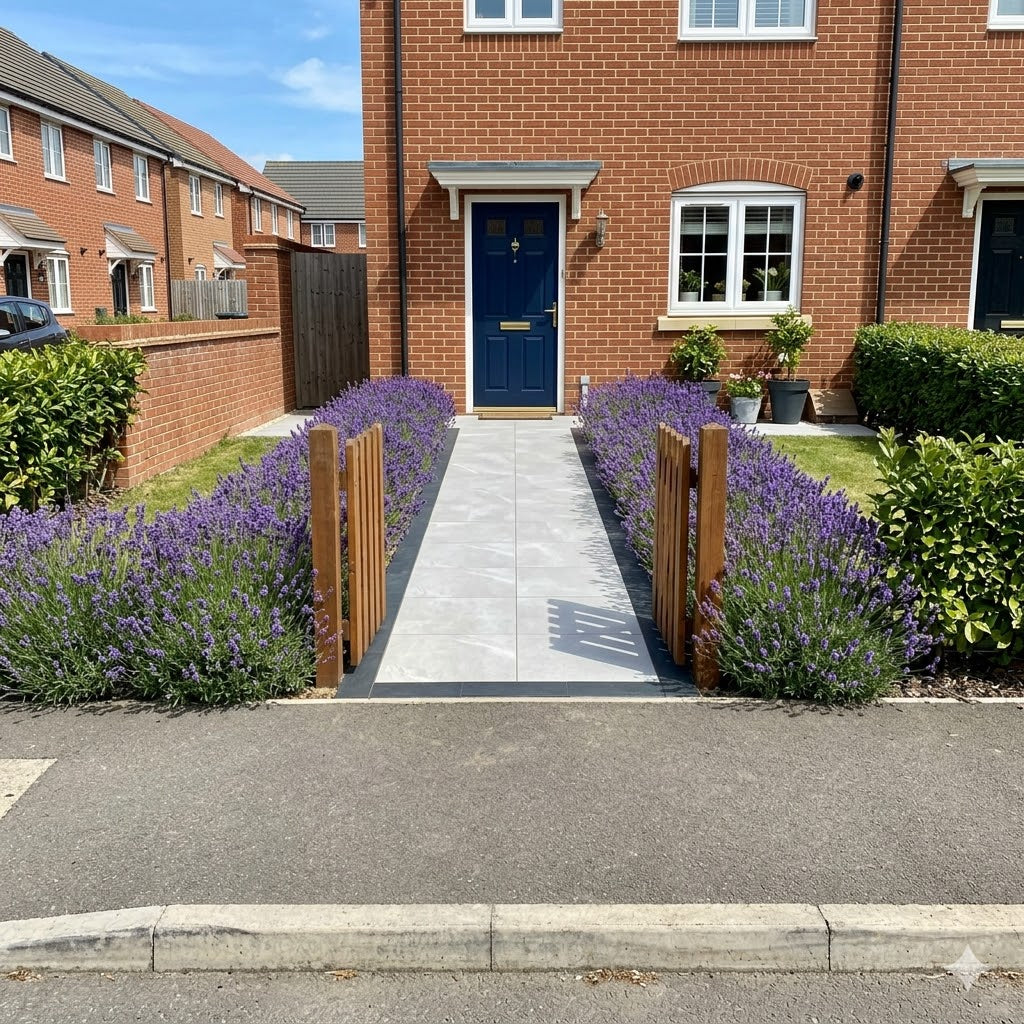
A straight path from the pavement to your front door in a single premium material — Kandla Grey porcelain 900×600mm slabs with 5mm joints and dark pointing. The uniform colour and tight joints create a clean, contemporary runway that draws the eye straight to the entrance. Keep it 900mm-1200mm wide (wide enough for two people side by side) and edge with a single row of Anthracite Black porcelain planks for contrast.
Works with: Modern homes, new builds, rendered facades, dark window frames. The clean lines of porcelain match the precision of contemporary architecture.
Planning note: A path alone doesn't trigger permeable surfacing requirements — only full front garden paving does.
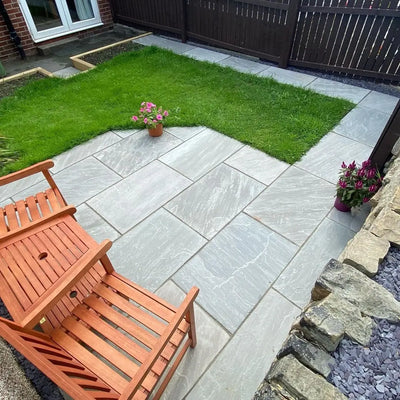
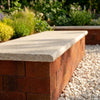
A sandstone slab path with a soldier course of Kandla Grey setts on both sides, flanked by low evergreen planting (lavender, box hedging, or grasses). The sett border creates a defined edge between the paving and the planting, preventing soil from washing onto the path and giving the whole frontage a designed, intentional feel.
Works with: Victorian terraces, Edwardian semis, period properties with original brick detailing. The natural stone and cobble combination suits heritage settings without feeling dated.
Pave the wheel tracks with two strips of granite paving or porcelain slabs, and fill the centre and sides with permeable gravel. This approach looks designed rather than purely functional, reduces the amount of hard surfacing (helping with planning rules — see below), and costs less than paving the entire driveway. The paved strips handle the tyre loads, the gravel handles drainage.
Works with: Any property with a front driveway. Particularly effective on narrow Victorian drives where full-width paving looks cramped.
Planning note: If more than 5m² of your front garden is being paved, you must use permeable materials or drain to a permeable area — mixing paving and gravel satisfies this requirement.
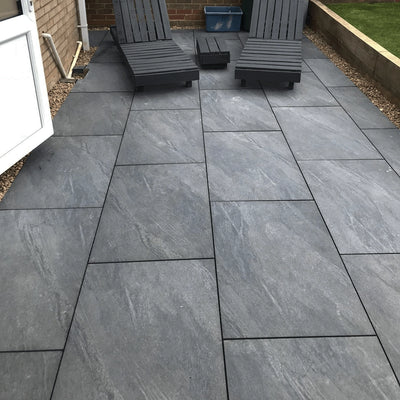
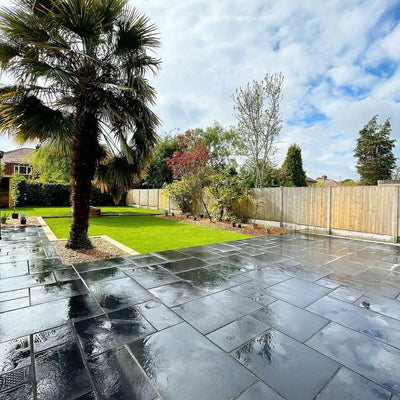
Anthracite Black porcelain against a white or light-grey rendered facade creates maximum contrast and a distinctly contemporary feel. Add architectural planting in oversized pots (olive trees, phormiums, or ornamental grasses) and the front garden becomes a design statement visible from the street. Keep lines clean and symmetrical — this look relies on precision.
Works with: Modern rendered homes, new builds, refurbished Victorian houses with render. Less effective against red brick where the contrast fights rather than complements.
Heat note: Dark porcelain gets very hot in direct sun — less of an issue in a front garden path than a south-facing back patio where you sit barefoot, but worth knowing.
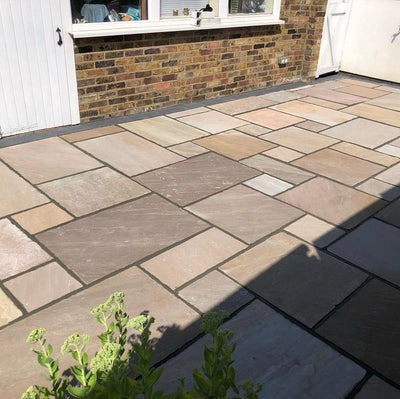
A Rippon Buff or Raj Green sandstone patio pack laid in a random pattern from gate to front door. The mixed sizes and natural colour variation create a path with immediate character — like it's been there for decades. Edge with low planting (cottage perennials, herbs, or creeping thyme between joints) for the full country garden effect.
Works with: Cottages, period farmhouses, stone-built properties, any home where natural warmth suits better than contemporary precision. The golden and green tones of Rippon Buff and Raj Green complement honey-coloured stone walls and aged brick.
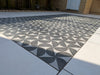
Silver Grey granite setts laid in a herringbone or stretcher bond pattern across the full driveway width. Granite is the hardest natural stone — virtually indestructible under vehicle traffic, non-porous, and maintenance-free. The small-format setts (200×100mm) handle turning forces better than large slabs, and the natural flamed surface provides excellent grip in all weather.
Works with: Any property — granite's neutral silver-grey works with brick, stone, render, and timber facades. The premium look adds genuine value to the property.
Read our complete driveway paving guide for material options and sub-base requirements.
If your front door is raised above pavement level (common in Victorian and Edwardian houses), a pair of paved steps with porcelain bullnose copings on the step fronts transforms a utilitarian concrete step into a design feature. Match the bullnose colour to your path material for a seamless transition from pavement to front door.
Works with: Any raised-entrance property. Bullnose copings are available in multiple colours to match both porcelain and sandstone paths.
Fossil Mint sandstone is the lightest, brightest natural stone in our range — pale cream with subtle fossil markings. In a north-facing or shaded front garden (common in terraced streets where the front gets limited direct sun), Fossil Mint reflects available light and prevents the space feeling dark and enclosed. It also stays the coolest of any sandstone in summer.
Works with: North-facing front gardens, shaded terraced streets, properties with dark brick where a light paving colour lifts the overall feel.
Practical front gardens need space for bins, bikes, and deliveries. Designate a 1.5m × 1m paved bay to one side of the path — bordered with setts or edging planks, and slightly recessed behind planting to screen the bins from the street. The paved surface keeps bins stable (no sinking into mud), looks intentional rather than dumped, and can double as a bike-locking bay.
Works with: Any front garden where bins are visible from the street. Match the bay paving to the path material for visual continuity.
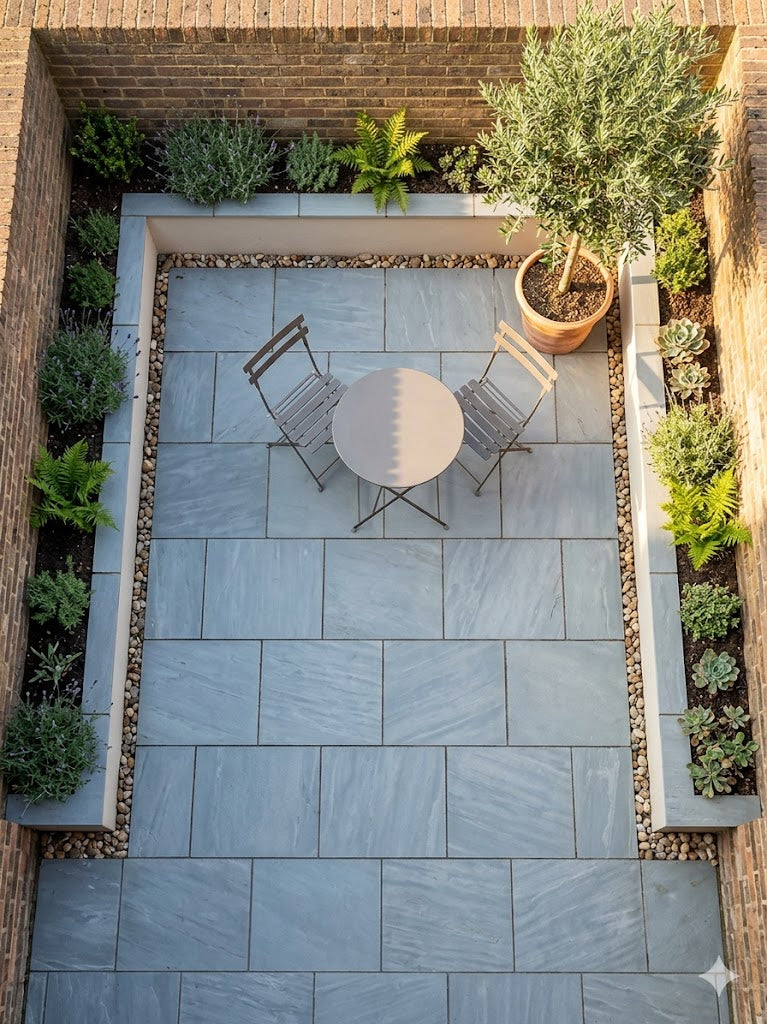
If your front garden is small (under 10m²) and you want to maximise usable space, pave the entire area with Kandla Grey sandstone or Kandla Grey porcelain and use raised planters at the boundaries for greenery. This creates a clean, low-maintenance frontage that doubles as an outdoor seating space on warm evenings — something terraced houses rarely have.
Planning note: Full front garden paving over 5m² requires either permeable paving or drainage to a permeable area (garden bed, soakaway, or rainwater harvesting system). Porcelain on a traditional mortar bed is NOT permeable — you'll need to install drainage channels or direct runoff into a planting bed. Check with your local authority before starting. Failure to comply can result in enforcement action.
Planning permission: what you need to know
The rule: Since 2008, paving over more than 5m² of front garden requires either permeable surfacing or drainage to a permeable area. This applies to all hard surfaces — paving, concrete, tarmac. The aim is to reduce surface water runoff and flooding risk.
What counts as permeable: Gravel, permeable block paving, grass grids. Standard paving slabs on mortar are NOT permeable.
How to comply with non-permeable paving: Direct surface water to a garden bed, soakaway, or rainwater harvesting system. Install a drainage channel at the boundary. Combine paving with gravel or planting beds (idea #3 above).
Paths only: A path to your front door (under 5m²) does not require planning permission regardless of material.
How much does front garden paving cost?
Front gardens are typically smaller than back patios — 5-15m² is common. That makes the material cost modest:
Front path only (5m²): approximately £100-120 in sandstone or £95-110 in porcelain, delivered free.
Full front garden (10-15m²): approximately £200-350 in materials depending on material choice. Add sub-base, mortar, and skip hire for approximately £500-800 total DIY.
Driveway (15-25m²): approximately £400-680 in granite setts or porcelain. Professional installation adds £60-100/m² for labour. See our full cost breakdown.
Browse front garden paving
Sandstone, porcelain, granite setts, edging — all in stock with free UK delivery.
Browse All Paving Order SamplesFrequently asked questions
Do I need planning permission to pave my front garden?
If you're paving more than 5m² of front garden, you must use permeable materials or ensure surface water drains to a permeable area (garden bed, soakaway, or drain). A front path under 5m² does not require planning permission regardless of material. Check with your local authority for specific requirements in your area.
What is the best paving for a front garden path?
Porcelain 900×600mm slabs are the most popular choice for contemporary front paths — zero maintenance, clean lines, and consistent colour. For period properties, riven sandstone in a patio pack or cobblestone border creates traditional character. Both start from under £20/m² delivered.
Can I pave my front garden for parking?
Yes, but driveways need driveway-rated materials — granite setts, porcelain on a heavy sub-base, or sandstone cobbles. Standard sandstone or limestone paving slabs are too thin for vehicle loads. You'll also need to apply for a dropped kerb from your local council. Read our driveway paving guide.
How do I make a small front garden look bigger?
Use large-format slabs (900×600mm or 1200×600mm) — fewer joints make the space feel more expansive. Choose light colours like Fossil Mint sandstone or white porcelain to reflect light. Run slabs lengthways from gate to door to create a sense of depth. Keep planting at the edges and low-growing to avoid closing in the space.