







Driveway Edging Ideas: 8 Ways to Frame Your Driveway Properly
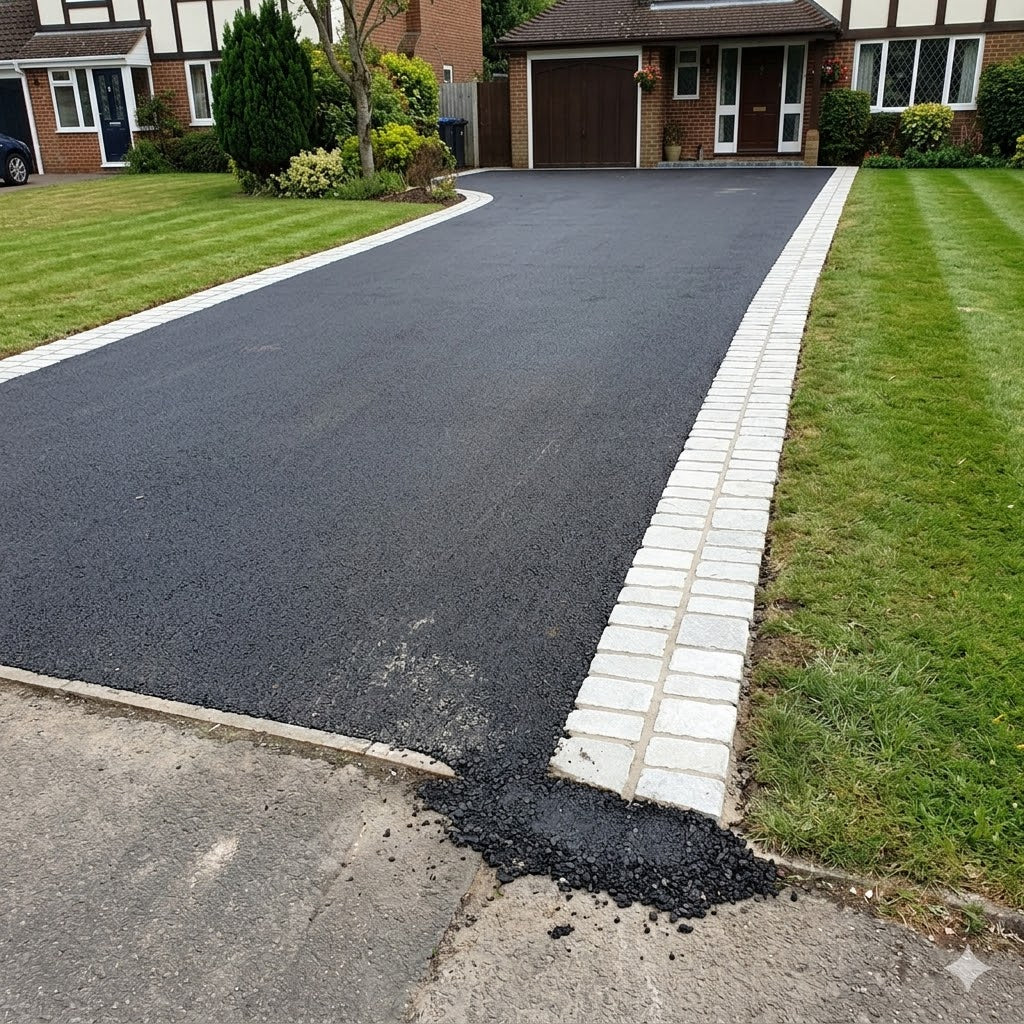
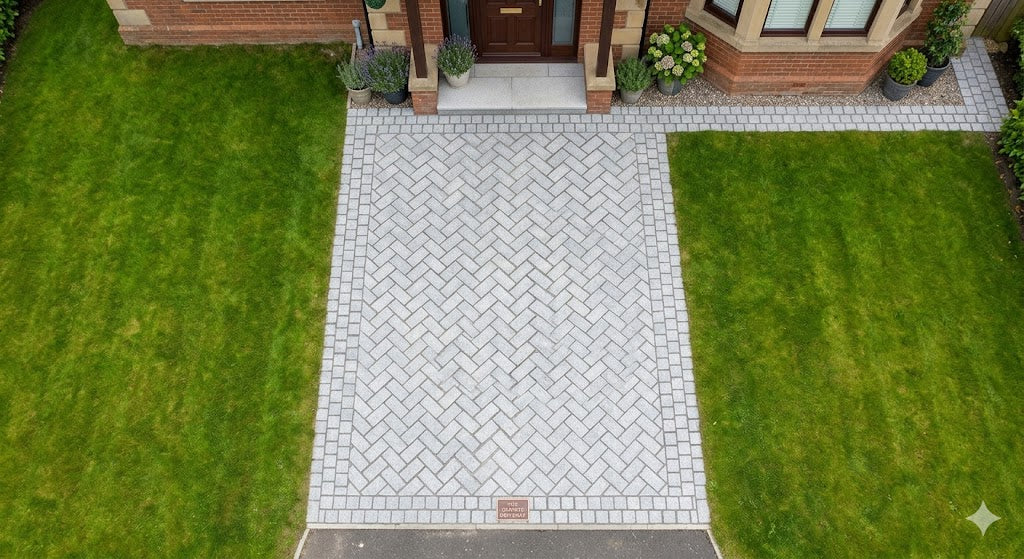
The best driveway edging uses granite or sandstone setts laid as a soldier course (single row on edge) or double border along both sides of the driveway surface. Setts prevent the driveway edge from crumbling, stop gravel migrating onto the road, define the boundary between driveway and garden, and add visible kerb appeal. Sandstone setts start from £40/m², granite from £40-55/m².
Driveway edging is the detail that separates a professionally finished driveway from one that looks DIY. Without it, tarmac crumbles at the edges. Block paving creeps outward. Gravel migrates onto the pavement. And the boundary between driveway and garden becomes a muddy, undefined mess within two years. The right edging fixes all of this permanently — and costs a fraction of the driveway surface itself.
Why driveway edging matters
Edging isn't decorative filler — it serves four structural and practical functions:
1. Prevents edge erosion. The edges of a driveway take the most punishment — turning wheels, foot traffic stepping on and off, rainwater runoff. Without a hard edge, tarmac crumbles, block paving shifts, and gravel spreads. Sett edging creates a rigid border that absorbs these forces.
2. Defines the boundary. A clean line between driveway and garden looks intentional. Without it, the transition zone becomes an untidy strip where grass, gravel, and paving blur together.
3. Retains surface materials. Gravel driveways without edging lose material constantly — gravel migrates onto the road, pavement, and lawn. Sett edging acts as a kerb that keeps the gravel where it belongs.
4. Adds property value. Estate agents consistently note that well-defined, professionally edged driveways improve first impressions and increase perceived property value. It's one of the highest-impact, lowest-cost front garden improvements.
8 driveway edging ideas
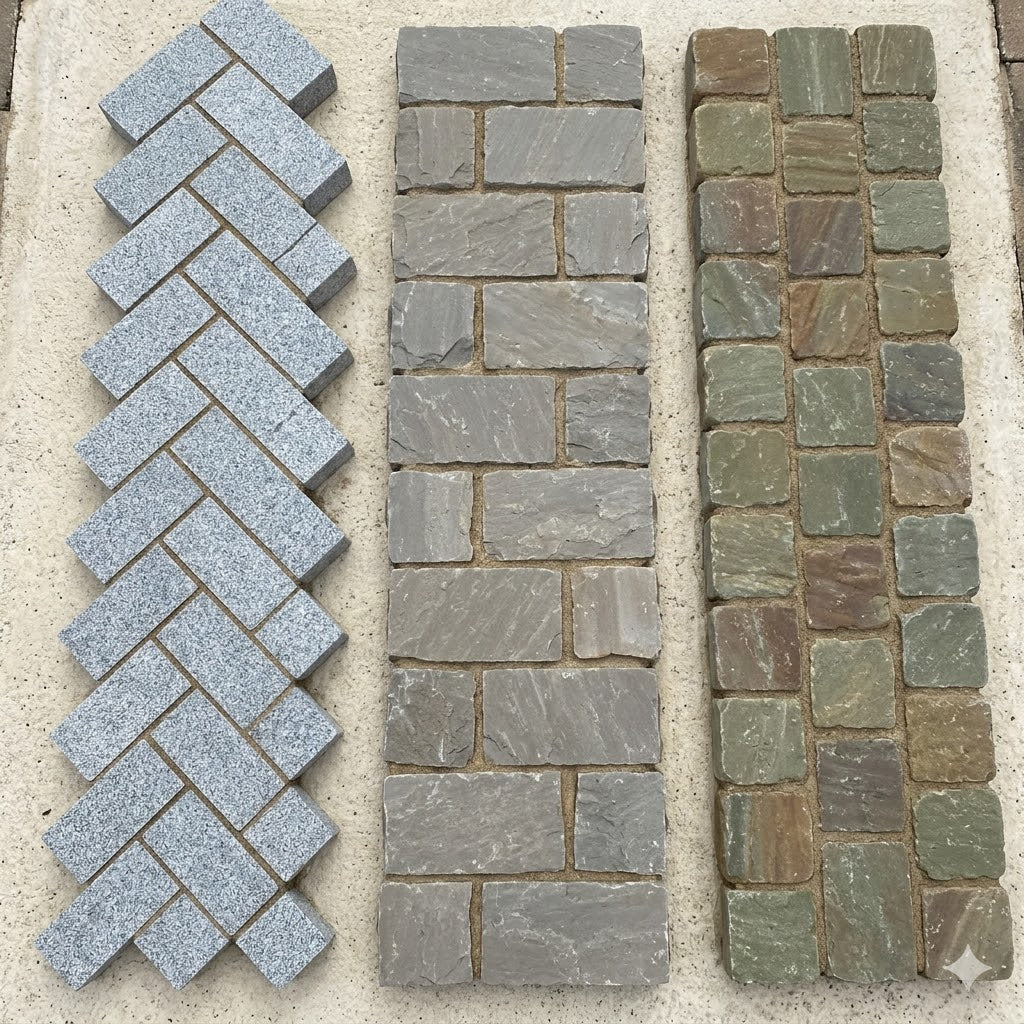
A single row of Silver Grey granite setts (200×100mm) laid on edge along both sides of the driveway. The simplest, most effective driveway edging — clean definition, virtually indestructible, and the neutral grey works with any driveway surface (tarmac, block paving, gravel, or paving slabs).
Cost: approximately £8-11 per linear metre in materials. A 15m driveway needs about 30 linear metres of edging = £240-330 total.
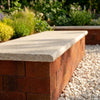
Two rows of setts instead of one — the inner row matching the driveway colour, the outer row contrasting. For example: Kandla Grey sandstone setts inside, granite setts outside. The double width creates a more substantial, premium look and gives the edge greater structural strength at driveway entrance points where vehicles turn.
Cost: approximately £16-22 per linear metre. Double the material but the visual impact is more than double.
If your back patio uses Kandla Grey sandstone, use Kandla Grey sandstone setts to edge your front driveway. Same stone, different format — creates visual continuity between front and back without using the same product. The setts' smaller scale suits the linear driveway application while the colour ties the whole property together.
Available colours: Kandla Grey and Raj Green, handcut or tumbled finish.
A 1m-deep strip of 100×100mm sandstone cobbles across the full driveway width at the entrance, with sett edging running up both sides. The cobbled apron marks the transition from road to private driveway — a visual threshold that signals "this is designed." The texture change also acts as a tactile speed bump, naturally slowing vehicles as they enter.
Best with: gravel driveways where the cobble apron provides a hard surface at the entrance point (no gravel scatter onto the road).
Porcelain edging planks (900×200mm) laid as a contemporary border. The long, narrow format creates a sleek, modern line that suits porcelain or block paving driveways. Anthracite Black planks alongside a grey driveway surface create sharp contrast and definition.
Advantage: zero maintenance — porcelain edging never needs treating, staining, or replacing. The clean edges stay pristine for decades.
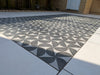
A 2m-deep strip of granite setts laid in herringbone pattern across the driveway entrance, with the rest of the driveway in tarmac or gravel. Concentrates the premium material at the most visible point — the entrance — where it creates maximum impact for minimum cost. The herringbone pattern is the strongest layout for vehicle turning forces.
Cost saving: a full granite sett driveway (25m²) costs £1,000-1,375 in materials. A 2m herringbone entrance strip (5m²) costs £200-275 — 80% less material for 80% of the visual impact.
If your driveway is raised above the adjacent garden or path, porcelain bullnose copings on the exposed edge provide a safe, finished look. The rounded nose prevents chipping, reduces trip hazards, and creates a clean transition between the raised driveway surface and the lower garden level.
Tumbled sandstone setts have softened edges and a weathered appearance that looks like they've been in place for decades. For Victorian, Edwardian, and cottage properties where crisp modern edges would look out of place, tumbled setts provide defined edging with period-appropriate character.
Colour match: Raj Green tumbled setts pair beautifully with red brick Victorian houses. Kandla Grey tumbled suits stone-built or rendered properties.
How much does driveway edging cost?
| Edging type | Cost per linear metre | 15m driveway (30m edging) |
|---|---|---|
| Granite sett single row | £8-11 | £240-330 |
| Sandstone sett single row | £8-10 | £240-300 |
| Double sett border | £16-22 | £480-660 |
| Porcelain plank edging | £10-14 | £300-420 |
| Professional installation (add) | £15-25 | £450-750 |
Driveway edging is one of the most cost-effective kerb appeal upgrades — £240-330 in materials transforms the entire front of your property. All our setts include VAT and free UK delivery.
How to install driveway edging
Driveway edging is a DIY-friendly project — even if the driveway surface itself was professionally installed:
1. Dig a trench along the driveway edge — 150mm wide, 150mm deep (or deep enough to set the sett at the correct finished height).
2. Mix a concrete haunching (4:1 ballast to cement) and fill the base of the trench to 50mm depth.
3. Set each sett into the concrete, butting them tightly together. Check alignment with a string line and level with a rubber mallet.
4. Haunch the back of the setts with concrete (fill behind to half the sett height) to prevent them tilting outward under vehicle pressure.
5. Point the joints with mortar or brush-in jointing compound after 24 hours.
Time: a competent DIYer can edge a 15m driveway (30 linear metres) in a weekend. Read our complete cobbles and setts guide for more installation detail.
Browse driveway edging
Granite setts, sandstone setts, porcelain planks, bullnose copings — see the full driveway paving range, all in stock with free UK delivery.
Sandstone Setts Granite SettsFrequently asked questions
What is the best edging for a driveway?
Granite setts (200×100mm) in a soldier course along both edges. Granite is the hardest natural stone — it handles vehicle tyre contact at driveway edges without cracking, chipping, or wearing. The neutral silver-grey colour works with any driveway surface material. From £40-55/m² delivered.
How much does driveway edging cost?
A single row of granite or sandstone setts costs approximately £8-11 per linear metre in materials. For a typical 15m driveway (30 linear metres of edging on both sides), that's £240-330 total. Professional installation adds £15-25 per linear metre. It's one of the most affordable front garden improvements with the biggest visual impact.
Can I add edging to an existing driveway?
Yes — driveway edging can be retrofitted without disturbing the existing driveway surface. Dig a trench alongside the existing edge, set setts on a concrete bed, haunch behind, and point. A weekend DIY project for most driveways.
Do I need edging on a gravel driveway?
Gravel driveways need edging more than any other type. Without a hard edge, gravel migrates onto the road, pavement, and garden — creating mess and requiring regular raking back. Sett edging acts as a permanent kerb that keeps the gravel contained.
%20or%20double%20border%20along%20both%20sides%20of%20the%20driveway%20surface.%20Setts%20prevent%20the%20driveway%20edg...)