








Cobblestone Driveway Ideas: 8 Designs from Classic to Contemporary
The best cobblestone driveway designs use granite setts (200×100mm) in herringbone or stretcher bond patterns for the main surface, with sandstone setts or cobbles as borders and entrance features. Granite is the strongest natural stone — 50-100+ year lifespan under daily vehicle use. A full granite sett driveway costs approximately £600-1,375 in materials for a single-car drive (15-25m²), with professional installation adding £40-65/m².
A cobblestone driveway makes a statement that tarmac and block paving can't match — every sett is real stone, laid by hand, with natural texture and colour variation that improves with age. European cities have cobblestone streets still in use after 200 years. Your driveway won't see that kind of traffic, which means a properly laid cobblestone drive will outlast the house. Here are 8 designs that range from full cobblestone surfaces to smart feature details that upgrade any existing driveway.
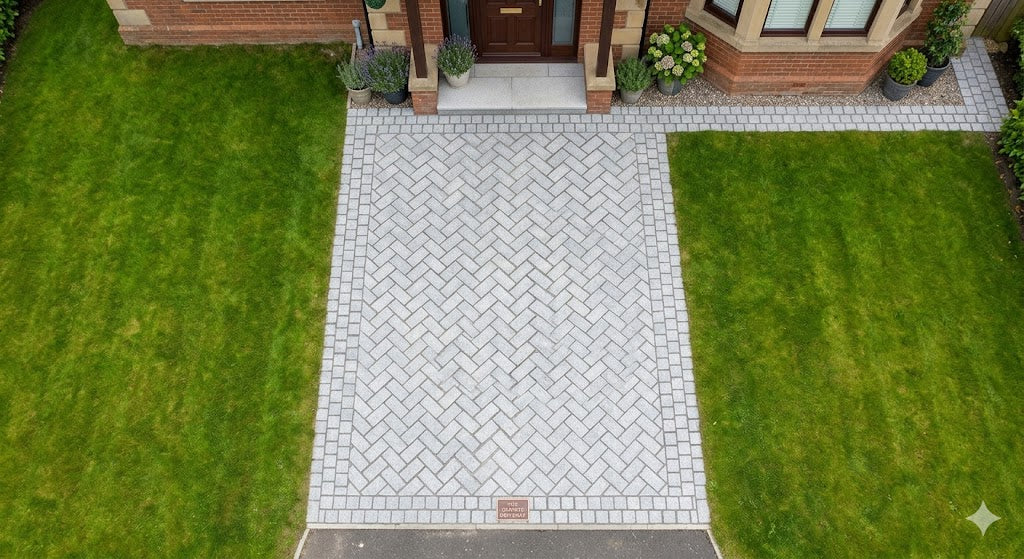
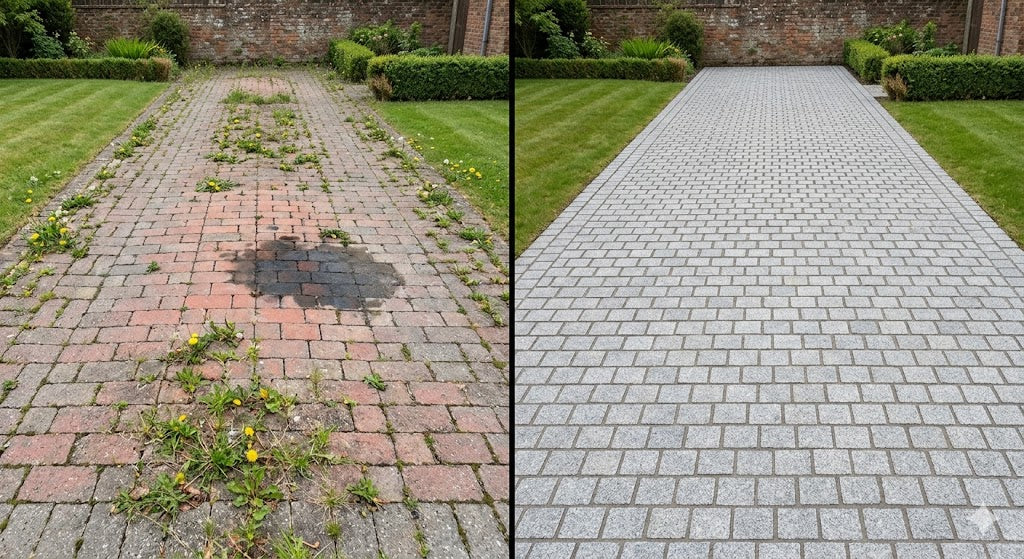
The premium option: Silver Grey granite setts (200×100mm) covering the entire driveway in a 45° herringbone pattern. Herringbone is the strongest sett layout — the interlocking angles resist vehicle turning forces better than any other pattern. The flamed granite surface provides excellent wet grip, and the stone itself is virtually indestructible. This is a 50-100+ year driveway.
Cost (20m²): approximately £800-1,100 in materials + £800-1,300 professional installation.
Works with: any property. The neutral silver-grey complements brick, stone, render, and timber facades equally well.
Two strips of granite or sandstone setts (600mm wide each) running the length of the driveway as wheel tracks, with decorative gravel filling the centre and sides. The sett strips handle the tyre loads, the gravel handles drainage and fills the visual space between. This costs roughly 40% of a full cobblestone driveway and satisfies permeable surfacing planning requirements because the gravel is permeable.
Cost (15m driveway): approximately £360-500 in setts (9m² of sett strips) + £100-150 in gravel and membrane.
Works with: narrow Victorian drives where full-width cobblestones would look dense and heavy. The gravel lightens the visual weight.
Raj Green sandstone setts (200×100mm, tumbled finish) laid in stretcher bond across the full driveway. The warm green-brown tones with rust accents suit period cottages, farmhouses, and properties with red brick where granite's cool grey would feel too modern. The tumbled edges give an aged, established appearance from day one.
Cost (20m²): approximately £800-810 in materials.
Note: sandstone setts are suitable for domestic driveways with occasional car use. For daily heavy use or commercial traffic, granite is the stronger choice.
A 1.5-2m deep strip of 100×100mm sandstone cobbles across the full driveway width at the entrance, with the rest of the driveway in a different material (tarmac, gravel, or block paving). The cobbled apron creates a premium first impression — the most visible part of any driveway is where it meets the road. The texture change also naturally slows vehicles as they enter.
Cost (5m² apron): approximately £216 in materials. Maximum visual impact for minimum spend — 80% of the kerb appeal for 20% of a full cobblestone driveway cost.
Two materials, one colour family: Silver Grey granite setts for the main driving surface (strongest, handles the tyre loads), with Kandla Grey sandstone setts as a double-row border on both sides. The grey tones are close enough to feel unified, but the texture difference between flamed granite and riven sandstone adds visual depth.
Why two materials: granite where the vehicles go (strongest), sandstone where only feet go (warmer, more character). Smart material allocation — strength where it matters, beauty everywhere.
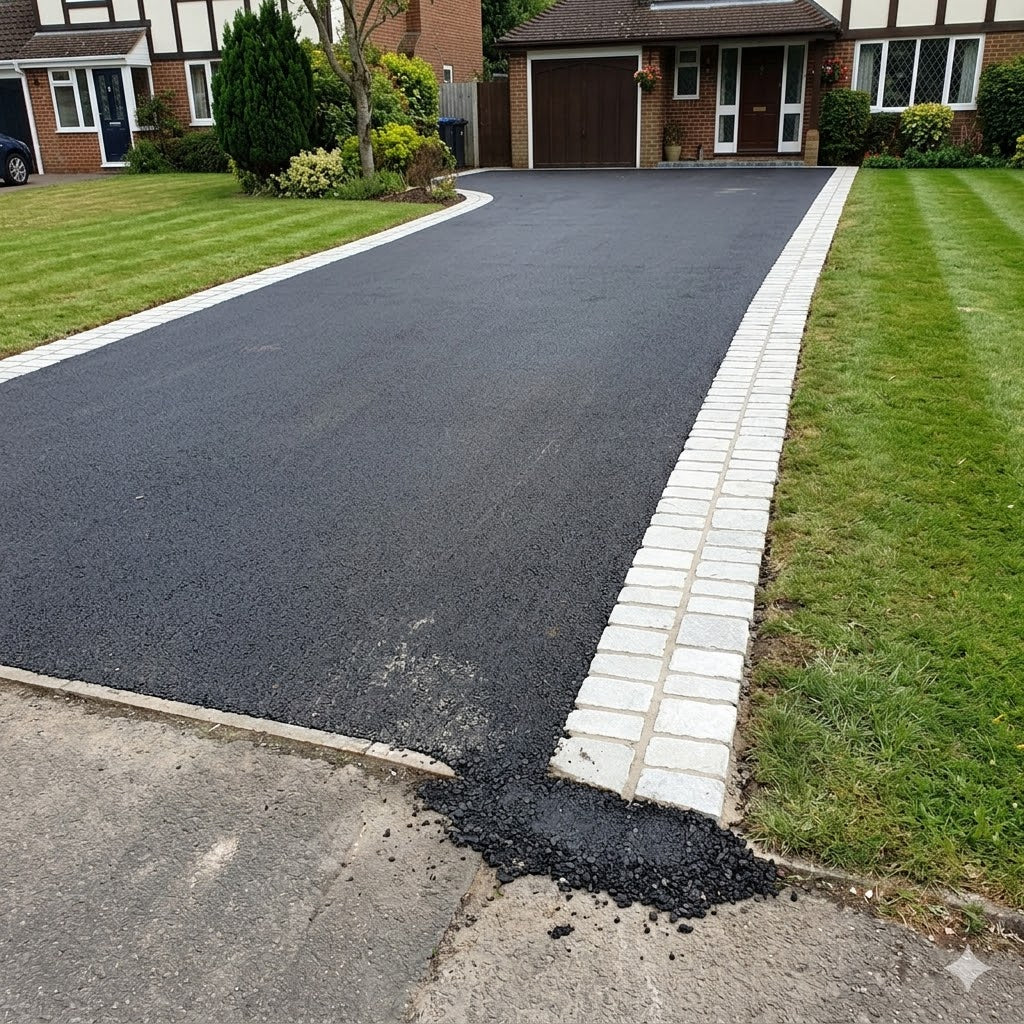
Main surface in Kandla Grey setts laid in stretcher bond (staggered brickwork pattern), bordered by a single soldier course of the same setts laid perpendicular to the main pattern. The soldier course creates a clean frame around the driveway without introducing a second material or colour. Simple, elegant, and the easiest pattern to lay for DIYers.
Best for: first-time DIY projects. Stretcher bond is the most forgiving pattern — no complex angle cuts, and minor alignment errors are less visible than in herringbone.
A circular cobblestone feature at the widest point of the driveway — typically where the car parks or where the drive widens near the front door. Use 100×100mm sandstone cobbles in a radial pattern (fanning outward from the centre like a compass rose), surrounded by setts or a different surface. The circle becomes the focal point of the front garden.
Works with: wider driveways (4m+ wide) where there's space for the circle without it dominating the surface. Particularly effective on double-width drives or turning circles.
The contemporary version: 20mm porcelain paving for the main driveway surface (clean, modern, zero maintenance), with a strip of granite or sandstone cobbles marking the entrance threshold and the parking area. The material change signals transitions — road to driveway, driving zone to parking zone — while the porcelain provides the low-maintenance surface most homeowners want.
Note: porcelain on driveways requires a minimum 200mm compacted sub-base with full mortar bed and SBR priming. Read our driveway paving guide for the full specification.
Cobblestone driveway cost guide
| Design | Materials (20m²) | Professional install | Total |
|---|---|---|---|
| Full granite herringbone | £800-1,100 | £800-1,300 | £1,600-2,400 |
| Full sandstone stretcher bond | £800-810 | £700-1,000 | £1,500-1,810 |
| Wheel tracks through gravel | £460-650 | £400-600 | £860-1,250 |
| Entrance apron only (5m²) | £200-275 | £200-325 | £400-600 |
All material prices include VAT and free UK delivery. For full project costs, use our cost calculator.
Planning permission for cobblestone driveways
If you're paving more than 5m² of front garden for a driveway, you must either use permeable materials or ensure surface water drains to a permeable area. Cobblestones on a mortar bed are NOT permeable — water runs off the surface. To comply: direct runoff to a garden bed, soakaway, or drainage channel, or combine cobblestones with gravel strips (idea #2 above) so the gravel provides the permeable element. A dropped kerb application to your local council is also required if you're creating a new vehicle crossover. Read our front garden planning guide for more detail.
How long does a cobblestone driveway last?
Granite setts: 50-100+ years. Victorian granite cobblestone streets are still in daily use. For a domestic driveway with one or two cars, granite setts will outlast the house.
Sandstone setts: 20-40 years depending on traffic volume and maintenance. Sandstone is softer than granite and will show wear in high-traffic turning points over decades. For driveways with daily heavy use, granite is the longer-lasting choice.
Read our full patio and driveway lifespan guide.
Browse driveway cobbles and setts
See the full driveway paving range, or go straight to granite and sandstone — all in stock with free UK delivery.
Browse Granite Setts Browse Sandstone SettsFrequently asked questions
Are cobblestone driveways good?
Cobblestone driveways are excellent — they handle vehicle traffic for decades, add significant kerb appeal, and require virtually no maintenance (particularly granite). The trade-off is cost: a cobblestone driveway costs more than tarmac or block paving, but lasts 3-5x longer. Over 30 years, cobblestones are often the better value because they never need replacing.
How much does a cobblestone driveway cost UK?
A full granite sett driveway (20m²) costs approximately £1,600-2,400 including materials and professional installation. A cobblestone entrance apron (5m²) costs approximately £400-600. Wheel tracks through gravel costs approximately £860-1,250. Materials start from £40/m² delivered free.
Which is better for a driveway — granite or sandstone cobbles?
Granite is harder and longer-lasting (50-100+ years vs 20-40 years for sandstone). For daily-use driveways, granite is the stronger choice. For occasional-use driveways or decorative features, sandstone offers warmer colour and more character. Read our full comparison.
Can I lay a cobblestone driveway myself?
Stretcher bond patterns are DIY-friendly for competent homeowners. Herringbone requires more skill and cutting. The most critical element is the sub-base — driveways need minimum 200mm compacted MOT Type 1 (250mm on clay soil). If you're confident with the sub-base, laying setts is methodical work rather than highly skilled work. Read our installation guide.
%20in%20herringbone%20or%20stretcher%20bond%20patterns%20for%20the%20main%20surface,%20with%20sandstone%20setts%20or%20cobbles%20as%20borders%20and%20entrance%20feat...)