







The Entertaining Patio: How to Build an Outdoor Space That Handles Everything You Throw at It
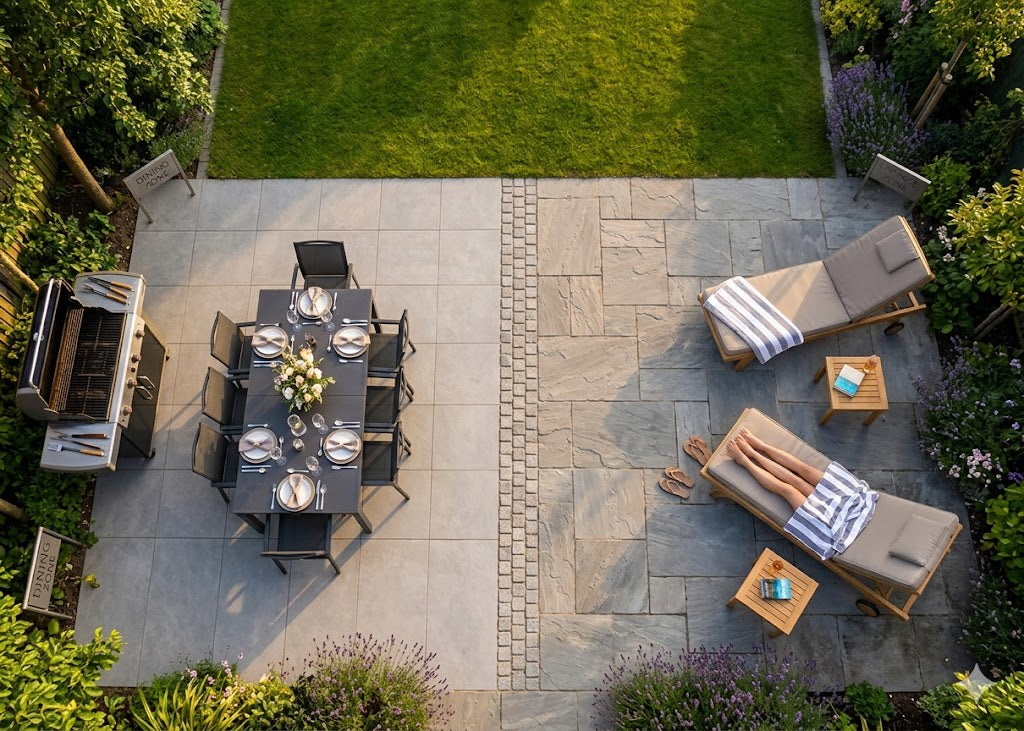
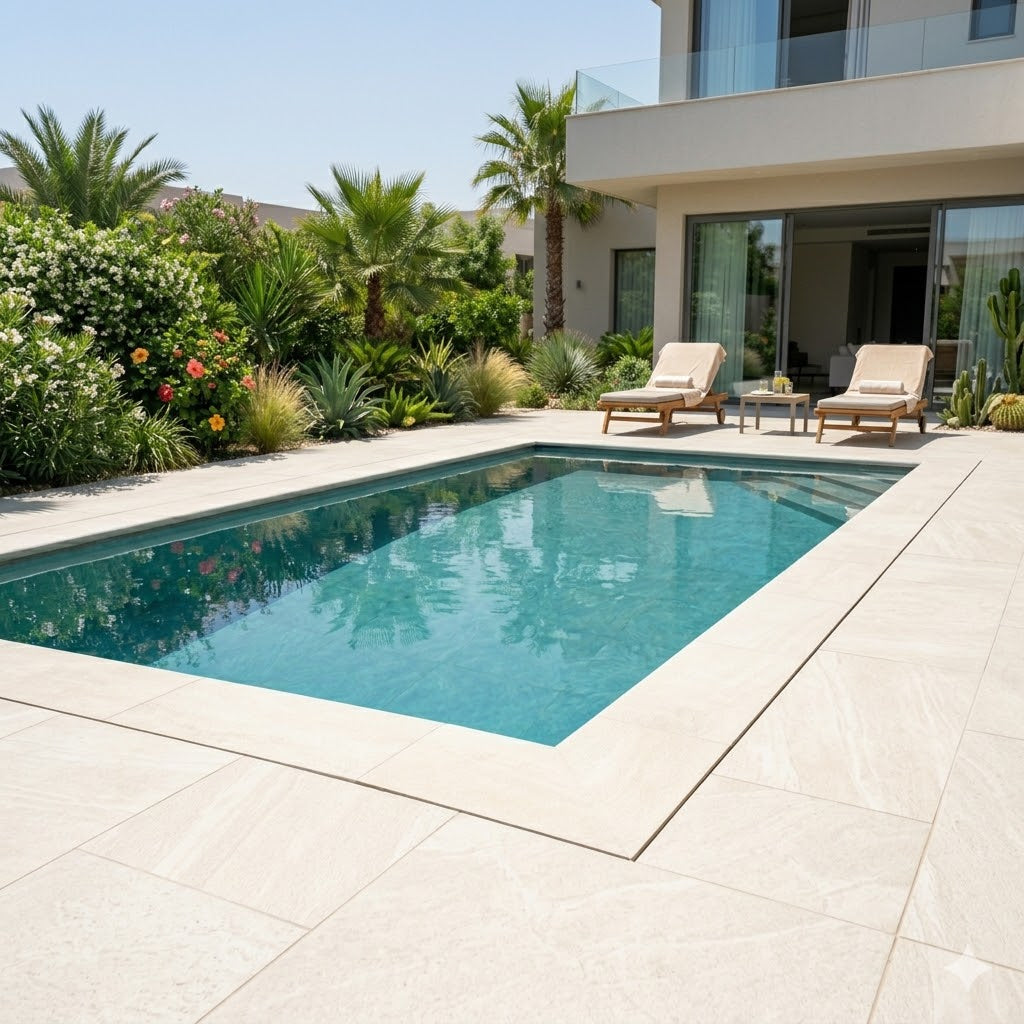
The smartest entertaining patio uses two materials in two zones: porcelain near the house for cooking and dining (stain-proof, wipe-clean, handles every spill), and sandstone further out for lounging and barefoot relaxation (cooler in summer, warmer underfoot, natural character). One colour family — Kandla Grey — in both materials creates visual unity while each surface does what it does best. This dual-zone concept costs less than you'd think when you buy both materials at direct import prices.
The problem with single-material patios
Every paving supplier tells you to choose ONE material for your whole patio. Porcelain or sandstone. Modern or traditional. Stain-proof or characterful.
But your patio isn't one thing. It's a kitchen. It's a dining room. It's a lounge. It's a cinema. It's a children's play area. It's a barefoot sun-trap. Asking one material to do all of that is like asking one room in your house to be the kitchen, living room, and bedroom.
Inside your house, you use tiles in the kitchen (stain-proof), carpet in the living room (warm, soft), and hard flooring in the hallway (durable). Nobody questions that. Your garden deserves the same logic.
Why most suppliers can't suggest this: Premium brands selling only porcelain will tell you porcelain is perfect everywhere. Sandstone-only suppliers will recommend sandstone for everything. We import and sell both — at direct import prices — which means we can honestly tell you where each material wins and where it doesn't. The two-zone patio isn't just a design concept. It's a product of being a supplier with no reason to push one material over the other.
The two-zone patio
Zone 1 and Zone 2. Two materials. One colour. One patio that works harder than anything built from a single surface.
Zone 1: The kitchen and dining zone — porcelain
This is the 3-4 metre strip closest to your back door. The area where you cook, eat, serve drinks, and inevitably spill things. The surface that needs to handle:
BBQ grease. Rendered fat from burgers, marinade drips, charcoal dust. On sandstone, cooking grease soaks into the porous surface and leaves permanent dark marks. On porcelain, it sits on top of the non-porous surface and wipes off with a damp cloth. Every time. Without scrubbing, chemicals, or swearing.
Red wine. The classic patio stain. One knocked glass on unsealed sandstone and you have a purple mark that no amount of cleaning fully removes. On porcelain, red wine pools on the surface like water on glass. Wipe it up within an hour and there's zero trace. We've tested this at our own yard — deliberately — because customers ask.
Food spills. Curry sauce, ketchup, olive oil, coffee, cola. Your dining patio sees every substance your kitchen does, but without the advantage of indoor flooring that's designed to be mopped. Porcelain gives you that indoor-grade stain resistance in an outdoor setting.
Furniture marks. Metal chair legs, dragged tables, heavy planters being repositioned. Porcelain's glazed surface resists scratching from garden furniture. Softer sandstone and limestone can scratch under heavy metal furniture without protective caps.
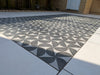
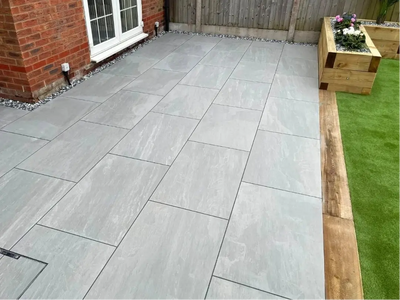
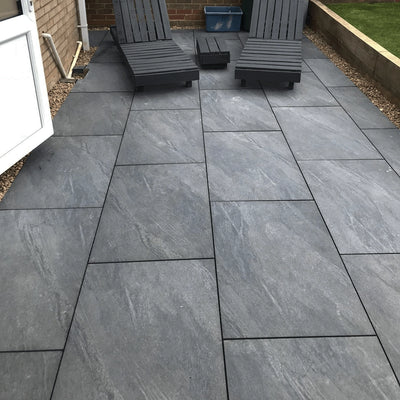
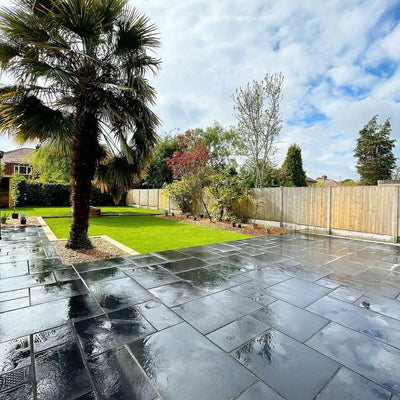
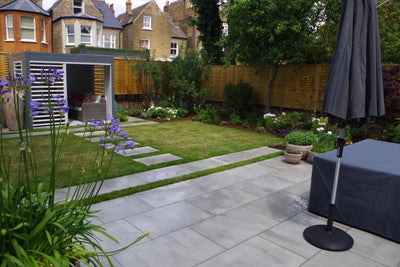
Kandla Grey porcelain 900×600 in the dining zone. Stain-proof, frost-proof, R11 anti-slip rated. Point with Ultrascape Porcelpoint (flowable porcelain grout, £50/tub). Zero maintenance — ever. The dining zone handles the mess, the cleaning takes 30 seconds.
Zone 2: The lounging and living zone — sandstone
This is the area beyond the dining zone — the sun-facing section where you sit, read, sunbathe, and walk barefoot. The surface that needs to deliver:
Barefoot comfort. This is sandstone's superpower and porcelain's weakness. In direct summer sun, riven sandstone stays at 35-40°C — warm but comfortable barefoot. Dark porcelain hits 48-55°C — uncomfortable and sometimes unsafe. If you have children who play barefoot, or you lounge without shoes, the material underfoot matters. Read our full heat comparison.
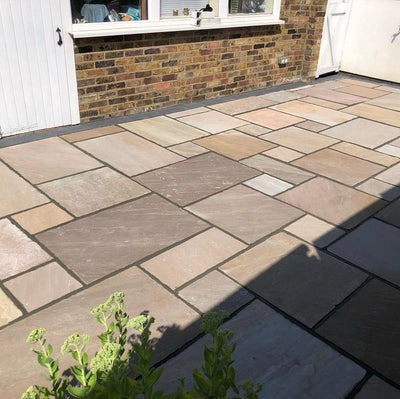
Natural character. The lounging zone is where you relax and look at your garden. Natural sandstone with its unique colour variation, fossil marks, and geological personality creates a surface that rewards a slower pace. Every slab tells a 150-million-year story. Porcelain — beautiful as it is — doesn't have that depth.
Visual warmth. The area where you sit for hours should feel warm and inviting. Sandstone's organic tones — whether Kandla Grey's subtle silvers or Raj Green's earthy greens — create that warmth naturally. The lounging zone should feel like resting in nature, not standing in a showroom.
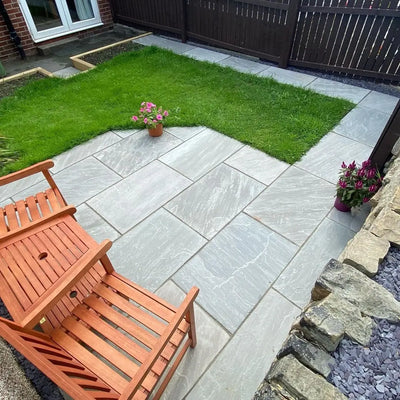
Kandla Grey sandstone 900×600 riven in the lounging zone. Naturally slip-resistant, stays cool barefoot, unique natural character. Point with Ultrascape Flowpoint (brush-in jointing compound, £55/tub). Annual clean and optional sealing keeps it at its best.
The transition strip
Where Zone 1 meets Zone 2, you need a visual signal that the material is changing. Without it, the join looks like a mistake rather than a design choice.
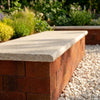
The best transition: a single row of Kandla Grey sandstone setts (200×100mm) laid as a soldier course between the porcelain and sandstone zones. The sett strip reads as a decorative border — like a threshold between two rooms. Same Kandla Grey colour family, third format (slab, sett, slab). The material change becomes intentional and elegant.
Alternative: a row of Anthracite Black porcelain edging planks between the zones — darker colour creates a bold dividing line that defines each zone clearly.
Read our 10 edging ideas for more transition options.
Why this costs less than you think
The two-zone concept sounds expensive — two materials instead of one. But when both materials come from a direct importer at direct import prices, the total is less than a single-material patio from a premium brand:
| Approach | Material cost (25m²) |
|---|---|
| Premium brand porcelain (full patio) | 25m² × £38/m² = £950 |
| Premium brand sandstone (full patio) | 25m² × £30/m² = £750 |
| Universal Paving two-zone patio | 10m² porcelain (£211) + 15m² sandstone (£324) + sett strip (£40) = £575 |
Two materials, two zones, a designed transition strip — for £375 less than a single-material premium brand patio. That's what direct import pricing makes possible. The saving isn't a compromise. It's a smarter design built on a shorter supply chain.
Read our guide to porcelain brand pricing to understand why direct import prices are 40-60% lower for the same specification.
Setting up for outdoor entertaining
The cooking station
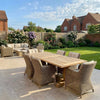
Position your BBQ or outdoor kitchen on the porcelain zone, within 3 metres of the back door. Run electrical conduits under the paving during installation for future outdoor sockets, lighting, and speaker connections — retrofitting is expensive and destructive. The porcelain surface handles grease splatter, charcoal marks, and dropped food without staining.
The dining table
Also on porcelain. Food and drink spills are inevitable at an outdoor dining table. Porcelain handles them all. Position the table where it catches evening sun — most entertaining happens from late afternoon onward.
The lounging area
On sandstone, beyond the dining zone. Sun loungers, outdoor sofas, beanbags, floor cushions. This is where barefoot comfort matters and food spill risk is low. The natural stone surface stays warm underfoot in the evening as it releases the heat it absorbed during the day — a natural radiant heater as the sun goes down.
The viewing area
For outdoor cinema or World Cup screening: a projector on the house wall or a weatherproof TV on a stand. Position viewing seating on the sandstone zone (comfortable, cool, relaxed) with drinks and snacks on a side table on the porcelain border (spill-safe). The best of both zones working together.
The stain-proof guarantee in practice
We sell porcelain because of what it does, not what it looks like. Here's what we've tested on our own porcelain stock at the warehouse:
| Substance | On porcelain | On unsealed sandstone |
|---|---|---|
| Red wine | Wipes off completely | Permanent purple stain |
| BBQ grease | Wipes off with soapy water | Dark oil mark, permanent |
| Curry sauce | Wipes off completely | Yellow-orange stain |
| Coffee | Wipes off completely | Light brown mark if left overnight |
| Beer | Wipes off, no residue | Minimal marking (light colour) |
| Rust from metal furniture | Wipes off with cleaner | Orange ring stain, permanent |
This is why the cooking and dining zone needs porcelain. Not because sandstone is bad — but because putting it where food and drink live is asking it to do something it wasn't designed for.
Build it this weekend
A 25m² two-zone patio costs approximately:
DIY: £575 materials + £350 sub-base/sundries + £250 skip = approximately £1,175 all-in
Professional: £575 materials + £1,500-1,750 labour = approximately £2,075-2,325 all-in
For exact figures based on your dimensions, use our patio cost calculator.
Build your two-zone patio
Porcelain for the kitchen zone. Sandstone for the living zone. Setts for the transition. All from one supplier, one delivery, one price — no middlemen.
Browse Porcelain (Zone 1) Browse Sandstone (Zone 2)Frequently asked questions
What is the best paving for a BBQ area?
Porcelain paving — the non-porous surface makes it completely stain-proof against BBQ grease, food spills, and cooking splatters. Everything wipes off with a damp cloth. Sandstone absorbs cooking grease permanently unless sealed, making it a poor choice directly around a barbecue.
Can you mix porcelain and sandstone on the same patio?
Yes — and it's an increasingly popular design approach. Use porcelain near the house for cooking and dining (stain-proof), and sandstone further out for lounging (cooler barefoot, natural character). Use setts or edging planks as a transition strip between the two zones. Choosing the same colour family (Kandla Grey) in both materials creates visual unity despite the material change.
Does porcelain stain from food?
No. Porcelain's non-porous surface (water absorption below 0.5%) means no substance can penetrate the slab. Red wine, cooking oil, curry sauce, coffee, beer — all sit on the surface and wipe off with a cloth. We've tested this on our own stock. Read our porcelain pros and cons for the full performance profile.
Is sandstone OK for a dining area?
Sealed sandstone is acceptable for light dining use. But for regular barbecue cooking, outdoor dinner parties, and areas where food and drink spills are frequent, porcelain is the significantly better choice. Sealing reduces sandstone's stain absorption but doesn't eliminate it. Porcelain eliminates it entirely.
How much does a two-zone patio cost?
A 25m² two-zone patio (10m² porcelain + 15m² sandstone + sett transition) costs approximately £575 in paving materials at direct import prices — less than a single-material patio from a premium brand. Total DIY cost including sub-base and sundries: approximately £1,175. Professionally installed: approximately £2,075-2,325. Use our calculator for exact figures.

,%20and%20sandstone%20further%20out%20for%20l...)