






Raj Green Paving: Britain's Favourite Character Stone
Raj Green is a multi-tonal Indian sandstone with warm green, brown, grey, and purple-rust accents. It's the UK's second most popular sandstone colour after Kandla Grey — chosen for its natural warmth, dramatic colour variation, and ability to hide everyday dirt within its organic palette. Available in riven and sawn finishes, 900×600, 600×600, patio packs, and setts. Suits cottage gardens, period properties, red brick houses, and any garden where natural character matters more than uniformity.
If Kandla Grey is the safe choice, Raj Green is the expressive one. No two slabs look the same — some lean mossy green, others warm brown, others show flashes of purple and rust. Laid across a 20m² patio, the effect is a surface with genuine geological depth that changes character in different light and weather. It's the stone that garden designers reach for when they want personality rather than precision.
What does Raj Green actually look like?
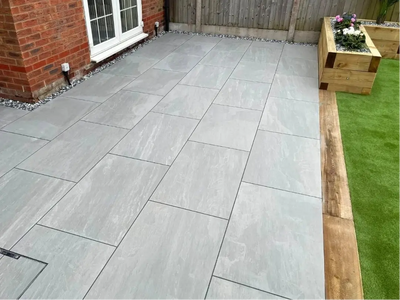
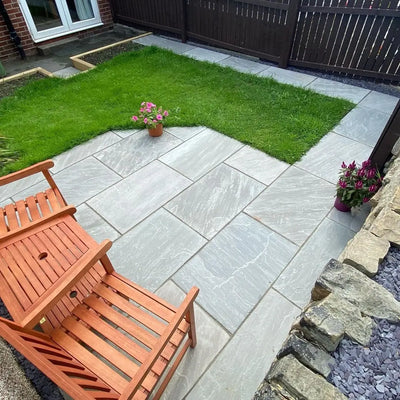
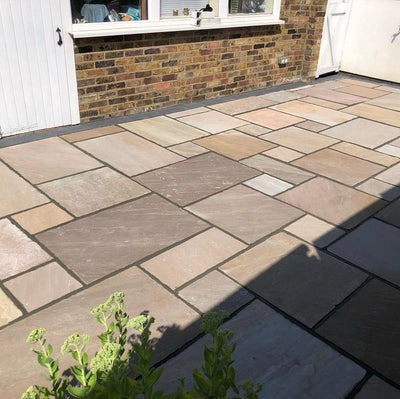
The name is misleading — Raj Green isn't predominantly green. It's a multi-tonal blend where greens, browns, greys, and purples appear across different slabs in unpredictable combinations:
Green tones: soft mossy greens and sage — the signature colour that gives the stone its name. More prominent in some slabs, subtle in others.
Brown tones: warm earthy browns ranging from light tan to rich chocolate. Often the dominant tone across larger areas of the patio.
Grey tones: cool charcoal grey appearing in veins and patches. Adds depth and prevents the warmer tones from becoming overwhelming.
Purple-rust accents: flashes of plum, burgundy, and rust-orange that appear in individual slabs. These accents are what make Raj Green distinctive — no other sandstone colour has this warm undertone.
The balance between these tones varies slab to slab and batch to batch. A patio pack creates the most diverse colour range because the mixed sizes come from different positions in the quarry bed. We always recommend ordering a sample — and ideally leaving it outside for a few days to see how the colour changes in sun, shade, wet, and dry.
Wet vs dry — the transformation
Raj Green has one of the most dramatic wet-dry transformations of any sandstone:
Dry: muted, soft tones. The greens and browns are subtle and gentle. The overall impression is warm and understated — pleasant but not dramatic.
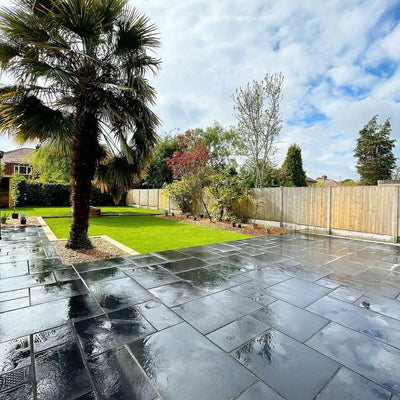
Wet: the colours intensify significantly. Greens deepen to rich emerald, browns darken to chocolate, and the purple-rust accents become vivid. After rain, a Raj Green patio looks like a completely different surface — richer, deeper, more dramatic. Many homeowners say they prefer their Raj Green patio in the rain.
Sealed (colour-enhancing): a colour-enhancing sealer brings out the "wet look" permanently — the deep, saturated tones locked in even when the surface is dry. A clear impregnating sealer preserves the natural dry appearance. Read our sealing guide for the difference.
Riven vs sawn Raj Green
| Feature | Riven (textured) | Sawn & Honed (smooth) |
|---|---|---|
| Surface | Naturally split, irregular texture | Diamond-cut, smooth, tactile |
| Edges | Hand-cut, slightly irregular | Precision sawn, straight |
| Joint width | 8-12mm | 5-8mm |
| Colour intensity | Slightly muted by texture | Richer — smooth surface shows colour more vividly |
| Slip resistance | Excellent — naturally non-slip | Moderate — smoother surface |
| Best for | Traditional, cottage, family gardens | Contemporary, formal, designer gardens |
| Starting price | From £21/m² (patio pack) | From £25/m² |
Choose riven for traditional character, better grip, and lower cost. The textured surface suits informal gardens and is the most forgiving finish to lay as a DIY project.
Choose sawn when you want Raj Green's colour but with clean lines and a contemporary feel. The smooth surface shows the colour more vividly — the greens and purples are more intense on a polished surface than a textured one.
Read our full riven vs sawn comparison.
Available sizes
Riven (22mm calibrated):
• 900×600mm — large format, contemporary feel, fewer joints
• 600×600mm — traditional square, budget-friendly
• Patio Pack (mixed sizes) — random pattern, maximum character
• 18mm economy option also available for budget projects
Sawn & Honed (20mm):
• 900×600mm — contemporary smooth finish
• Patio Pack — mixed sizes, smooth finish
Setts:
• 200×100mm setts — handcut or tumbled, for edging, borders, and paths
For help choosing the right size, read our paving size guide.
Which gardens suit Raj Green?
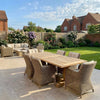
Raj Green's warm, organic tones are the natural partner for cottage-style gardens — lavender borders, climbing roses, brick walls, and timber fences. The colour variation in a patio pack creates a surface that looks established from day one, as if it's been there for decades.
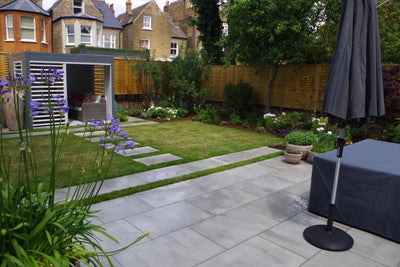
The warm brown and rust tones in Raj Green complement red brick beautifully — the colours share the same warm palette. Where Kandla Grey creates contrast against red brick, Raj Green creates harmony. Victorian terraces, Edwardian semis, and any red-brick property suit Raj Green naturally.
Gardens with mature trees, deep borders, and lush planting provide the natural backdrop that makes Raj Green shine. The multi-tonal palette blends into a green, growing garden rather than sitting on top of it. The stone looks like it belongs in nature — because it does.
Raj Green's warm tones counteract the cool light in north-facing gardens. Where Kandla Grey can feel cold and clinical in permanent shade, Raj Green adds warmth even without direct sunlight. The brown and green tones glow in diffused light.
If your garden is all clean lines, white render, and architectural precision, Raj Green's bold colour variation may fight the aesthetic. For minimalist contemporary gardens, Kandla Grey (subtle, neutral) or porcelain (uniform, precise) are better choices.
Raj Green vs Kandla Grey
| Feature | Raj Green | Kandla Grey |
|---|---|---|
| Colour | Warm — greens, browns, purple accents | Cool — silver-grey with warm undertones |
| Colour variation | High — dramatic differences between slabs | Moderate — subtle shifts within grey range |
| Dirt visibility | Low — multi-tones hide dirt naturally | Moderate — light grey shows some marks |
| Versatility | Suits warm-toned properties | Suits everything — universal neutral |
| Personality | Bold, expressive, characterful | Understated, safe, consistent |
| Starting price | From £21/m² | From £20/m² |
Choose Raj Green when you want warmth, personality, and a patio that tells a geological story. Choose Kandla Grey when you want a neutral that works with everything and lets the garden do the talking.
Read our full 6-colour comparison.
The dirt-hiding advantage
This is Raj Green's underrated superpower. The multi-tonal colour palette means everyday marks, light staining, and natural weathering blend into the surface rather than standing out. A leaf stain on Kandla Grey or Fossil Mint is visible. The same stain on Raj Green disappears into the brown and green tones.
For families with children, barbecue areas, and patios under deciduous trees (where autumn leaf stains are inevitable), Raj Green's ability to absorb visual imperfections is a genuine practical advantage.
Edging combinations
Raj Green benefits from a defined border — the bold colour variation needs framing:
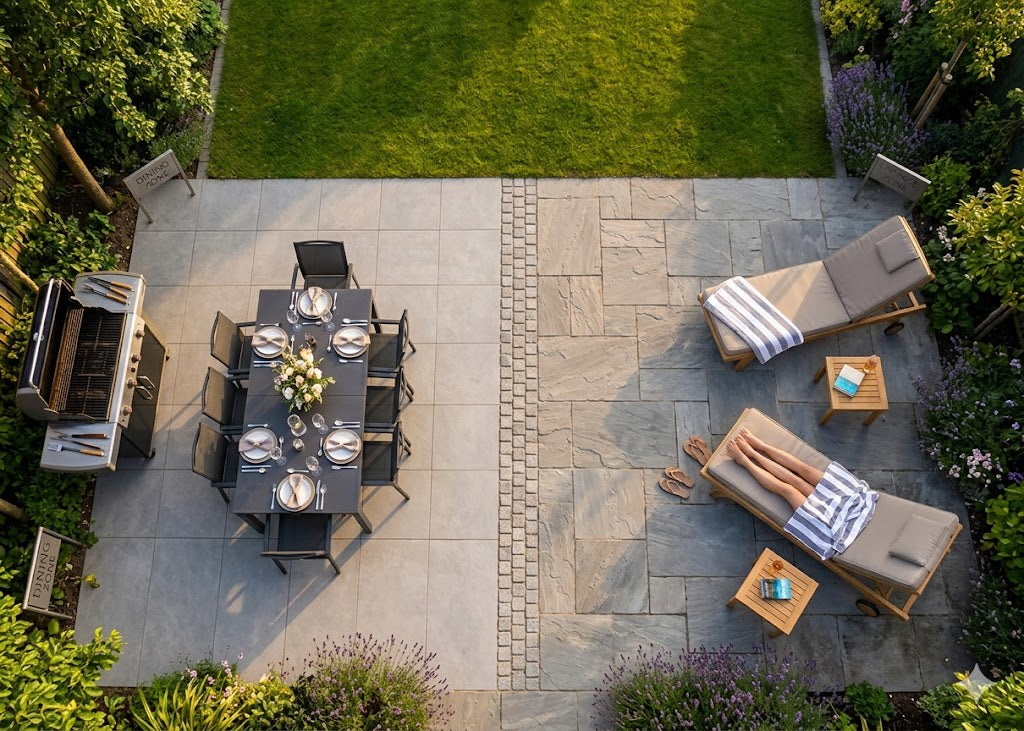
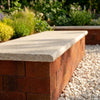
Best combination: Raj Green slab patio with Kandla Grey sandstone setts as a single soldier course border. The cool grey frames the warm multi-colour centre, creating visual structure without introducing a clashing colour.
Alternative: Raj Green setts as the border around a Raj Green slab centre — same colour, different format. The texture change between slab and sett provides subtle definition.
Read our 10 edging ideas for more combinations.
Browse Raj Green
Riven and sawn finishes, every size in stock. All prices include VAT and free UK delivery.
Browse Raj Green Sandstone Order SamplesFrequently asked questions
Is Raj Green sandstone good?
Raj Green is excellent for traditional gardens, cottage properties, and any setting where natural character and warmth matter. It's the UK's second most popular sandstone after Kandla Grey. The multi-tonal colour variation creates unique patios and the warm palette hides dirt better than lighter stones. It needs the same maintenance as any sandstone — annual clean and optional sealing.
What colour is Raj Green really?
Despite the name, Raj Green isn't predominantly green. It's a multi-tonal blend of mossy greens, warm browns, cool greys, and purple-rust accents. The balance varies slab to slab — some are mostly brown with green hints, others mostly green with brown accents. The overall effect is warm, earthy, and organic. Order a sample to see the real colour range.
Does Raj Green change colour over time?
Like all natural sandstone, Raj Green develops a patina over years — the colours soften and mellow slightly. In shaded areas, moss and algae can add their own green tones. Many homeowners say Raj Green looks even better after 5-10 years of natural ageing. Sealing preserves the original colour if you prefer to prevent the ageing process.
Is Raj Green suitable for a modern patio?
Raj Green in a sawn (smooth) finish works for contemporary gardens — the clean edges and tight joints give modern lines while the colour adds warmth. Riven Raj Green is more traditional in character. For ultra-minimalist modern designs, Kandla Grey or porcelain are better suited.
What looks best next to Raj Green?
Kandla Grey sandstone or granite setts as edging — the cool grey frames the warm multi-colour beautifully. For planting, lavender, ornamental grasses, and any purple-flowering plants pick up the stone's natural purple accents. Red brick houses and timber fences are the ideal architectural backdrop.