







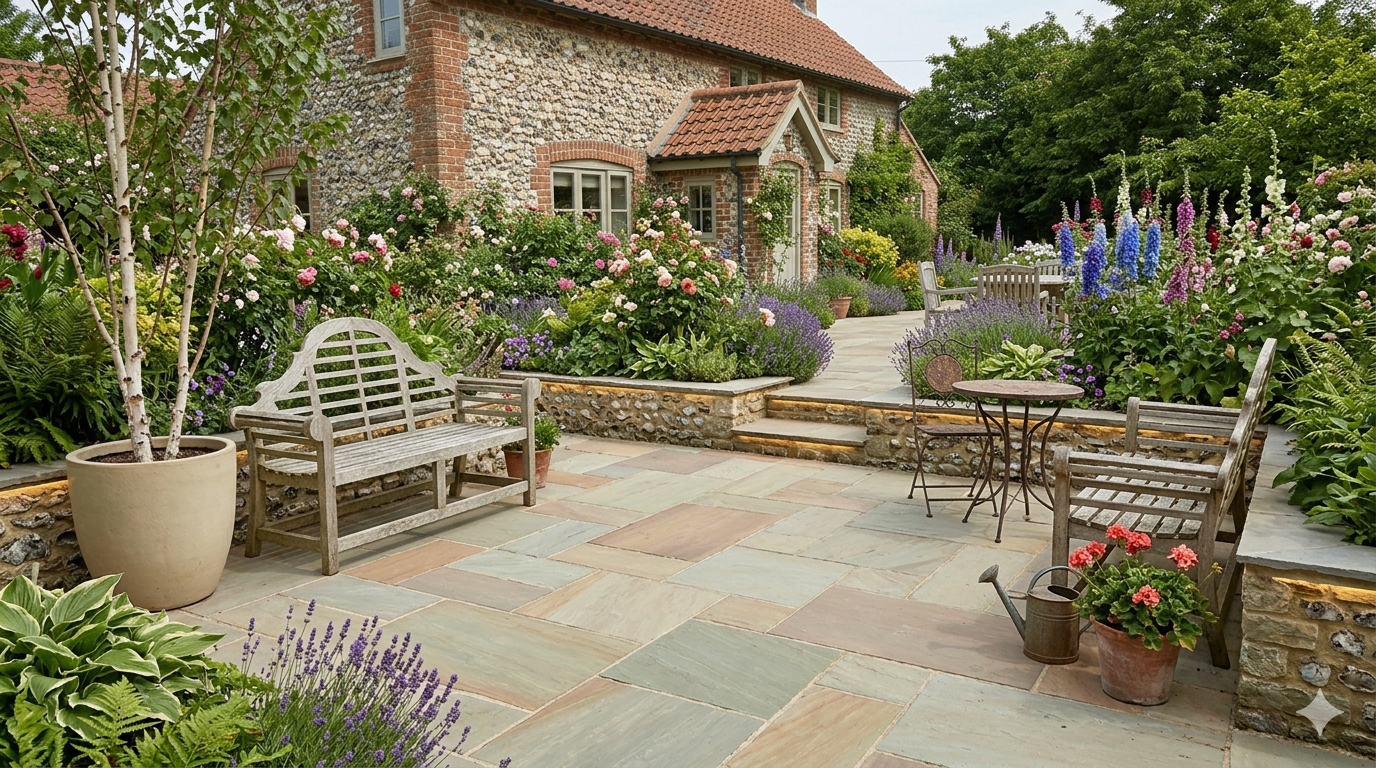
Indian Sandstone Colours: A Complete Guide to Choosing the Right Shade
Choosing the right Indian sandstone colour is the single biggest decision in a patio project. The material is brilliant, durable and affordable — but the colour determines whether the finished space feels right in your garden or fights with it. This guide walks through the six Indian sandstone colours we stock, how each one looks in both dry and wet conditions, and which garden styles, planting schemes and house types each tends to suit.
Why Indian sandstone colours vary so much
Indian sandstone colours aren't painted, dyed or treated. They're formed entirely by the mineral content of the stone as it was laid down on ancient sea beds hundreds of millions of years ago. Iron oxide produces reds, browns and buff yellows. The absence of iron produces cool greys. Chlorite gives green tones. Organic deposits and carbon produce dark greys. Quartz and mica can give silver highlights.
This is why the same "colour" from two different sources can look noticeably different, and why even slabs from a single pallet will have natural variation. This isn't a defect — it's the whole point of buying natural stone. A patio that looks perfectly uniform is a patio that was probably made of porcelain or concrete.
One thing worth flagging upfront: every natural sandstone looks different wet vs dry. Rain, dew and sun will shift the character of your patio through the seasons. Always look at samples under both conditions before committing.

Kandla Grey Sandstone
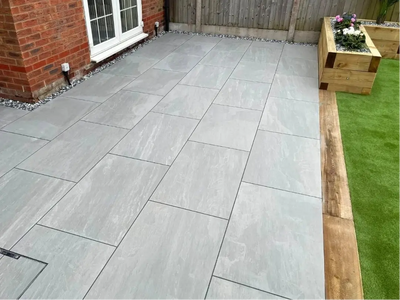
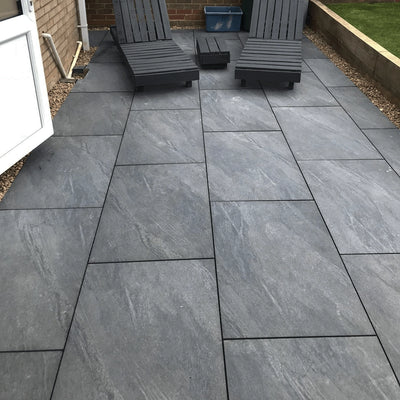
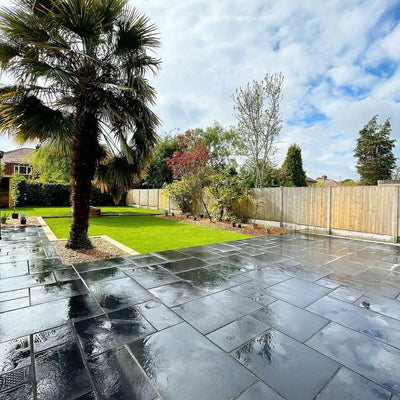
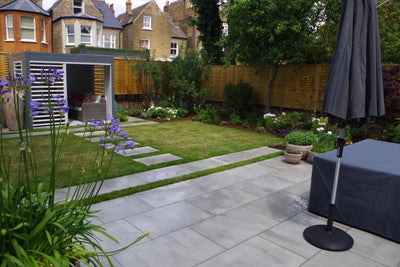
The UK's most popular Indian sandstone, and the biggest seller in our range. Kandla Grey is a cool silver-grey with occasional dove-grey and pale gold banding. It reads as a soft, contemporary mid-grey in dry conditions — modern enough for a new build extension, subtle enough not to dominate a garden scheme. When wet, the darker bands come forward and the surface takes on a slate-like character with much more depth.
Kandla Grey is the safe choice if you want something that will work with almost any house style and planting scheme. It's also the most forgiving if you're not sure what direction you want the garden to go in. Browse Kandla Grey →

Raj Green Sandstone
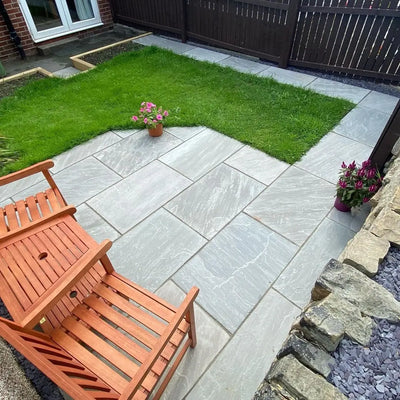
Raj Green is a mottled blend of grey, green, olive and rust — one of the most visually complex Indian sandstones we stock. The green tones come from chlorite in the stone itself, not pigment, and they deepen noticeably when wet. It's the traditional garden choice, particularly striking against red brick, and has enough character to carry a mature planting scheme without looking flat.
Choose Raj Green if you want a patio that looks like it's always been there. It works particularly well with Victorian and Edwardian properties and settles into rural settings without feeling new. Browse Raj Green →

Rippon Buff Sandstone
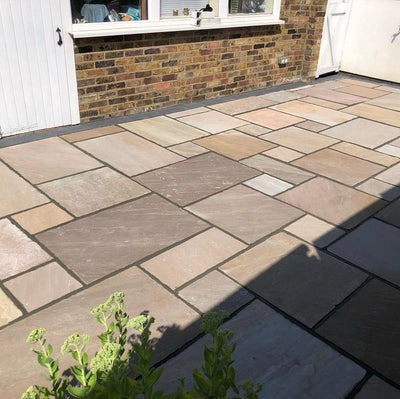
Rippon Buff is a warm blend of cream, buff, pink and russet tones. It has the most colour variation of any Indian sandstone in our core range, and when wet the pinks and roses come out strongly. It's the natural choice for period properties in honey-stone regions — Cotswold villages, Bath, parts of Gloucestershire and North Yorkshire — where the local building stone is already warm-toned.
Rippon is the riskiest of the core colours in the sense that it has the strongest personality — but when it's right, it's very right. Get a sample before committing so you can see exactly how it sits against your house. Browse Rippon Buff →

Fossil Mint Sandstone
Fossil Mint is the lightest sandstone in our range — a pale cream and soft mint-green stone, sometimes with visible fossil impressions from ancient sea life. It's also the most reflective, which makes it the best choice when you need paving that brightens a shaded garden rather than making it feel darker.
If your garden doesn't get much sun, Fossil Mint will visibly lift it. It's also one of the easier colours to keep looking clean because dirt shows up less against the pale base tones than it does on darker stone. Browse Fossil Mint →

Camel Dust Sandstone
Camel Dust is a warm, earthy stone with light browns, soft buffs, occasional green flecks and golden honey tones running through it. It sits in the middle of our range — not as pale as Fossil Mint or Rippon Buff, not as deep as Autumn Brown — and has become particularly popular for European-style courtyards and Mediterranean-inspired schemes. When wet, the browns deepen and the gold tones intensify.
Camel Dust is the choice when you want warmth without the strong pink undertones of Rippon Buff. It's particularly effective in south-facing gardens where the light brings out the gold tones throughout the day. Browse Camel Dust →

Autumn Brown Sandstone
Autumn Brown is a warm blend of browns, tans and amber with occasional purple undertones. It reads as the richest, most grounded colour in our range — the choice when you want paving that feels rooted in the landscape rather than making a statement against it.
Autumn Brown is particularly strong in larger gardens where it can read as part of the landscape itself, and it works well surrounding mature trees or informal borders. Browse Autumn Brown →
How to choose the right colour for your garden
Four practical tests that work for almost any project:
- Look at your house firstYour patio has to live next to your house for decades. Light stone properties (Cotswold, Bath, Chilmark limestone) look best with lighter sandstones like Rippon Buff or Fossil Mint. Red brick properties pair naturally with warmer tones — Raj Green or Autumn Brown. Modern white or grey render pairs best with cooler tones — Kandla Grey. The rule isn't absolute, but it's a good starting point.
- Look at your lightShaded or north-facing gardens benefit from lighter sandstones that reflect what light there is — Fossil Mint, Rippon Buff, or the lighter end of Kandla Grey. Sun-drenched south-facing gardens can handle any colour, including the warmer Camel Dust and Autumn Brown that come alive in direct sun.
- Look at your plantingIf you already have a mature planting scheme, choose paving that complements it rather than fighting it. Traditional herbaceous borders suit warmer, more varied sandstones. Architectural contemporary planting suits cooler, more uniform tones.
- Look when wetThis is non-negotiable. Every Indian sandstone changes colour dramatically when wet, and some of the colours you'll see most often are the wet ones. Before committing, put a sample under running water and look at it again. You might find you prefer the wet appearance to the dry, or vice versa — either is useful information.
A note on variation within a pack
Every pack of Indian sandstone contains natural variation — some slabs lighter, some darker, some with more banding, some more uniform. This is intentional. When laid together, the variation reads as a natural tapestry.
A tip from experienced landscapers: when laying, open multiple packs at once and draw slabs from all of them rather than working through one pack at a time. This distributes the variation evenly across the finished patio rather than leaving one area lighter than another.
Ready to see them in person?
Order individual samples of any colour to see them in your own garden light before committing.
Order Samples Browse Full Range