






Indian Sandstone Paving: The Complete UK Buyer's Guide
Indian sandstone paving slabs are the UK's most popular natural stone for garden patios. Hand-cut from quarries in Rajasthan, Indian sandstone offers natural colour variation, a non-slip riven surface, and 20+ year durability — from £20/m² delivered. This guide covers everything you need to know before buying: colours, sizes, finishes, costs, laying, cleaning, and sealing.
What is Indian sandstone?
Indian sandstone is a natural sedimentary rock quarried primarily in the Jodhpur and Kota districts of Rajasthan, northwest India. The stone formed 145-170 million years ago from compressed layers of sand beneath an ancient seabed. Each colour comes from a different geological formation — Kandla Grey from quarries near Kandla, Raj Green from the Rajnagar region, Fossil Mint from formations rich in ancient marine fossils.
Indian sandstone became the UK's dominant garden paving stone because it offers three things that no manufactured product can match: genuine natural colour variation (no two slabs are identical), a naturally non-slip riven surface that handles British weather safely, and a price point that undercuts European natural stone by 40-60%. We import ours directly from the quarry and hold stock year-round at our Nottingham warehouse. Read more about how sandstone gets from the quarry to your garden.
Choosing a colour
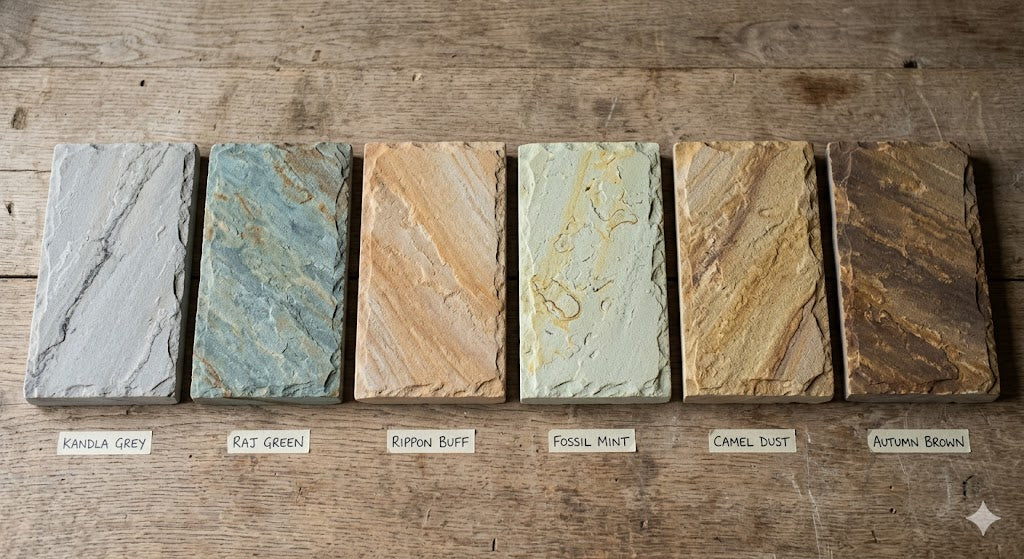
We stock six Indian sandstone colours year-round — each with distinct character:
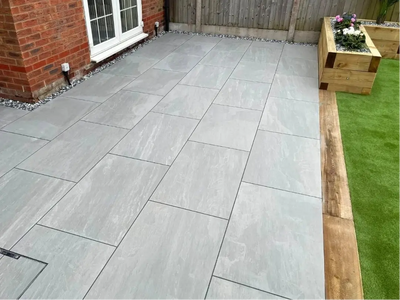
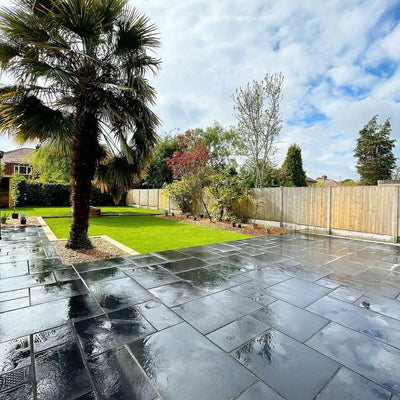
Kandla Grey — our #1 seller. Cool silver-grey with subtle warm undertones. Works with virtually every house style. Accounts for over 60% of our sandstone sales.
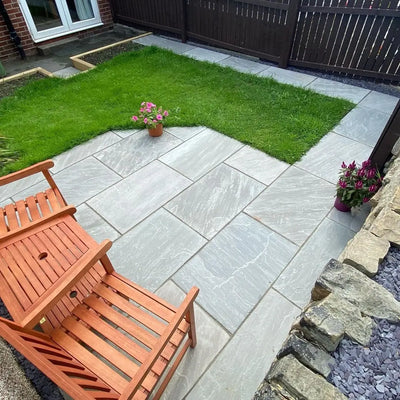
Raj Green — warm green-brown tones with purple and rust accents. The classic British garden choice. Beautiful against red brick and lush planting.
Rippon Buff — golden buff with gentle brown veining. Warm and inviting. Suits cottage gardens, traditional settings, and properties with yellow or cream stone walls.
Fossil Mint — pale mint-cream with fossil markings visible in the surface. Light and bright. Opens up smaller gardens and reflects light into north-facing spaces.
Camel Dust — warm sand tones with brown and ochre variation. Mediterranean feel. Pairs well with terracotta pots and warm-toned furniture.
Autumn Brown — rich chocolate browns with plum and rust tones. The boldest colour in the range. Makes a dramatic statement in contemporary gardens.
Every colour looks different wet vs dry, sun vs shade. We always recommend ordering a sample and leaving it in your garden for a few days before committing to a full order. Read our complete Indian sandstone colours guide for detailed photos and pairing advice.
Riven vs sawn finishes
Indian sandstone comes in two finishes that look and feel completely different:
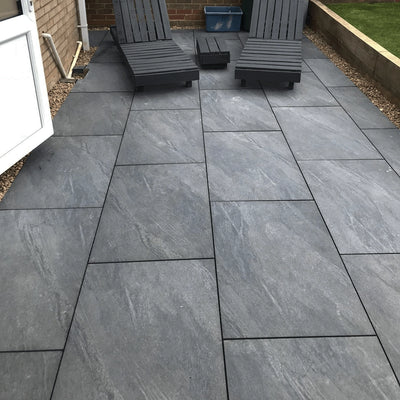
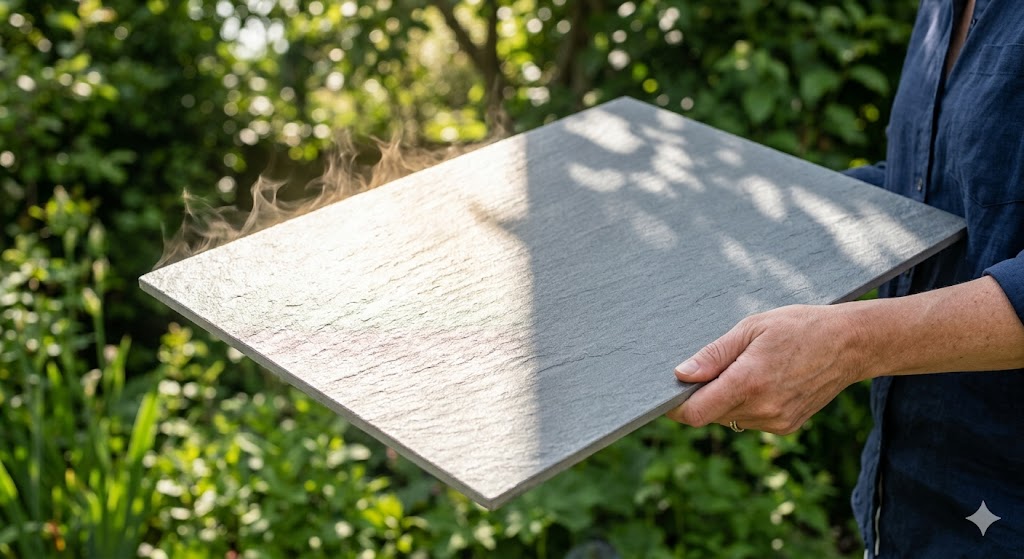
Riven (natural split) — the stone is split along its natural bedding plane, creating an irregular, textured surface with peaks and valleys. This is the traditional British patio finish. Naturally non-slip, forgiving to lay, and the texture adds character that improves with age. Most of our sandstone range is riven.
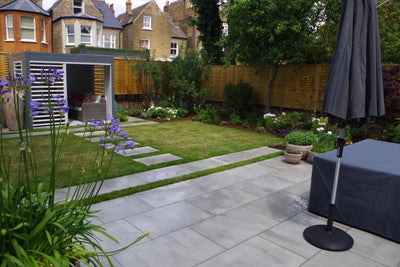
Sawn and honed (smooth) — the stone is diamond-cut to precise dimensions and polished to a smooth, flat surface. Clean edges allow tight 5-8mm joints for a sleek, contemporary look. Suits modern homes, bifold door transitions, and architectural gardens. Slightly more expensive than riven and requires more precision during installation.
Not sure which is right? Read our full riven vs sawn sandstone comparison — it covers appearance, price, installation difficulty, and which settings each finish suits best.
Sizes and formats
900×600mm — the most popular UK paving slab size. Fewer joints, larger visual scale, contemporary feel. Our bestseller across all sandstone colours.
600×600mm — the traditional paving slab size. Best value per m² and suits smaller patios, paths, and budget projects.
1200×600mm — large format, premium contemporary look. Available in sawn finish only. Makes spaces feel significantly bigger with minimal joint lines.
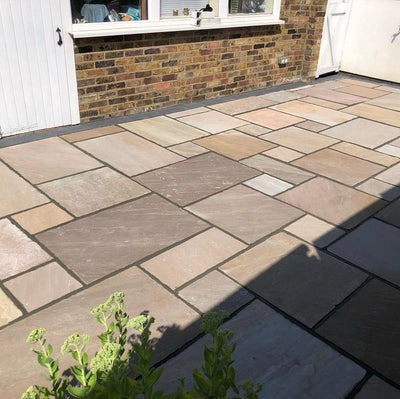
Patio packs (mixed sizes) — pre-calculated mix of 900×600, 600×600, 600×300, and 300×300 slabs. Lay in a traditional random pattern for classic cottage garden character. Often the best value per m².
For help choosing the right size, read our guide to choosing paving slab sizes.
How much does Indian sandstone paving cost?
Our Indian sandstone paving starts from £20/m² delivered — that's the complete price including VAT and free UK mainland delivery. No delivery charges, no split pallet fees, no extras at checkout.
For a typical 20m² garden patio, the material cost is approximately £400-460 depending on the colour and size you choose. Add sub-base materials (£200-300), mortar and jointing (£80-120), and skip hire (£220-280), and a complete DIY sandstone patio costs approximately £900-1,100 all-in.
Professional installation adds £50-80/m² for labour — making a 20m² professionally installed sandstone patio approximately £2,200-2,800 total.
For exact figures based on your dimensions, use our patio cost calculator — enter your length and width, choose your product, and get an instant price. Or read the full patio cost breakdown with three worked examples.
How to lay Indian sandstone paving
Indian sandstone is one of the most DIY-friendly paving materials, particularly in calibrated riven finish. The textured surface is forgiving of minor levelling imperfections, and the natural colour variation hides small inconsistencies that would show on uniform porcelain.
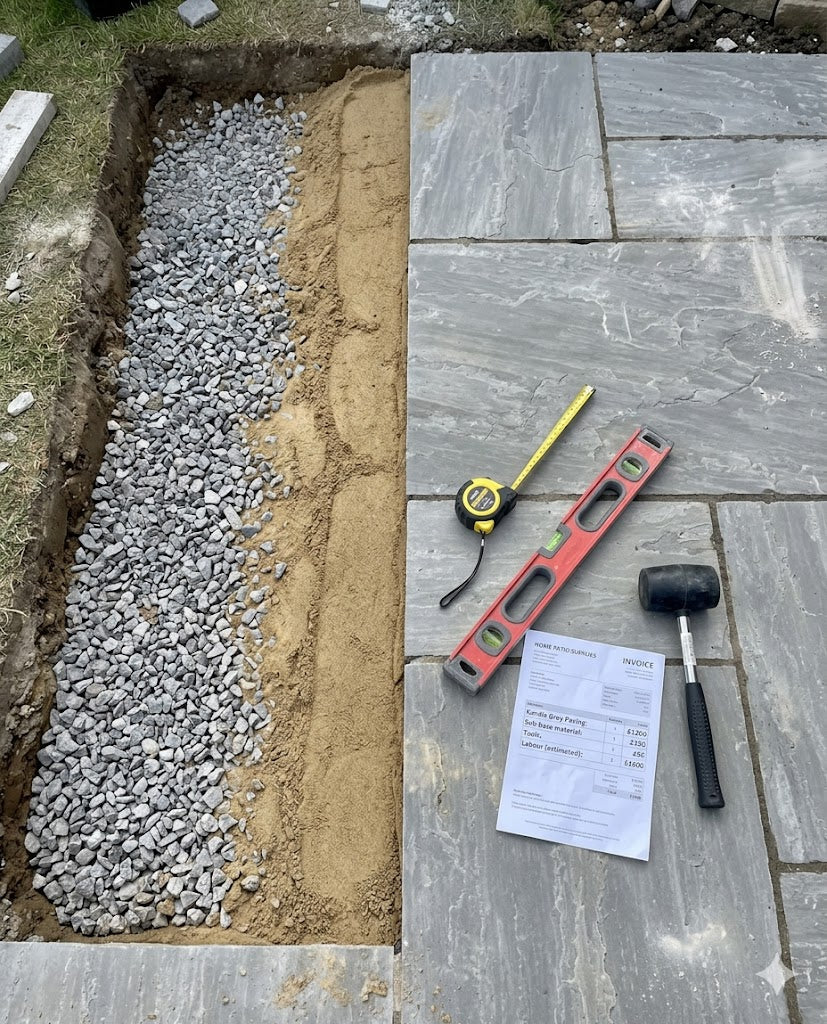
The process in brief: excavate to depth, lay and compact 150mm MOT Type 1 sub-base, prepare a semi-dry mortar bed (5:1 sharp sand to cement), prime the back of each slab with SBR, lay slabs with consistent joints, check levels constantly, and point with a suitable jointing compound after 24-48 hours.
The two most common mistakes: spot-bedding (5 blobs of mortar instead of a full bed — causes cracking within a year) and skipping the sub-base (leads to sinking and movement within months). Both are easy to avoid if you follow the method properly.
We wrote a complete step-by-step laying guide covering every stage from excavation to pointing, including mortar mix ratios and the 7 mistakes that ruin most patios. For the sub-base specifically, see our sub-base guide.
How to clean Indian sandstone
Indian sandstone is porous, which means it can absorb stains, develop algae in shaded areas, and darken with dirt over time. The good news: it cleans up easily with the right method.
For annual maintenance, a pressure washer on a low setting (max 1,500 PSI, wide fan nozzle, 30cm distance) removes surface dirt and algae effectively. For stubborn stains, use a dedicated paving cleaner — never acid-based products, which cause permanent orange discolouration on sandstone.
Read our complete guide to cleaning Indian sandstone for pressure washer settings, stain-by-stain removal instructions, and which products to use and avoid.
Should you seal Indian sandstone?
Sealing is optional but recommended, especially for patios near cooking areas, dining spaces, or barbecues where food and drink spills are likely.
A breathable impregnating sealer soaks into the stone and creates an invisible barrier against stains without changing the appearance. It doesn't create a shiny film — the stone looks exactly the same, just with better stain resistance. Apply once every 3-5 years.
Some homeowners prefer to leave sandstone unsealed and let it develop a natural patina over time — the colours soften slightly and the stone develops character. Neither approach is wrong — it depends on whether you prioritise pristine appearance or natural ageing.
For product recommendations and application steps, read our guide to sealing Indian sandstone.
Indian sandstone vs porcelain
This is the most common question we get. The short answer: sandstone offers natural character, warmth, and wider colour variation. Porcelain offers zero maintenance, stain resistance, and consistent colour. Neither is objectively better — they suit different priorities.
Sandstone costs from £20/m², porcelain from £18/m² — material costs are similar. The real difference is ongoing maintenance: sandstone benefits from sealing and annual cleaning, porcelain needs neither. Over 20 years, porcelain's lower maintenance cost roughly offsets sandstone's lower upfront price.
We import and sell both materials. Read our honest sandstone vs porcelain comparison for the full breakdown including 7 scenarios that tell you exactly which material suits your situation.
Indian sandstone vs limestone
Limestone is the refined alternative to sandstone — subtler colour variation, smoother surface texture, and a more formal aesthetic. Sandstone has more character and natural warmth. Limestone is more porous and stains more easily, so sealing is strongly recommended.
Limestone starts from £25/m² vs sandstone from £20/m². The £5/m² difference adds up on larger patios — on a 20m² patio, that's £100 more in materials.
Read our sandstone vs limestone comparison for a detailed breakdown of durability, maintenance, and which settings each stone suits.
Indian sandstone paving FAQs
Is Indian sandstone good for patios?
Indian sandstone is the most popular natural stone for UK patios. It's durable (20+ year lifespan with proper installation), naturally non-slip, available in a wide range of colours, and significantly less expensive than European natural stone. It suits both traditional and contemporary gardens.
How long does Indian sandstone last?
Properly installed Indian sandstone lasts 20-50+ years. The stone itself is millions of years old and will outlast the mortar bed. Lifespan depends on the quality of installation (sub-base and mortar bed are critical) rather than the stone itself. Regular cleaning and optional sealing help maintain appearance.
Does Indian sandstone get slippery when wet?
Riven (textured) Indian sandstone is naturally non-slip, even when wet. The irregular surface provides excellent grip. Sawn (smooth) sandstone has less texture and can feel slippery when wet with algae growth, but is still safer than many man-made alternatives. If algae is a concern, clean annually and consider an anti-slip treatment.
What colour Indian sandstone is best?
Kandla Grey is the UK's bestselling sandstone colour — its neutral silver-grey tone works with virtually every house style and garden design. For warmer settings, Raj Green or Rippon Buff add natural warmth. For light, bright spaces, Fossil Mint reflects the most light. Read our complete colours guide.
Can you lay Indian sandstone on concrete?
Yes — if the existing concrete is structurally sound, level, and has no major cracks. Clean the concrete thoroughly, apply SBR primer, then lay the sandstone on a full mortar bed. The existing concrete acts as the sub-base. If the concrete is cracked, uneven, or sinking, it's better to remove it and start with a proper MOT Type 1 sub-base.
How thick should Indian sandstone be for a patio?
22mm calibrated thickness is standard for residential patios. All of our Indian sandstone is calibrated to 22mm for consistent installation. Thicker stone (25-30mm) is available for heavy-traffic commercial applications but is unnecessary for garden patios.
Is Indian sandstone better than concrete slabs?
For appearance, durability, and long-term value — yes. Indian sandstone offers natural colour variation, a non-slip surface, and a 20-50 year lifespan vs concrete's 10-15 years before surface deterioration. Concrete is cheaper upfront but fades, stains, and degrades faster. Over a 20-year period, sandstone is better value despite the higher initial cost.
Where does Universal Paving source its Indian sandstone?
We import directly from quarries in Rajasthan, India. The stone is cut, calibrated, and quality-checked at source, then shipped to our warehouse in Nottingham where we hold 1,000+ pallets year-round. Direct import means no importer, wholesaler, or reseller margins — which is why our prices start from £20/m² delivered. Read about our supply chain.
Browse our Indian sandstone range
Six colours, riven and sawn finishes, every size in stock. All prices include VAT and free UK delivery.
Browse Sandstone Paving Order Samples