






Indian Sandstone vs Limestone Paving: Which Natural Stone Suits Your Garden?
Indian sandstone and limestone are both natural stone, both quarried from sedimentary rock, and both make beautiful patios. But they're not interchangeable. They look different, feel different, weather differently, and suit different garden styles. We import and stock both — so this isn't a sales pitch for one over the other. It's an honest breakdown of when each makes sense.
The quick comparison
| Indian Sandstone | Limestone | |
|---|---|---|
| Geology | Formed from compressed sand grains (quartz-based) | Formed from compressed marine organisms (calcium carbonate) |
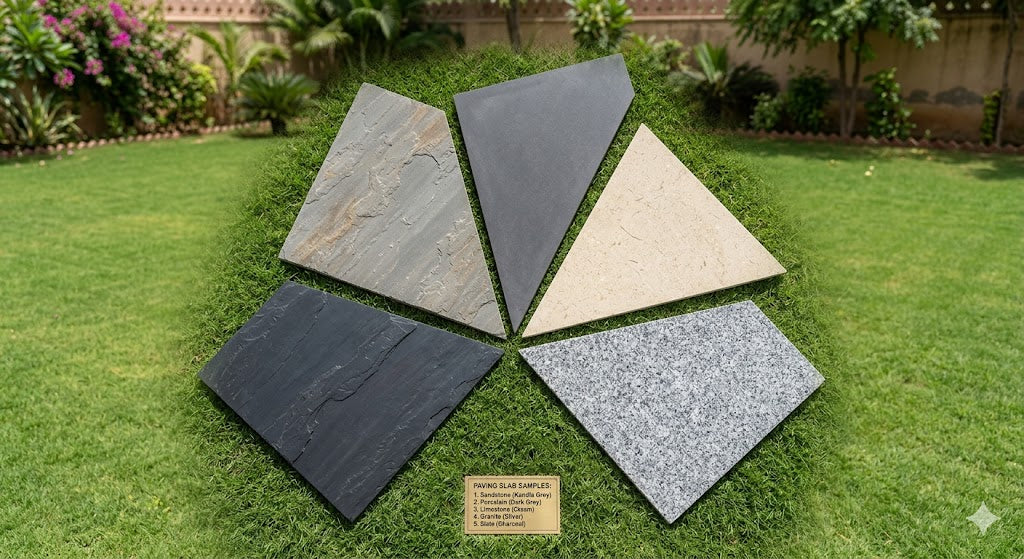
| Colour range | Wide: greys, greens, buffs, pinks, browns | Narrower: blues, greys, creams, yellows |
| Colour variation | High — every slab is noticeably different | Lower — more uniform and consistent |
| Texture | Riven is tactile and uneven; sawn is smooth | Generally smoother and finer-grained than sandstone |
| Hardness | Moderate — harder than limestone | Softer — more susceptible to scratching and wear |
| Porosity | Porous — absorbs water, can stain | More porous — absorbs more, stains more readily |
| Acid sensitivity | Iron reacts with acid (orange staining) | Calcium reacts with acid (surface etching) |
| Price | From £20/m² delivered | From £25/m² delivered |
| Best for | Versatile — traditional to contemporary | Refined, understated, elegant gardens |
Appearance: the real difference
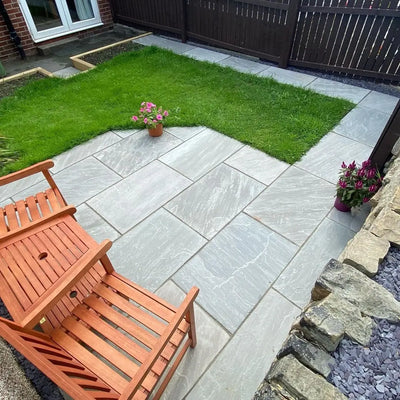
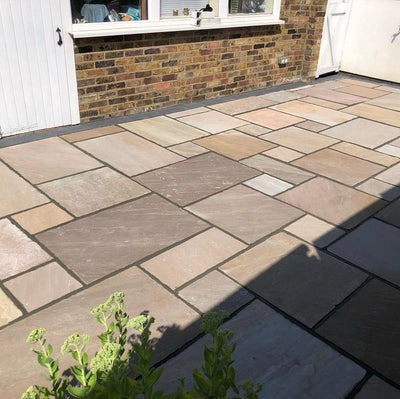
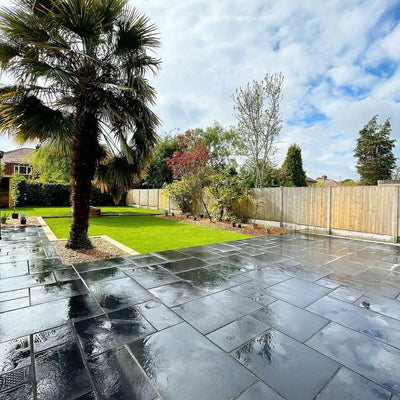
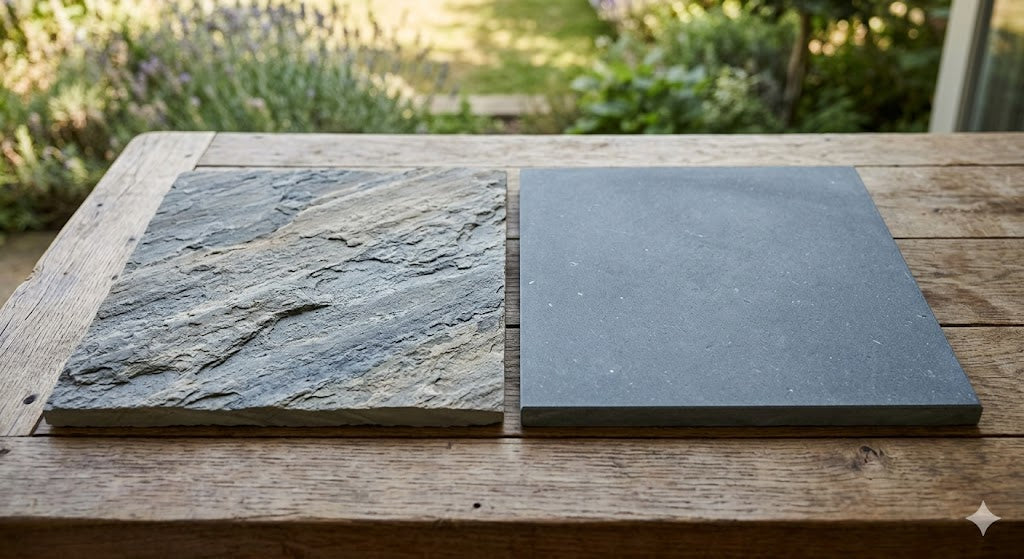
Indian sandstone is expressive. The colour variation within a single pallet can be dramatic — greys shift to golds, greens mix with rust, buffs blend with pinks. This variation is the whole point of sandstone. When laid, it creates a richly textured surface where every slab contributes something different. It's a stone with personality.
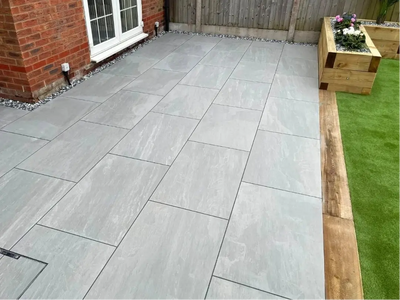
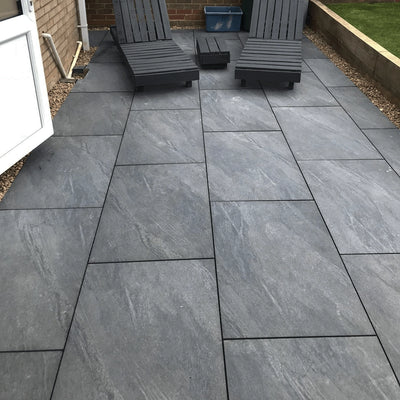
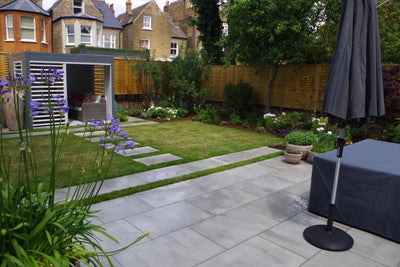
Limestone is understated. The colour variation is much more subtle — you might see slight shifts in tone across a patio, but nothing like the dramatic slab-to-slab differences of sandstone. Limestone reads as calmer, quieter, more refined. It's the choice when you want the patio to recede into the background and let the planting, furniture, or architecture be the focus.
If you want a patio with character and warmth, sandstone gives you more visual interest. If you want a patio that's elegant and understated, limestone delivers sophistication without competing for attention.
Durability and maintenance
Indian sandstone is the harder of the two stones. It handles foot traffic, garden furniture, and general wear better than limestone. It's also less porous, which means it absorbs less water and is less prone to staining.
Limestone is softer and more porous. It scratches more easily (dragging metal furniture across it will leave marks), absorbs stains faster (oil and wine penetrate quickly if unsealed), and is more susceptible to algae and moss in damp conditions because the porous surface gives organic growth something to grip.
Both stones benefit from sealing, but limestone needs it more. An impregnating sealer on limestone significantly reduces stain absorption and algae growth. On sandstone, sealing is helpful but less critical.
The acid issue: Neither stone likes acid — but they react differently. Sandstone contains iron oxide; acid makes it turn orange permanently. Limestone is calcium carbonate; acid etches and dissolves the surface, leaving dull, rough patches. Never use acid-based cleaners on either material. This includes brick acid, patio cleaners containing hydrochloric acid, and even strong vinegar.
Cost
Indian sandstone is typically 20–30% cheaper than limestone per square metre. Our sandstone range starts from £20/m² delivered; limestone starts from £25/m². On a 20m² patio, that's a difference of roughly £100–150 in material cost.
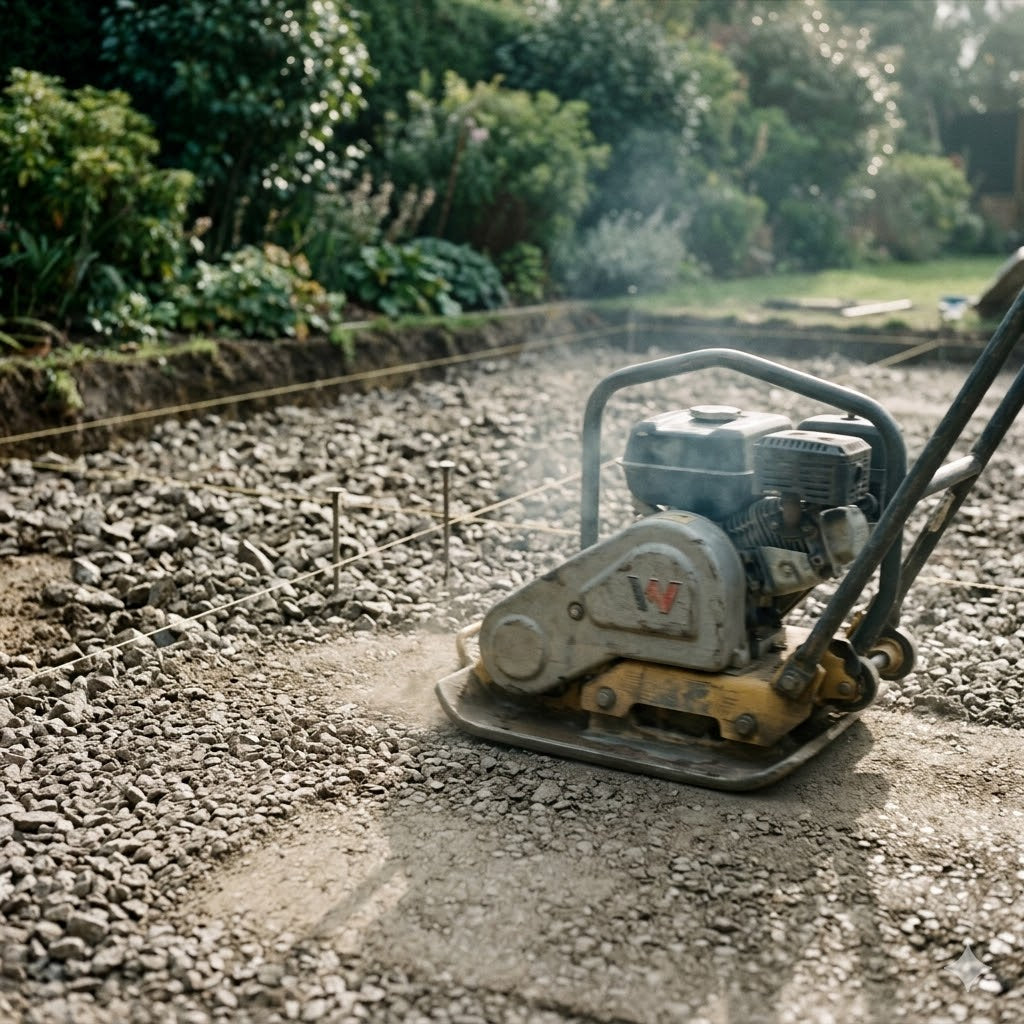
The installation cost is the same for both — same sub-base, same mortar bed, same labour. So the total project saving from choosing sandstone over limestone is modest but real.
If budget is the primary concern, sandstone gives you more patio for your money. But limestone isn't significantly more expensive — the difference is less dramatic than sandstone vs porcelain.
Which suits your garden?
"Traditional cottage garden with mature planting"
You want warmth, character, and a patio that feels like it's always been there.
→ Indian sandstone (Raj Green or Rippon Buff)"Contemporary garden with architectural planting"
Clean lines, muted palette, the stone should complement not compete.
→ Limestone (Kota Blue or Tandur Grey)"Period property, honey-stone region"
Cotswold villages, Bath stone, warm local building materials.
→ Either — Rippon Buff sandstone or Tandur Yellow limestone"Modern townhouse, grey render"
Cool tones, contemporary feel, grey-on-grey palette.
→ Either — Kandla Grey sandstone or Kota Blue limestone"Maximum coverage on a budget"
You want natural stone quality at the lowest possible cost per square metre.
→ Indian sandstone (from £20/m²)"Outdoor dining area near a barbecue"
High stain risk from food, oil, and drinks. Needs to handle spills.
→ Indian sandstone (more stain-resistant than limestone) — or porcelain if maintenance matters mostCan you mix sandstone and limestone?
You can, but it requires careful colour coordination. The two stones have different colour temperatures — sandstone tends warmer, limestone tends cooler — and mixing them without thought can look disjointed. The most successful combinations use one material for the main patio and the other for a defined accent: limestone copings on a sandstone patio, or sandstone setts bordering a limestone surface.
What doesn't work is random alternation within the same area. Use one material for each defined zone.
The bottom line
Indian sandstone is the more versatile, more affordable, more forgiving choice. It has broader colour range, better stain resistance, and it suits everything from cottage gardens to modern extensions. It's the right default unless you have a specific reason to choose limestone.
Limestone is the more refined, more understated choice. It's at its best in contemporary or formal settings where you want the stone to be quietly elegant rather than visually active. It costs a little more and needs a little more care — but the aesthetic it delivers is distinct from anything sandstone can do.
We stock both because both are excellent materials. The right one depends on your garden, your style, and your priorities.
See both in person
Order samples of sandstone and limestone to compare in your own garden light.
Browse Sandstone Browse LimestoneFrequently asked questions
Is limestone more expensive than sandstone?
Typically 20–30% more per square metre. Our sandstone starts from £20/m² and limestone from £25/m². The installation cost is the same for both materials.
Which is more durable — sandstone or limestone?
Sandstone is harder and more durable in most practical respects. It handles wear, foot traffic, and weathering better than limestone. Limestone is softer and more susceptible to scratching and surface wear, though both will last decades when properly installed.
Does limestone stain easily?
Yes — more easily than sandstone. Limestone is more porous and absorbs liquids faster. Oil, wine, and food spills can leave permanent marks on unsealed limestone. Sealing with an impregnating sealer is strongly recommended for any limestone patio, especially near outdoor dining or cooking areas.
Can I use limestone on a driveway?
We don't recommend it. Limestone is too soft for vehicle loads — car tyres will wear the surface and the stone can crack under concentrated weight. For driveways, use granite, porcelain, or sandstone cobbles and setts.
Which is easier to maintain?
Sandstone requires less maintenance. It's less porous, more stain-resistant, and harder-wearing. Limestone benefits from sealing and more careful stain management. Neither is high-maintenance compared to timber decking, but limestone needs slightly more attention.