








How Much Does a Landscaper Cost? UK Pricing Guide 2026
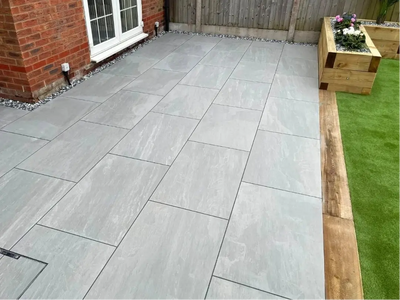
A UK landscaper charges £50-80 per m² for patio installation (labour only), depending on location, complexity, and material type. A typical 20m² sandstone patio costs approximately £1,000-1,600 in labour on top of £400-500 in materials. Total professionally installed: £2,200-3,200. The same patio DIY costs approximately £900-1,400 all-in. The difference is labour — which buys you speed, experience, and a guarantee that the sub-base is right.
The decision between DIY and hiring a landscaper isn't just about money — it's about risk. A DIY patio built properly saves £1,000-1,600 on a 20m² project. A DIY patio built badly costs £2,000-3,000 to rip up and redo professionally. The question isn't "can I save money?" — it's "am I confident I'll get the sub-base right?" This guide breaks down exactly what landscapers charge, what that price covers, and how to decide whether the saving is worth the risk.
Landscaper costs by project type
| Project | Labour rate | Typical 20m² total (labour only) |
|---|---|---|
| Sandstone patio (riven) | £50-65/m² | £1,000-1,300 |
| Porcelain patio | £60-80/m² | £1,200-1,600 |
| Sawn sandstone patio | £55-70/m² | £1,100-1,400 |
| Granite sett driveway | £40-65/m² | £800-1,300 |
| Garden path (10m long) | £40-55/m² | £360-500 (9m²) |
| Full garden redesign (patio + lawn + planting + fencing) | Quoted per project | £5,000-15,000+ |
Why porcelain costs more to install: porcelain requires SBR primer on every slab (adds 30-60 minutes per 10m²), a diamond wet cutter for any cuts (slower than angle grinding sandstone), and more precision due to tight 3-5mm joints. The material cost is similar to sandstone, but the labour takes longer.
What's included in the price?
A reputable landscaper's quote should cover everything needed to complete the job. Check that these are included — not listed as extras:
Excavation: digging out existing surface to the correct depth (200-250mm).
Waste disposal: removing excavated soil via skip or grab lorry.
Sub-base: supplying and compacting MOT Type 1 aggregate (100-150mm).
Mortar bed: mixing and laying the full mortar bed.
Slab laying: installing all paving slabs to level with correct drainage gradient.
Cutting: all cuts around edges, drain covers, and obstacles.
Pointing: filling all joints with mortar or jointing compound.
Clean-up: removing all waste materials and leaving the site tidy.
Skip hire: some landscapers quote labour only and charge skip hire separately (£200-350 extra).
Sub-base materials: some quote labour only and charge MOT Type 1 as a separate line item (£100-200 extra).
Sand, cement, SBR: sundry materials sometimes listed as extras (£80-150 extra).
Drainage: if a drainage channel is needed, this is often quoted separately.
Steps: each step typically adds £150-300 to the quote.
Always ask: "Is this quote for the complete job, or are there additional costs for materials, skip hire, or sundries?"
What affects the price?
1. Location
Landscaper rates vary significantly by region. London and the South East command the highest rates (£65-100/m²). Midlands and North are typically £45-70/m². Scotland, Wales, and rural areas are often £40-60/m². These are labour rates — material costs are the same nationwide when buying online with free delivery.
2. Access
Easy rear garden access (side gate, no steps, space for a mini digger) keeps costs down. Difficult access — through the house, down narrow passages, up steps, or across neighbours' land — adds time and manual labour. Some landscapers add 10-20% for restricted access.
3. Existing surface removal
A bare lawn or soil is the easiest starting point. Removing an existing concrete patio, old paving, or decking adds excavation time, skip volume, and disposal cost. If your existing concrete is sound, consider laying over it — saves the landscaper and you significant cost.
4. Complexity
A simple rectangular patio on flat ground is the baseline quote. Curves, steps, raised areas, retaining walls, drainage channels, lighting conduits, and mixed materials all add complexity and time. Each step typically adds £150-300. Each material change adds cutting and transition work.
5. Material type
Porcelain costs more to install than sandstone (SBR priming, specialist cutting). Setts cost more per m² to lay than slabs (more pieces to handle). Sawn sandstone requires more precision than riven (tighter joints, visible alignment errors). The material you choose affects the labour cost, not just the material cost.
DIY vs professional — the real comparison
| Factor | DIY | Professional |
|---|---|---|
| Cost (20m² sandstone) | ~£1,100-1,400 | ~£2,200-3,200 |
| Time | 3-5 weekends | 3-5 days |
| Sub-base quality | Depends on your skill | Guaranteed by experience |
| Equipment needed | Hire wacker plate, cutter (£80-130) | They bring everything |
| Physical demand | Very hard — heavy lifting, digging | You watch |
| Risk of failure | Higher — sub-base errors are costly | Low — experience prevents mistakes |
| Satisfaction | Huge — you built it yourself | Professional finish, less personal |
DIY makes sense when:
You have the time (3-5 weekends minimum), the physical ability (excavation and barrowing aggregate is genuinely hard work), a simple rectangular design on flat ground, and you've read and understood the sub-base guide and laying guide. Riven sandstone is the most DIY-friendly material — the textured surface hides minor levelling imperfections.
Hire a professional when:
The design includes steps, retaining walls, or level changes. The garden slopes significantly and needs re-grading. You're using porcelain (SBR and cutting require experience). Access is difficult. Or you simply don't have the time or physical capacity for a heavy manual project. The sub-base is the most critical part of any patio — if you're not confident you can compact 150mm of MOT Type 1 to the correct level and gradient, the labour cost is worth paying.
How to find a good landscaper
Never accept the first quote. Three quotes from different landscapers give you a price range and help you spot outliers — either suspiciously low (cutting corners) or unjustifiably high (overcharging). The quotes should be within 20-30% of each other for the same specification.
Ask every landscaper: "What sub-base depth and material will you use?" The answer should be "100-150mm compacted MOT Type 1" (or equivalent). If they say "50mm of sand" or avoid the question, they're planning to cut the most important corner. Read our sub-base guide so you know what the correct answer sounds like.
Ask to see a patio they completed 2-3 years ago — not one they finished last week. Fresh work always looks good. Two-year-old work shows whether the sub-base was right (no sinking), the pointing has lasted (no cracks or weeds), and the drainage works (no puddles against the house).
Some landscapers supply materials as part of their quote (with their own markup). Others expect you to supply materials and quote labour only. Supplying your own paving from a direct importer like us saves 20-40% on the material cost — the landscaper gets the same product to install, you keep the margin. Ask upfront which approach they prefer.
A verbal quote is worthless. Get everything in writing: sub-base depth, mortar method (full bed, not spot-bed), drainage gradient, materials included, timeline, payment terms, and what happens if things go wrong. A professional landscaper will provide this willingly. One who won't put the specification in writing is one who plans to cut corners.
Red flags — when to walk away
Standard practice: 10-20% deposit, stage payments during the work, final 10-20% on completion and your satisfaction. Any landscaper demanding 50%+ upfront is either cash-flow desperate or planning to disappear.
"About £2,000, give or take" is not a quote. A professional quote specifies exactly what's included, what's excluded, and what the total cost will be. Vague quotes lead to expensive "extras" mid-project that you can't refuse because your garden is half-dug.
If you hear "we use five blobs of mortar per slab" — that's spot-bedding, and it causes cracked slabs within 12-24 months. Full mortar bed is the only acceptable method. This is the most common corner-cutting practice in UK patio installation. Read our laying guide to understand why.
Some landscapers insist on supplying materials and quote significantly above retail — adding 30-50% to the material cost as hidden profit. You have the right to supply your own materials. If a landscaper refuses to work with customer-supplied paving, find one who will.
Save on materials regardless of who installs
Whether you DIY or hire a professional, the material cost is within your control. Buying paving from a direct importer rather than through the landscaper's merchant saves 20-40% on the paving itself — without affecting the installation quality. The landscaper lays whatever you supply.
Our sandstone from £20/m² and porcelain from £19/m² are the same products sold through merchants at £28-48/m². Same thickness, same R-rating, same frost-proof specification — different supply chain, different price. Read our brand comparison guide for the full pricing breakdown.
Supply your own paving — save 20-40%
Whether you're DIYing or handing to a landscaper, buying direct saves hundreds. All prices include VAT and free UK delivery.
Browse Paving Slabs Order SamplesFrequently asked questions
How much do landscapers charge per m² for a patio?
UK landscapers typically charge £50-80/m² for patio installation (labour only), depending on location, material type, and complexity. Sandstone sits at the lower end (£50-65/m²), porcelain at the higher end (£60-80/m²) due to SBR priming and specialist cutting requirements. London rates are 20-30% higher than the national average.
Is it worth paying for a landscaper?
For complex projects (steps, level changes, porcelain, drainage) — yes. The sub-base and drainage must be right, and experience prevents costly errors. For simple rectangular patios on flat ground with riven sandstone — a competent DIYer can achieve professional results and save £1,000-1,600 on a 20m² patio. The saving needs to be weighed against the risk of sub-base failure.
How long does it take a landscaper to lay a patio?
A professional team (2-3 people) typically completes a 20m² patio in 3-5 working days: day 1-2 for excavation and sub-base, day 3-4 for laying slabs, day 5 for pointing and finishing. Complex designs with steps, mixed materials, or drainage add 1-2 days. DIY takes 3-5 weekends for the same area.
Should I supply my own paving or let the landscaper supply it?
Supplying your own paving from a direct importer saves 20-40% on the material cost. The landscaper installs whatever you supply — the product is the same regardless of where it came from. Ask upfront if your landscaper accepts customer-supplied materials. Most do. Those who insist on supplying materials at marked-up prices are adding hidden profit to the quote.
How much does a full garden redesign cost?
A complete garden redesign including patio, lawn, planting, fencing, and paths typically costs £5,000-15,000+ depending on size, materials, and design complexity. The patio accounts for approximately 40-50% of the total budget. Get a detailed written quote that breaks down each element so you can prioritise if the total exceeds your budget.

,%20depending%20on%20location,%20complexity,%20and%20material%20type.%20A%20typical%2020m%C2%B2%20sandstone%20patio%20costs%20approximately%20%C2%A31,000-1,60...)