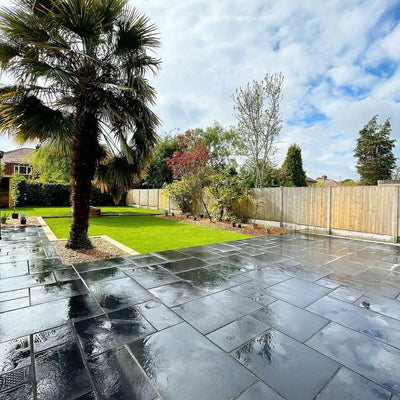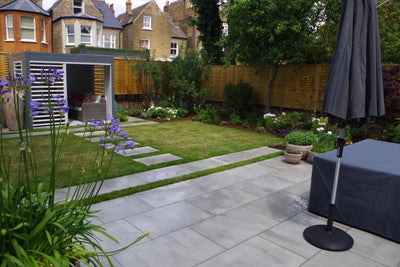






Outdoor Tiles for Patios: What You Need to Know Before Buying
Outdoor tiles for patios are porcelain paving slabs — the same product, different name. The critical difference is specification: genuine outdoor porcelain is 20mm thick, R11 anti-slip rated, and frost-proof (water absorption below 0.5%). Indoor porcelain tiles repurposed for outdoor use are 8-12mm thick, often unrated for slip, and will crack in their first UK winter. If you're searching for "outdoor tiles," you need 20mm outdoor-grade porcelain paving — from £19/m² delivered.
If you've been searching for "outdoor tiles" and ended up confused by the difference between tiles, paving, and slabs — you're not alone. The UK market uses these terms interchangeably, which makes comparison difficult. This guide cuts through the terminology, explains what actually matters, and helps you buy the right product without overpaying or risking a failed installation.
Outdoor tiles vs paving slabs — what's the difference?
Functionally, nothing. "Outdoor tiles," "porcelain paving," "garden tiles," and "porcelain paving slabs" all describe the same product: a factory-made porcelain slab designed for outdoor use. The terminology depends on who's selling it:
| Term | Used by | Same product? |
|---|---|---|
| Outdoor tiles | Tile shops, interior designers, homeowners | Yes — if 20mm |
| Porcelain paving | Paving suppliers, landscapers | Yes |
| Garden tiles | Homeowners searching online | Yes — if 20mm |
| Porcelain paving slabs | Paving suppliers, builders merchants | Yes |
| Outdoor porcelain | Everyone | Yes |
The name doesn't matter. The specification does. Whether it's called a tile, a slab, or a paving unit — check the same three things: 20mm thickness, R11 slip rating, frost-proof certification.
Indoor tiles vs outdoor tiles — the dangerous difference
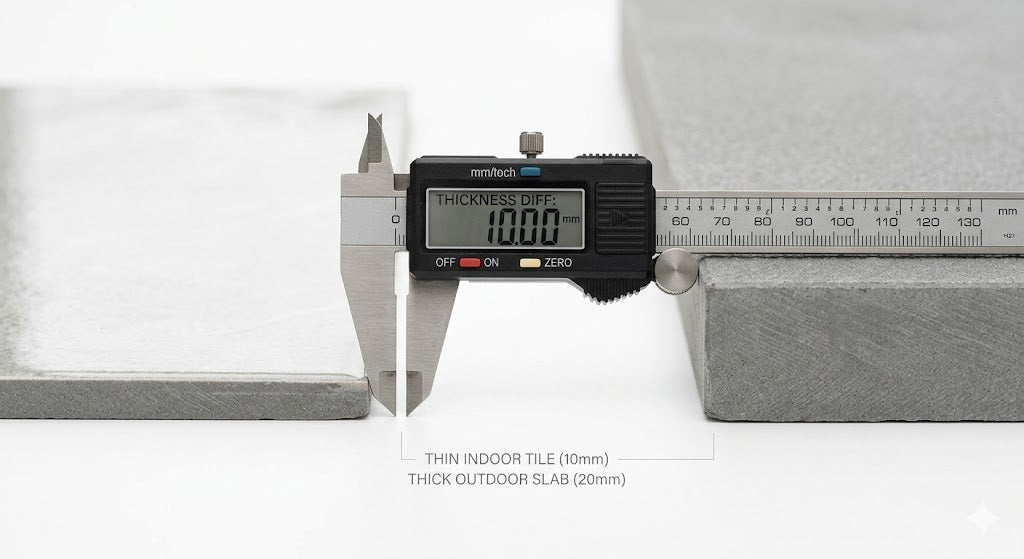
This is where it goes wrong. Some retailers sell standard indoor porcelain tiles as "suitable for outdoor use" — they're not. The difference isn't cosmetic, it's structural:
| Spec | Indoor porcelain tile | Outdoor porcelain paving |
|---|---|---|
| Thickness | 8-12mm | 20mm |
| Anti-slip rating | R9-R10 or unrated | R11 certified |
| Frost resistance | Variable — not guaranteed | Certified frost-proof (<0.5% absorption) |
| Load bearing | Cracks under point loads on mortar bed | Rated for pedestrian and light vehicular use |
| Installation | Adhesive on flat substrate | Mortar bed on compacted sub-base |
| Price | £15-30/m² | £18-48/m² |
They crack: 8-12mm porcelain doesn't have the flexural strength to span a mortar bed under foot traffic. The slab flexes, the mortar bond breaks, the tile cracks — often within the first season.
They become lethal when wet: indoor tiles with R9 or no slip rating become dangerously slippery when wet with rain. A wet R9 tile on an exposed patio is a slip injury waiting to happen.
They frost-crack: indoor tiles may have higher water absorption than outdoor-rated porcelain. Water gets in, freezes, expands, and shatters the tile from inside. One bad winter destroys the surface.
The price difference between indoor tiles (£15-30/m²) and genuine outdoor porcelain (£19-48/m²) is often minimal — especially at the direct-importer end of the market. Saving £5/m² on indoor tiles that fail within two years isn't a saving, it's a waste.
What to look for when buying outdoor tiles
Whether the product is called "outdoor tiles," "garden tiles," or "porcelain paving" — apply the same checklist:
Non-negotiable for outdoor use on a mortar bed. If the listing says 10mm, 12mm, or doesn't state thickness — it's an indoor tile. Don't use it outside.
The minimum recommended rating for open-air residential use in the UK. "Anti-slip" without an R-number is a marketing claim, not a certification. Read our full anti-slip rating guide.
The UK gets frost. If the tile doesn't explicitly state frost-proof performance with a water absorption rate, assume it isn't rated for outdoor use in British winters.
Some tile shops quote per tile or exclude VAT. Convert everything to price per m² inc VAT and add delivery cost. A "cheap" tile at £8 per tile for a 600×600 works out to £22.22/m² before delivery and VAT. Read our brand comparison guide for the full pricing breakdown.
Popular outdoor tile sizes
Outdoor porcelain is available in the same sizes whether you call them tiles or paving slabs:
600×600mm — the most common "tile" size. Familiar to anyone who's tiled a bathroom or kitchen floor. The square format creates a clean grid pattern and is the easiest to lay for DIYers.
900×600mm — the most popular outdoor size in the UK. Rectangular format with fewer joints than 600×600. Creates a more contemporary look with better visual scale.
1200×600mm — large format for premium modern patios. Minimal joints, maximum visual impact. Popular for seamless indoor-outdoor transitions with bifold doors.
800×800mm — large square format. Less common but suits modern grid layouts where you want scale without going rectangular.
Outdoor tiles vs natural stone paving
If you're choosing between porcelain "tiles" and natural stone "paving," you're really choosing between two different materials with different strengths:
| Feature | Porcelain outdoor tiles | Natural stone paving |
|---|---|---|
| Maintenance | None | Annual clean, optional sealing |
| Stain resistance | Stain-proof | Porous — can stain without sealer |
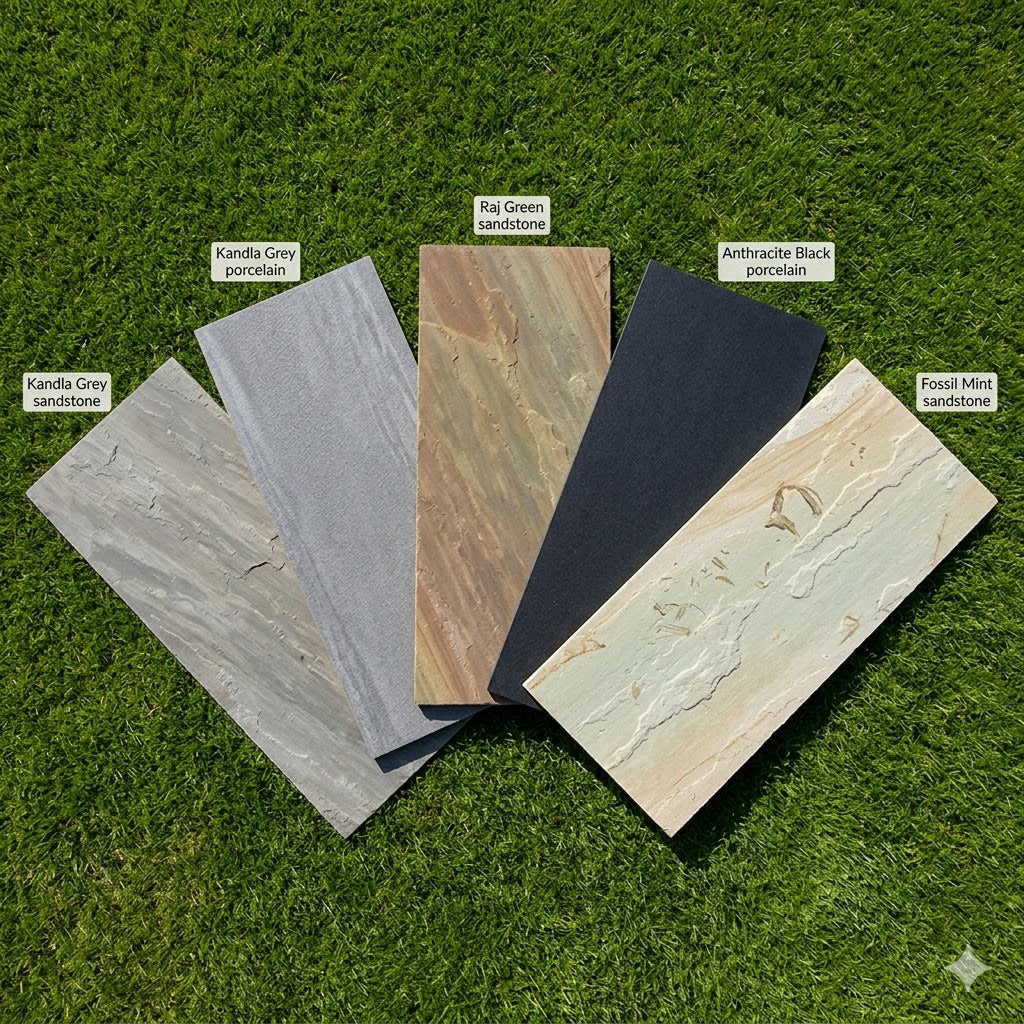
| Character | Uniform, consistent | Every slab unique, natural variation |
| Summer heat | Gets hot (42-55°C on dark) | Stays cooler (35-40°C) |
| DIY cutting | Needs diamond wet cutter | Standard angle grinder |
| Starting price | From £19/m² | From £20/m² |
Material costs are nearly identical. The choice comes down to maintenance preference and aesthetic taste. Read our full sandstone vs porcelain comparison.
How outdoor tiles are installed
Outdoor porcelain tiles are NOT installed like indoor tiles. Indoor tiles go on adhesive over a flat substrate (concrete screed or backer board). Outdoor tiles go on a mortar bed over a compacted sub-base — the same method as any paving slab:
1. Excavate and compact a MOT Type 1 sub-base (100-150mm)
2. Apply SBR primer to the sub-base (or existing concrete if overlaying)
3. Spread a full 5:1 mortar bed (20-30mm)
4. Prime the back of each tile with SBR — mandatory for porcelain
5. Lay each tile and tap to level
6. Point joints with Ultrascape Porcelpoint (flowable porcelain grout, £50/tub)
The SBR priming step is the key difference from natural stone. Porcelain is non-porous — standard mortar won't bond to it without the chemical primer. Skip it and the tiles lift within 12-24 months.
Read our full laying guide and mortar mix guide for the complete method.
Browse outdoor porcelain tiles
20mm, R11 rated, frost-proof — every colour in stock with free UK delivery. From £19/m².
Browse Porcelain Paving Order SamplesFrequently asked questions
Can I use indoor tiles outside?
No. Indoor porcelain tiles (8-12mm) are too thin for outdoor mortar-bed installation, often lack anti-slip ratings for wet conditions, and may not be frost-proof. They crack under load, become dangerously slippery when wet, and can shatter in UK winters. Always use 20mm outdoor-rated porcelain for patios, paths, and garden areas.
Are outdoor tiles the same as porcelain paving?
Yes — "outdoor tiles," "porcelain paving," "garden tiles," and "porcelain paving slabs" all describe the same product. The terminology varies by retailer and industry. What matters is the specification: 20mm thickness, R11 anti-slip rating, and frost-proof certification with water absorption below 0.5%.
How much do outdoor tiles cost?
Genuine 20mm outdoor porcelain ranges from £18-48/m² depending on brand and supply chain. Direct importers offer £18-22/m². Mid-range online suppliers charge £22-30/m². Premium merchant brands charge £28-48/m². The porcelain specification is the same across all tiers — the price difference is distribution margin. Read our brand comparison guide.
Do outdoor tiles need grouting?
Yes — the joints between outdoor tiles must be filled with a suitable jointing compound. For porcelain, use a flowable grout like Ultrascape Porcelpoint (£50/tub). Never use standard bathroom grout — it's not designed for outdoor expansion, contraction, and weather exposure. Read our jointing compound guide.
Can I match my indoor floor tiles to my patio?
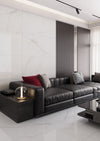
Some porcelain ranges are available in both indoor (10mm) and outdoor (20mm) versions — same colour and pattern, different thickness. If seamless indoor-outdoor continuity matters (common with bifold doors), ask your tile supplier if an outdoor 20mm version of your indoor tile exists. Alternatively, choose a similar-toned outdoor porcelain that complements rather than matches exactly.