







Back Garden Ideas: 12 Designs That Work in Real UK Gardens
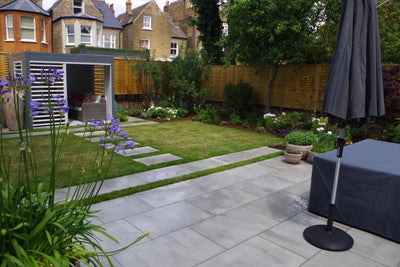
The best back garden designs start with zoning — separate your garden into a dining zone (paved, near the house), a lounging zone (paved or lawn, sun-facing), and a planting zone (borders, raised beds). Use the same paving colour throughout for continuity but vary the format — slabs for the patio, setts for borders, stepping stones for paths. A 20m² paved area with defined planting costs approximately £1,100-1,400 DIY or £2,400-3,200 professionally installed.
Show gardens look incredible but cost £30,000 and take a team of landscapers a month. Real UK back gardens have limited budgets, awkward shapes, north-facing walls, and a shed in the corner. These 12 ideas are designed for actual British gardens — the ones behind terraced houses, 1930s semis, and new-build estates — with real products, honest costs, and results you can achieve yourself or with a local landscaper.
Layout and zoning
Divide your garden into three zones working outward from the house: Zone 1 — paved dining and cooking area directly outside the back door (porcelain for stain resistance near food). Zone 2 — sun-facing lounging area with comfortable seating (sandstone for barefoot comfort, or lawn for children). Zone 3 — productive or planted area at the far end (raised beds, borders, shed, compost).
This layout works for gardens of any size — a 6m-deep terraced garden uses 2m per zone. A 15m-deep suburban garden uses 5m per zone. The zones stay proportional, only the scale changes.
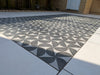
In narrow terraced gardens (3-4m wide), a rectangular patio running parallel to the house makes the space feel like a corridor. Instead, angle the patio at 45° to the back wall — the diagonal creates the longest visual line across the garden, making it feel wider. Use the triangular off-cuts of space at the corners for planting beds.
Best material: Kandla Grey porcelain 600×600 — the square format suits diagonal layouts better than rectangular slabs.
Instead of a patio against the house and lawn at the back, wrap the paving around two or three sides of a central lawn panel. This creates usable paved space in both sun and shade throughout the day — the morning coffee spot on the east side, the afternoon lounging spot on the west. The central lawn becomes a green focal point rather than an unused strip.
Cost: uses more paving than a simple rectangle (25-30m² vs 15-20m²) but creates a garden that feels three times more designed.
Dining and entertaining
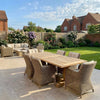
Dedicate a 3m × 3m paved area near the house for a barbecue or outdoor kitchen. Porcelain paving is essential here — cooking oil, food spills, and grease wipe off the non-porous surface. Sandstone absorbs grease stains permanently. Position the cooking zone within 3m of the back door for easy access to the indoor kitchen.
Tip: run an electrical conduit under the paving during installation for future outdoor lighting or power sockets. Retrofitting is expensive.
If your garden slopes away from the house, use the gradient to create a sunken seating area — paved at a lower level with two or three steps down. The change in level creates a sense of enclosure and intimacy that a flat patio can't achieve. Use porcelain bullnose copings on the step fronts for a professional finish and safe rounded edges.
Read our drainage guide — sunken areas need careful drainage planning to avoid water pooling at the lowest point.
Family gardens
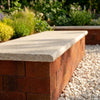
The classic UK back garden layout: a paved patio (15-20m²) for dining, and a lawn beyond for children, pets, and ball games. What makes this work better than most: a defined edge between patio and lawn using sandstone setts or porcelain edging planks, and a mowing strip (one row of slabs flush with the grass) so the mower cuts cleanly without manual edging.
Best paving for families: riven sandstone — naturally slip-resistant when wet, stays cooler than porcelain for barefoot children in summer, and tough enough to handle bikes, footballs, and garden furniture being dragged across it.
For families with young children: paved dining zone near the house, rubber play surface or bark under the climbing frame, lawn for running, and a gravel sensory area with stepping stones. Each surface serves a purpose, and the variety creates visual interest. Connect all zones with a stepping stone path so children can move between areas safely.
Budget-smart designs
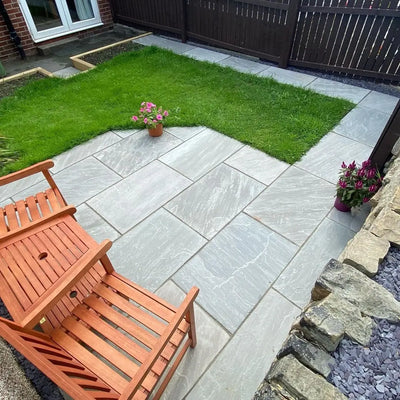
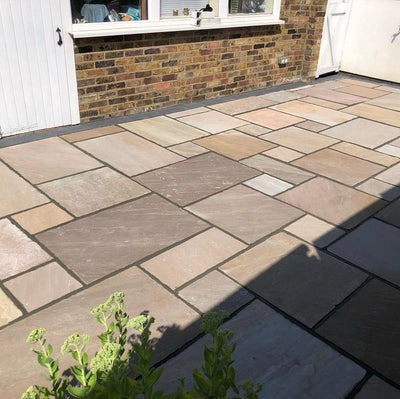
Kandla Grey sandstone patio pack from £20/m² — mixed sizes that lay in a random pattern with natural colour variation across every slab. It's the most character per pound in the paving market. A 15m² patio pack DIY build costs approximately £895 all-in including sub-base, mortar, jointing, and skip hire.
You don't need to pave the entire garden. A 10m² dining patio (approximately £550 DIY in sandstone) with generous planting beds, a gravel path, and a small lawn creates a more interesting garden than 30m² of wall-to-wall paving. The planting provides colour, privacy, wildlife, and seasonal change that paving alone can't deliver.
Read our 3 real patios built for under £500 for exact material lists and costs.
Contemporary and modern
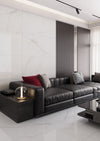
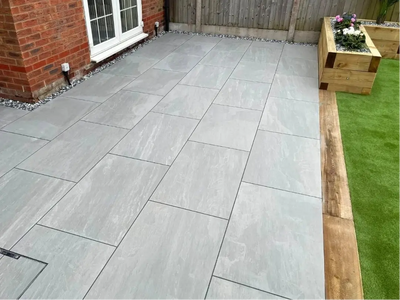
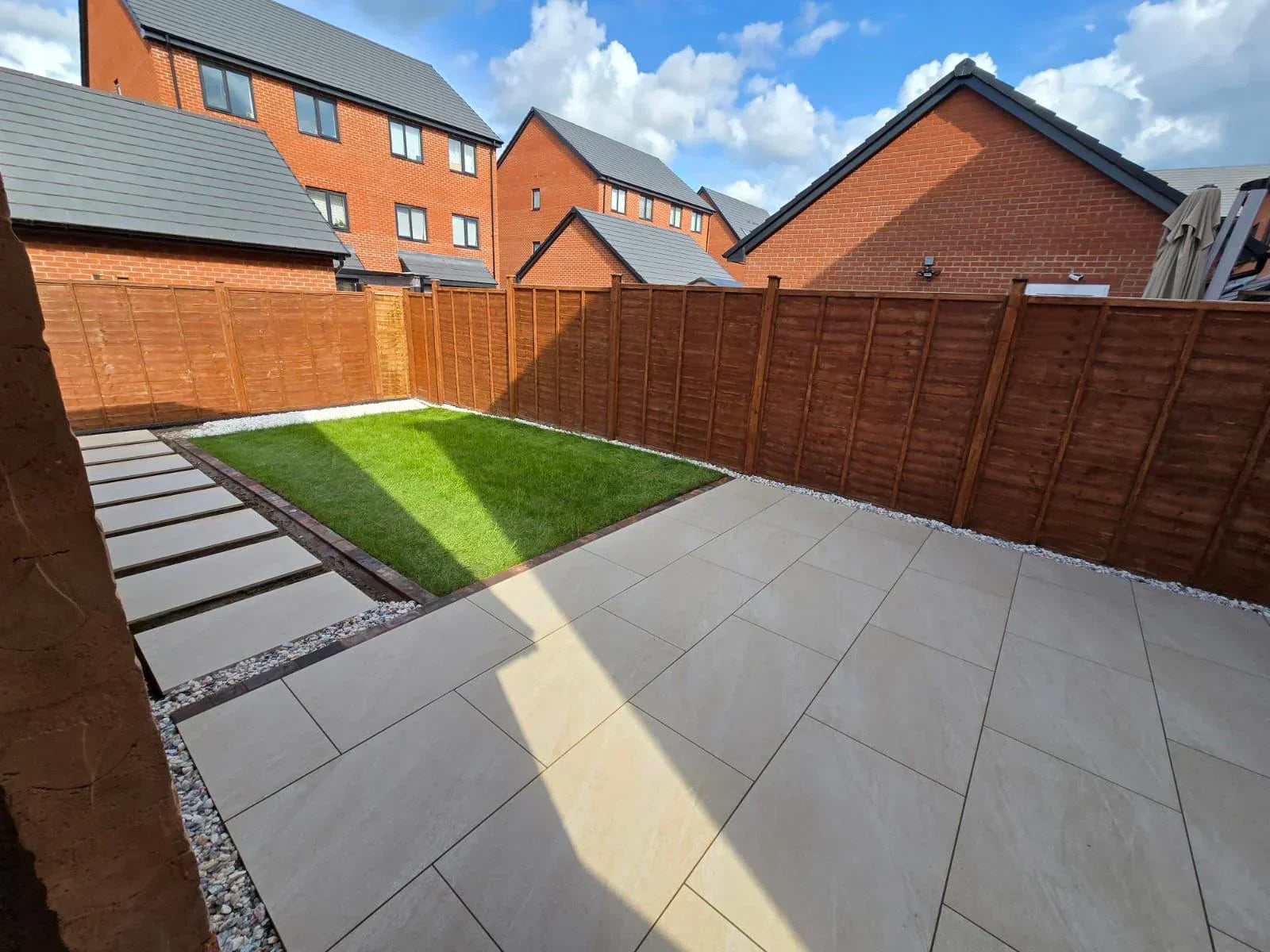
Kandla Grey porcelain extending from bifold doors across the full patio width at the same level as the indoor floor. The seamless transition between inside and outside makes both spaces feel larger. Use 1200×600mm large format for minimal joints and maximum visual continuity.
Tip: match the joint direction of your indoor and outdoor tiles for a truly continuous line. Even if the materials are different, aligned joints create the illusion of a single surface.
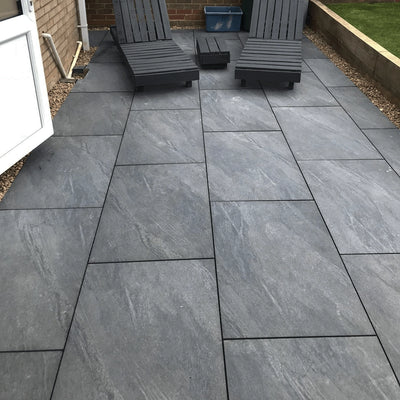
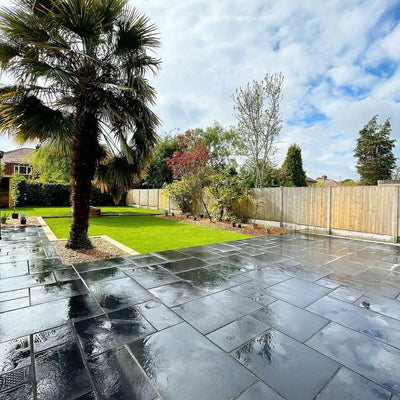
Anthracite Black porcelain as the base, with architectural planting in oversized pots — olive trees, topiary balls, ornamental grasses, and a single specimen fern. The dark paving makes green foliage pop and creates a gallery-like outdoor space. Best for sheltered, urban gardens where the planting can be controlled.
Note: dark porcelain gets hot in summer sun — hose it down before barefoot use or add shade over the seating area.
Making the most of difficult spaces
North-facing gardens spend most of the day in shade — which means damp surfaces, algae risk, and limited warmth. Three design moves that help:
Light-coloured paving: Fossil Mint sandstone or light porcelain reflects available light and brightens the space. Dark paving in a north-facing garden absorbs light and makes it feel gloomier.
Porcelain in shaded zones: the non-porous surface resists algae better than sandstone in permanently damp conditions. Less cleaning, less slip risk.
Position seating at the far end: in many north-facing gardens, the far end catches afternoon and evening sun while the area near the house is in shadow. Put the dining patio where the sun is, not where the back door is. Connect with a paved path.
Quick cost guide
| Garden type | Paved area | DIY total | Professional total |
|---|---|---|---|
| Small terraced yard | 8-12m² | £500-800 | £1,200-1,800 |
| Standard family patio | 15-20m² | £900-1,400 | £2,200-3,200 |
| Wrap-around patio | 25-35m² | £1,500-2,400 | £3,500-5,500 |
For exact figures based on your dimensions, use our patio cost calculator.
Start your back garden project
Sandstone, porcelain, edging, jointing — all in stock with free UK delivery. Order samples to see materials in your garden first.
Browse All Paving Order SamplesFrequently asked questions
How do I start designing my back garden?
Start with zones: where you'll eat (near the house), where you'll relax (follow the sun), and where you'll plant or store (far end). Measure each zone, choose a paving material, and work out the cost using our calculator. Don't try to design everything at once — get the patio right first and build outward from there.
What is the best paving for a back garden?
Indian sandstone for traditional warmth and natural character (from £20/m²). Porcelain for modern aesthetics and zero maintenance (from £19/m²). For a garden with both dining and lounging areas, use porcelain near the kitchen and sandstone in the sun. Read our complete garden paving guide.
How much does a back garden makeover cost?
A 15-20m² paved patio with planting, edging, and a path costs approximately £1,100-1,400 DIY or £2,400-3,200 professionally installed. Adding a lawn, raised beds, and fencing increases the total to £3,000-6,000 for a complete garden makeover. The paving is typically 40-50% of the total project cost.
What should I do with a small back garden?
Use large-format slabs (900×600 or 1200×600) to reduce joints and make the space feel bigger. Choose light colours to reflect light. Keep the design simple — one material, defined edges, structural planting at the boundaries. Read our 12 small patio ideas.
,%20a%20lounging%20zone%20(paved%20or%20lawn,%20sun-facing),%20and%20a%20planting%20zone%20(borders,%20r...)