






Porcelain vs Limestone Paving: Which One Belongs in Your Garden?
Porcelain is the practical choice — zero maintenance, stain-proof, frost-proof, and consistent in colour for decades. Limestone is the premium natural choice — refined texture, subtle geological character, and a warmth that manufactured materials can't replicate. The trade-off: limestone needs sealing, stains from acidic substances (wine, citrus, dog urine), and requires more care than porcelain. Choose porcelain for busy family gardens. Choose limestone for formal gardens where you're willing to maintain it.
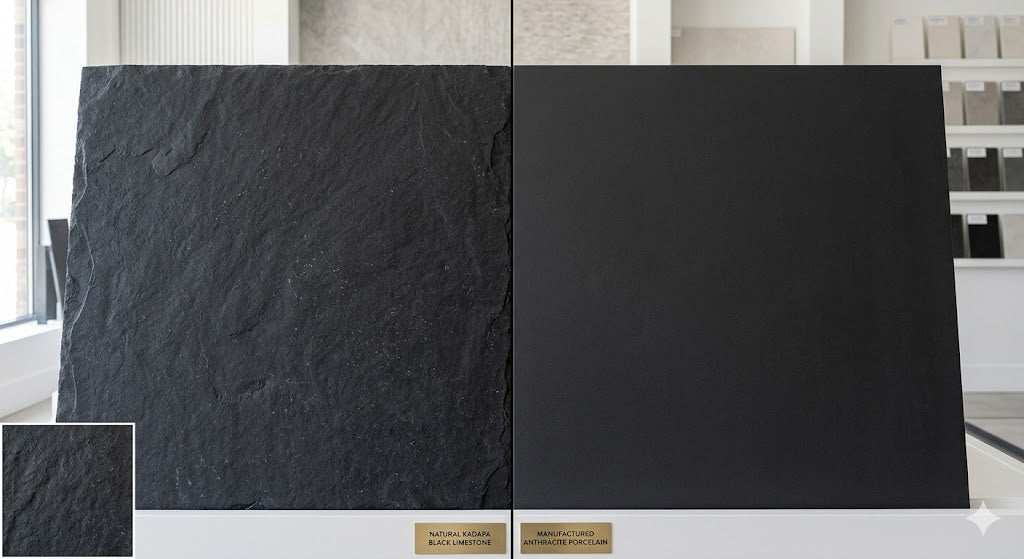
This comparison exists because customers regularly ask us: "Should I get limestone or porcelain?" They're often choosing between Kadapa Black limestone and Anthracite Black porcelain, or between Dijon Sinai limestone and a cream porcelain. Similar colour, similar price point, completely different materials. The answer depends on how you'll use your garden and how much maintenance you're willing to do. Here's the honest breakdown.
The 8-factor comparison
1. Maintenance
Non-porous surface. Stains sit on top and wipe off. Algae can't colonise the surface (only the joints). No sealing, no treating, no annual scrubbing. Hose it down once a year if you feel like it. Read our porcelain cleaning guide.
Limestone is porous — it absorbs liquids and stains if unsealed. Sealing is recommended within 4-6 weeks of installation and reapplied every 3-5 years. Annual cleaning with a pH-neutral cleaner is needed to prevent algae buildup. Acid-based cleaners damage limestone — you can't just grab any patio cleaner off the shelf.
2. Stain resistance
Red wine, coffee, BBQ grease, rust, paint — everything wipes off the non-porous surface. You can host a barbecue, spill everything, and clean it up the next morning without a trace.
Limestone is calcium carbonate. It reacts chemically with acid. Red wine, citrus juice, vinegar, tomato sauce, and dog urine all etch the surface — leaving dull, rough patches that can't be polished out. Even sealed limestone is vulnerable if spills aren't cleaned promptly. This is the single biggest drawback of limestone for family patios and BBQ areas.
3. Frost performance
Water absorption below 0.5% means porcelain doesn't absorb moisture, so freeze-thaw cycles can't damage it. No spalling, no cracking, no surface erosion in even the harshest UK winters.
Quality Indian limestone (Kadapa Black, Kota Blue) handles UK frost well — they're dense, low-porosity stones. But softer limestones can suffer surface spalling after prolonged freeze-thaw cycles, especially if water pools on the surface. Proper drainage and a good sub-base prevent most frost issues.
4. Appearance and character
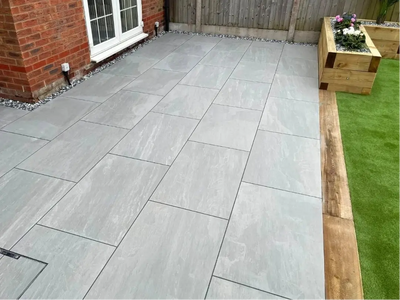
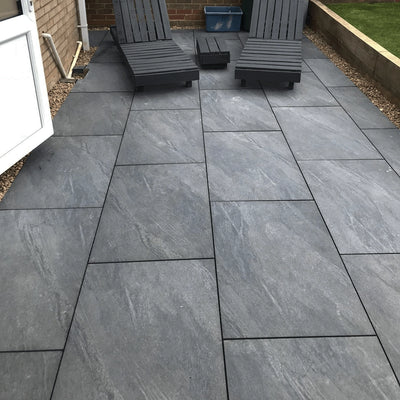
Porcelain reproduces the look of natural stone through digital printing — consistent colour, pattern, and texture across every slab. Some find this predictability appealing. Others find it flat and lifeless compared to real stone. Porcelain doesn't weather, patina, or change over time — the patio looks the same in year 20 as it did in year 1.
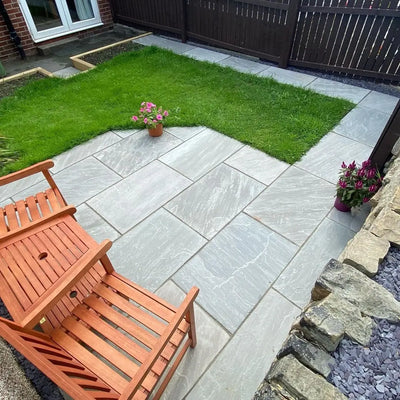
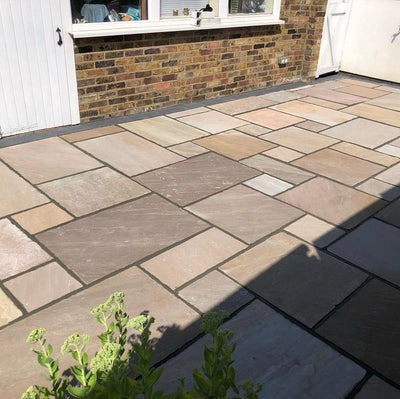
Every limestone slab is unique. The fine-grained texture, subtle fossil impressions, and natural colour variation create a surface with depth and refinement that porcelain can only approximate. Limestone also changes with time — it develops a gentle patina, and colours shift subtly between wet and dry, season to season. For gardens where aesthetics are the priority, limestone has a warmth and sophistication that manufactured materials can't match.
5. Cost
| Cost factor | Porcelain | Limestone |
|---|---|---|
| Starting price | From £19/m² | From £21/m² |
| Sealer cost (lifetime) | £0 | £80-150 every 3-5 years |
| Annual maintenance cost | £0 | £20-50 (cleaner + time) |
| Installation (professional) | £50-80/m² all-in | £50-80/m² all-in |
| 20-year total (20m² patio) | £1,380-1,980 | £1,820-2,680 |
Initial material costs are similar. The difference is ongoing — porcelain costs nothing to maintain, while limestone needs sealer, specialist cleaner, and your time every year. Over 20 years, porcelain is £400-700 cheaper in total cost of ownership.
6. Grip and slip resistance
Porcelain: R11-rated textured porcelain provides good grip in wet conditions. Smooth-finish porcelain can be slippery when wet — always choose textured for outdoor use.
Limestone: Naturally textured surface provides good grip. Honed limestone is smoother and can be slippery when wet — riven or brushed finishes are safer for outdoor patios. Limestone doesn't receive formal R-ratings like porcelain but performs well in practice.
Verdict: Both are safe outdoors if you choose the right finish — textured porcelain or riven/brushed limestone.
7. Heat in summer
Porcelain: Dark porcelain absorbs heat and can become uncomfortable barefoot on hot summer days — 50°C+ in direct sun. Light porcelain stays at 35-42°C (manageable).
Limestone: Stays cooler than porcelain in the same conditions. Natural stone dissipates heat more effectively than vitrified porcelain. Even dark limestone (Kadapa Black) stays cooler than dark porcelain.
Verdict: If you walk barefoot on your patio in summer, limestone is more comfortable. If you always wear shoes outdoors, this doesn't matter.
8. Lifespan
Porcelain: 30-50+ years. The material doesn't degrade — colour stays constant, surface doesn't erode. The limiting factor is joint failure and sub-base movement, not the porcelain itself.
Limestone: 30-50+ years when properly laid and maintained. Dense Indian limestone (Kadapa Black, Kota Blue) is extremely durable. Softer limestones may show surface wear sooner, especially in high-traffic areas.
Verdict: Both last a full generation. Neither needs replacing within your lifetime if properly installed.
The decision matrix
| Your situation | Choose | Why |
|---|---|---|
| Family with young children | Porcelain | Stain-proof for spills and mess, R11 anti-slip, zero maintenance |
| Dog owners | Porcelain | Dog urine damages limestone (acid etching) — porcelain is immune |
| BBQ and entertaining | Porcelain | Grease, wine, sauce — nothing stains porcelain |
| Formal garden, period property | Limestone | Refined natural texture suits formal settings |
| Rental property or holiday let | Porcelain | Zero maintenance between tenants/guests |
| Barefoot in summer | Limestone | Stays cooler than porcelain in direct sun |
| Aesthetics are the top priority | Limestone | Natural character porcelain can't replicate |
| Lowest lifetime cost | Porcelain | £400-700 less over 20 years (no sealer/maintenance) |
Our limestone range
Kadapa Black — dense, dark, fine-grained. The most durable limestone in our range. Suits contemporary gardens with dark architectural elements.
Kota Blue — blue-grey with subtle warm undertones. Hard-wearing and distinctive.
Tandur Grey — mid-tone grey, fine texture. Understated and refined.
Tandur Yellow — warm golden limestone. Suits period properties and cottage gardens.
Dijon Sinai — premium Egyptian limestone in warm cream tones. The most refined stone in our collection.
Our porcelain range
If the comparison above pointed you toward porcelain, browse our full porcelain range — Kandla Grey, Anthracite Black, Anthracite Grey, Smoke Grey, and more. All 20mm, R11 anti-slip, frost-proof. From £19/m² with free delivery.
See both in your own garden
Order samples of your shortlisted limestone and porcelain colours. See them side by side, wet and dry, in your own light. Then decide.
Order Samples Browse LimestoneFrequently asked questions
Is porcelain better than limestone?
For maintenance and practicality, yes — porcelain is stain-proof, frost-proof, and needs zero upkeep. For natural beauty and character, no — limestone has a refined, geological texture that porcelain can only approximate. The "better" material depends on whether you prioritise low maintenance or natural aesthetics.
Does limestone stain easily?
Limestone is vulnerable to acidic stains — wine, citrus, vinegar, and dog urine can etch the calcium carbonate surface. Sealing reduces this risk significantly but doesn't eliminate it entirely. If you barbecue regularly or have dogs, porcelain is the safer choice for stain resistance.
Can I use limestone around a barbecue area?
You can, but it requires more care. Seal the limestone before use and clean spills promptly — particularly acidic spills like wine or tomato sauce. If low maintenance is a priority in your BBQ area, consider our Two-Zone Patio concept — porcelain for the cooking/dining zone and limestone for the lounging zone.
Is limestone slippery when wet?
Riven or brushed limestone provides good grip when wet. Honed (polished) limestone can be slippery — avoid honed finishes for outdoor patios. All our limestone is supplied in riven or natural-finish surfaces that are safe for outdoor use.
Which is cheaper — porcelain or limestone?
Initial material costs are similar — porcelain from £19/m², limestone from £21/m². The difference is lifetime cost: porcelain needs no sealer (£0) and no maintenance products (£0), while limestone needs sealer every 3-5 years (£80-150) and specialist cleaner annually (£20-50). Over 20 years, porcelain is £400-700 cheaper in total.