







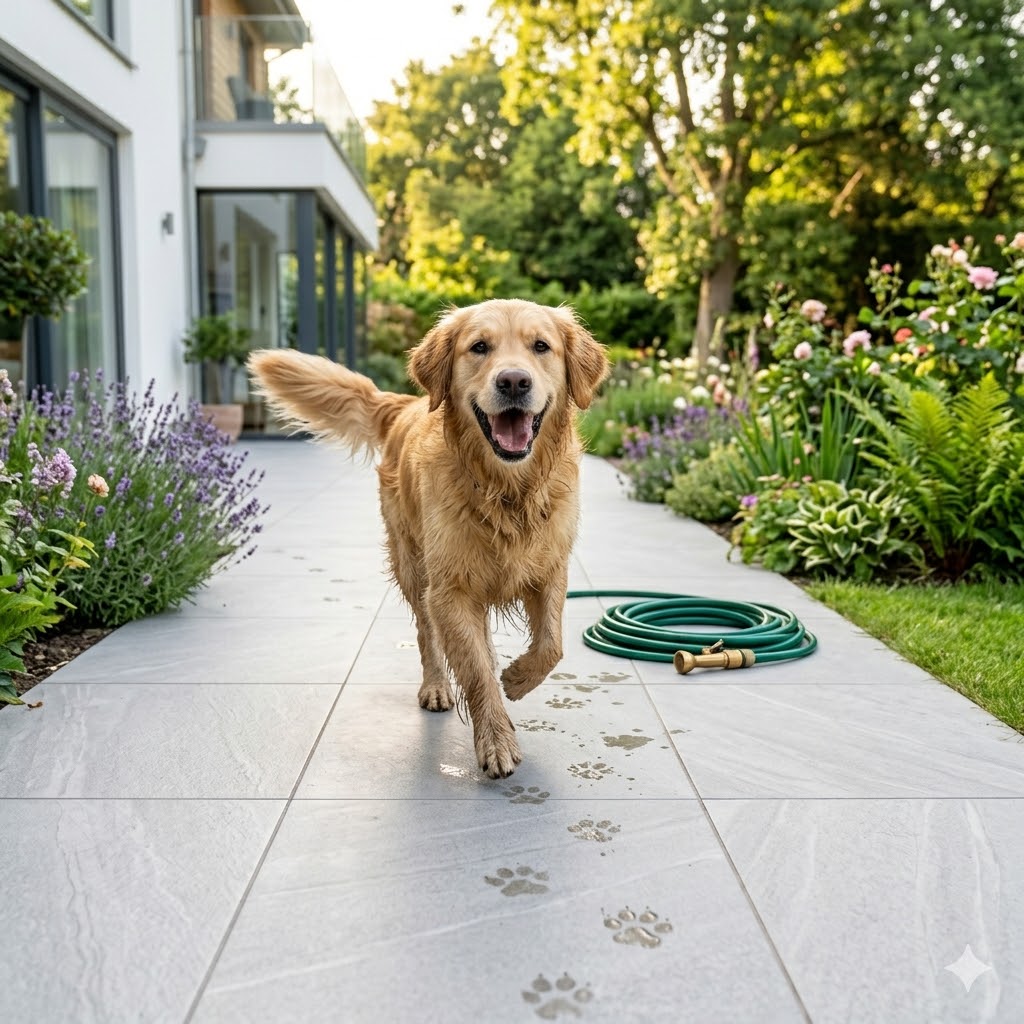
Paving for Dogs: How to Build a Pet-Friendly Garden That Lasts
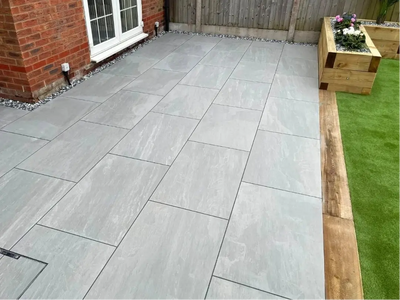
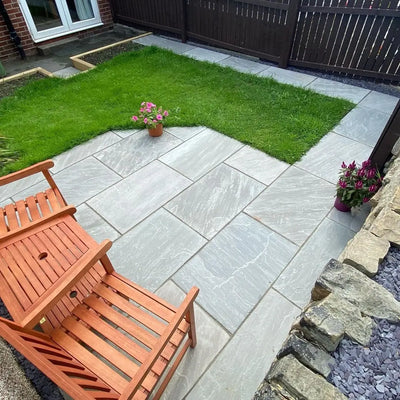
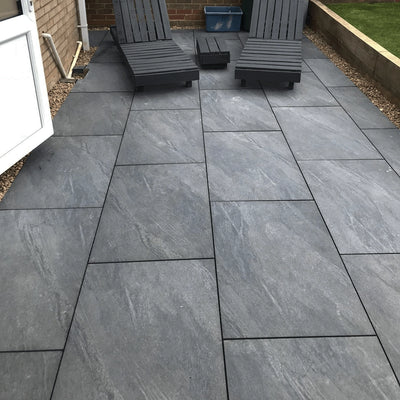
The best paving for dog owners is porcelain — non-porous (urine and mud wash off without staining), scratch-resistant (claws can't damage the glazed surface), and easy to hose clean daily. Sandstone works well if sealed, with the advantage of staying cooler for paw pads in summer and providing better grip for running dogs. Avoid limestone (urine etches the acid-sensitive surface) and polished surfaces (slippery for wet paws).
Dog owners don't just use their patio for dining and lounging — it doubles as a toilet, a muddy paw staging area, a digging zone, and a high-speed running track. The paving that looks perfect in a show garden lasts about three weeks with a Labrador. This guide is for the 12 million UK households with dogs — because your paving needs to survive real life, not a lifestyle photoshoot.
What dogs actually do to paving
Before choosing a material, understand what you're protecting against:
| Dog behaviour | Damage to paving | Which materials suffer |
|---|---|---|
| Urinating | Acidic urine stains, discolours, and etches porous surfaces | Limestone (acid-sensitive), unsealed sandstone |
| Muddy paws | Mud ground into porous surfaces, stains joints | Unsealed sandstone, limestone |
| Scratching/claws | Surface scratches from running, turning, digging at edges | Limestone (soft), sawn sandstone (smooth) |
| Digging at edges | Undermines border slabs, dislodges jointing | All — this is a boundary issue, not material |
| Running/sliding | Dogs need grip — smooth or wet surfaces cause injuries | Polished porcelain, sawn sandstone when wet |
| Chewing/licking | Dogs lick paving surfaces — chemical treatments must be pet-safe | All — cleaning product choice matters |
Best paving materials for dog owners
Porcelain — the easy-clean champion
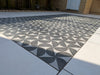
Porcelain paving is purpose-built for the mess dogs create. The non-porous surface means nothing penetrates:
Urine: sits on the surface and hoses off completely. No staining, no discolouration, no lingering odour absorbed into the stone. On a porcelain patio, a daily hose-down after the dog's been out keeps the surface pristine.
Mud: dries on the surface and sweeps or hoses off. Doesn't grind into the material the way it does with porous sandstone.
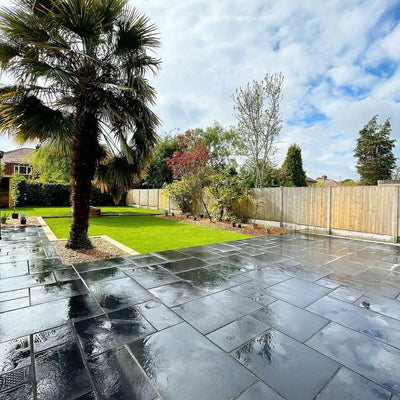
Claws: porcelain's glazed surface is harder than dog claws — even large breeds running and turning at speed won't scratch it. The exception: if grit or small stones are trapped under the claws, they can cause fine surface scratches over years. Regular sweeping prevents this.
Cleaning: hose, wipe, done. No specialist cleaners needed for daily dog mess. Read our porcelain cleaning guide.
R11-rated textured porcelain provides adequate grip for dogs in the rain. But dogs running at full speed on smooth or wet porcelain can slide — particularly on turns. If your dog is a high-energy runner, textured porcelain (not smooth) is essential. Check the product description confirms R11 with a textured surface, not just the R-rating alone.
Riven sandstone — the grip-and-comfort option
Riven sandstone provides two advantages that porcelain can't match for dogs:
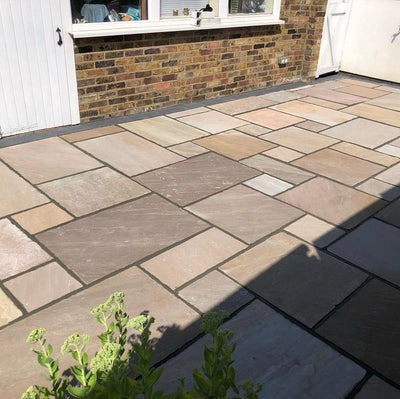
Superior grip: the naturally rough, textured surface of riven sandstone provides the best grip of any paving — even when soaking wet. Dogs running, turning, and playing on riven sandstone don't slide the way they can on smooth or glazed surfaces. For high-energy breeds, this matters.
Cooler paw pads: in summer sun, sandstone stays 10-15°C cooler than dark porcelain. Dog paw pads are sensitive to hot surfaces — on a 30°C day, dark porcelain can reach 50°C+ (painful for paws), while sandstone stays at 35-40°C (safe). Read our heat comparison.
The trade-off: sandstone is porous. Dog urine absorbs into unsealed sandstone and can leave discolouration over time — particularly on lighter colours like Fossil Mint. Sealing with an impregnating sealer significantly reduces absorption. Darker colours like Kandla Grey and Raj Green hide minor staining better than pale tones.
Materials to avoid with dogs
Dog urine is acidic. Limestone is calcium carbonate — it reacts with acid. Regular urination on limestone paving etches the surface, creating rough, dull patches that can't be reversed. If you have a dog that uses the patio as a toilet (most do), limestone is the worst natural stone choice.
Honed porcelain, polished granite, and smooth sawn sandstone all become slippery when wet. Dogs don't adjust their running speed for surface conditions — a dog at full sprint hitting a wet polished surface slides uncontrollably. This causes paw injuries, joint strain, and worse. Always choose textured surfaces: riven sandstone or R11 textured porcelain.
Decking is slippery when wet (dangerous for dogs), absorbs urine (permanent odour), splinters (injures paw pads), and rots faster with daily dog mess exposure. Decking is the worst possible surface for a dog-friendly garden.
Head-to-head: porcelain vs sandstone for dog owners
| Factor | Porcelain (textured R11) | Riven sandstone (sealed) |
|---|---|---|
| Urine resistance | Stain-proof — hoses off completely | Good when sealed — some absorption if sealer wears |
| Mud cleaning | Hoses off instantly | Hoses off — some grinding into texture over time |
| Claw scratch resistance | Excellent — harder than claws | Good — riven texture hides minor scratches |
| Wet grip for dogs | Good (textured R11 only) | Excellent — best natural grip of any paving |
| Paw comfort in summer | Light colours OK, dark gets hot | Stays cool — safe for paws |
| Daily cleaning effort | 30 seconds — hose and done | 2-3 minutes — may need brushing |
| Starting price | From £19/m² | From £20/m² |
Best overall for dog owners who prioritise easy cleaning: Kandla Grey porcelain (textured R11) — stain-proof, scratch-proof, 30-second daily cleanup.
Best for active dogs who run and play hard: Kandla Grey riven sandstone (sealed) — best grip, coolest underfoot, hides minor dirt within its natural colour variation.
Dog-friendly garden design tips
Train your dog to use a specific area of the garden as a toilet — ideally a gravel or bark section away from the main patio. This concentrates the urine damage to one replaceable surface rather than spreading it across your paving. A 2m × 1m gravel pad with a post or marker gives the dog a clear target.
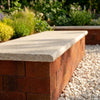
Dogs dig at the edges of paved areas where paving meets soil. A row of sandstone setts or granite setts set deep into the ground at the patio perimeter creates a buried barrier that deters digging. Set the setts 100mm below soil level — the dog hits stone and gives up.
Light-coloured jointing compound shows dirt and urine staining faster than dark. Choose a grey or charcoal jointing compound rather than buff or cream — it hides daily dog mess between professional cleans.
A garden tap within hose reach of the patio makes daily cleanup effortless — 30 seconds with a hose after the dog's been out. Without one, you're carrying buckets from the kitchen. The tap pays for itself in saved time within a month of dog ownership.
Dogs lick paving surfaces. Any cleaning product you use must be pet-safe once dry. Avoid bleach-based cleaners (toxic residue), phenol-based disinfectants (toxic to dogs), and strong acid cleaners. Standard washing-up liquid diluted in water is safe and effective for daily porcelain cleaning. For sandstone, use a pH-neutral paving cleaner labelled pet-safe.
Best colour choices for dog owners
Colour affects how much dog mess shows between cleans:
Best: Raj Green sandstone — the multi-tonal palette (greens, browns, greys) absorbs visual imperfections better than any other colour. Muddy paw prints, minor staining, and everyday dirt disappear into the natural variation. Read our Raj Green guide.
Good: Kandla Grey — mid-tone grey hides moderate dirt without being so dark that mud shows as light marks. The UK's most popular choice for all gardens including pet-friendly ones.
Avoid: Fossil Mint and light cream porcelain — beautiful but every muddy paw print, urine mark, and speck of dirt shows immediately on pale surfaces. High-maintenance with dogs.
Build a garden your dog can't ruin
Porcelain for easy cleaning. Sandstone for natural grip. Both handle everything dogs throw at them.
Browse Porcelain Paving Browse Sandstone PavingFrequently asked questions
What is the best paving for a garden with dogs?
Textured R11 porcelain for maximum stain resistance and easiest cleaning. Sealed riven sandstone for best grip and coolest surface in summer. Both handle urine, mud, and claws. Avoid limestone (acid in urine damages the surface) and any smooth or polished surface (slippery for running dogs).
Does dog urine stain porcelain paving?
No. Porcelain is non-porous — urine sits on the surface and hoses off completely with no staining, discolouration, or odour absorption. This is porcelain's biggest advantage for dog owners. Sandstone absorbs urine if unsealed — sealing reduces this significantly but doesn't eliminate it entirely.
Will dog claws scratch paving?
Porcelain's glazed surface is harder than dog claws — no scratching under normal use. Riven sandstone's textured surface hides minor claw marks within its natural pattern. Limestone is softer and can show claw marks over time. The biggest scratch risk isn't claws directly — it's grit trapped under claws that acts as an abrasive. Regular sweeping prevents this.
Is porcelain too slippery for dogs?
Textured R11-rated porcelain provides adequate grip for most dogs. Smooth or polished porcelain IS too slippery — avoid it in a dog-friendly garden. For very active, high-speed dogs, riven sandstone provides the best natural grip of any paving material. Always check the product description specifies a textured surface, not just the R-rating.
Does hot paving burn dogs' paws?
Dark paving in direct summer sun can reach 50°C+ — uncomfortable and potentially harmful for paw pads. Light sandstone stays at 35-40°C (safe). Light porcelain stays at 35-42°C (safe). The rule: if you can't hold your palm flat on the surface for 5 seconds comfortably, it's too hot for paws. Read our heat comparison.
,%20scratch-resistant%20(claws%20can't%20damage%20the%20glazed%20surface),%20and%20easy%20to%20hose%20clean%20daily.%20San...)