





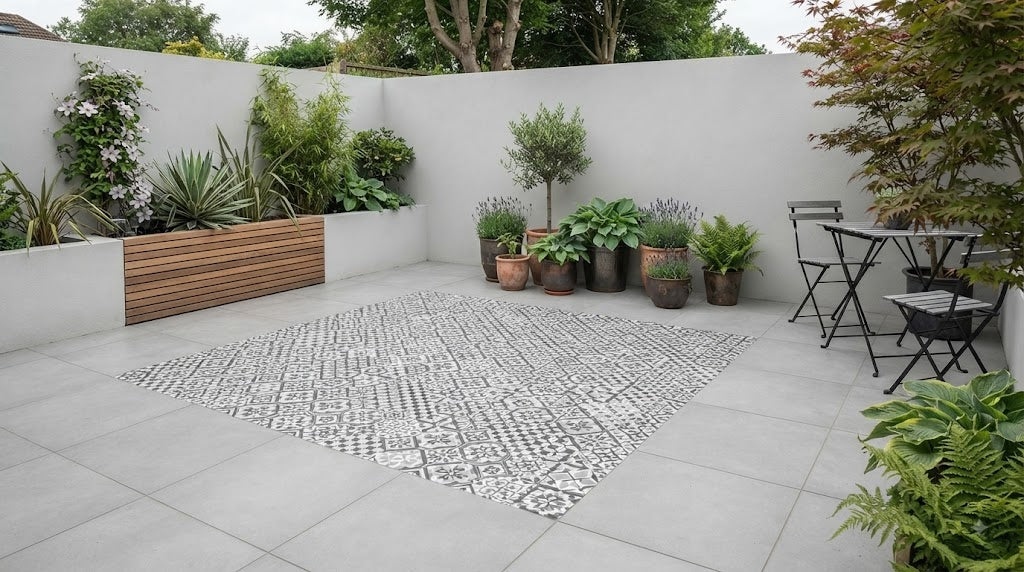
Decorative Porcelain Paving: How to Use Pattern Well
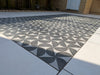
Decorative porcelain paving uses printed patterns — geometric, floral, encaustic-tile and concrete-effect designs — to create a feature surface rather than a plain one. It works best used deliberately: as a defined feature zone, a rug-effect panel within plain paving, or a small courtyard where pattern makes the whole space. Used across a large area it can overwhelm, so most successful designs pair decorative tiles with plain porcelain that lets the pattern breathe. It's outdoor-grade 20mm porcelain, so it's frost-proof, anti-slip and zero-maintenance like any other porcelain — the difference is purely visual.
Patterned paving used to mean expensive hand-laid encaustic tiles that stained, cracked in frost and needed constant sealing. Decorative porcelain gives you the same characterful, patterned look with none of those problems — printed into a slab that shrugs off British winters and wipes clean. The trick is knowing how to use it, because pattern is powerful: get it right and it's the making of a space; overdo it and it's exhausting. Here's how to design with it.
What decorative porcelain actually is
Decorative or "décor" porcelain is standard outdoor porcelain with a patterned design printed into the surface during manufacture and fired in, so it never wears off or fades. Our decorative porcelain range draws on a few traditions: encaustic and Victorian tile designs (the geometric, faintly Mediterranean look), concrete and industrial effects, and floral or ornamental motifs.
Underneath the pattern, it's the same slab as the rest of your porcelain range: 20mm thick, anti-slip textured, frost-proof, stain-proof, and completely maintenance-free. So you get the character of patterned tile with the toughness of outdoor porcelain — a combination that simply wasn't possible with the real encaustic tiles this look is descended from, which were porous, delicate, and hopeless outdoors in the UK climate.
The golden rule: pattern needs plain around it
Decorative porcelain works best in restraint. A whole patio of bold pattern is overwhelming — the eye has nowhere to rest, and what looked striking on one tile becomes chaotic across forty. The most effective designs use decorative tiles as an accent within, or alongside, plain paving. Pattern draws the eye; plain gives it somewhere to rest. You want both.
Nearly every successful decorative-paving scheme follows this principle. The pattern is the jewellery, not the outfit. The plain partner can be a stone-effect porcelain or a simple grey or beige from the main porcelain range — below are the ways designers actually deploy the pattern itself.
5 ways to use decorative porcelain
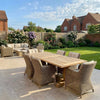
Lay a rectangular panel of decorative tiles within a larger area of plain paving, like an outdoor rug on a plain floor. It defines a zone — under a dining table, in front of a bench, at the centre of a courtyard — and gives the space a focal point without patterning the whole thing. This is the single most popular and most forgiving way to use décor tiles.
Use pattern to mark a specific area with a job — a seating nook, a fire-pit surround, the threshold outside bi-fold doors. The change in surface signals a change in use, the way a different floor material does indoors. It makes a large garden feel considered and zoned rather than one flat expanse.
A small, enclosed courtyard is the one place you can be bold across the whole floor. In a compact space, an all-over pattern reads as intentional and characterful rather than overwhelming, and the enclosure frames it. Mediterranean and encaustic looks especially suit courtyard gardens, roof terraces and townhouse yards.
Run a single row of decorative tiles as a border around a plain patio, or as a runner down a path. It's the most restrained use of all — a hint of pattern that frames the space without dominating it, and a good choice if you love the idea of decorative tile but worry about overdoing it. Porcelain setts work well for a contrasting border in the same vein.
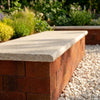
Use decorative tiles on step risers or a low retaining wall face, with plain paving on the treads and ground. It's a designer's trick — the pattern appears at eye level where it's appreciated, on a surface that isn't walked on, and uses only a handful of tiles for maximum effect.
Choosing a pattern that lasts
Pattern is more permanent than colour — you'll live with it for decades, so it's worth choosing with a cooler head than a moodboard encourages.
Match the pattern to the property. Ornate encaustic designs suit period homes, cottages and courtyards; cleaner geometric and concrete-effect patterns suit contemporary and new-build gardens. A very traditional pattern outside a sharp modern extension can jar.
Consider how bold you'll still want it in year five. A striking pattern that thrills you now can tire faster than a quieter one. If in doubt, use a bolder pattern in a smaller quantity (the rug or border approach) rather than a whole floor — it's easier to love pattern in a defined dose.
Think about what it sits beside. Decorative tiles almost always look best paired with a plain porcelain in a tone drawn from the pattern itself. Pull a colour out of the design and use it plain around the feature, and the whole thing reads as one considered scheme.
Order samples of both the décor tile and your plain paving together. Pattern is the hardest thing of all to judge from a screen — scale, colour and how busy it reads all change in reality. Seeing the decorative tile next to the plain one you'll pair it with, in your own light, is the only reliable way to know the combination works before you commit.
Why porcelain beats real encaustic tile outdoors
The patterned look descends from encaustic and Victorian floor tiles — beautiful, but made for indoor use. Outdoors in the UK they fail: they're porous, so they absorb water and stain; they're not frost-rated, so they crack in winter; and they need sealing and constant care. Decorative porcelain takes the same visual tradition and prints it into a vitrified outdoor slab.
The result: the character of a hand-laid tiled courtyard, with the performance of modern porcelain — frost-proof, non-porous, anti-slip, and needing nothing but the occasional wash. It's genuinely the first time this look has been practical for a British garden.
Laying decorative porcelain
It lays exactly like any other outdoor porcelain — a full mortar bed over a compacted sub-base, with the back of every slab primed and laid wet-to-wet. The only extra consideration is set-out: with a pattern, where you start and how the design aligns across the space matters more than with plain slabs, so dry-lay the pattern first and plan your centre line before you mix anything. Full method in our guide to laying porcelain paving.
Explore decorative porcelain
Patterned and plain porcelain to pair together — 20mm, anti-slip, frost-proof, zero maintenance. Prices include VAT and free UK delivery.
Browse Decorative Porcelain Order SamplesFrequently asked questions
What is decorative porcelain paving?
It's outdoor porcelain paving with a pattern — geometric, floral, encaustic-tile or concrete-effect — printed into the surface and fired in, so it never fades or wears off. Underneath the pattern it's standard 20mm outdoor porcelain: frost-proof, anti-slip, stain-proof and maintenance-free. The difference from plain porcelain is purely visual.
Can you use patterned paving over a whole patio?
You can, but it usually works better in restraint. A whole patio of bold pattern can overwhelm the eye. Most successful schemes use decorative tiles as a feature — a rug-effect panel, a defined zone, a border — surrounded by plain paving that lets the pattern breathe. The exception is a small enclosed courtyard, where all-over pattern can read as characterful rather than chaotic.
Is decorative porcelain suitable for outdoors and UK winters?
Yes. Decorative porcelain is 20mm outdoor-grade porcelain — frost-proof, with water absorption below 0.5%, and an anti-slip textured surface. Unlike the real encaustic and Victorian tiles the look descends from, which are porous and crack in frost, decorative porcelain is built for the British climate and needs no sealing.
How do I stop patterned paving looking too busy?
Pair it with plain paving. Use decorative tiles as a defined feature — a central panel, a bordered zone, a runner — and surround them with a plain porcelain in a tone pulled from the pattern. Pattern draws the eye; plain gives it somewhere to rest. Using a bolder pattern in a smaller quantity is easier to live with long-term than patterning a whole floor.
Does decorative porcelain need sealing?
No. Like all porcelain it's non-porous and never needs sealing — the pattern is fired into the surface, so it won't fade or wear. A rinse with water keeps it looking new. It does need laying on a full mortar bed with primer, like any outdoor porcelain.