





Crazy Paving: The Complete UK Guide
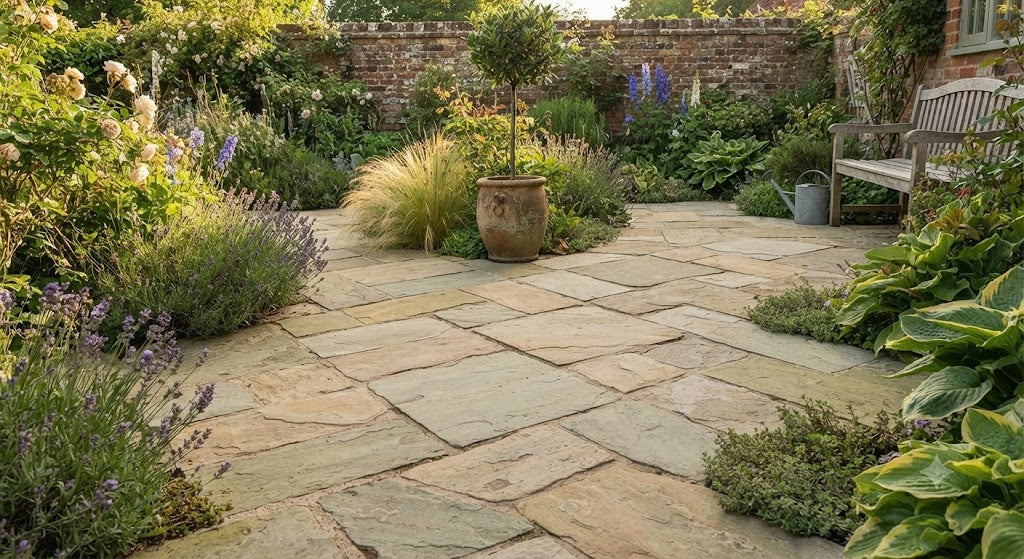
Crazy paving is natural stone laid in an irregular, random pattern — handcut pieces of varying shapes fitted together like a jigsaw, with no straight rows or grid lines. It gives a patio, path or courtyard instant rustic, old-world character that no uniform slab can copy. It's sold by the crate rather than the pack: one crate of our sandstone crazy paving covers roughly 15–18m² depending on your joint width, working out from around £16.61/m² — making it one of the most affordable ways to pave a natural stone patio. It comes in Raj Green (soft greens and buffs) and Kandla Grey (silver-grey).
Crazy paving has come full circle. Once seen as dated, it's now one of the most sought-after looks for cottage gardens, courtyards and informal patios — precisely because it looks natural, established and one-of-a-kind. Here's everything you need to know before you buy.
What is crazy paving?
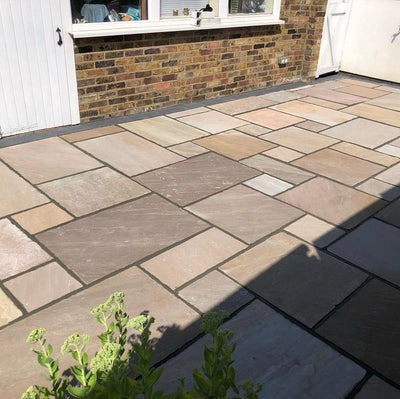
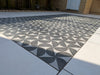
Crazy paving is a way of paving using irregular, randomly-shaped pieces of natural stone rather than uniform rectangular slabs. Each piece is handcut with natural, irregular edges, and they're fitted together on site like a jigsaw — the gaps between them filled with mortar or jointing compound. Because no two pieces are the same and there are no repeating rows, every crazy paving surface is genuinely one-off.
The look is rustic, organic and traditional. It suits cottage gardens, courtyards, informal paths and period properties beautifully, and it works straight away — a crazy paving patio looks established from the day it's finished, rather than obviously new. The name comes from the "crazed", cracked-looking pattern the irregular joints create.
Why crazy paving is back in fashion
For years, uniform sawn slabs and large-format porcelain dominated. But the pendulum has swung back toward natural, characterful, informal gardens — and crazy paving is perfectly placed for that mood. Here's why people are choosing it again:
- One-off character. No grid, no repeats — a surface that looks natural and unique.
- Instant establishment. It looks like it's been there for decades from day one.
- Affordability. Sold by the crate, it's one of the cheapest ways to lay a natural stone patio per m².
- Flexibility. The irregular pieces work brilliantly around curves, corners and awkward shapes where rectangular slabs need constant cutting.
- Low waste. Because you're fitting irregular pieces together, off-cuts and smaller pieces get used rather than binned.
Colours: Raj Green vs Kandla Grey
Our sandstone crazy paving comes in two classic colours:
| Colour | Tone | Best for |
|---|---|---|
| Raj Green | Soft greens, buffs, gentle browns | Cottage gardens, planting, weathered brick |
| Kandla Grey | Cool silver-grey | Contemporary-rustic mix, grey-toned homes |
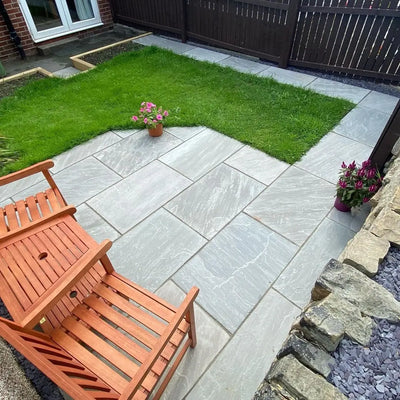
Raj Green crazy paving shifts through soft greens, buffs and gentle browns, so it sits naturally against planting, lawns and weathered brick — the classic cottage-garden choice. Kandla Grey crazy paving gives the same rustic, irregular character in a cooler silver-grey, which bridges traditional and contemporary — ideal if you want the informal crazy-paving look but with a modern grey palette.
How much crazy paving do you need? (Coverage & cost)
Crazy paving is sold by the crate, not the square metre pack. One crate of our sandstone crazy paving covers approximately 15–18m² — and here's the key thing to understand about that range:
- Tighter joints use more stone, so coverage is nearer 15m².
- Wider mortar joints stretch the stone further, so coverage is nearer 18m².
At £299 per crate covering 15–18m², that works out from around £16.61/m² — one of the most affordable natural stone paving options available. As with all paving, order enough to allow around 10% extra for cutting and breakage, and try to complete the area from crates bought together so the colour blend is consistent.
Give your garden instant character
Natural sandstone crazy paving in Raj Green or Kandla Grey — rustic, one-off, and from just £16.61/m². Sold by the crate covering 15–18m², free UK delivery. Order a sample to see the colour blend and texture.
Raj Green Crazy Paving Kandla Grey Crazy PavingHow to lay crazy paving
Crazy paving is laid on the same solid foundation as any natural stone patio, with one extra skill: fitting the irregular pieces together. Here's the approach:
- Sub-base. Excavate and lay a compacted MOT Type 1 sub-base (typically 100mm for a patio), the same as for standard slabs.
- Mortar bed. Lay each piece on a full wet mortar bed (a 4:1 or 5:1 sharp sand and cement mix), tapping down to a consistent level. The 22mm calibrated thickness means every piece is the same depth, which keeps the surface level despite the varying shapes.
- Dry-lay first. Before mortaring, arrange the pieces dry to work out the jigsaw — mixing large and small pieces, keeping joint widths reasonably even, and placing the straightest edges along the patio border. This planning is what separates a great crazy paving job from a messy one.
- Start at the edges. Work the neat, straighter-edged pieces around the perimeter first, then fill the middle with the more irregular pieces.
- Joint. Fill the gaps with mortar or a brush-in jointing compound. Consistent joints tie the random pattern together and (with a good compound) keep weeds out.
Because it's a natural, porous natural stone paving, sealing before and after laying is recommended to protect the colour and resist staining — the same as for any sandstone.
Where crazy paving works best
Cottage and country gardens. The rustic, informal look is a natural fit for traditional planting and period homes.
Courtyards and informal patios. The one-off character suits relaxed, characterful spaces rather than sharp modern ones.
Winding paths and awkward shapes. The irregular pieces follow curves and fit odd corners far more easily than rectangular slabs.
Feature areas. A crazy paving section can define a seating spot or transition zone within a larger garden.
Frequently asked questions
What is crazy paving?
Crazy paving is natural stone laid in an irregular, random pattern using handcut pieces of varying shapes, fitted together like a jigsaw with no straight rows. It creates a rustic, one-off surface ideal for cottage gardens, courtyards and informal patios.
How much area does a crate of crazy paving cover?
One crate covers approximately 15–18m². Tighter joints use more stone (nearer 15m²); wider mortar joints stretch coverage further (nearer 18m²). Order around 10% extra for cutting and breakage.
How much does crazy paving cost?
Our sandstone crazy paving is £299 per crate covering 15–18m² — from around £16.61/m² including VAT, with free UK delivery. That makes it one of the most affordable natural stone paving options.
Is crazy paving hard to lay?
The foundation and mortar bedding are the same as for standard slabs — the extra skill is fitting the irregular pieces together. Dry-laying the pieces first to plan the jigsaw, and keeping joint widths reasonably even, makes a big difference to the finished look. Many DIYers manage it; the 22mm calibrated thickness keeps the surface level.
What colours does crazy paving come in?
Two: Raj Green (soft greens, buffs and gentle browns — classic cottage-garden) and Kandla Grey (cool silver-grey — a more contemporary-rustic look). Both are natural riven sandstone with handcut edges.
Does crazy paving need sealing?
Sealing is recommended. As a natural, porous sandstone, crazy paving benefits from sealing before and after laying to protect the colour, resist staining and slow algae growth — the same as any sandstone patio.
Is crazy paving slippery?
No — the naturally riven surface provides good grip underfoot, even when wet, making it suitable for patios and paths. Keeping joints filled and the surface clear of algae maintains grip.