






Does Stone-Effect Porcelain Look Real? An Honest Comparison
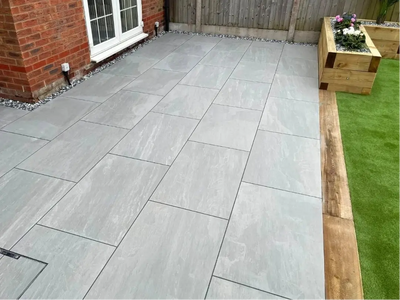
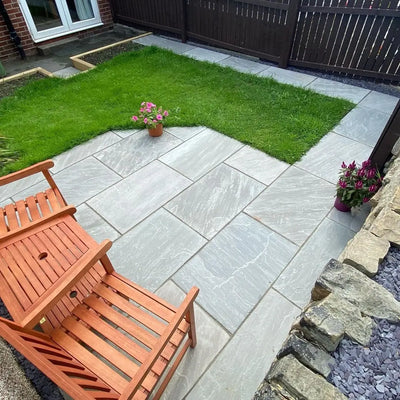
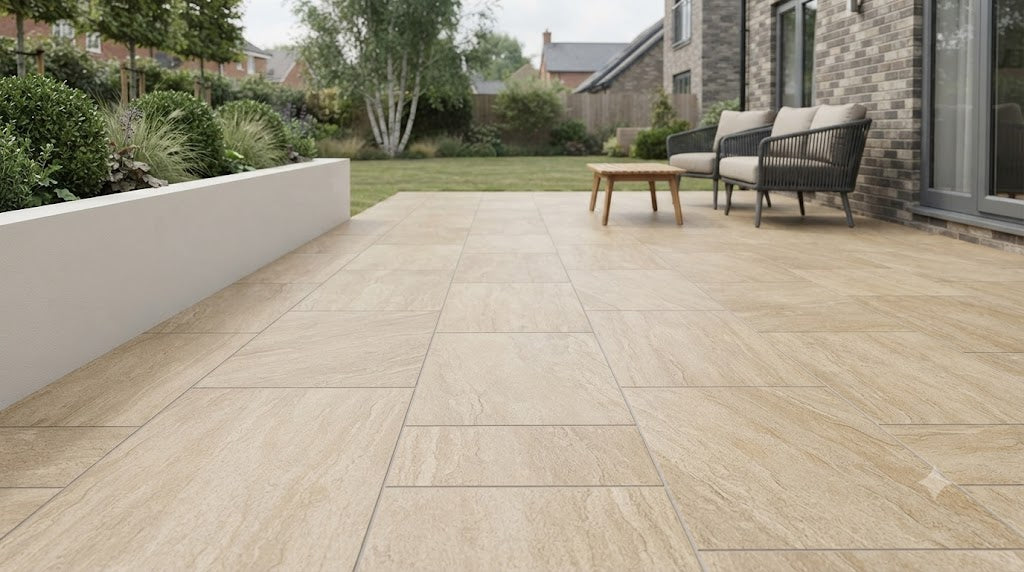
Modern stone-effect porcelain looks convincingly like natural stone from standing height — the printing and texturing technology has improved enormously, and most people can't tell the difference on a laid patio. Look closely and you'll spot the tells: porcelain repeats its pattern every few slabs, has perfectly straight factory edges, and feels denser underfoot. Whether that matters depends on you: if you want the look of stone with zero maintenance, stone-effect porcelain delivers. If you want genuine one-of-a-kind character, real stone is still real stone. We sell both, so here's the honest comparison.
"Does it look fake?" is the single most common question we get about stone-effect porcelain — and it's the right question to ask. Nobody wants to spend thousands on a patio that looks like a bathroom floor pretending to be stone. The honest answer is nuanced: modern stone-effect porcelain is genuinely convincing, but it isn't identical to natural stone, and the differences are worth understanding before you commit either way.
How stone-effect porcelain is made to look like stone
Stone-effect porcelain isn't painted or coated. The stone appearance comes from high-resolution digital printing applied during manufacture, then fired into the surface, combined with moulded surface texture that mirrors the grain and cleft of real stone. The best ranges use dozens of different print faces across a production run, so slabs don't obviously repeat — and they add a matt, tactile texture you can feel underfoot, not just see.
The result is a slab that carries the colour variation, veining and surface character of natural stone — sandstone, slate, limestone or concrete looks — with none of the porosity. That's the whole pitch: the appearance of stone, the performance of porcelain.
The honest tells — how to spot porcelain vs real stone
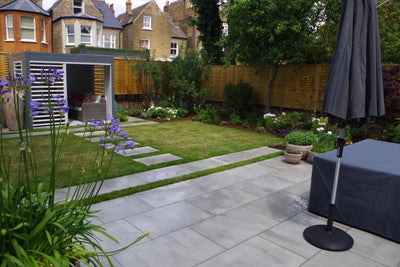
From standing height on a finished patio, most people genuinely can't tell modern stone-effect porcelain from natural stone. Up close, and to a trained eye, there are four reliable tells:
Every natural stone slab is geologically unique — no two are identical, ever. Porcelain prints from a finite set of faces, so across a large patio you'll eventually see the same "stone" pattern appear on more than one slab. Good ranges use enough faces that this is subtle; cheaper ones repeat obviously. On a natural stone patio, repetition is impossible.
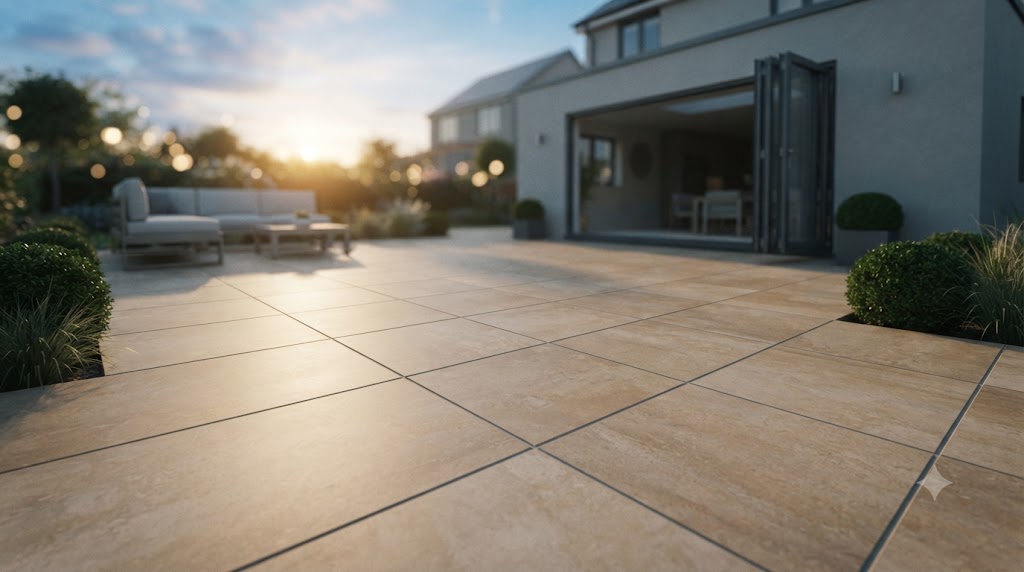
Porcelain is factory-cut to exact dimensions with clean, straight, rectified edges. That's what allows the tight 3-5mm joints of a modern patio. Natural stone — especially riven sandstone — has slightly irregular hand-dressed edges and needs wider joints. Crisp, uniform edges are a porcelain giveaway; slightly varied ones signal real stone.
Tap a laid porcelain slab and it produces a harder, more ceramic sound than the dense thud of natural stone. Porcelain is also colder underfoot in shade and hotter in direct sun, because it doesn't breathe the way porous stone does. These are feel-and-sound differences, not visual ones — most people never notice them.
Natural stone develops a patina — it weathers, softens, and ages into the garden over years. Porcelain looks identical in year 20 to the day it was laid. To some that permanence is the appeal; to others, the lack of ageing is what makes it read as manufactured. Neither is wrong — it's a matter of taste.
Our stone-effect porcelain range
The best way to judge realism is to see the actual finishes. Here's what we stock in stone-effect porcelain, and the natural material each one echoes:
| Porcelain finish | Natural look it echoes | Best for |
|---|---|---|
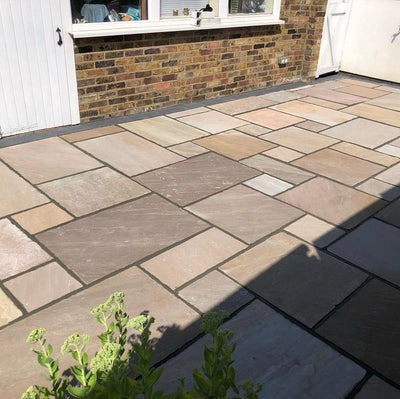
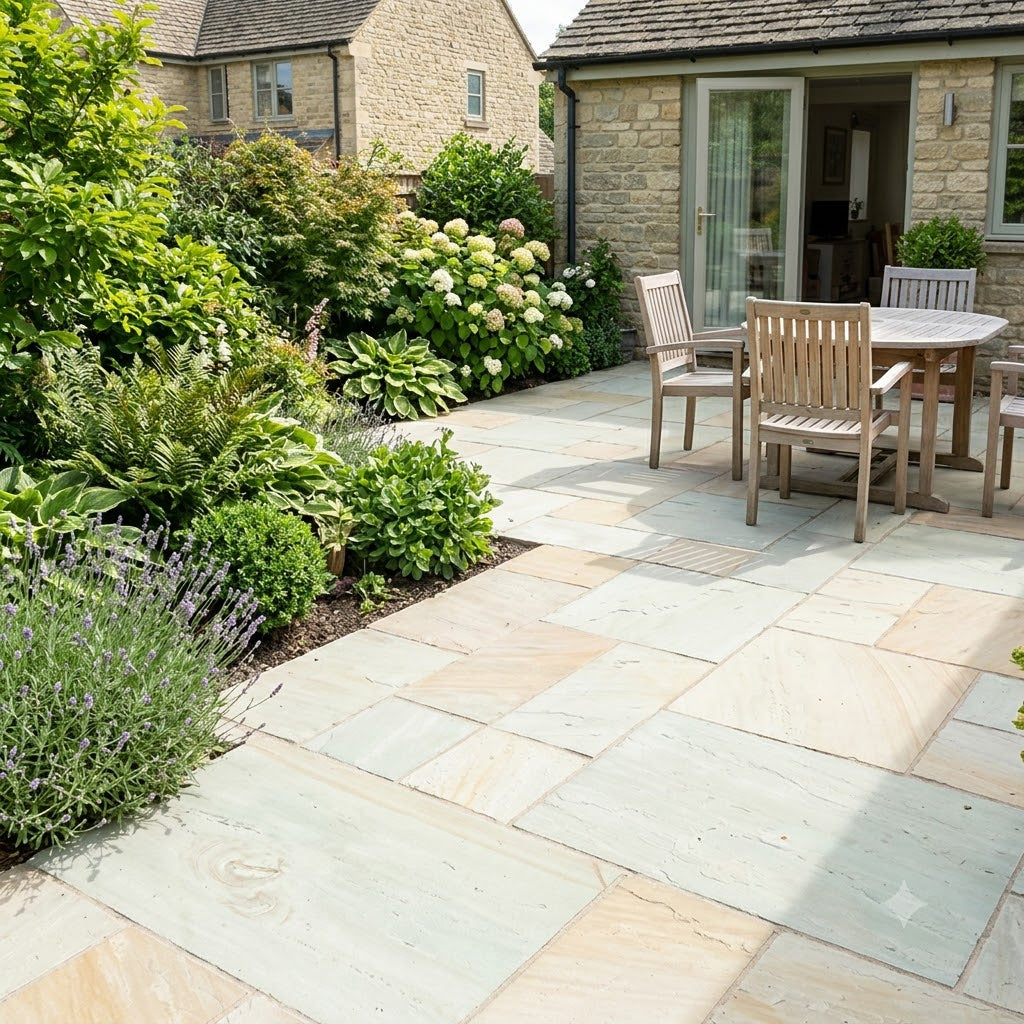
| Hammerstone Beige | Warm buff sandstone | Traditional gardens, upgrading from Indian sandstone |
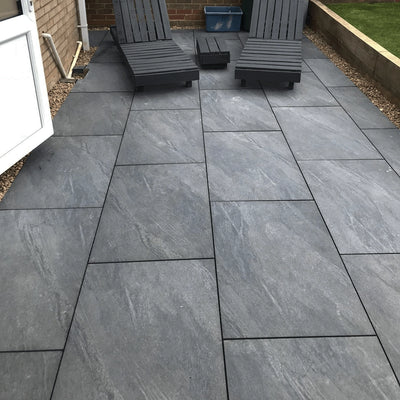
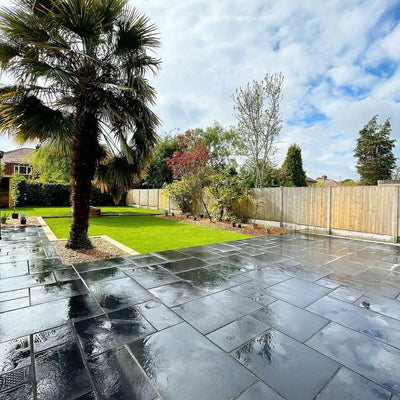
| Hammerstone Nero | Deep charcoal-black stone | Contemporary, high-contrast schemes |
| Rustic Slate | Riven slate — bronze, brown, copper, black | Characterful, rustic and modern gardens alike |
| Beton décor range | Patterned / concrete-effect | Feature areas, courtyards, decorative detail |
All are 20mm outdoor porcelain with an anti-slip textured surface, frost-proof and stain-proof. Rustic Slate is available in both single-size 900×600 and a mixed patio pack for a more varied, natural-looking layout — the mix pack in particular helps defeat the "pattern repeat" tell, because the varied sizes break up any visible repetition.
The realism test that actually works: order samples and lay three or four slabs together outside, in daylight, next to any natural stone you already have. Realism is far easier to judge across several slabs on the ground than from one tile in your hand or a photo on a screen. It's the single best £-for-£ way to settle the "does it look real" question for yourself.
Stone-effect porcelain vs the real thing
| Factor | Stone-effect porcelain | Natural stone |
|---|---|---|
| Appearance | Convincing, consistent, repeats subtly | Genuinely unique, every slab different |
| Maintenance | None — never seal | Periodic sealing |
| Staining | Stain-proof (non-porous) | Can stain unsealed |
| Ageing | Never changes | Develops a natural patina |
| Laying | Full mortar bed + SBR primer required | More forgiving, no primer needed |
| Character | Controlled, uniform | Individual, one-of-a-kind |
If maintenance and consistency matter most, stone-effect porcelain wins. If genuine character and the way stone ages matter most, natural stone wins. Compare the real thing directly in our Indian sandstone and limestone ranges.
So — does it look real enough?
For most gardens, yes. On a laid patio viewed from standing height, modern stone-effect porcelain reads as natural stone to the vast majority of people, including most visitors. The tells only appear on close inspection. If your priority is a stone look that stays pristine and maintenance-free for decades, it's an excellent choice.
Where we'd steer you toward real stone instead: if you have an eye for detail and know the repetition and permanence would nag at you, or if your garden is traditional enough that genuine geological character matters to the whole scheme. There's no wrong answer — it's about which trade-off you'd rather live with. The one thing we'd never recommend is deciding from a screen. See samples on the ground before you commit.
Judge the realism for yourself
Order samples of our stone-effect porcelain and compare them against real stone in your own garden light. All prices include VAT and free UK delivery.
Browse Stone-Effect Porcelain Order SamplesFrequently asked questions
Does stone-effect porcelain look fake?
Modern stone-effect porcelain looks convincingly like natural stone from standing height, and most people can't tell the difference on a laid patio. The tells only appear on close inspection: subtle pattern repetition across many slabs, perfectly straight factory edges, and a harder feel underfoot. Cheaper, older porcelain looks more obviously artificial — the quality of the printing and texturing is what makes the difference.
Can you tell the difference between porcelain and real stone?
Up close and to a trained eye, yes — porcelain's pattern repeats across a large area, its edges are perfectly uniform, and it sounds harder when tapped. From normal standing height on a finished patio, most people cannot tell. Natural stone's giveaway is that every single slab is unique, which porcelain can only approximate.
Is stone-effect porcelain better than natural stone?
Neither is universally better — they suit different priorities. Stone-effect porcelain wins on maintenance (never needs sealing), stain resistance and consistency. Natural stone wins on genuine character, individuality, and the way it ages into a garden. Choose porcelain for a low-maintenance stone look; choose real stone for authentic, one-of-a-kind character.
Which stone-effect porcelain looks most like real stone?
Textured, riven-look finishes tend to read as most authentic because the moulded surface catches light like real stone. Our Rustic Slate replicates riven slate with bronze, brown and copper tones, and the mixed patio pack in particular helps break up any visible pattern repetition. Hammerstone Beige echoes warm sandstone for traditional gardens. Ordering samples and laying several together is the only reliable way to judge.
Does stone-effect porcelain need sealing?
No. Like all porcelain, it's non-porous, so it never needs sealing — one of its main advantages over the natural stone it imitates. A rinse with water keeps it looking new. It does need a full mortar bed with SBR primer during installation, because porcelain won't bond to mortar without it.