





Article: Porcelain Setts: The Zero-Maintenance Way to Edge a Patio
Porcelain Setts: The Zero-Maintenance Way to Edge a Patio
Porcelain setts are 20mm outdoor porcelain units — in 100×100mm and 200×100mm — designed to edge, border and add detail to a porcelain patio while matching the slabs exactly. They come in anthracite black, Kandla grey and silver grey, are R11 anti-slip, frost-proof and completely maintenance-free — no sealing, ever. Prices start from around £36 per pack. They're the modern, zero-upkeep way to finish a porcelain patio; for vehicle driveways, thicker 40–50mm natural stone or granite setts are the better choice.
If you've laid — or are planning — a porcelain patio, porcelain setts are how you finish it properly: a crisp border or contrasting band in the same material, so the edge never stains, never needs sealing, and never dates. Here's what they're for, the colours, how they compare to natural stone setts, and how to lay them.
What are porcelain setts?
Porcelain setts are small-format units made from the same 20mm outdoor porcelain as our porcelain paving slabs — just cut small, in 100×100mm and 200×100mm, for edging and detail work. They share every performance benefit of porcelain: water absorption below 0.5%, R11 anti-slip textured surfaces, full frost resistance, and no sealing or maintenance beyond the occasional rinse.
The key thing that sets them apart from natural stone setts is thickness. At 20mm they're built for pedestrian areas — borders, bands and paths — rather than the 40–50mm depth you'd want under a car. That makes them the ideal finishing detail for a patio, not a driveway surface.
What porcelain setts are for
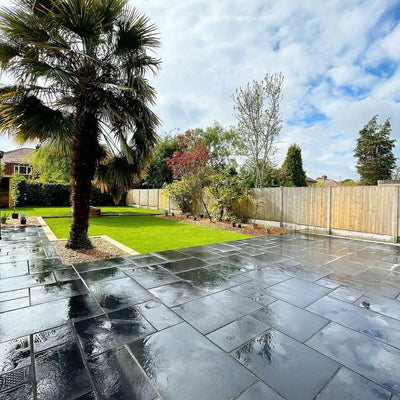
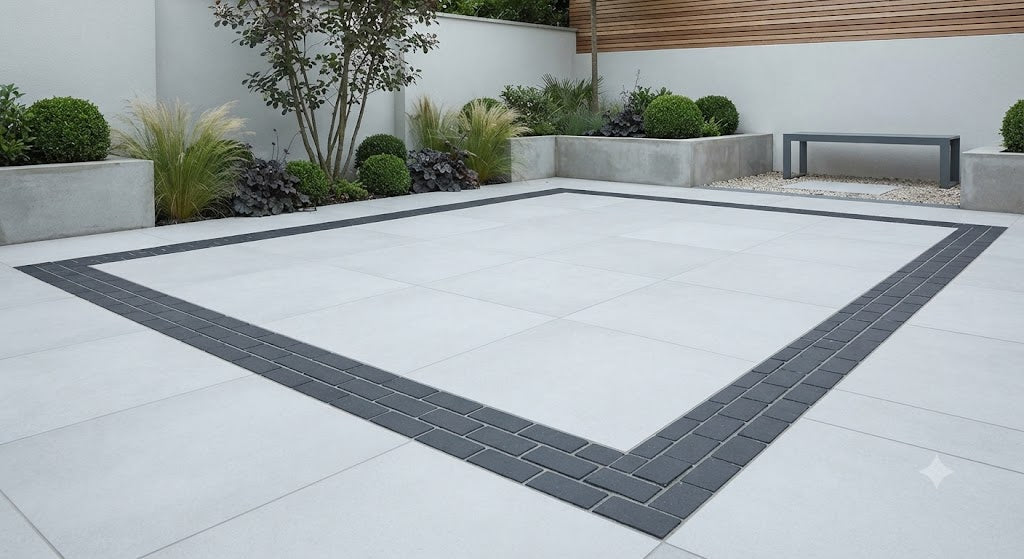
A porcelain sett border in the same colour as your slabs frames the patio and gives a clean, deliberate edge that will never stain or need sealing — unlike a natural stone border.
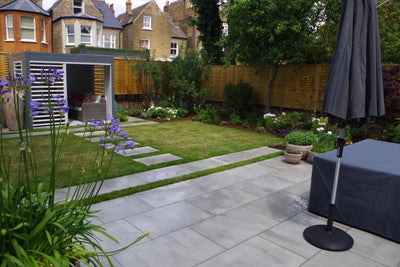
Run a band of anthracite setts through light grey slabs (or vice versa) to break up a large patio and zone it — a designer detail that's easy in matching porcelain.
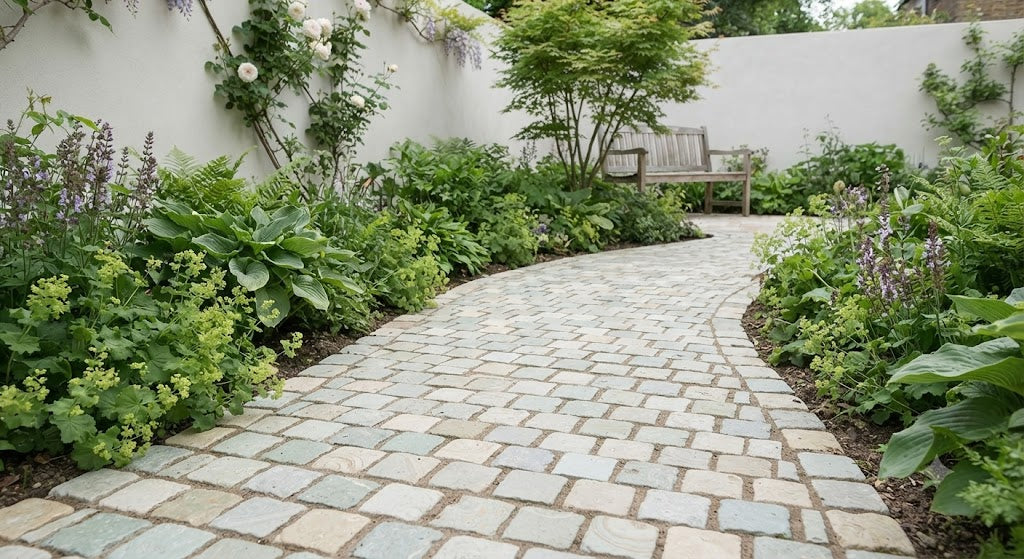
Setts suit garden paths, thresholds and feature areas where you want porcelain's zero-maintenance finish in a smaller, more textured format.
Used on step risers or low walls, setts add crisp definition at eye level — pair them with matching porcelain bullnose steps for a coordinated finish.
Porcelain sett colours
Porcelain setts are made to coordinate with the main porcelain slab range, so the border matches the field:
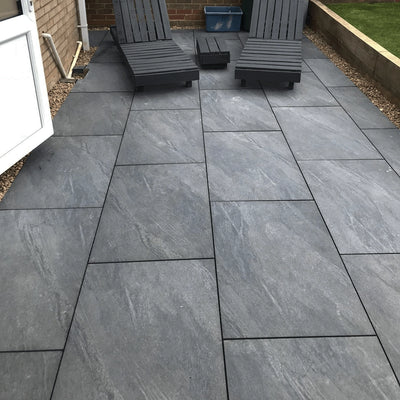
- Anthracite Black — the strongest contrast; frames light-grey and beige patios with a sharp, modern edge.
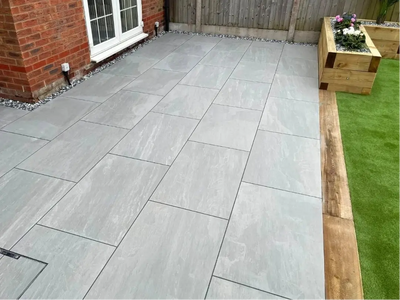
- Kandla Grey — cool mid-grey that matches Kandla Grey porcelain slabs for a seamless, tonal border.
- Silver Grey — a lighter, granite-look grey, currently on clearance and the keenest entry point into the range.
Porcelain setts vs natural stone setts
Both edge a patio beautifully — the choice comes down to maintenance versus use:
| Feature | Porcelain setts | Natural stone setts |
|---|---|---|
| Thickness | 20mm | 40–50mm |
| Maintenance | None — never seal | Occasional sealing |
| Colour | Uniform, matches porcelain slabs | Natural variation |
| Best for | Patio borders, bands, edging, paths | Driveways, paths, edging |
| Vehicle traffic | Not recommended (20mm) | Yes, on the right base |
The quick rule: choose porcelain setts to border and detail a porcelain patio with zero maintenance. For a vehicle driveway, choose thicker 40–50mm natural stone or granite setts instead — 20mm porcelain isn't built to carry cars.
Porcelain sett pricing
Porcelain setts are sold by the pack, with prices including VAT and free UK mainland delivery:
- Silver Grey porcelain setts (200×100mm) — from £36 (clearance)
- Kandla Grey porcelain setts (200×100mm) — from £169 per pack
- Anthracite Black porcelain setts (200×100mm) — from £269 per pack
Because pack sizes and coverage vary by colour, check each product page for the exact quantity, coverage and current stock before ordering — a border needs far fewer setts than a full band or path.
How to lay porcelain setts
Porcelain setts lay exactly like porcelain slabs — the priming step is the one that catches people out:
- Sub-base: a compacted MOT Type 1 sub-base under any area, as with slabs.
- Mortar bed: lay each sett on a full mortar bed (4:1 to 6:1), not spot-bedded.
- Prime the backs: porcelain is non-porous, so it will not bond to mortar without a slurry primer brushed onto the back of each sett and laid wet-to-wet. This is non-negotiable with porcelain.
- Jointing: use a porcelain-suitable jointing compound in the 5–10mm joints.
- Curing: allow 24–48 hours before foot traffic.
Skipping the primer is the number-one porcelain mistake. Because porcelain absorbs almost no water, mortar alone won't grip it — setts laid without a slurry primer on the back will lift and rock within a season. Prime every piece and bed it while the primer is still wet.
Explore porcelain setts
Zero-maintenance porcelain edging to match your patio — R11 anti-slip, frost-proof, from £36. VAT included and free UK delivery.
Browse Porcelain Setts Order SamplesFrequently asked questions
What are porcelain setts used for?
Porcelain setts are mainly used to edge and border porcelain patios, create contrast bands within larger paved areas, and detail paths, steps and garden features — all with zero maintenance, matching the porcelain slabs exactly.
Can you use porcelain setts on a driveway?
They're not the best choice. At 20mm, porcelain setts are designed for pedestrian areas — borders, paths and patios. For a vehicle driveway, thicker 40–50mm natural stone or granite setts are built to carry the load.
Do porcelain setts need sealing?
No. Like all porcelain, setts are non-porous and never need sealing — the surface won't stain, fade or absorb moisture. A rinse with water keeps them looking new.
Do porcelain setts match porcelain paving slabs?
Yes — porcelain setts are made to coordinate with the main slab range in anthracite black, Kandla grey and silver grey, so a border or band matches the patio field for a seamless finish.
How do you lay porcelain setts?
On a full mortar bed over a compacted sub-base, with a slurry primer brushed onto the back of each sett and laid wet-to-wet. The primer is essential — porcelain won't bond to mortar without it. Joint with a porcelain-suitable compound.