








The True 30-Year Cost of a Patio (Cheap vs Quality)
Over 30 years, a quality natural stone or porcelain patio (20m²) costs roughly £1,700-2,600 all-in — laid once, with minimal upkeep. A cheap concrete or budget patio often costs more, around £2,800-5,000, because it needs replacing once or twice and demands more maintenance. The lowest upfront price is rarely the lowest true cost. Quality stone laid on a proper sub-base is usually the cheapest option measured over the life of the patio.
"How much does a patio cost?" is the wrong question. The right one is "how much will this patio cost me over the time I own my home?" A patio isn't a one-off purchase like a meal — it's an investment that either serves you quietly for decades or becomes a recurring expense of repairs, cleaning, and eventual replacement. The cheapest patio to buy is frequently the most expensive to own. Here's the honest maths.
The three costs nobody adds up
When people compare patios, they look at one number: the price per square metre. But the true cost of a patio has three parts:
1. The upfront cost — materials plus installation. This is the only number most people consider.
2. The maintenance cost — cleaning, sealing, re-sanding, weed treatment, repairs, spread across the years you own it.
3. The replacement cost — if the patio doesn't last, you pay to rip it out and do it again. This is the big hidden number, and it's where "cheap" patios become expensive.
Add all three over 30 years (roughly how long people own a home, or how long a quality patio should last) and the picture changes completely.
The 30-year comparison: 20m² patio
Let's compare the common options for a typical 20m² back-garden patio, counting all three costs over 30 years.
| Option | Upfront | Lifespan | Replacements | 30-yr total |
|---|---|---|---|---|
| Budget concrete slabs | £700-1,100 | 10-15 yrs | 1-2 | £2,800-5,000 |
| Timber decking | £1,800-3,200 | 10-15 yrs | 1-2 | £5,400-9,600 |
| Indian sandstone | £1,400-2,200 | 30-50 yrs | 0 | £1,700-2,560 |
| Porcelain | £1,400-2,100 | 30-50+ yrs | 0 | £1,500-2,200 |
Figures are typical UK ranges for a 20m² patio including materials and standard installation, plus lifetime maintenance and replacement. Your costs will vary with site, region and finish.
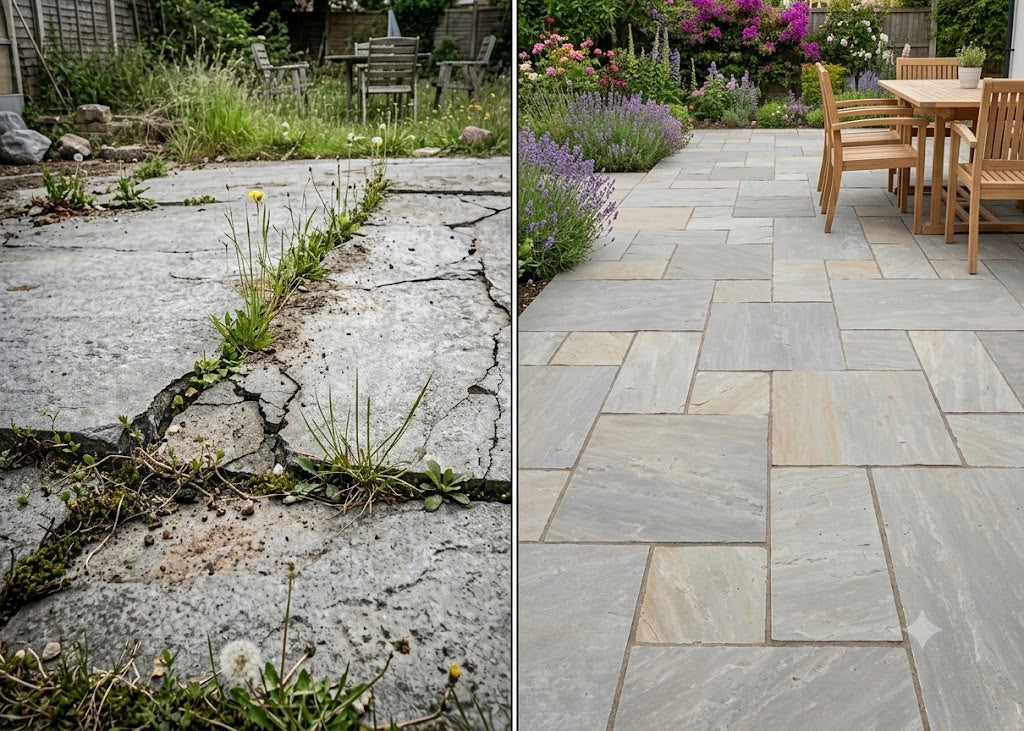
The result surprises people: porcelain and sandstone — which look more expensive upfront than budget concrete — are the cheapest options over 30 years. Concrete's low entry price is wiped out by replacing it once or twice. Decking is the most expensive of all once you count repeated replacement and annual maintenance.
Why "cheap" gets expensive
Replacement is the killer cost
Ripping out a failed patio and laying a new one isn't half the original cost — it's often more than the original, because you pay for demolition and disposal on top of new materials and labour. A budget patio that fails at year 12 and again at year 24 means you've paid for three patios by year 30. Quality stone laid once on a proper sub-base means you've paid for one.
Maintenance adds up quietly
Budget surfaces tend to need more upkeep — concrete slabs grow weeds in the joints and stain; decking needs annual cleaning and re-staining every 2-3 years. None of these are big bills individually, but £100-200 a year across decades becomes thousands. Porcelain needs essentially nothing; quality sandstone needs an occasional wash and seal.
The sub-base matters more than the slab
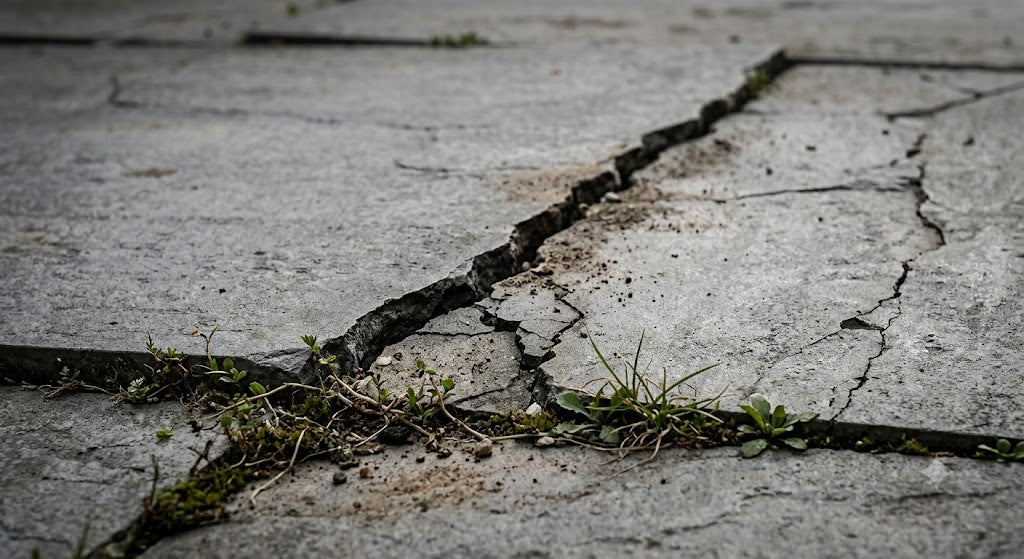
Here's the part most cost comparisons miss: a cheap slab on a good sub-base outlasts an expensive slab on a bad one. Much of what makes a patio "last" is the 150mm of compacted aggregate underneath, not the stone on top. Skimping on the sub-base to save money is the most expensive saving you can make — it's the number one cause of cracking. See why patios crack.
Where it's worth spending — and where it isn't
This is what determines whether your patio lasts 30 years or 3. A proper 150mm compacted MOT Type 1 sub-base and a full mortar bed are non-negotiable. If your budget is tight, protect this part first — it's the foundation everything else depends on.
Quality sandstone or porcelain costs a little more upfront than budget concrete but lasts 2-4x longer with far less maintenance — so it's cheaper over the patio's life. This is where the upfront premium pays itself back many times over.
You don't need to pay inflated retail markups for quality stone. The same Indian sandstone and porcelain sold at a premium by some resellers is available at direct-import prices. Quality matters; paying for middlemen doesn't. As a direct importer, that's the gap we exist to close.
The cost-per-year way of thinking
The clearest way to compare patios is cost per year of use. Take the 30-year total and divide by 30:
| Option | 30-yr total | Cost per year |
|---|---|---|
| Budget concrete | £2,800-5,000 | £93-167/yr |
| Timber decking | £5,400-9,600 | £180-320/yr |
| Indian sandstone | £1,700-2,560 | £57-85/yr |
| Porcelain | £1,500-2,200 | £50-73/yr |
Seen this way, a quality porcelain patio costs about £50-73 a year — less than £1.50 a week for a surface you use every day for three decades. The "cheap" concrete option costs nearly double per year once replacement is counted.
Buy once, lay once
Quality natural stone and porcelain at direct-import prices — built to last 30+ years. Sandstone from £20/m², porcelain from £18.50/m². Free UK delivery.
Browse All Paving Use the Cost CalculatorFrequently asked questions
Is a cheap patio a false economy?
Usually, yes. Budget concrete slabs cost less upfront but typically last 10-15 years versus 30-50 for quality stone, and need more maintenance. Once you count replacement and upkeep over 30 years, the cheap option often costs more in total than quality stone laid once. The exception is if you genuinely only need the patio for a few years.
What's the cheapest patio over its whole life?
Porcelain and quality Indian sandstone are usually the cheapest over 30 years — around £1,500-2,560 all-in for 20m² — because they last decades with minimal maintenance and never need replacing. Their higher upfront price is more than offset by not paying twice.
Where should I spend money on a patio?
On the sub-base and laying first, then on durable, low-maintenance stone. The 150mm of compacted aggregate beneath the slabs is what makes a patio last — skimping there is the most expensive saving you can make. You don't need to overpay for premium branding; direct-import stone gives quality without the markup.
How long should a patio last?
A quality natural stone or porcelain patio laid on a proper sub-base should last 30-50+ years. Budget concrete typically lasts 10-15 years, and timber decking 10-15. Lifespan depends as much on the sub-base and laying as on the material itself.
Does spending more on stone mean it lasts longer?
Up to a point. Quality stone laid properly lasts far longer than cheap concrete. But beyond a certain point, paying more is buying brand or rarity, not durability — and a mid-priced quality stone on a great sub-base will outlast a premium stone on a poor one. Spend on quality and on the foundation, not on markup.
%20costs%20roughly%20%C2%A31,700-2,600%20all-in%20%E2%80%94%20laid%20once,%20with%20minimal%20upkeep.%20A%20cheap%20concrete%20or%20budget%20patio%20often%20costs%20more,%20around%20%C2%A3...)