






The Restorer Who Saved a Forgotten Courtyard — A Story About Limestone
In the grounds of a forgotten Cotswolds estate, beneath thirty years of ivy and soil, a stone restorer uncovered something extraordinary — a courtyard that told the story of three centuries. Not in words. In limestone.
This is the story of Elena Marsh. And the stone that connects every era of British architecture.
Elena Marsh — The Woman Who Listened to Old Stone
Elena Marsh never wanted to build anything new. She wanted to find what was already there.
A heritage stone restorer by trade, Elena spent her career travelling to country houses, churches, and estates across England — not to renovate them, but to uncover what time had buried. Beneath overgrown gardens and collapsed outbuildings, she found the original stone. And the original stone always told her something the archives couldn't.
Limestone was her obsession. Not because it was the hardest stone, or the cheapest, or the easiest to work with. But because limestone — more than any other material — carried the signature of the period it was laid in. The cut, the colour, the surface finish, the jointing pattern. Every era left its fingerprint in the stone.
And Elena could read every one of them.
Ashworth Hall — Three Centuries Beneath the Ivy
The call came on a Tuesday in October. A property developer had bought Ashworth Hall — a Cotswolds estate that had been empty for thirty years. During demolition planning, his team found something beneath the ivy and topsoil of the rear garden: stone. A lot of stone.
Elena arrived the next morning. Within two hours of careful clearing, she realised what she was looking at.
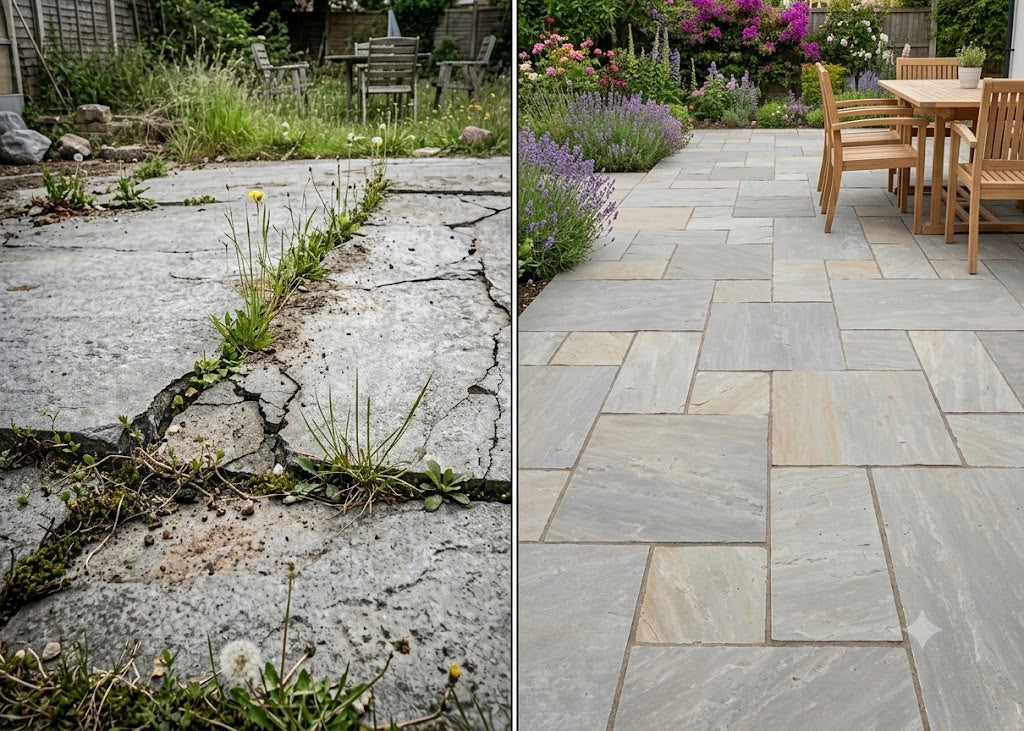
It wasn't one courtyard. It was three courtyards, layered on top of each other — each from a different century, each built from limestone, and each telling a completely different story about how people used outdoor space.
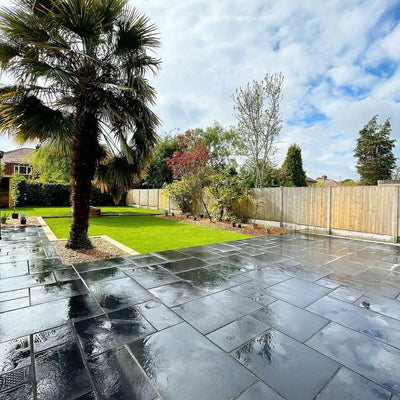
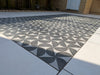
The Formal Terrace
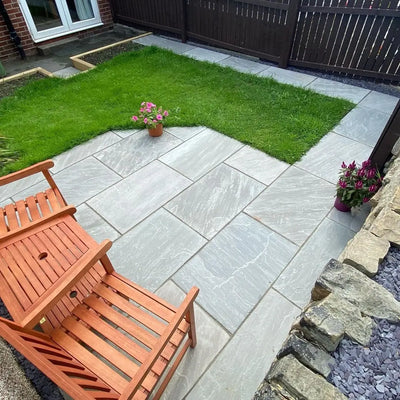
Pale, honed limestone in precise geometric patterns. Symmetrical. Restrained. Designed for evening promenades and structured beauty.
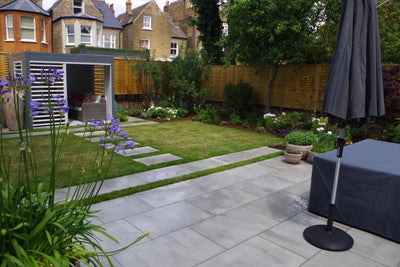
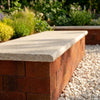
Explore Limestone →The Garden Room
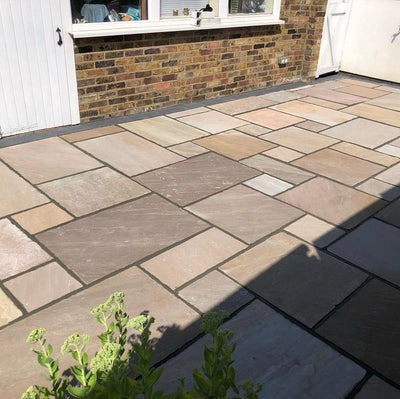
Warmer, honey-toned limestone in larger slabs. Functional yet decorative. Built for entertaining — afternoon tea, garden parties, outdoor living.
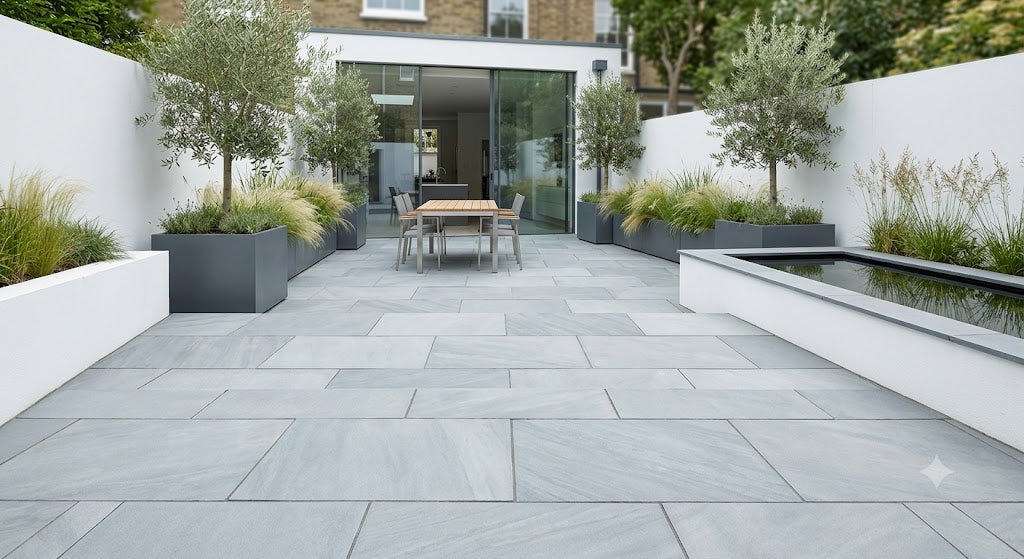
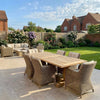
Explore Limestone →Your Patio
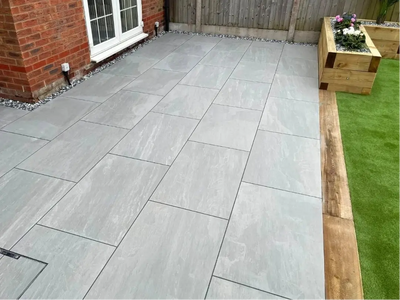
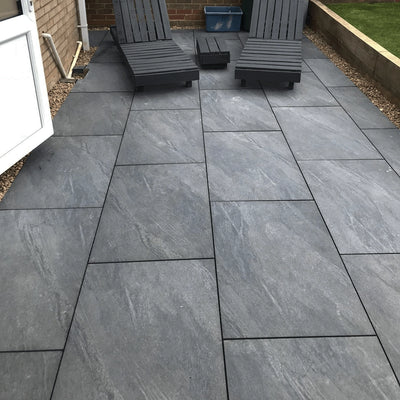
Clean-cut limestone in contemporary formats. The same warmth, the same natural beauty — engineered for today's outdoor spaces.
Explore Limestone →Three centuries. Three courtyards. One material. Limestone had been the stone of choice for British outdoor spaces since before the Industrial Revolution — and it still is today. Not because of tradition. Because nothing else feels quite like it.
See the Full Limestone Range
Warm, golden, naturally elegant — browse every colour, size, and format.
Explore Limestone Paving →Why Every Era Chose Limestone
Elena had a theory about why limestone appeared in every century of Ashworth Hall. It wasn't fashion. It wasn't availability. It was something more fundamental.
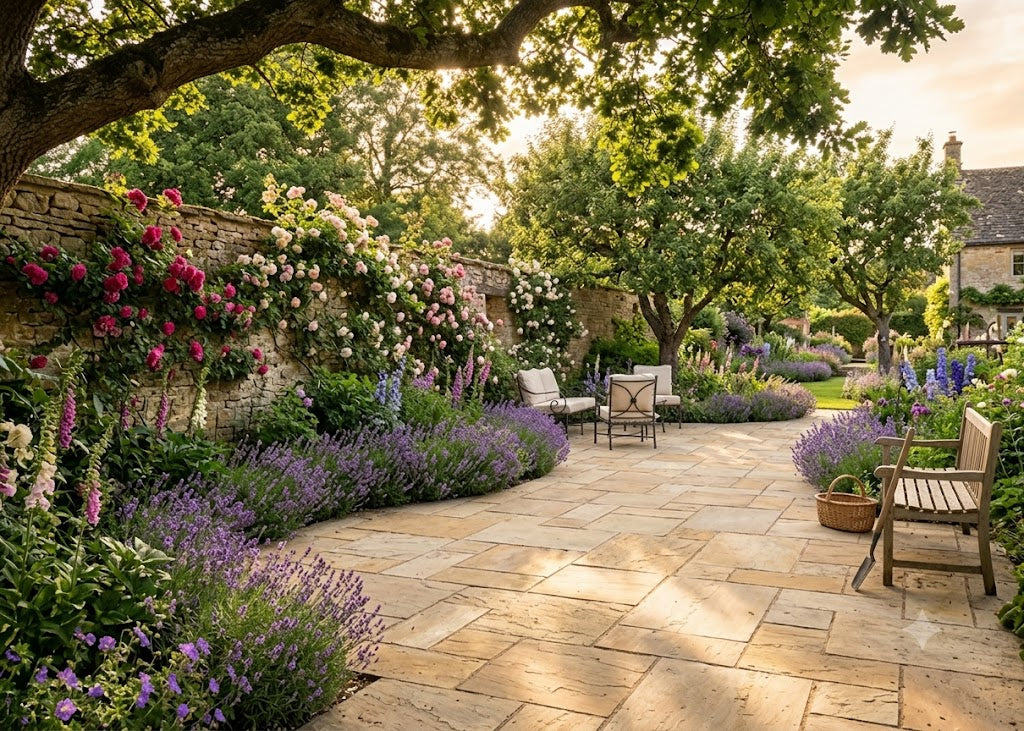
Limestone is the only natural stone that feels warm in character and warm to the touch. Granite is cold. Sandstone is earthy. Porcelain is precise. But limestone occupies a space between all of them — refined enough for a Georgian terrace, warm enough for a family patio, natural enough to sit beautifully alongside any planting scheme.
Warm Underfoot
Limestone holds and radiates warmth like no other stone — naturally inviting for barefoot walks on summer evenings.
Living Colour
Honey, cream, gold, and blue-grey tones that shift subtly with the light — limestone looks different at every hour of the day.
Heritage Aesthetic
The same stone used in Bath, the Cotswolds, and Oxford colleges. Limestone carries centuries of architectural credibility.
Ages With Grace
Limestone develops a gentle patina over time — it doesn't deteriorate, it matures. Your patio grows more beautiful with age.
That's what Elena found at Ashworth Hall. Three centuries of architects, gardeners, and homeowners — all choosing the same material, because nothing else did what limestone does. Warm. Natural. Refined. Timeless.
The Slab That Changed Everything
Three weeks into the restoration, Elena found something that stopped her cold.
In the Victorian layer, beneath a collapsed cold frame, she uncovered a single limestone slab with an inscription on its underside. A stonemason's mark — a date and a set of initials. J.W. 1863.
She traced the initials through parish records. James Whitmore. A local mason who had laid the entire Victorian courtyard by hand over the summer of 1863. He'd signed his work — not on the surface where anyone would see it, but on the underside, pressed against the earth. A private mark. A quiet statement of pride.
The stone had kept his name for 160 years.
Elena sat in the October sun, holding a slab that a man had laid with his own hands before the telephone was invented. The limestone was intact. The edges were sharp. The colour was warm. The stone hadn't just survived — it had preserved something.
That's what limestone does. It doesn't just endure. It holds. It remembers. And when you lay it in your own garden, it will hold your story with the same quiet, patient permanence.
Why This Story Matters for Your Home
You don't need a Cotswolds estate. You need a patio that makes you feel something when you step outside.
Limestone paving is chosen by homeowners who want their outdoor space to feel naturally warm, quietly premium, and deliberately beautiful — without the coldness of porcelain or the ruggedness of sandstone. It sits in the space between those two extremes, and that's exactly why it works.
- Warm, golden, honey tones that complement brick, timber, and planting in any garden style
- A refined surface with enough natural texture to feel authentic, not manufactured
- Ages beautifully — limestone develops a gentle patina that makes it more attractive over time
- The heritage stone of choice — Bath, Oxford, the Cotswolds. Limestone is the stone of British architecture
- Dijon, Kota, Sinai, and more — a range of colours from cool blue-grey to rich golden honey
Every slab is naturally unique. Every surface catches the light differently. And every patio laid in limestone carries the same quiet warmth that Elena found beneath the ivy at Ashworth Hall — a material that doesn't shout, doesn't try too hard, and never goes out of style.
What Elena Teaches Us About Choosing Stone
After Ashworth Hall, Elena was asked what she'd learned from three centuries of limestone. Her answer was characteristically simple:
"Trends come and go. Limestone just waits. It was the right stone in 1780, it was the right stone in 1863, and it's the right stone today. The only thing that changes is the garden around it."
— Elena Marsh, Heritage Stone RestorerShe was right. Limestone is the stone that outlives every trend, every fashion cycle, every redesign. It looked beautiful in a Georgian terrace. It looked beautiful in a Victorian courtyard. And it will look beautiful in your garden — this year, next year, and every year after that.
That's not a selling point. That's 300 years of evidence.
Browse by Collection
Ready to Choose the Stone
That Outlasts Everything?
Elena found 300 years of proof beneath the ivy. You just need to choose the colour that feels right for your garden.
Shop Limestone Paving →