






Slate Paving: Is It A Good Choice For UK Gardens
Universal Paving — Garden Guides
A natural stone with deep blue-black tones and a jagged, riven surface — what to know about slate before it goes into your patio, from appearance and formats through to pricing and laying it properly.
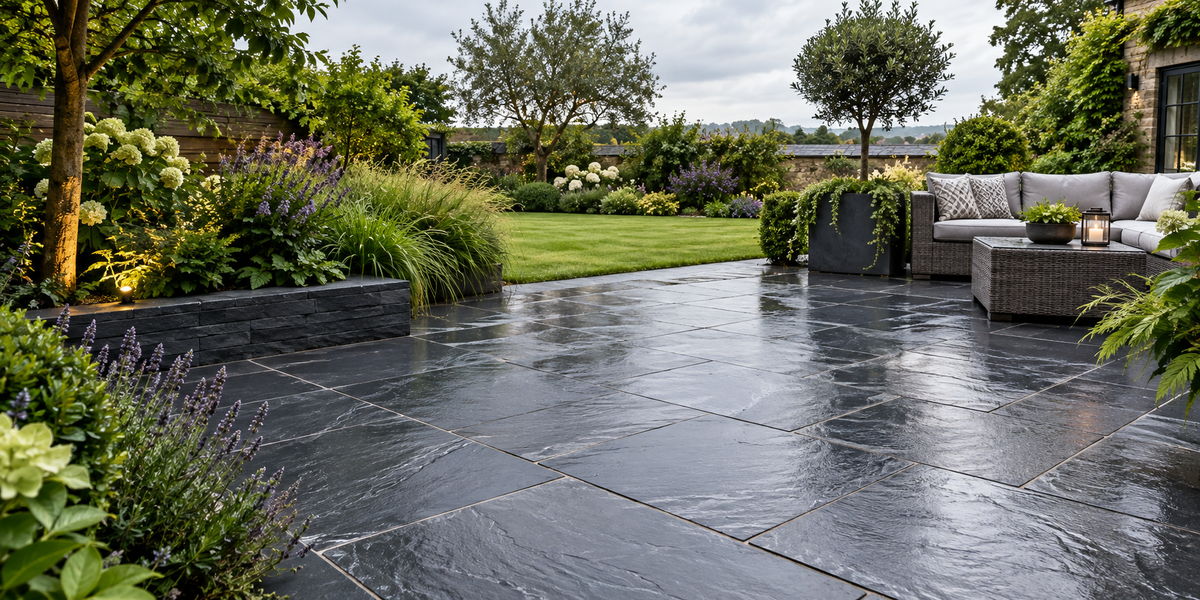
If you prefer a more natural look than porcelain and find sandstone too light, slate is worth a close look. Natural slate carries deep blue-black tones with colour patterns and texture formed by the pressure it's exposed to underground, and its fissile surface suits patios, walkways and standout corners of a garden.
Below: how slate is placed, where it works best, roughly what it costs, and how to tile it — so you can decide if it's the right stone for your garden.
What is slate paving?
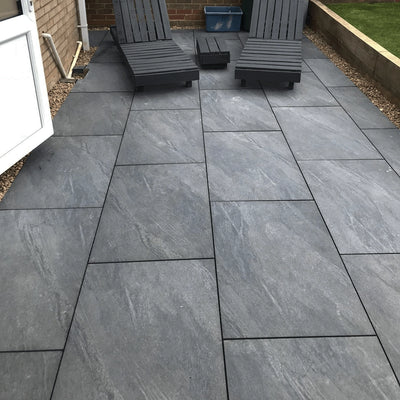
Slate paving is natural stone that's split and cut into paving slabs for outdoor use. Universal Paving's slate range is 20mm thick with sawn edges and a naturally riven surface, available in large-format 900×600mm slabs and mixed patio packs.
The jagged riven face is part of what gives slate its character, while the straight sawn edges keep the overall look tidy and professional. As with any patterned or decorative layout, it's worth thinking the design through carefully before you start — particularly around buildings, where sightlines and cut pieces need planning.
What does slate paving look like?
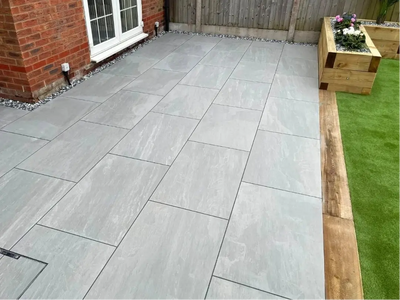
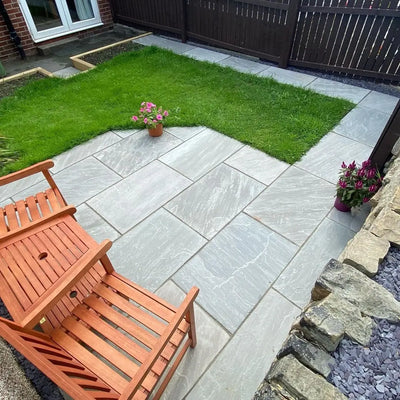
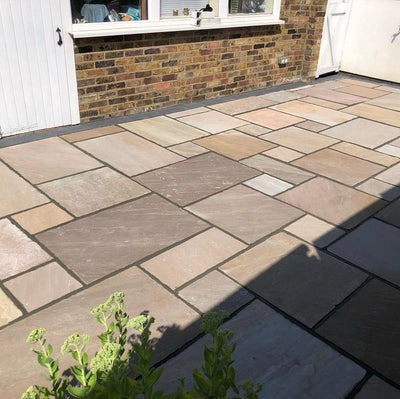
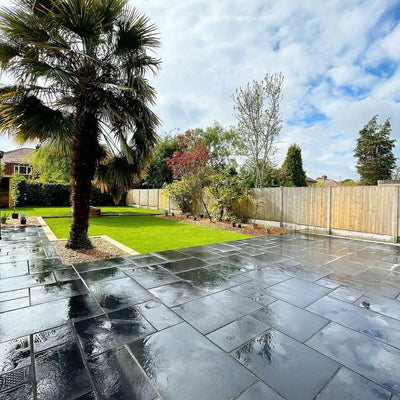
Compared with sandstone, black slate paving reads far more striking and vivid. Universal Paving's range comes in two colourways: the refined Blue Black, and the more varied Rustic tone, which blends red, green, brown and grey hues together. Both carry genuine slab-to-slab variation, as natural stone does.
| Blue Black | Rustic — red | Rustic — brown | Rustic — grey/green |
It's particularly effective set against:
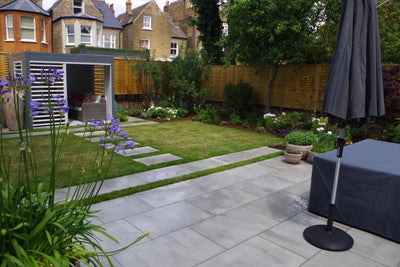
Green planting & lawns Red brick Timber fencing Light-coloured walls Gravel Modern garden furniture
For a bold, architectural patio, Blue Black is the stronger choice. For a softer, more traditional garden, Rustic slate tends to work better.
900×600mm vs. patio packs — which format?
| 900×600mm | Patio pack | |
|---|---|---|
| Look | Large-format & clean | Random, natural pattern |
| Best for | Contemporary patios | Traditional & characterful patios |
| Joints | Fewer | More |
| Style | Modern | Natural & varied |
The quick rule: choose 900×600mm for a cleaner, contemporary patio. Choose a patio pack for a traditional, random layout with more variation.
What slate paving is used for
|
USE 1 Contemporary patios Slate suits homes built around furnished outdoor space, and pairs well with wooden, resin and plastic furniture. |
USE 2 Garden paths The natural texture and dark colour make slate an attractive choice for paths through lawns and planted borders. |
|
USE 3 Feature areas Decorative in garden rooms, patio glazing, outdoor fireplaces and dining areas, where its colour draws the eye. |
USE 4 Traditional patios Looser, patio-pack layouts suit a more relaxed courtyard design with a traditional feel. |
Slate paving pricing
| Rustic Indian Slate — 900×600mm | from £31.31/m² |
| Rustic Indian Slate — Patio Pack | from £30.10/m² |
| Blue Black Slate — 900×600mm | from £29.99/m² |
Prices are subject to stock and promotions — always check the live product page before ordering.
How much slate paving will you need?
Start by calculating your area: length × width = area in m². A 20m² patio needs 20m² of paving before allowing for cuts and breakages.
Add wastage before you order
| Base area | 20m² |
| +10% for cuts & breakages | 20 × 1.10 |
| Order quantity | 22m² |
For curved areas, complicated layouts or designs with a lot of cutting, budget for more than 10%.
How to lay slate paving
Slate needs a properly prepared, compacted sub-base — it isn't a stone you can rush.
| 1 | Sub-base. Excavate the area and lay a suitable MOT Type 1 sub-base, compacted thoroughly. |
| 2 | Bedding. Lay slabs on a full mortar bed so each one is properly supported, not spot-bedded. |
| 3 | Priming. Use a suitable slurry primer where recommended, to create a strong bond. |
| 4 | Laying. Position each slab carefully, checking levels and maintaining falls for drainage. |
| 5 | Jointing. Fill joints with a suitable exterior jointing compound once the bedding has cured. |
Worth knowing: mix slabs from different packs as you lay. Natural slate has genuine colour variation, so blending pieces avoids patches of similar tone across the patio.
Is it a good choice for UK gardens?
Yes — with the right base and drainage.
Slate suits gardens where you want a natural, textured surface with a darker, contemporary character. Its variation looks at home in both modern and classic designs, and the riven surface helps underfoot grip. It holds up well in wet UK weather and through temperature swings, provided you choose a product made for outdoors, lay it on a solid base, and get the drainage right.
Slate works well for patios, path edges, seating areas and smaller garden spots. Choose it if you want a natural look, richer dark tones and a more rugged surface. If you'd rather have a tidy, even finish with less upkeep, porcelain may suit you better.
|
Explore Slate Paving Natural, textured and naturally slip-resistant — from around £24/m², in Blue Black and Rustic finishes, 20mm thick. |
Browse Slate Paving Order Samples |
Frequently asked questions
Is slate paving good for UK gardens?
Yes. Quality outdoor slate is a strong choice for UK patios and paths. Its naturally riven surface gives texture and grip, and its dark tones suit both contemporary and traditional gardens.
Is slate paving slippery when wet?
Natural slate's riven surface provides good grip. That said, moss, algae, dirt and standing water can make any outdoor paving slippery, so regular cleaning and good drainage matter.
Do slate paving slabs need sealing?
Sealing is optional but recommended. A breathable sealant helps protect against staining and slows natural weathering. Left unsealed, slate will gradually soften in tone as it ages.
What sizes does slate paving come in?
Universal Paving's range includes 900×600mm single-size slabs and mixed patio packs. The 900×600mm format particularly suits contemporary patios.
Is slate better than sandstone?
It depends on the look you want. Slate offers darker, more dramatic colour and stronger texture; sandstone gives warmer tones and more earthy colour variation.
Can slate paving be laid yourself?
Yes, as a DIY project if you have the right skills and equipment. A properly prepared sub-base, full bedding support and correct drainage are essential for a durable result.
How much does slate paving cost in the UK?
Prices vary by colour, format and finish. Universal Paving's current range runs from around £30–£31/m² across several formats, though live prices and stock can change.
Does slate paving work in modern gardens?
Yes. Blue Black slate is particularly effective in contemporary gardens, where its dark colour contrasts against green planting, light walls, timber and modern furniture.