





How to Choose Indoor Porcelain Tiles: Size, Finish and Style
Universal Paving — Indoor Tile Guides
How to choose indoor porcelain tiles for your home — from the room and style through to size, finish, grout, practical checks and ordering the right quantity.
A floor brings the whole room together. It sits alongside your kitchen cabinets, runs beneath your dining table and sets the backdrop for furniture, paint colours and everyday life. With so many tile designs available, where should you start?
Universal Paving has recently introduced indoor porcelain tiles, bringing more choice to your home renovation. Whether you prefer understated concrete effects or decorative marble-inspired designs, this guide will help you narrow down the size, finish and style for your space.
Start with the room and how you use it
Before choosing a colour, think about where the tiles will go.
|
ROOM 1 Kitchen Consider how the floor will look alongside your cabinetry and worktops. An understated design can balance a strongly patterned worktop, while a more expressive tile can become the focal point of a simple kitchen. |
ROOM 2 Hallway Look at the view through adjoining doorways. A colour that works with the surrounding rooms can help the entrance feel connected to the rest of your home. |
|
ROOM 3 Bathroom Separate your wall and floor decisions. A tile's appearance alone does not establish whether it is appropriate for a wet floor or shower area — check the specific product's intended use and slip information before ordering. |
ROOM 4 Open-plan space Compare your shortlist against the kitchen, dining and living areas together. The floor needs to work with all three. |
Choose a style that complements your home
Concrete effect for an understated look
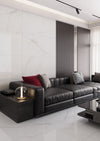
Concrete-effect porcelain works well when you want a simple backdrop that allows furniture and other materials to stand out. The colour makes a considerable difference: ivory creates a warmer scheme, white keeps things light, and anthracite adds depth.
| Ivory — warmer | White — lighter | Anthracite — deeper | Marble effect — veining |
For example, Ark Ivory Matt Porcelain in 600 × 1200 mm pairs a soft ivory shade with a concrete-inspired design. Consider it alongside:
Oak cabinetry Warm neutral paint Brushed metal details
For a darker scheme, Ark Anthracite Matt Porcelain in 1000 × 1000 mm offers a deeper colour that can contrast with lighter furnishings.
Marble effect for a more decorative finish
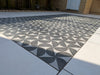
Marble-effect tiles introduce veining and movement. They can add interest to a room with plain cabinetry or simple furniture, without needing a strong colour throughout the space.
Our Destiny Marble Effect Matt Porcelain in 600 × 600 mm is one option for a marble-inspired scheme with a matt finish. When comparing patterned tiles, look at photographs showing several tiles together — one close-up may not show the full variation or how the pattern repeats across a floor.
The quick rule: choose concrete effect for a quiet, understated backdrop. Choose marble effect when you want veining and movement to add interest to a simpler room.
Which indoor tile size should you choose?
Size affects the number of grout lines, the layout and where cuts will fall. These three formats offer different starting points:
| Tile size | Appearance | What to consider |
|---|---|---|
| 600 × 600 mm | A balanced square format with a regular grid | Plan how the joints meet doorways and room edges. |
| 600 × 1200 mm | An elongated rectangular format | Compare both laying directions before deciding. |
| 1000 × 1000 mm | A broad square format with fewer joints than smaller tiles | Check access, handling and the proposed cutting layout with your installer. |
Large tiles are not reserved for large rooms. They can also work in smaller spaces when the layout is well planned. However, a bigger tile is not automatically a better choice: awkward cuts around fittings or narrow strips at the edges can undermine the finished look.
Worth knowing: ask your tiler to map out the layout before you order.
Matt or a reflective finish?
| Matt | Glossy & polished | |
|---|---|---|
| Look | Softer, less reflective | Reflects more light, different visual effect |
| Best for | Understated interiors where colour and pattern do the work | Rooms where you want light to play across the floor |
| Check | Matt does not automatically mean non-slip | View under your room's actual lighting, especially near windows and spotlights |
Finish names do not tell you everything about performance. Gloss, polished and lappato should not be assumed to describe identical surfaces. Check the specification for the individual tile and its intended location.
Think about grout as part of the design
Grout can blend into your floor or make the tile pattern more prominent.
|
OPTION 1 Close to the tile colour Helps the joints look quieter. |
OPTION 2 Contrasting colour Draws attention to the shape and arrangement of each tile. |
You may also see tiles described as “rectified”. This means their edges have been mechanically finished for more consistent dimensions. Rectified tiles still require grout joints; your installer should select the appropriate joint width using the manufacturer's guidance and site conditions.
Check the practical details before ordering
A good shortlist should work with your installation as well as your décor.
| 1 | Wall or floor use. Confirm the product is suitable for the intended surface. For walls, your installer should also check the background can support the proposed tiling. |
| 2 | Underfloor heating. Check tile compatibility and have your installer confirm the complete installation system. Our Ark Ivory 600 × 1200 mm listing identifies it as suitable for underfloor heating when correctly installed. |
| 3 | Total project cost. Allow for preparation, adhesive, grout, trims and fitting alongside the tile price. |
| 4 | Order quantity. Include an allowance for cuts and wastage agreed with your tiler, then round up to full boxes. |
How much tile will you need?
Start by calculating your area: length × width = area in m². Ark Ivory 600 × 1200 mm, for example, is supplied in boxes covering 2.16 m².
Add wastage before you order
| Base area | 20 m² |
| +10% illustrative allowance | 20 × 1.10 = 22 m² |
| Boxes (22 ÷ 2.16, rounded up) | 11 boxes |
| Total coverage | 23.76 m² |
Your actual allowance may differ with the layout.
Bring your shortlist together
Start with the room, then narrow down the rest.
Before making your final choice, compare the tiles with your cabinet door, worktop, paint and fabrics. Where samples are available, view them in daylight and under artificial lighting; a small sample helps with colour and texture, while full-room photographs help you judge the overall pattern.
Start with the room's requirements, narrow down the style, then check size, finish and installation details. That gives you a more useful shortlist than choosing from a photograph alone.
|
Explore Indoor Porcelain Tiles Concrete-effect and marble-effect porcelain for your home. Contact our team with your room dimensions and preferred look for help narrowing down your options. |
Browse Indoor Tiles Order Samples |
Frequently asked questions
Which indoor tile size should I choose?
It depends on your layout. 600 × 600 mm gives a balanced grid, 600 × 1200 mm an elongated look, and 1000 × 1000 mm fewer joints. Large tiles can work in smaller rooms when the layout is well planned, so ask your tiler to map it out first.
Is matt or glossy better for indoor tiles?
Matt gives a softer, less reflective look; glossy and polished finishes reflect more light. Neither name tells you the slip performance, so check the specification for the individual tile and its location.
Does matt mean a tile is non-slip?
No. Matt does not automatically mean non-slip. Check the product's intended use and slip information before ordering, especially for bathrooms and wet areas.
What does rectified mean?
Rectified tiles have mechanically finished edges for more consistent dimensions. They still need grout joints, and your installer should choose the joint width using the manufacturer's guidance and site conditions.
Can I use these tiles with underfloor heating?
Check each tile's compatibility and have your installer confirm the complete installation system. Our Ark Ivory 600 × 1200 mm listing identifies it as suitable for underfloor heating when correctly installed.
How many boxes of tile do I need?
Measure length × width, add a wastage allowance agreed with your tiler (10% is an illustrative figure), then round up to full boxes. For a 20 m² room using 2.16 m² boxes, that works out at 11 boxes.
What grout colour should I choose?
A colour close to the tile makes joints look quieter, while a contrasting grout highlights the shape and arrangement of each tile.