











Best Time of Year to Lay a Patio (And When to Avoid)
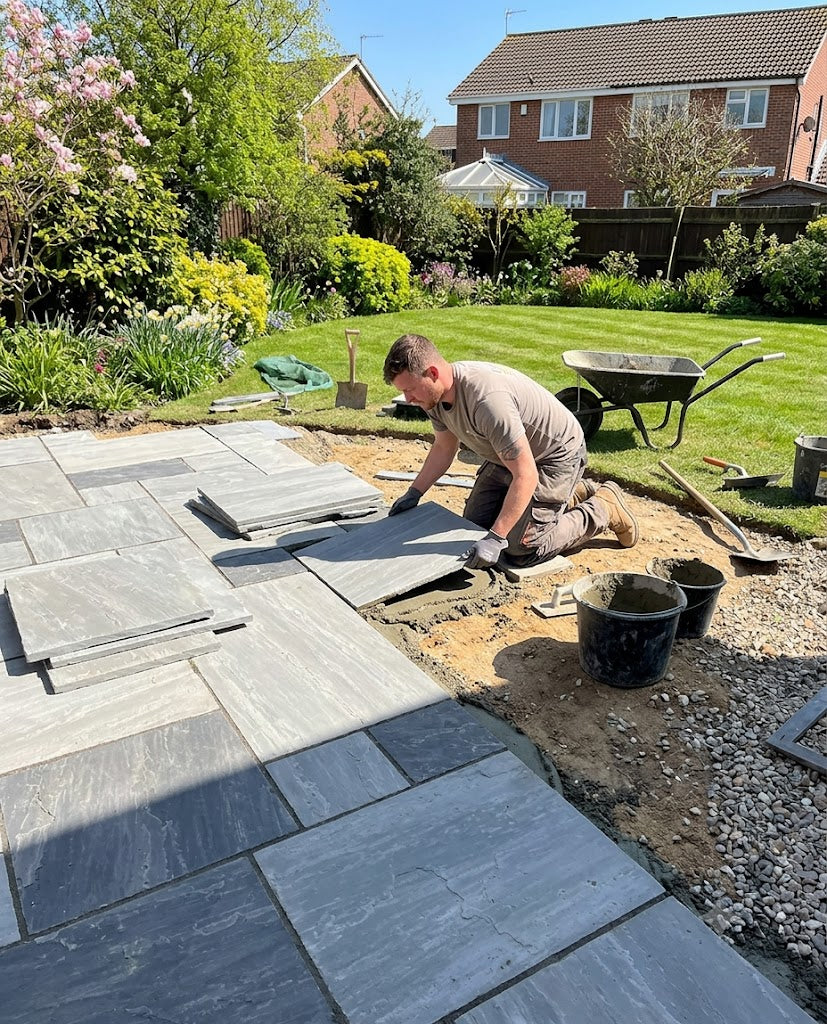
The best time to lay a patio in the UK is spring (April-May) or early autumn (September-October). Temperatures of 5-25°C let mortar cure properly, the ground is workable, and rain is moderate. Avoid laying in frost (below 3°C mortar won't set and can crack) and in extreme summer heat (above 30°C mortar dries too fast and cracks). You can lay a patio in summer and winter with care, but spring and autumn give the most reliable results with the least effort.
A patio is a one-time investment that should last 30-50 years — so it's worth laying it in conditions that give the mortar the best chance to cure properly. The good news: the UK climate is actually well-suited to patio laying for most of the year. The two things that genuinely cause problems are frost and extreme heat, and both are avoidable with timing or technique. Here's how each season stacks up.
The ideal conditions for laying a patio
Regardless of season, these are the conditions that give the best results:
| Condition | Ideal | Why it matters |
|---|---|---|
| Temperature | 5-25°C | Mortar cures steadily — not too fast, not too slow |
| No frost forecast | For 3-5 days after laying | Frost freezes water in wet mortar, cracking it before it sets |
| Dry or light rain | No heavy downpours | Heavy rain washes out fresh mortar and jointing |
| Workable ground | Not frozen or waterlogged | You can't dig and compact a sub-base in frozen or boggy soil |
Season by season
Spring (March-May) — the best time
Spring is the ideal time to lay a patio. By April, the frost risk has usually passed, temperatures sit in the perfect 8-18°C range, and the ground has dried enough from winter to dig and compact properly. Crucially, laying in spring means your patio is ready for the summer — you get a full season of barbecues, dining, and garden use out of it the same year.
Watch for: late frosts in March and early April. Check the forecast for 3-5 frost-free nights before starting. Spring can also be wet — pick a dry spell, and cover fresh mortar overnight if rain threatens.
The catch: spring is peak season for landscapers. If you're hiring a professional, book 6-8 weeks ahead — good installers fill their spring calendars fast.
Summer (June-August) — good with care
Summer offers long daylight hours and dry, easy-to-work ground. For most of a British summer, conditions are fine for laying a patio. The risk is heat: on days above 28-30°C, mortar dries too quickly, which weakens it and causes cracking before it cures properly.
How to lay in a heatwave: work in the cooler parts of the day (early morning or evening), keep mortar shaded and covered, dampen the slabs and sub-base before laying (so they don't suck moisture out of the mortar), and mist the finished joints to slow the drying. Read our mortar guide for hot-weather technique.
Watch for: sudden summer thunderstorms. A heavy downpour on freshly pointed joints washes the compound out. Keep an eye on the forecast and have a tarpaulin ready.
Autumn (September-October) — the second-best time
Early autumn rivals spring as the best time to lay a patio. September and early October bring mild temperatures (10-18°C), the ground is dry from summer, and the frost risk hasn't yet arrived. Landscapers are also less booked than in spring, so you may get a better rate and a sooner start date. The patio cures fully before winter and is ready for the following spring.
Watch for: the first frosts, which can arrive from late October. Aim to finish laying and let the mortar cure (3-5 days minimum) before the first cold snap. After mid-October, frost risk climbs steadily.
Winter (November-February) — possible but difficult
Winter is the most challenging time to lay a patio, for three reasons: frost can crack wet mortar before it sets, frozen or waterlogged ground is impossible to dig and compact properly, and cold temperatures slow mortar curing dramatically. It's not impossible — but it requires careful timing around mild, dry spells and frost-free forecasts.
If you must lay in winter: only work when temperatures stay above 3-5°C for at least 3-5 days (day and night), never lay on frozen ground, use a rapid-set mortar additive, and cover the finished patio with frost blankets or hessian overnight. Even then, results are less reliable than in milder seasons.
The honest advice: if you can wait until spring, wait. A patio is a long-term investment — laying it in poor conditions to save a few weeks risks cracking, movement, and a shorter lifespan.
Quick season comparison
| Season | Rating | Main advantage | Main risk |
|---|---|---|---|
| Spring (Apr-May) | ★★★★★ Best | Ready for summer use | Late frost, busy landscapers |
| Summer (Jun-Aug) | ★★★★ Good | Long days, dry ground | Heat cracks mortar, storms |
| Autumn (Sep-Oct) | ★★★★★ Best | Mild, easier to book a pro | Early frost from late Oct |
| Winter (Nov-Feb) | ★★ Difficult | Lowest landscaper rates | Frost, frozen ground, slow cure |
Does the paving material change the timing?
Slightly. The material you choose affects how sensitive the job is to weather:
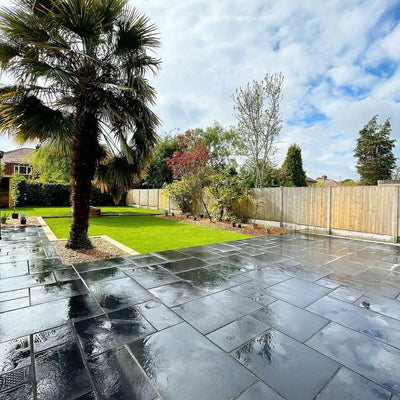
Porcelain needs an SBR primer slurry to bond to the mortar bed, and primer performs best in mild, dry conditions. Avoid laying porcelain in very cold or very wet weather — the primer needs time to become tacky before the slab goes down.
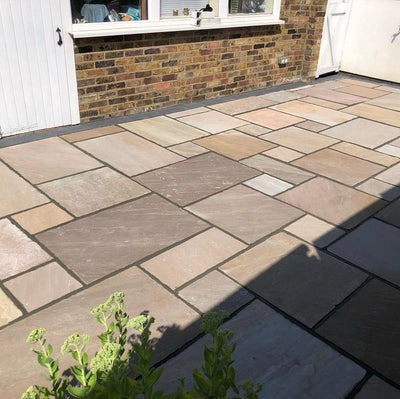
Sandstone and other natural stone are more forgiving but still need frost-free curing. In hot weather, dampen the porous stone before laying so it doesn't draw water out of the mortar too fast.
The sub-base and mortar are the weather-sensitive parts, not the slabs themselves. Whatever material you lay, the mortar bed and jointing are what frost and heat affect. Plan your timing around mortar curing, not the stone.
How long before you can use a new patio?
Whatever season you lay in, give the patio time to cure before heavy use:
Foot traffic: wait 24-48 hours after laying before walking on it (longer in cold weather).
Furniture and full use: wait at least 5-7 days for the mortar bed and jointing to cure fully. In cold conditions, allow up to 14 days.
Heavy loads (hot tubs, vehicles): wait the full 28 days that mortar takes to reach maximum strength.
Planning your patio?
Order your paving now so it's ready for the next dry spell. Sandstone from £20/m², porcelain from £19/m² — all with free UK delivery.
Browse All Paving Order SamplesFrequently asked questions
What is the best month to lay a patio?
April, May, September, and October are the best months in the UK. They offer mild temperatures (8-18°C), frost-free conditions, workable ground, and moderate rainfall — everything mortar needs to cure properly. Spring (April-May) has the bonus of giving you a patio ready for summer use.
Can you lay a patio in winter?
Yes, but it's difficult and the results are less reliable. Only lay when temperatures stay above 3-5°C for 3-5 days, never on frozen or waterlogged ground, and protect fresh mortar from overnight frost with blankets. If you can wait until spring, that's the safer choice — frost can crack curing mortar and ruin the job.
Can you lay a patio in the rain?
Light rain is manageable, but avoid laying in heavy rain — downpours wash out fresh mortar and jointing compound before they set. If rain is forecast, cover the finished work with a tarpaulin. Pointing the joints is the most rain-sensitive stage; never point if heavy rain is expected within a few hours.
Is it too hot to lay a patio in summer?
On days above 28-30°C, yes — mortar dries too fast and cracks before it cures. Work in the early morning or evening when it's cooler, keep mortar shaded, dampen the slabs and sub-base before laying, and mist the joints. Most British summer days are fine; only genuine heatwaves cause problems.
How long does a patio take to set?
You can walk on it after 24-48 hours, add furniture after 5-7 days, and apply heavy loads after 28 days (when mortar reaches full strength). Cold weather extends these times — in winter, allow up to 14 days before normal use. Curing time depends more on temperature than season.


%20or%20early%20autumn%20(September-October).%20Temperatures%20of%205-25%C2%B0C%20let%20mortar%20cure%20properly,%20the%20ground%20is%20workable,%20and%20rain%20is%20moderate....)