






Best Paving Slabs for UK Gardens 2026 Buyer s Guide
The best paving slabs for most UK gardens are Indian sandstone and outdoor porcelain. Sandstone gives you warm, natural colour and character from around £20/m²; porcelain gives you a low-maintenance, stain-proof, frost-proof surface from £18/m². For premium durability choose granite or limestone, and for a distinctive dark, textured finish choose slate. The right choice comes down to four things: how much maintenance you want, your budget, your garden's style, and how the surface needs to perform underfoot in wet British weather.
Choosing the right paving slabs is the difference between a garden surface that still looks good in twenty years and one you regret by the second winter. This guide compares the five materials worth considering for a UK garden in 2026 — sandstone, porcelain, limestone, granite and slate — on the factors that actually matter: durability, slip resistance, maintenance, style and real price per m². No filler, just what each one is genuinely good for.
The 5 materials at a glance
These are delivered prices including VAT — what you actually pay at Universal Paving as a direct importer, with no merchant markup.
| Material | From per m² | Best for | Maintenance |
|---|---|---|---|
| Indian sandstone | £20 | Natural warmth, character, best all-round value | Periodic sealing |
| Porcelain | £18 | Low maintenance, modern look, family gardens | None — no sealing |
| Limestone | £21 | Refined, formal gardens, period properties | Regular sealing |
| Granite | £27 | Maximum durability, driveways, high traffic | Minimal |
| Slate | Natural stone | Dark, dramatic, naturally textured surfaces | Occasional sealing |
Remember the 10% rule. Whatever material you choose, order 10% more than your measured area to cover cuts, waste and breakages. A 20m² patio needs 22m² of paving.
1. Indian sandstone — the best all-rounder
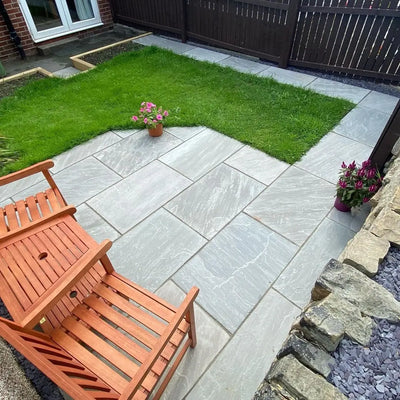
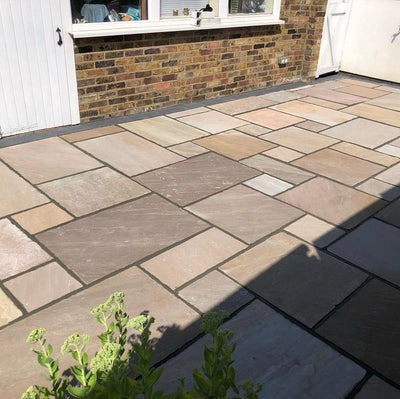
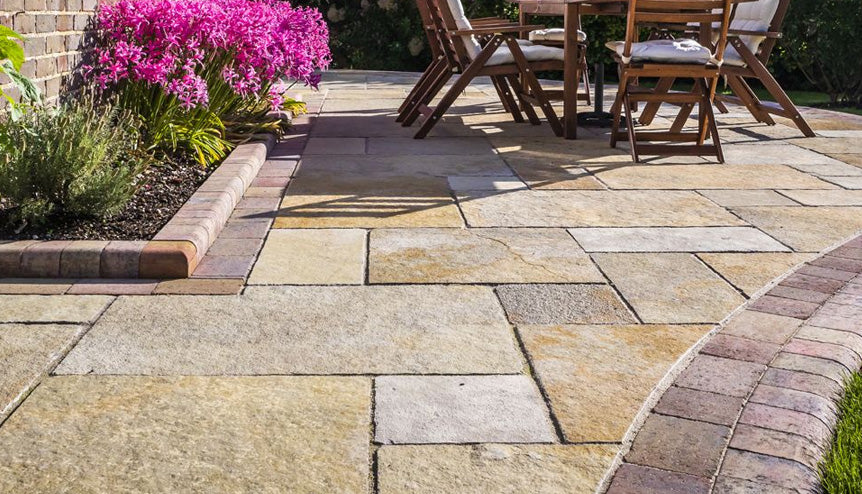
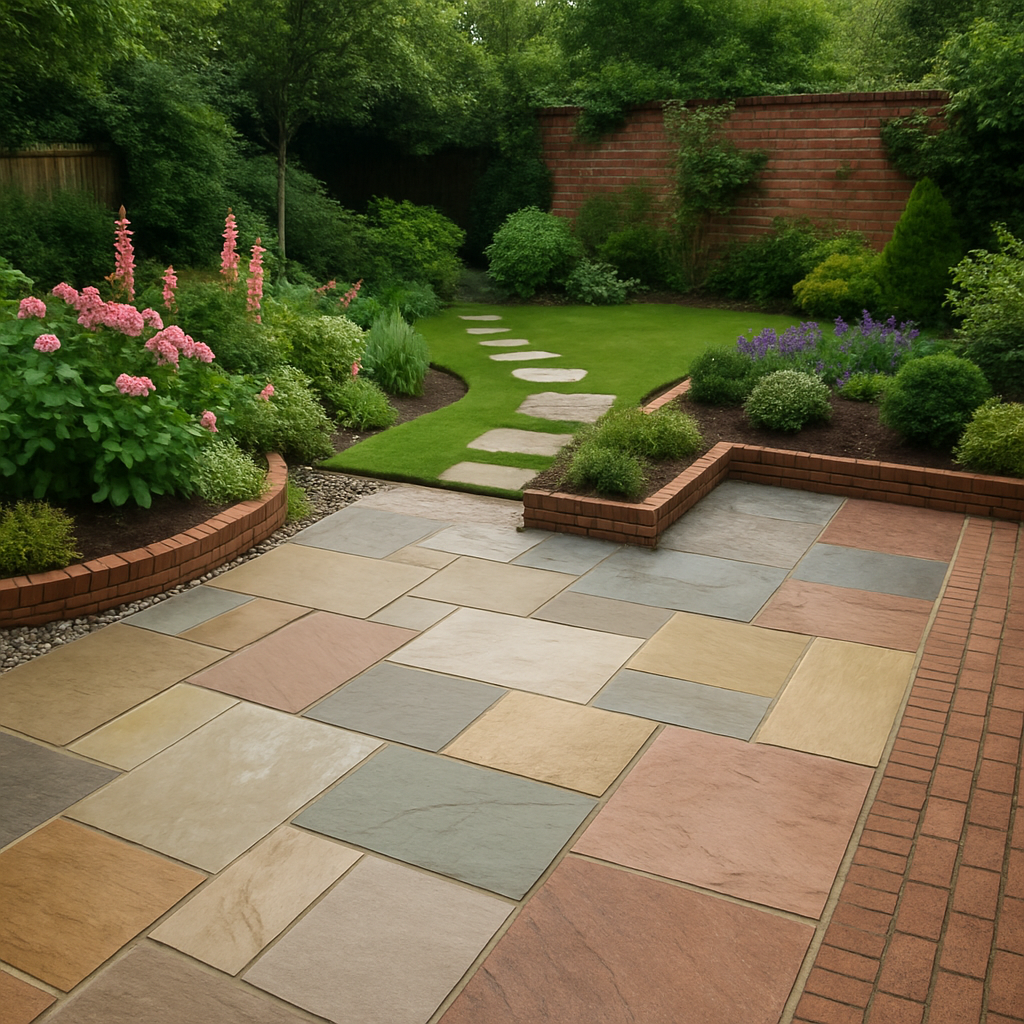
Indian sandstone is the most popular garden paving in the UK, and for good reason. It delivers genuine natural-stone character — warm tones, subtle veining, and a surface where no two slabs are identical — at the most accessible price of any natural stone. It suits almost every garden style, from cottage to contemporary.
The colour range is what wins people over. Kandla Grey is the UK's best-selling paving colour — a cool, versatile grey that works with any planting and any architecture. Raj Green brings green-brown tones that flatter red-brick houses, Rippon Buff offers warm honey shades, and Fossil Mint adds pale mint-cream character with delicate fossil markings.
Sandstone comes in two finishes: riven (a naturally textured, hand-split surface that grips well underfoot and forgives small laying errors) and sawn & honed (a smoother, more contemporary finish). Riven starts at around £20/m²; sawn from around £25/m².
You love the look of real stone, don't mind sealing it every few years, and want the widest colour and finish choice without paying premium-stone prices. It's the default recommendation for most UK gardens.
2. Porcelain — the low-maintenance modern choice
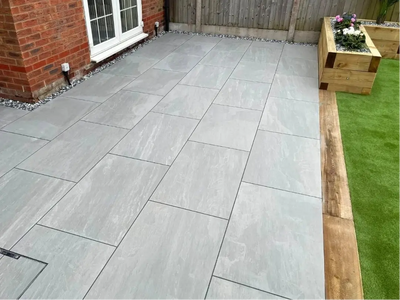
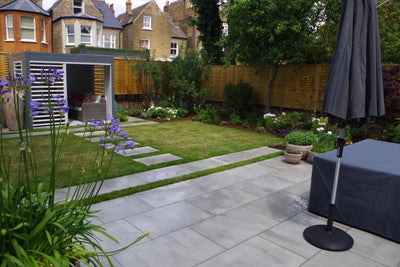
Outdoor porcelain is the fastest-growing choice for UK gardens, and it starts from just £18/m² — often the same price as, or less than, natural stone. It's engineered to be denser and harder than stone, which gives it a set of practical advantages stone can't match.
Porcelain is non-porous, so it never needs sealing, doesn't absorb stains, and resists frost, moss and fading year after year. Spill red wine or barbecue grease on it and it wipes clean. It holds its colour for decades because the pigment runs through the slab rather than sitting on a sealed surface. The trade-off is that it's manufactured rather than natural — consistent and precise, which some love and some find less characterful than stone.
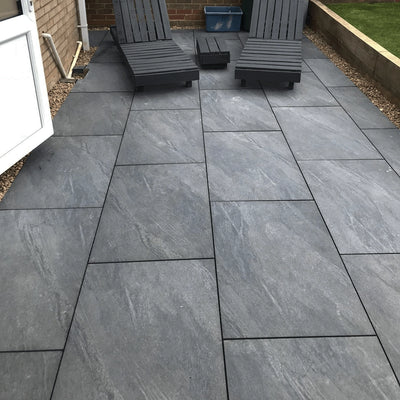
Outdoor porcelain is supplied in a 20mm thickness with textured, anti-slip surfaces designed for wet British weather — very different from the thin, smooth tiles sold for indoor floors. Popular options include Kandla Grey, Anthracite Black, County Light Grey and stone-effect finishes, available in 900×600, 600×600 and 1200×600 formats.
You have a busy family garden, dogs, or a barbecue area, you want zero ongoing maintenance, and you prefer a clean, modern, consistent finish. It's also the strongest choice for the lowest long-term cost of ownership.
3. Limestone — refined and naturally warm
Limestone sits in the space between sandstone's earthiness and porcelain's precision. It has a fine-grained, refined surface with subtle fossil detail and a warmth — both in colour and underfoot — that suits formal gardens and period properties beautifully. Kadapa Black and Kota Blue offer dense, dark, hard-wearing options, while Tandur tones and Dijon Sinai bring soft greys and warm cream.
The thing to know about limestone is that it's a calcium-carbonate stone, so it reacts to acids — wine, citrus, vinegar and similar spills can etch the surface if left. It needs sealing within a few weeks of laying and re-sealing periodically. Cared for, it's a refined, generation-lasting surface; neglected, it shows its age faster than the alternatives.
You want a refined, understated natural surface for a formal or traditional garden, and you're happy to seal and care for it to keep it looking its best.
4. Granite — the most durable natural stone
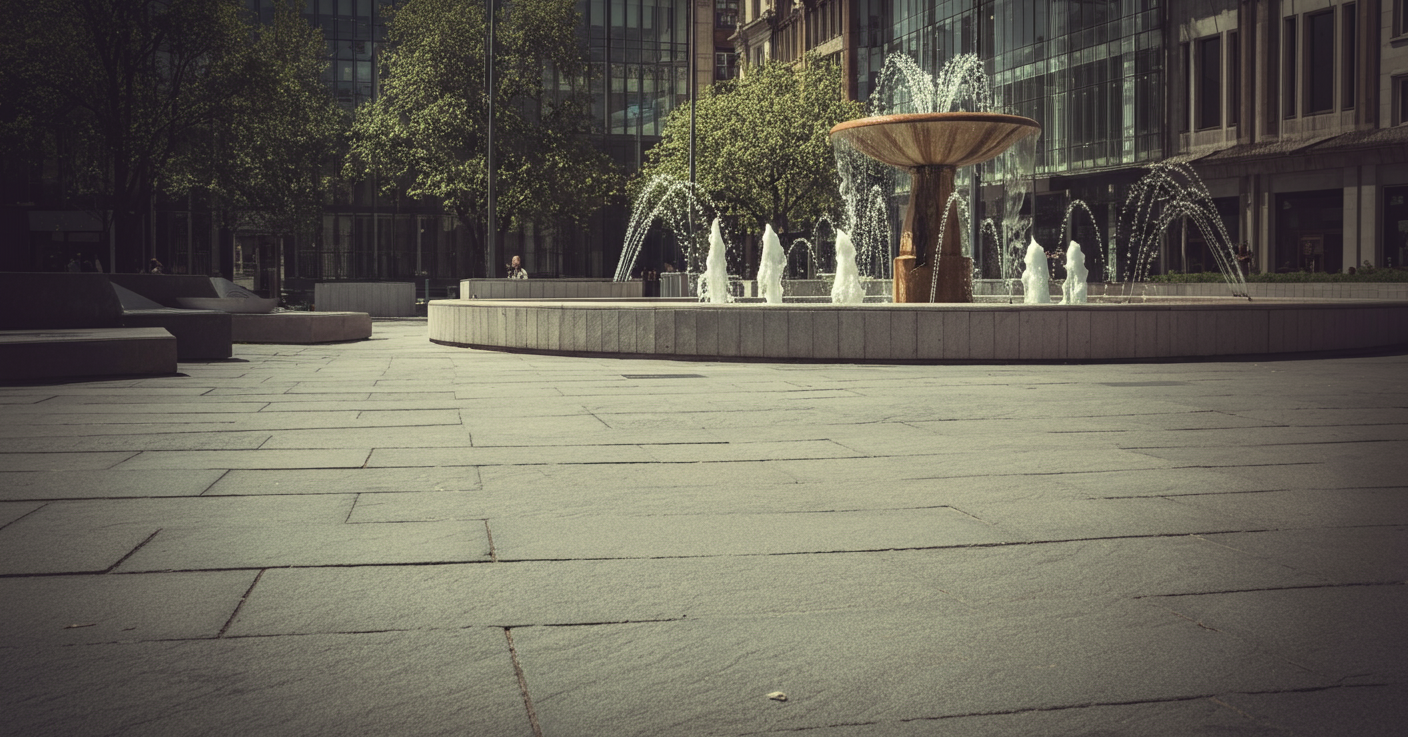
Granite is the hardest natural stone you can lay outdoors — denser than sandstone, harder than limestone, and built to take decades of foot traffic, frost and weather without losing colour or surface texture. The flamed silver-grey finish gives a naturally grippy surface, and granite setts are one of the few natural materials genuinely rated for driveway use under vehicle weight.
Granite paving starts from around £27/m². It's the long-term investment choice: higher upfront cost, but minimal maintenance and a lifespan that comfortably outlasts the alternatives. For high-traffic areas, driveways, or anywhere you want a surface you'll never have to think about again, granite is the strongest option.
You have a high-traffic area or driveway, or you simply want the toughest, longest-lasting natural surface and don't mind paying a little more upfront for it.
5. Slate — dark, dramatic and textured
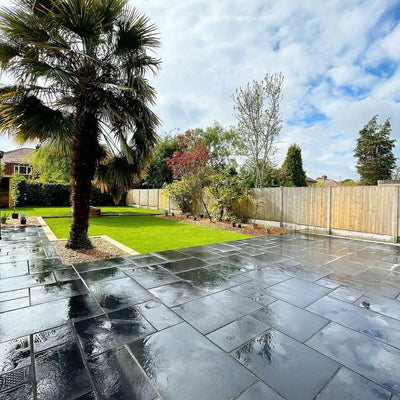
Slate is the choice for gardens that want drama. Its naturally riven surface has a rich, layered texture and deep tones — charcoals, blue-greys and rustic multicolours — that create a bold, contemporary contrast against planting and pale walls. The natural cleft of the stone gives it good grip underfoot.
Slate is supplied at a price similar to other premium natural stone. Like other natural stones it benefits from occasional sealing, which also deepens and enriches its colour. It's particularly effective around water features, modern architecture, and as a contrast material alongside lighter paving.
You're after a bold, dramatic finish with natural texture and depth, ideally in a contemporary garden or as a striking contrast to lighter materials.
Best paving by garden style
| Garden style | Best choice | Why |
|---|---|---|
| Modern / contemporary | Porcelain | Clean lines, consistent colour, large formats, zero maintenance |
| Cottage / traditional | Sandstone | Warm natural tones and riven texture suit period charm |
| Formal / period property | Limestone | Refined, fine-grained surface suits formal settings |
| High-traffic / driveway | Granite | Hardest natural stone, rated for vehicle loads as setts |
| Bold / dramatic contemporary | Slate | Dark tones and natural texture create striking contrast |
| Busy family garden | Porcelain | Stain-proof and maintenance-free for spills and mess |
What to check before you buy
Slip resistance
For a surface that stays safe in the rain, choose a textured finish — riven natural stone, flamed granite, or anti-slip outdoor porcelain. Smooth, polished or honed surfaces look elegant but can be slippery when wet, so they're better suited to covered or low-traffic areas. Always pick a textured finish for steps, pool surrounds and main walking routes.
Thickness
Standard garden paving is 20mm porcelain or 20–22mm natural stone — correct for patios and paths. Driveways are a different requirement entirely: they need thick setts (40–50mm), not standard slabs, which crack under vehicle weight. If your project includes a driveway, see our driveway paving guide.
Maintenance
This is the real long-term cost difference. Porcelain needs nothing but an occasional wash. Natural stone — sandstone, limestone, slate — needs periodic sealing to protect against stains and weathering. Granite sits in between, needing very little. Factor sealing time and cost into your decision, not just the headline price per m².
Order direct
As a direct importer, we ship straight from our own UK warehouses with no merchant markup in between — every product shows its price per m² including VAT and free UK mainland delivery. Order samples to compare colours in your own garden light before you commit; screen colours never match reality.
Find the right slabs for your garden
Browse the full range — every product shows the price per m² including VAT and free UK delivery.
Browse All Paving Slabs Order SamplesFrequently asked questions
What is the best material for garden paving slabs?
For most UK gardens, Indian sandstone or outdoor porcelain. Sandstone gives natural character at the best value from around £20/m²; porcelain gives a low-maintenance, stain-proof, frost-proof surface from £18/m². Choose granite or limestone for premium durability or a formal look, and slate for a dark, textured finish. The best choice depends on your budget, garden style, and how much maintenance you're willing to do.
What is the cheapest way to pave a garden?
The best value comes from riven Indian sandstone in a 600×600 format, laid yourself on a simple rectangular layout. Sandstone is the most affordable natural stone, riven is more forgiving to lay than sawn, and DIY installation removes the largest cost — labour. Porcelain from £18/m² is also strong value once you factor in that it never needs sealing.
Which paving slabs are best for a low-maintenance garden?
Porcelain. It's non-porous, so it never needs sealing, doesn't stain, and resists frost, moss and fading. A wash with water is all it needs. Natural stone — sandstone, limestone, slate — all need periodic sealing to stay at their best, so they require more upkeep than porcelain.
Are porcelain or natural stone paving slabs better?
Neither is universally better — they suit different priorities. Porcelain wins on maintenance, stain resistance and consistency. Natural stone wins on character, warmth and individuality, since every slab is unique. If you want a surface you never have to think about, choose porcelain; if you want genuine natural-stone character and don't mind sealing it, choose sandstone, limestone or slate.
What thickness of paving slab do I need?
For patios and garden paths, 20mm porcelain or 20–22mm natural stone is correct. For driveways, you need thick setts of 40–50mm rather than standard slabs — standard paving cracks under vehicle weight. Match the thickness to the use, not just the look.