





Article: What Is Porcelain Paving? Benefits, Uses, Types & Buying Guide
What Is Porcelain Paving? Benefits, Uses, Types & Buying Guide
Universal Paving | Porcelain Paving Guides
Why outdoor porcelain suits UK properties, from weather and slip resistance to styles, colours, installation and cost.
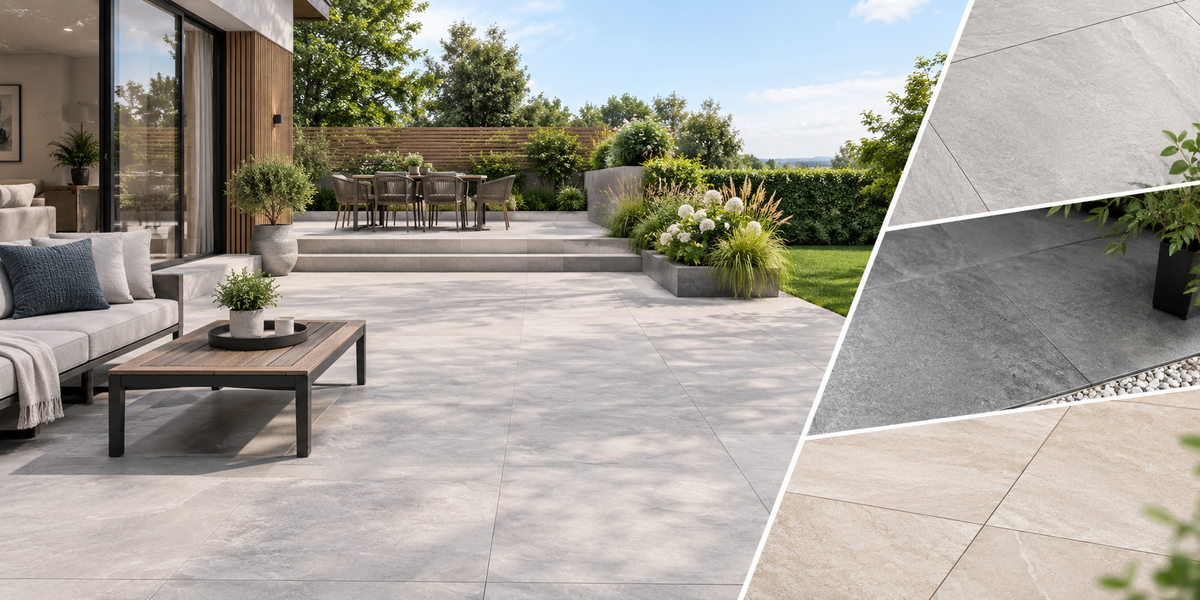
Across modern UK property developments and garden renovations, Porcelain Paving has established itself as the premier exterior surfacing solution. Over the past decade, British property markets have seen a decisive transition away from high-maintenance traditional flags toward dense outdoor stoneware that combines structural strength with refined architectural appeal. For UK property dealers, homeowners, landscape contractors, and commercial developers, selecting ground finishes requires balancing initial capital expenditure, long-term durability, and overall property valuation.
Outdoor engineered tiles represent an advanced generation of exterior flooring designed to withstand demanding weather conditions. Unlike indoor ceramics or porous concrete, external porcelain slabs endure repeated freeze-thaw cycles, continuous foot traffic, and heavy seasonal rainfall without degradation.
What Is Outdoor Porcelain Flooring?
To appreciate why this material performs so reliably, one must examine its technical composition. The production process converts raw mineral ingredients into a dense, non-porous structure through intense thermal compaction.
Engineered from refined clays, quartz, and feldspar fired at temperatures exceeding 1,200 degrees Celsius, modern porcelain paving slabs achieve exceptional hardness. This intense thermal consolidation eliminates internal air voids, producing outstanding structural density and flexural strength.
Outdoor porcelain at a glance
| Firing temperature | Above 1,200°C |
| Water absorption | Below 0.5% |
| Slip rating | R11 certified |
| Thickness | 20mm calibrated |
A defining characteristic of exterior stoneware is its certified water absorption rate below 0.5 percent, ensuring complete immunity to frost heave and efflorescence.
As a direct importer with a primary distribution centre in Nottingham, Universal Paving supplies high-specification outdoor materials directly from stock, backed by rapid dispatch across the UK.
Key Advantages for UK Properties
Choosing an exterior ground surface involves weighing operational upkeep against upfront investment. High-performance stoneware delivers practical advantages tailored specifically to the British climate.
|
ADVANTAGE 1 Weather and Frost Resistance Porous stones absorb rainwater, expanding upon freezing and causing spalling. Because dense porcelain tiles absorb virtually no moisture, internal ice crystals cannot form, preserving pristine edges and structural stability even during sub-zero spells. |
ADVANTAGE 2 Slip Resistance and Wet-Weather Safety Safety underfoot is critical for terraces, walkways, and pool surrounds. With consistent R11 anti-slip certification, porcelain patio slabs deliver dependable traction underfoot even during heavy British rainfall and sub-zero winter frosts. The subtly textured surface provides secure grip for pedestrians and bathers without feeling abrasive. |
|
ADVANTAGE 3 Stain Resistance and Low Maintenance Algae and grease spills frequently discolour conventional surfaces, requiring pressure washing. Porcelain surfaces repel spills at the surface level, allowing quick cleanup with mild soap and water without requiring periodic sealants. |
ADVANTAGE 4 Colour Fastness and UV Stability Sunlight exposure gradually bleaches concrete flags and alters natural stone tones. Exterior porcelain products incorporate mineral pigments baked permanently into the tile body, ensuring original colour depth remains unchanged over decades. |
Porcelain vs Natural Stone: Performance Comparison
Specifiers frequently debate whether to choose engineered porcelain stoneware or quarried natural stone for upcoming developments. Understanding technical divergence clarifies why modern architects and developers increasingly choose manufactured options.
While traditional sandstone paving slabs offer rustic charm, their natural porosity ranging from one to six percent leaves them vulnerable to water ingress, freeze-thaw cracking, and stubborn staining. In contrast, outdoor porcelain maintains a certified water absorption threshold below 0.5 percent, stopping damp penetration before it can compromise the sub-base.
For property owners seeking to replace aging installations, swapping weathered sandstone paving slabs for modern alternatives eliminates routine sealing regimens and reduces annual cleaning to a simple wash with mild detergent, lowering lifecycle maintenance costs.
| Metric | Outdoor Porcelain | Natural Sandstone |
|---|---|---|
| Water Absorption | Below 0.5% | 1.0% to 6.0% |
| Sealing | Never | Every 12-24 Months |
| Slip Rating | R11 Certified | Variable (R10-R11) |
| Lifespan | 30+ Years | 20+ Years |
| Maintenance | Low (Soap & Water) | High (Regular Sealing) |
| Dimensions | Calibrated Edges | Variable Hand-Cut |
The quick rule: choose porcelain when you want a surface that never needs sealing and stays consistent for decades. Choose natural stone when rustic variation matters more than upkeep.
Types and Styles: The Collection Range
Exterior porcelain products encompass diverse formats, textures, and profile treatments tailored to distinct architectural contexts.
At Universal Paving, every exterior tile in the collection features a calibrated 20mm thickness, sawn rectified edges, and a certified R11 anti-slip surface tested for wet British conditions.
|
RANGE 1 Porcelain Setts Compact 100x100mm and 200x100mm Porcelain Setts deliver high load-bearing capability for driveways, replicating cobbles while resisting vehicle fluids. |
RANGE 2 Porcelain Borders/planks Elongated 900x200mm Porcelain Borders/planks introduce sharp architectural boundaries, functioning effectively as step treads and herringbone paths. |
|
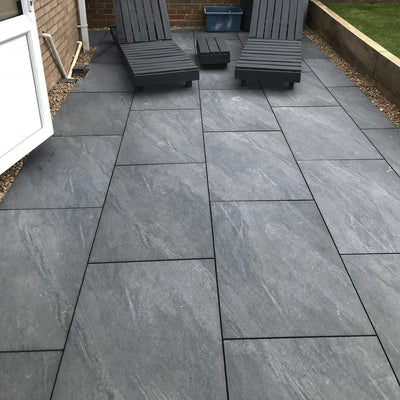
RANGE 3 XL Format Porcelain Generous 1200x600mm XL Format Porcelain slabs produce sleek floor planes that visually enlarge gardens and commercial terraces. |
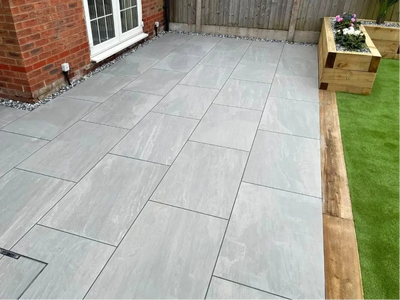
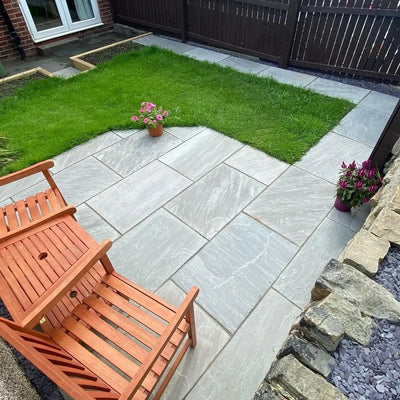
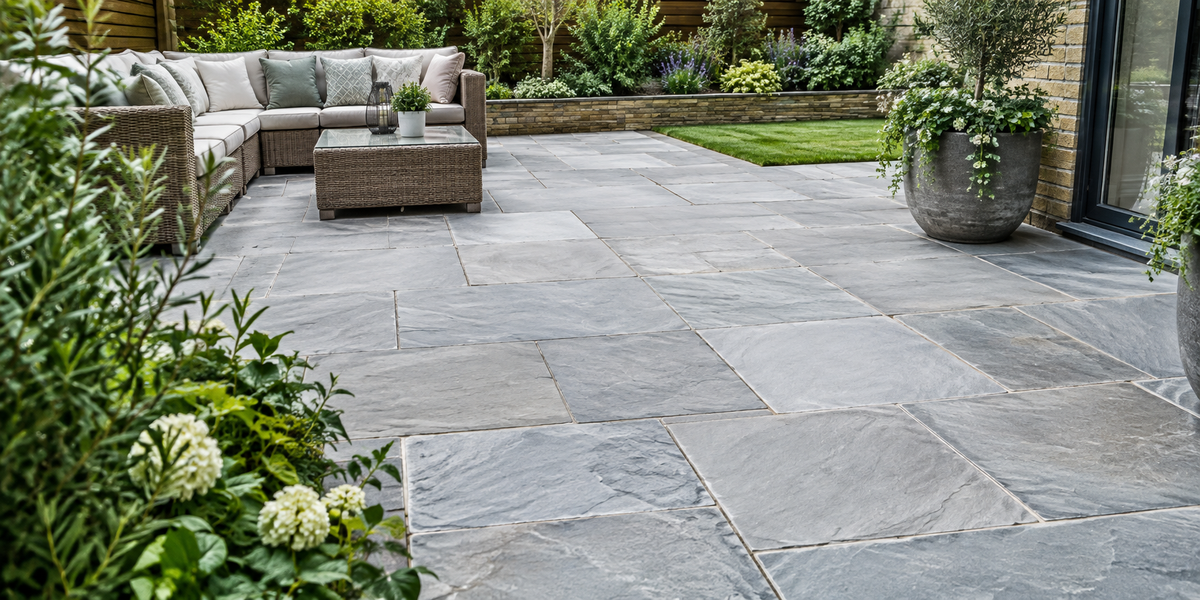
RANGE 4 Stone Effect Porcelain Replicating Kandla Grey, Raj Green, and slate, Stone Effect Porcelain captures organic sedimentary veining across an impervious core. |
|
RANGE 5 Eco Range Porcelain Formulated with recycled mineral content and energy-efficient kilning, Eco Range Porcelain meets green building standards without sacrificing strength. |
RANGE 6 Porcelain Bullnose Featuring machined rounded edges, Porcelain Bullnose products eliminate sharp corners on step treads, pool surrounds, and wall copings. |
|
RANGE 7 Decor Porcelain Incorporating geometric motifs, Decor Porcelain creates stylish outdoor rugs beneath pergolas and frames dedicated outdoor dining zones. |
RANGE 8 Indoor Tiles Matching 10mm Indoor Tiles pair with 20mm outdoor slabs, creating fluid visual continuity from kitchens through bi-fold doors to the patio. |
Practical Applications Across Residential and Commercial Sectors
Engineered stone serves diverse functional environments due to its versatile structural characteristics and aesthetic appeal.
Architects and commercial developers frequently specify Porcelain Paving for high-traffic environments such as hotel terraces, retail courtyards, restaurant dining patios, and communal walkways. The impervious surface prevents food and grease stains from penetrating the ground, maintaining pristine presentation with minimal downtime.
Residential properties gain significant curb appeal and utility from modern installations. Garden patios become durable foundations for outdoor kitchens, garden furniture, and fire pits.
Driveways represent another demanding application where dense stone excels. When laid on an engineered concrete road base with bonding slurry, 20mm outdoor units easily support passenger vehicles without cracking or shifting under load.
Comprehensive Buying Guide for Decision-Makers
Securing high-grade materials requires property dealers, contractors, and homeowners to evaluate technical specifications carefully before ordering.
Starting from competitive price points around £20 per square metre including VAT, the curated selection at Universal Paving makes commercial-grade outdoor stoneware accessible for projects of every scale.
Choosing Dimensions and Layout
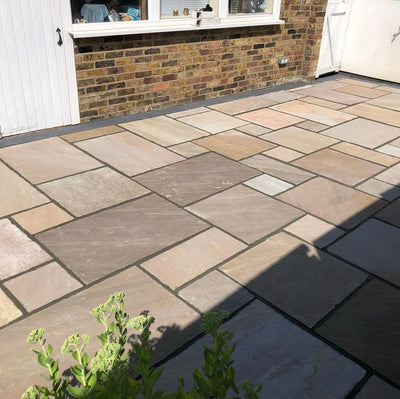
Dimension selection dictates visual perspective. Square 600x600mm formats suit symmetrical spaces, while the popular 900x600mm format of porcelain patio slabs offers balanced proportions that suit both urban courtyards and expansive terraces. Mixed patio packs provide traditional layout patterns reminiscent of classical flagstone courtyards.
Colour Selection Guidelines
Surrounding brickwork and lighting should guide colour choices:
| Grey tones | Anthracite and black | Beige and buff | White and quartz |
| 1 | Grey Tones. Silver and Kandla Grey provide versatile neutral backdrops complementing brickwork. |
| 2 | Anthracite and Black. Charcoal and black deliver dramatic architectural contrast alongside foliage. |
| 3 | Beige and Buff. Warm cream and earthy beige tones reflect sunlight, generating warm Mediterranean garden ambiances. |
| 4 | White and Quartz. Bright tones maximize light reflection, making shaded courtyards feel substantially larger. |
Installation and Sub-Base Essentials
Contractors must note that installing porcelain paving slabs requires specialized trade techniques, notably a full wet mortar bed and a polymer-modified bonding slurry primer applied across the entire reverse face of each tile. Because outdoor stoneware absorbs virtually no moisture, it cannot mechanically bond to dry cement. Slurry primer creates the chemical bond necessary to lock each slab permanently to the mortar bed.
Sub-base preparation requires a 100mm compacted MOT Type 1 foundation with a 1:60 drainage fall. Lay slabs on a full wet mortar bed with primer on every tile back, using spacers for 3mm to 5mm joints before grouting.
Worth knowing: skipping the slurry primer is the most common cause of slabs lifting, because porcelain cannot form a mechanical bond with dry cement.
Trade professionals, property dealers, and residential renovators can access dedicated support, technical guidance, and material samples directly through Universal Paving, ensuring confident project delivery from concept to completion.
Conclusion: Long-Term Value for Property Projects
Choose the right surface once and enjoy it for decades.
Selecting the right hardscaping material represents a major strategic decision for property development, renovation, and commercial management. Dense exterior stoneware combines remarkable structural resilience with versatile aesthetic design, solving the historic maintenance challenges associated with traditional porous flagstones.
Investing in Porcelain Paving delivers an exceptional return for UK property dealers, commercial developers, and private homeowners alike. By choosing durable 20mm exterior materials installed with proper trade techniques, stakeholders create elegant, safe, and low-maintenance outdoor spaces that maintain their pristine condition across decades of British weather.
|
Explore Porcelain Paving Browse the full outdoor range or order samples to see colour and texture in your own garden light. |
Browse Porcelain Paving Order Samples |
Frequently Asked Questions
Do outdoor porcelain slabs require sealing after installation?
No, outdoor porcelain slabs never require sealing. Their certified water absorption rate below 0.5 percent prevents moisture, oils, and algae from penetrating the internal structure. Periodic washing with warm water and mild detergent keeps surfaces pristine.
Can 20mm outdoor tiles be laid on a driveway?
Yes, 20mm outdoor tiles can be installed on domestic driveways over a reinforced concrete base or compacted sub-base. When laid on a full wet mortar bed with slurry primer, they comfortably support vehicular traffic.
How does the R11 slip rating perform in wet British weather?
An R11 anti-slip rating ensures dependable friction underfoot. In wet UK weather, the specialized micro-texture breaks surface water tension, providing reliable traction for footwear and bare feet during heavy rain and frost.
Why is a bonding slurry primer mandatory during installation?
Because exterior stoneware absorbs virtually no water, traditional mortar cannot form a mechanical suction bond. Polymer-modified slurry primer applied to the tile reverse creates the chemical bond required to lock each slab permanently.
How does outdoor stoneware compare in cost and longevity to natural stone?
Exterior porcelain tiles start from around £20 per square metre including VAT, comparable to natural stone. With lower maintenance costs, zero sealing expenses, and a lifespan exceeding 30 years, outdoor porcelain proves far more economical over time.