





Patio Trends 2026: What UK Homeowners Are Actually Building
Most "patio trends" articles are written by people who've never sold a paving slab. They recycle the same Pinterest boards and call travertine "the material of the moment" when travertine hasn't been the moment since 2019. We're a direct paving importer who ships thousands of square metres every month. Here's what people are actually buying, laying, and coming back for in 2026 — based on real orders, not mood boards.
Grey is still king — and it's not even close
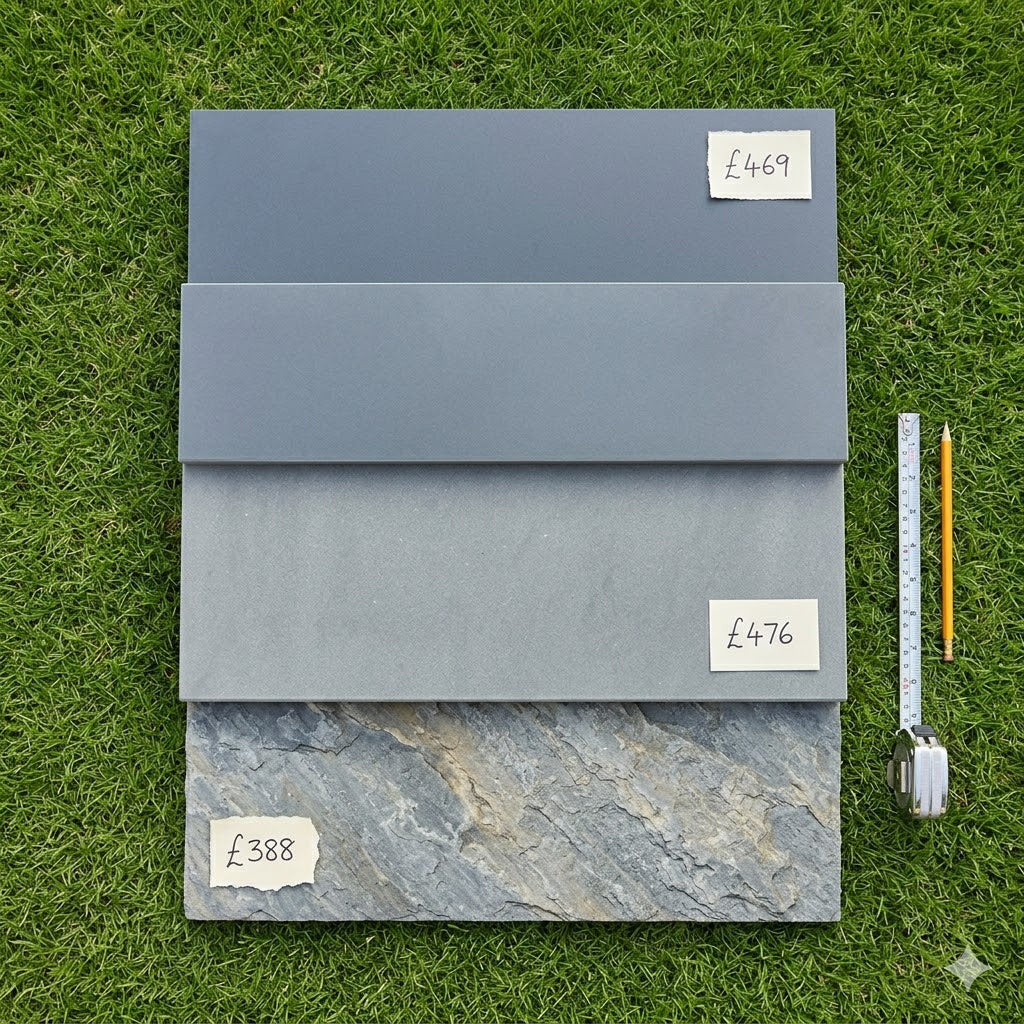
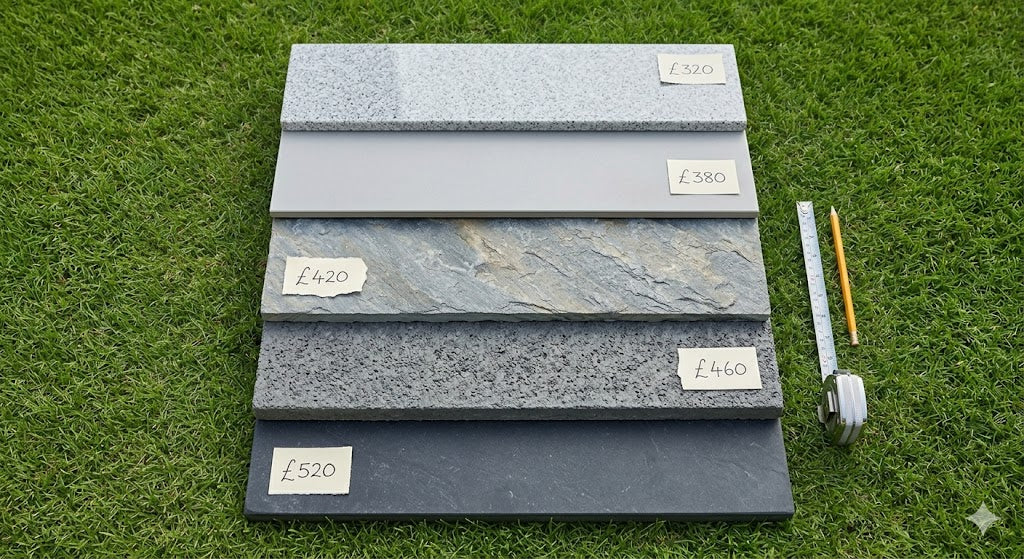
Grey paving slabs account for more than half of all UK patio sales. Not just at our business — across the entire market. Kandla Grey sandstone and Kandla Grey porcelain are our #1 and #2 bestsellers by a wide margin, and they have been for three years running.
Why? Grey works with everything. White render, red brick, grey brick, timber cladding, glass extensions — a grey patio doesn't fight with any of them. It's the safe choice that also happens to be the stylish choice, which is a combination most colours can't manage.
Within grey, the shift is toward warmer, softer greys rather than cold industrial tones. Kandla Grey's silver-grey with subtle warm banding hits the sweet spot perfectly.
900×600 has overtaken 600×600 as the default
Five years ago, 600×600mm was the standard UK paving slab. In 2026, 900×600mm has taken over. The larger format creates fewer joints, a cleaner look, and makes spaces feel bigger — all things today's homeowners want.
The trend is being driven partly by porcelain (which has always favoured larger formats) bleeding into sandstone expectations. People see the 900×600 format on Instagram and in show gardens, then look for the same size in natural stone.
We still sell plenty of 600×600 — it's the right choice for smaller gardens and paths — but 900×600 is now the first size most people ask for.
Porcelain is growing, but sandstone isn't dying
Porcelain paving has been the fastest-growing category for three years. Zero maintenance, stain-proof, colourfast — it ticks every practical box. But here's the thing: Indian sandstone sales haven't dropped. They've held steady while porcelain has grown alongside them.
What's happening is the market is expanding, not substituting. More people are building patios overall (driven by the post-lockdown outdoor living boom that still hasn't faded), and the new buyers split between sandstone (character, warmth, value) and porcelain (modern, maintenance-free).
Our read: if you want something that ages and develops character, sandstone is still the better choice. If you never want to think about your patio again, porcelain wins. Both are excellent — the trend is having two great options, not one replacing the other.
Mixed materials are in — one material per zone
The cleverest patios we're seeing in 2026 use different materials for different zones. Porcelain for the main dining area (stain-proof, easy to clean under the barbecue), sandstone for the path leading into the garden (natural, warm, connects to the planting), and sandstone setts or edging stones as the border between them.
This isn't random mixing — it's deliberate zoning. Each material goes where its strengths matter most. The key to making it work is keeping the colour palette cohesive (grey porcelain + grey sandstone + grey setts, not grey + buff + green).
Edging has become a design feature, not an afterthought
Two years ago, most patios had no visible edging — the slabs just stopped and met the lawn. In 2026, deliberate borders are everywhere: porcelain edging planks in a contrasting colour, sandstone setts creating a cobbled frame, bullnose copings finishing raised edges cleanly.
The trend started in show gardens and has filtered down to domestic projects. A dark Anthracite Black border around a light grey patio is probably the single most popular edging combination we sell right now.
The "outdoor room" is no longer aspirational — it's standard
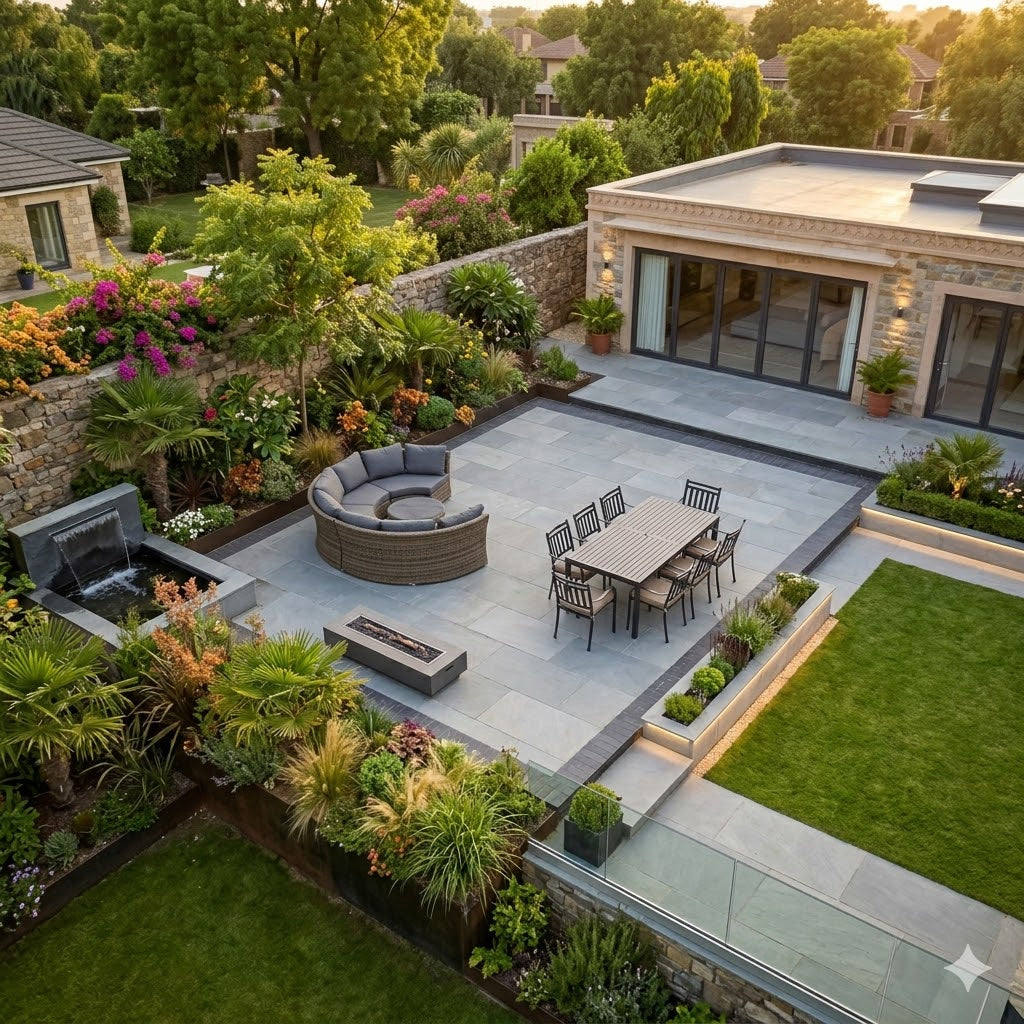
A patio used to be somewhere you put a table and chairs in summer. In 2026, it's a designed outdoor room with zones for dining, lounging, cooking, and socialising. This means bigger patios (20–30m² is common, up from 12–15m² a decade ago), better materials, and proper lighting and planting schemes.
This directly affects what people buy: larger format slabs (900×600 and 1200×600), porcelain for the cooking zone (stain-proof near the barbecue), natural stone for the lounging zone (warm and textured underfoot), and dedicated edging to define each area.
Price transparency is becoming a competitive advantage
Buyers in 2026 are savvy about hidden costs. They check whether the price includes VAT, whether delivery is free, what the split pallet charge is, and whether there are postcode surcharges. Suppliers who show all-in pricing are winning over those who advertise "from £18/m²" and add £150 in fees at checkout.
This isn't really a "trend" — it's just buyers being more informed. But it's changing which suppliers win. The direct import model (buy from source, hold stock, ship free, price transparently) is growing because it aligns with how people want to shop.
What's declining in 2026
Concrete paving slabs. Budget concrete from B&Q and Wickes is losing share to Indian sandstone. The price gap has narrowed to £5–10/m², and buyers now understand that natural stone is a buy-once decision while concrete fades, stains, and needs replacing in 5–8 years.
Timber decking. The maintenance burden (annual oiling, moss treatment, board replacement) is pushing homeowners toward low-maintenance paving instead. Our most common new customer enquiry starts with "we're replacing our decking." Read our paving vs decking comparison for the full picture.
Indian Limestone. Limestone sales are softening as porcelain takes over the "clean, refined, contemporary" aesthetic that limestone used to own. Porcelain does it with zero maintenance, and the stone-effect finishes are now convincing enough to compete directly.
Random patterns on porcelain. Mixed patio packs in porcelain are less popular than they were. Porcelain suits clean, uniform layouts — running bond in 900×600 is the dominant porcelain pattern in 2026. Random patterns still work beautifully in sandstone, where the natural variation in each slab adds to the randomness.
The biggest shift overall: People are spending more on their patios but expecting more transparency for their money. The average order value is up, but tolerance for hidden fees and vague pricing is down. Suppliers who import direct, hold stock, and price honestly are taking share from resellers who add margins and hide costs. Browse our full range →
Build a 2026 patio
All materials in stock at our Nottingham warehouse. Free UK delivery, no hidden fees.
Grey Sandstone — #1 Seller Porcelain Paving