






Setts & Cobbles for Edging, Borders & Driveways
Setts and cobbles are the detail that makes a paving project look finished. Beyond paving a full driveway, their most valuable use is as edging and borders — framing a driveway, defining a patio edge, or marking the transition between paved and planted areas. A single row of contrasting setts around a drive or patio instantly lifts the whole design. They come in sandstone (Kandla Grey, Raj Green) and granite (silver grey, black), in handcut and tumbled finishes, from around £44/m² with free UK delivery.
Most people think of setts and cobbles as a material for paving a whole driveway. But their real design power is in the detail — as a border, an edge, a frame. It's the difference between a driveway that just stops at the lawn and one that looks deliberately, professionally finished. Here's how to use them.
Setts vs cobbles: the quick difference
Both are small paving units, and the terms are often used interchangeably, but there's a practical distinction. Setts are roughly rectangular (commonly 200×100mm) — ideal for laying in neat rows, courses and edging strips. Cobbles are smaller and more square (commonly 100×100mm) — better for tighter detail, fan patterns and feature areas. For a clean edging line, setts are usually the easier choice; for a decorative feature or a more traditional, textured look, cobbles work beautifully. For the full background on both, see our complete cobbles and setts guide.
1. Driveway edging
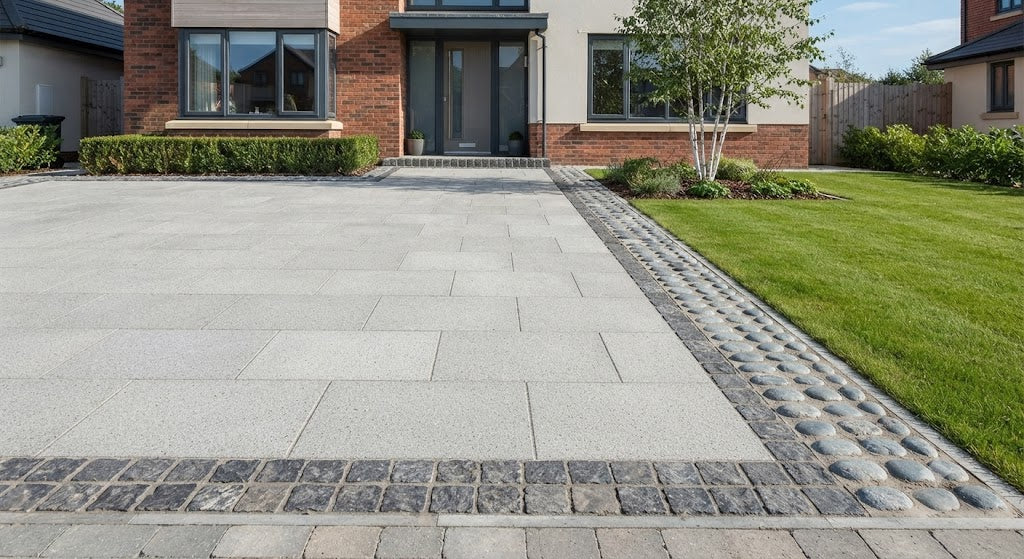
This is the highest-impact use. A driveway paved in porcelain, resin or block looks unfinished where it meets a lawn or border. A single or double course of contrasting setts along the edge does three things: it visually frames the drive, it creates a solid physical restraint that stops the driveway surface spreading or lifting, and it gives a clean mowing edge against grass.
For a modern driveway, silver grey granite setts give a crisp, contemporary frame. For a warmer or more traditional home, Kandla Grey or Raj Green sandstone setts soften the look. Laying the setts in a contrasting tone to the main driveway is what makes the edge "read" as a deliberate design feature.
2. Patio borders and frames
The same principle works around a patio. A border of setts or cobbles around the perimeter of a slabbed patio frames the space and adds a layer of detail that flat paving alone can't. It's especially effective where the patio meets planting — the sett border creates a clean, defined edge that keeps soil and bark off the slabs and stops the lawn creeping in.
A tumbled-finish sett works particularly well here: the softened, aged edges give an established, characterful look from day one, which suits cottage gardens and period properties.
3. Path and material transitions
Setts are the perfect way to mark where one surface becomes another — patio to lawn, drive to path, gravel to paving. A single course of setts as a transition strip signals the change cleanly and stops materials mixing at the join. It's a small detail that makes a garden feel considered and professionally laid out.
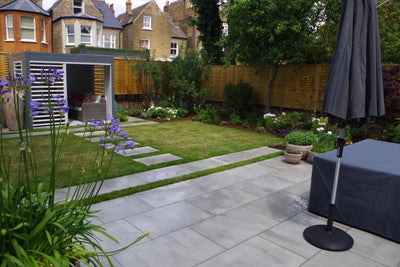
They're also ideal for edging a gravel path or defining stepping-stone routes through a lawn, holding loose materials in place while adding structure.
4. Decorative features and fans
For a more traditional or ornamental look, cobbles laid in fan or circular patterns create a genuine feature — around a tree, at the entrance to a drive, or as an inset panel within a larger paved area. Handcut cobbles such as Raj Green or black granite cobbles, with their natural variation, give an authentic, timeless character that works beautifully in period and country settings.
Which material and finish?
| Option | Look | Best for |
|---|---|---|
| Kandla Grey sandstone setts | Cool silver-grey | Modern & traditional edging, versatile |
| Raj Green sandstone setts & cobbles | Warm green-brown multi-tone | Cottage & period gardens, red brick |
| Silver grey granite setts | Crisp, hardwearing grey | Modern driveway edging, high traffic |
| Black granite cobbles | Deep charcoal-black | Bold contrast borders & features |
Handcut vs tumbled: handcut setts have crisp, split faces for a defined, slightly rustic look; tumbled setts have softened, rounded edges for an aged, established appearance. Choose handcut for modern crispness, tumbled for instant character.
Granite vs sandstone: granite is the harder, more hardwearing option — the better choice for driveway edging that takes vehicle loads and heavy use. Sandstone offers warmer, more varied natural colour and suits softer garden settings.
Frame your project with setts & cobbles
Natural stone setts and cobbles in sandstone and granite — the detail that makes a driveway or patio look finished. From £44/m², free UK delivery. Order samples to match them to your paving.
Browse Driveway Paving Order SamplesA note on driveways
If you're paving a full driveway in setts (not just edging), remember that driveways need units and a sub-base rated for vehicle loads — typically thicker setts (40-50mm) on a properly compacted foundation, not thin slabs. Standard patio paving cracks under vehicle weight. For edging and borders, standard setts are fine; for a full sett driveway, check the depth is suitable for cars and speak to our team if you're unsure.
Frequently asked questions
What's the difference between setts and cobbles?
Setts are roughly rectangular (around 200×100mm), ideal for neat rows and edging. Cobbles are smaller and squarer (around 100×100mm), better for tight detail, fan patterns and features. For a clean border line, setts are usually easier; for decorative features, cobbles suit better.
Can I use setts just for driveway edging?
Yes — edging is one of their most popular uses. A course of contrasting setts frames a driveway, provides a solid edge restraint, and gives a clean line against lawn or borders. You don't need to pave the whole drive in them.
Are granite or sandstone setts better for a driveway edge?
Granite is harder and more hardwearing, making it the better choice for driveway edging that takes vehicle loads. Sandstone offers warmer, more varied colour and suits softer garden borders and patio edges.
What's the difference between handcut and tumbled setts?
Handcut setts have crisp, split faces for a defined, contemporary or lightly rustic look. Tumbled setts have softened, rounded edges for an aged, established appearance that suits cottage and period settings from day one.
How much do setts and cobbles cost?
Natural stone setts and cobbles start from around £44/m² including VAT, with free UK delivery. Because edging and borders use a small quantity, the total cost for a framing detail is usually modest relative to the visual impact. Order a sample to match them to your main paving.
Can I use setts as a border around my patio?
Yes — a sett or cobble border frames a patio beautifully, adds detail flat paving can't, and creates a clean edge where the patio meets planting or lawn. A contrasting tone to your main slabs makes the border read as a deliberate design feature.