





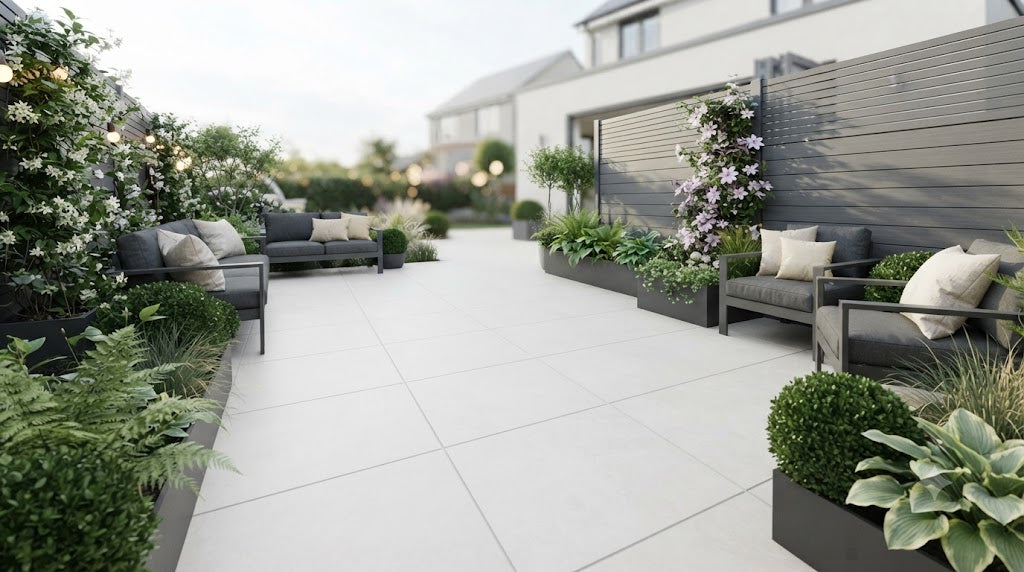
Light & White Porcelain Paving for Small or Shaded Gardens
For a small or shaded garden, light and white porcelain is usually the best-performing choice. Pale slabs reflect available light, so a compact or north-facing space instantly feels bigger and brighter. And because porcelain is non-porous — unlike pale natural stone — it resists the algae, moss and staining that plague light surfaces in damp, shaded corners. It wipes clean, holds its colour, and needs no sealing. Light porcelain starts from £19.50/m² with free UK delivery.
A dark, enclosed garden can feel smaller than it is. The paving is one of the biggest surfaces in the space, so its colour has an outsized effect on how open and bright everything feels. Go pale and the whole garden lifts. But in shade, pale natural stone has a weakness — it shows algae and dirt fast. Light porcelain solves both problems at once. Here's how to choose it.
Why light paving makes a small garden feel bigger
It's simple physics: light colours reflect more light, dark colours absorb it. In a small or enclosed garden — a courtyard, a side return, a north-facing patio hemmed in by fences or walls — pale paving bounces daylight back up into the space instead of soaking it up. The result is a garden that feels more open, airy and larger than its actual footprint.
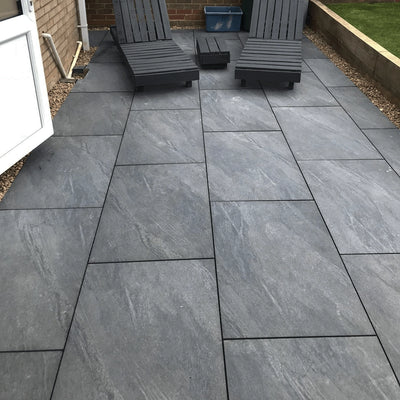
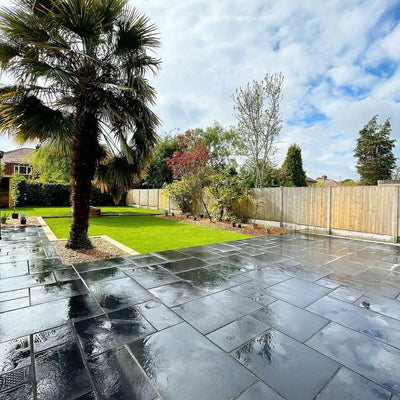
Dark paving does the opposite. Anthracite and charcoal slabs look stunning in a big, sunny garden, but in a small shaded one they can make the space feel heavy, closed-in and even smaller. If your garden is compact or doesn't get much sun, going light is one of the highest-impact decisions you can make.
The shade problem — and why porcelain beats natural stone here
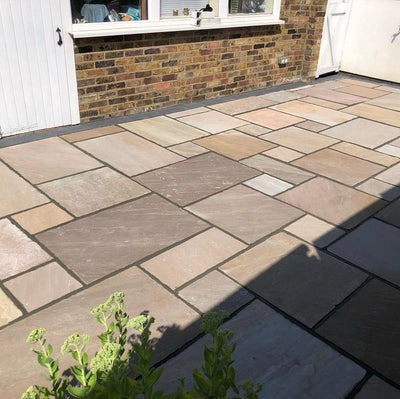
Here's the catch with pale surfaces in shade: they show everything. In a damp, low-light corner, algae and moss build up, and on a light natural stone that green film is very visible. Pale sandstone or limestone in a shaded spot can look grubby within a season or two without regular cleaning and sealing.
Porcelain sidesteps this entirely. It's fired at extremely high temperatures into a dense, non-porous surface with near-zero water absorption. Algae and moss can't get a foothold the way they do in porous stone, dirt sits on the surface rather than soaking in, and a quick wash returns it to like-new. It never needs sealing, and it won't fade. For a shaded garden — where a light surface is exactly what you want but staining is the risk — light porcelain is the ideal combination.
Light porcelain vs pale natural stone in shade
| Light Porcelain | Pale Natural Stone | |
|---|---|---|
| Algae in shade | Resists — non-porous | Prone — porous surface |
| Staining | Wipes clean | Can absorb marks |
| Sealing needed | Never | Recommended, repeat |
| Colour over time | Stays true | Mellows / can darken |
| Natural character | Uniform, contemporary | Organic, varied |
If you love the organic look of stone, a light sandstone still works in shade with upkeep — but for low-maintenance brightness, porcelain wins.
Best light porcelain shades for small & shaded gardens
Not all "light" porcelain is the same. Here are the tones that work best, and what each one does for a space:
Off-white & ivory
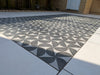
The brightest option and the biggest space-opener. Our Quartz White porcelain in large 900x600 format is ideal here — the soft off-white tone reflects the most light, and the large slab size means fewer grout lines, which makes a small garden read as one clean, continuous surface rather than a busy grid. Large-format pale paving is the single most effective combination for making a compact space feel bigger.
Light grey
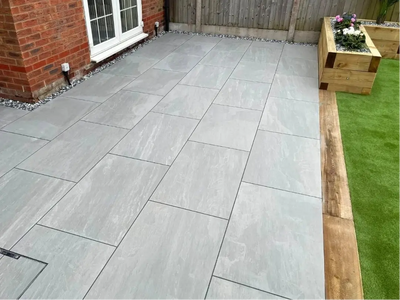
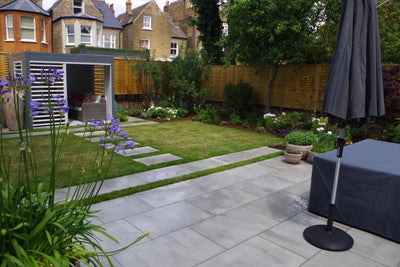
A touch of grey keeps things bright but a little more forgiving of dirt than pure white, and pairs effortlessly with modern homes, grey window frames and contemporary planting. County Light Grey porcelain in 900x600 is a strong all-rounder for a shaded contemporary garden — light enough to lift the space, practical enough for everyday use.
White marble & stone effect
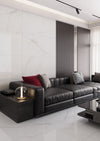
For a premium, high-end look, white marble-effect porcelain (such as Statuario and Bianco quartzite designs) gives the luxury of pale marble veining with none of marble's fragility outdoors. The subtle veining adds interest to a small space without darkening it — you get brightness and a designer finish in one.
Brighten your small or shaded garden
Light porcelain that opens up tight spaces and shrugs off algae in shade. From £19.50/m², free UK delivery, no sealing ever. Order a sample to see the tone in your own light before you commit.
Browse Porcelain Paving Order SamplesDesign tips to maximise light and space
Go large-format. Bigger slabs mean fewer joints, which makes a small garden feel calmer and more expansive. 900x600 or 1200x600 beats small formats for this.
Lay the long edge away from the house. Running large slabs lengthways down the garden draws the eye outward and makes the space feel longer.
Keep grout light. A pale or grey jointing compound keeps the surface visually seamless. Dark grout on light slabs creates a grid that can make a small space feel busier.
Pair with light-reflecting planting. White and silver planting — think white hydrangea, silver ferns, variegated foliage — reinforces the bright, open feel and thrives in shade.
Continue paving to the edges. Taking the paving right up to fences and walls, rather than stopping short, makes the whole footprint feel usable and larger.
Is light porcelain slippery in shade?
A fair question, since shaded areas stay damp. Quality outdoor porcelain is manufactured with a textured, anti-slip surface (commonly rated R11) specifically for wet UK conditions, so it offers reliable grip even in a shaded, damp garden. And because porcelain resists the algae that actually causes most slip incidents on paving, it tends to stay safer underfoot in shade than a pale natural stone that's gone green. Keeping it clear of leaf litter and the occasional wash keeps grip at its best.
Frequently asked questions
What is the best paving colour for a small garden?
Light tones — off-white, ivory and light grey. Pale paving reflects daylight and makes a compact space feel larger and more open, where dark paving absorbs light and can make a small garden feel closed in. Large-format light porcelain is the most effective combination.
Does light porcelain get dirty quickly in a shaded garden?
Far less than pale natural stone. Porcelain is non-porous, so algae and dirt sit on the surface rather than soaking in, and a wash returns it to like-new. It's the most practical light surface for a damp, shaded spot.
Is white porcelain paving hard to keep clean?
No — it's one of the easiest surfaces to maintain. A sweep and an occasional wash with water (or mild patio cleaner) is all it needs. It never requires sealing, and it won't stain or fade the way porous light stone can.
Will light porcelain make my north-facing garden brighter?
Yes. A north-facing garden gets less direct sun, so a light, reflective surface makes a real difference — pale porcelain bounces what light there is around the space, lifting the whole garden. It's one of the best choices for north-facing and shaded plots.
How much does light porcelain paving cost?
Light and white outdoor porcelain starts from £19.50/m² including VAT, with free UK delivery. Large-format and marble-effect designs sit a little higher. Order a sample first to check the exact tone suits your space and light.
What size porcelain is best for a small garden?
Large formats like 900x600 and 1200x600. Fewer joints mean a cleaner, more continuous surface that makes a small garden feel bigger and less busy than lots of small slabs would.