






Is Porcelain Paving Worth the Price? Cost vs Value Explained
Planning your dream patio? You're likely picturing sunny afternoons and family barbecues, but then you see the price for porcelain paving and pause. Is it a smart investment or just an expensive trend?
That higher price tag makes anyone hesitate. While the initial porcelain paving cost vs value calculation seems to favor cheaper materials, this view often misses what happens after the patio is built—the ongoing costs of maintenance, repairs, and eventual replacement. In practice, the upfront price is only one part of the total investment over the life of your patio.
This guide explores why porcelain is different and whether its long-term performance makes it a good investment for your home. By the end, you’ll have the clarity to choose the best value patio paving materials confidently.
What Is Outdoor Porcelain Paving? (And Why It’s Not Like Your Kitchen Tile)
When you hear "porcelain," you might picture the decorative tiles in a bathroom or kitchen, worrying they could crack or be dangerously slippery outside. However, outdoor porcelain paving is an entirely different category of material, engineered specifically to handle everything nature throws at it. It’s built for durability, not decoration, combining high-end looks with workhorse strength.
The secret lies in a manufacturing process called vitrification. Think of it like creating a diamond from carbon. Fine clays and minerals are compacted under extreme pressure and then fired in a kiln at over 2,000°F. This intense heat and pressure fuses the material into an incredibly dense, non-porous slab with the color running all the way through.
This transformation results in a paver that is fundamentally different from ceramic tile. Because it’s no longer porous, it won’t soak up water, which means it resists stains from wine or oil and won’t crack during a harsh winter freeze. It’s less like a tile and more like a solid piece of engineered stone, giving you a beautiful surface that’s built for a lifetime.

The Upfront Cost: What Exactly Are You Paying For?
When you first look at porcelain paving, it’s true that the price per paver is higher than many traditional options. But to understand the real-world budget for your project, it’s essential to look beyond that sticker price. The total cost for a new porcelain patio is a blend of three distinct parts, and only one of them is the pavers themselves.
Calculating the total cost for a porcelain patio comes down to these key components:
-
The Pavers: The price per square metre for the porcelain slabs you choose.
-
The Foundation: This is the crucial gravel foundation (often called a 'sub-base') that sits underneath, preventing your patio from sinking or cracking.
-
The Installation: The professional labour needed to excavate, prepare the base, and lay the pavers correctly.
Skimping on the foundation is like building a house on sand—it’s the most common reason for a beautiful new patio to fail. A deep, properly compacted sub-base is what ensures your surface stays level and stable for decades, making it a non-negotiable part of the porcelain patio installation cost.
So, how much do porcelain pavers cost per square metre once everything is included? You can generally expect to budget between £150 to £250+. While this initial investment is higher, it’s only half the story. The true value becomes clear when you see how it pays off over the long run.
The "Hidden" Value: 4 Ways Porcelain Paving Saves You Money and Headaches
That higher initial price tag begins to make sense when you look at what you don't have to pay for later. The porcelain paving return on investment isn't just about money; it’s about eliminating the common headaches that come with other materials, giving you a patio that’s as effortless as it is beautiful.
Because porcelain is non-porous, it's virtually stain-proof. Think about common patio accidents: a spilled glass of red wine, grease from a BBQ, or even moss and algae trying to take hold. On porous materials, these can leave a permanent mark. On porcelain, however, spills bead up on the surface and can be wiped away without a trace, meaning you can entertain without worry.
Beyond stains, porcelain also holds its appearance against physical wear and tear. The colour and pattern are not just a thin top layer; they are baked all the way through the paver itself. This means the design won't fade in the sun or wear away in high-traffic areas. Its incredible hardness also resists scratches from patio furniture, kids' toys, or pet claws.
This durability leads to one of the biggest savings: maintenance. As one of the best low-maintenance garden paving options, porcelain never needs to be sealed, stained, or treated to protect it from the elements. While a timber deck requires yearly work and concrete pavers benefit from periodic sealing, a porcelain patio frees up your time and your wallet from those recurring costs.
Ultimately, the true value of porcelain is peace of mind. You are investing upfront to buy back your future weekends and eliminate worries about stains, fading, or costly upkeep. But how do these long-term benefits of outdoor porcelain tiles stack up directly against more traditional materials?

Porcelain vs. The Competition: A Head-to-Head Comparison
Seeing the benefits of porcelain is one thing, but how does it truly stack up against the materials you’re already familiar with? To get the full picture, you can’t just compare the upfront porcelain paving vs natural stone price. You have to look at the total cost of ownership—what you’ll really spend in time and money over the life of your patio. A direct comparison with two popular cheaper alternatives to porcelain paving, natural sandstone and standard concrete pavers, shows where your money goes.
This simple breakdown shows where your money goes, both on day one and over the next two decades.
What this table reveals is a classic trade-off. The lower initial cost of sandstone and concrete is balanced by long-term demands. The question of sandstone vs porcelain paving maintenance becomes clear: one requires annual sealing to prevent stains and water damage, while the other needs little more than a sweep and wash. Porcelain’s higher price is an investment in avoiding future costs, chores, and replacements, paying you back with a patio that looks brand new for years.
Of course, cost and maintenance aren't the only factors. You also need to know if your beautiful new patio will be safe and practical year-round.
Answering Your Biggest Fears: Is It Slippery? What About Winter?
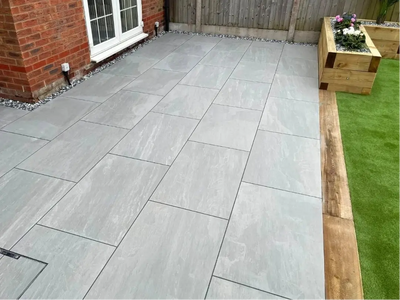
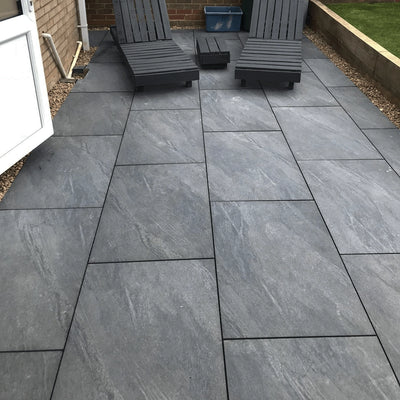
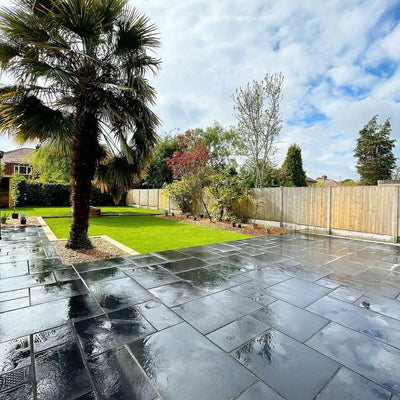
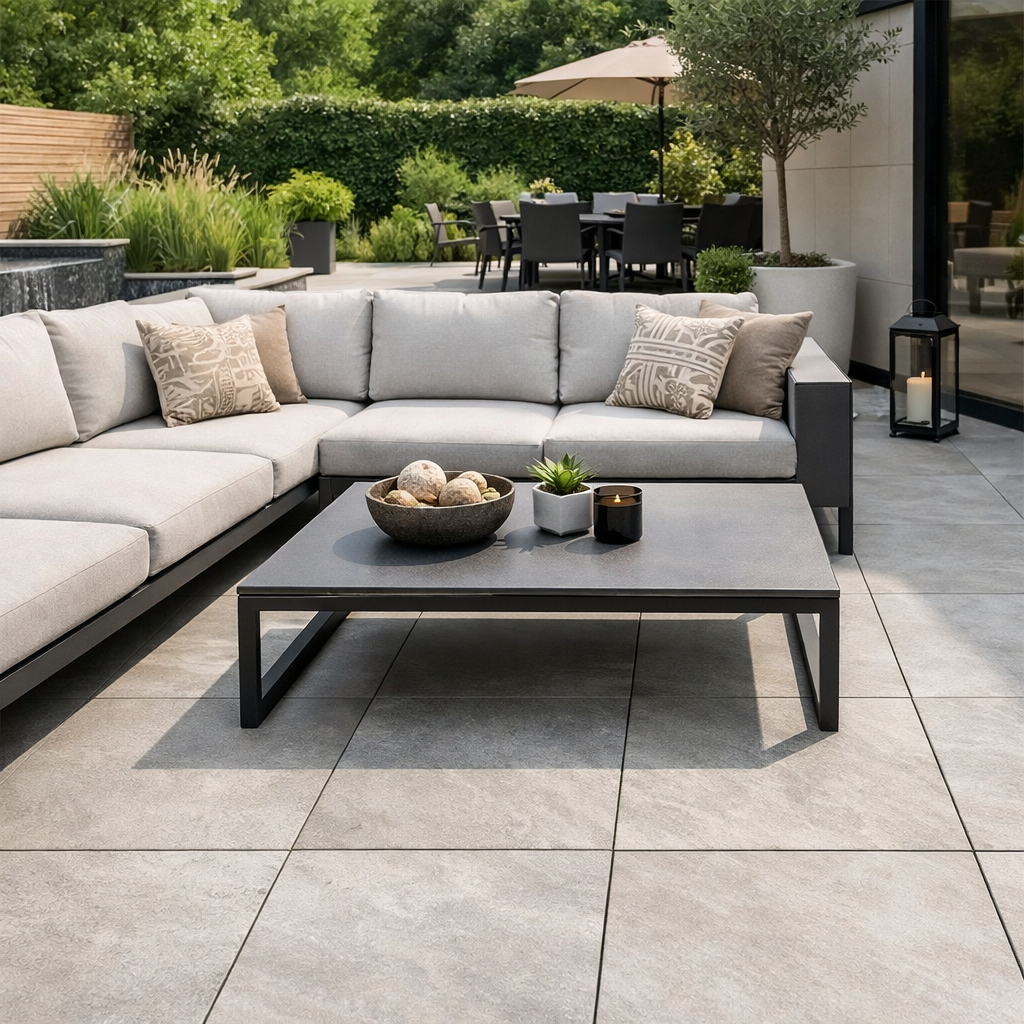
Perhaps the biggest hesitation homeowners have is safety: “Will my porcelain patio be slippery when it rains?” It’s a fair question, especially if you’re picturing smooth indoor tile. But outdoor porcelain is a completely different product. It’s manufactured with a subtle, textured finish designed specifically for grip, delivering one of the key anti-slip porcelain paving benefits. As you can see in the photo, this gives it excellent traction even when wet, making it a confident choice for pool surrounds, walkways, and rainy climates.
That same non-porous quality that prevents stains also makes porcelain incredibly durable in winter. Since water can’t seep into the paver, there’s no risk of it freezing, expanding, and causing cracks—a common issue that plagues concrete and some natural stones. This frost-proof nature is a major factor in its impressive outdoor tile durability and lifespan, ensuring your patio survives harsh freeze-thaw cycles year after year without damage.
Combining this all-weather resilience with its need for minimal upkeep, porcelain proves itself as a true low maintenance garden paving solution you can rely on, season after season. With performance and safety covered, the last step is to decide if this combination of high style and low hassle is the right long-term investment for your home.

The Final Verdict: Is Porcelain Paving the Right Investment For YOU?
While the upfront cost of porcelain paving might have seemed like a barrier, you can now see the lifetime value packed into every paver. This shifts the focus from comparing price tags to evaluating long-term performance, durability, and the priceless gift of your own time. This new perspective is the key to choosing a patio with confidence, not just a budget.
So, is porcelain paving a good investment for you? It comes down to your personal priorities. Porcelain is likely one of the best value patio paving materials for your home if you:
-
Prioritize low maintenance over the lowest initial cost.
-
Want a modern, clean look that won't fade or date.
-
Have a busy lifestyle and want to "set it and forget it."
-
Are planning to stay in your home long-term to see the porcelain paving return on investment.
Ultimately, this decision is about more than just materials; it's an investment in your lifestyle. By choosing the right foundation for your outdoor memories, you're not just building a patio—you're buying back your future weekends and securing years of worry-free enjoyment. You now have everything you need to make the choice that best serves your home and your life.