





Building a Beautiful Home Starts Outside: The Value of Premium Porcelain Paving
There's an interesting shift happening in how people think about their homes. We're spending more time outside – whether that's morning coffee on the patio, weekend barbecues, or just having a proper outdoor space to decompress. And here's what I've noticed: homeowners are finally giving their gardens and patios the same attention they'd give their kitchens or living rooms.
That's where premium porcelain paving slabs comes in. Not the cheap stuff you'll regret in three years, but properly engineered outdoor porcelain that actually performs.
First Impressions Matter More Than You Think
Let's be honest – your driveway, front garden, and outdoor areas are what people see first. Before they step inside your beautifully renovated kitchen, they've already formed an opinion based on your exterior.
A tired, cracked patio or dated paving screams neglect. Premium porcelain paving slabs does the opposite. It signals that you've invested in quality and care about the details.
Estate agents will tell you the same thing: kerb appeal directly impacts property value. A well-designed outdoor space with quality materials can add 5-15% to your home's worth. That's not marketing spin – that's actual market data.

Why Porcelain Has Become the Go-To Choice
Ten years ago, porcelain paving was still relatively niche in the UK. Now? It's everywhere, and for good reason.
The technical advantages are significant:
Extreme durability – we're talking virtually indestructible. Porcelain is fired at over 1,200°C, making it harder than natural stone. It won't chip easily, resists staining, and maintains its appearance for decades.
Zero water absorption – this is crucial for British weather. Porcelain absorbs less than 0.5% water, meaning frost damage simply isn't a concern. Natural stone can absorb 3-6%, which creates vulnerability during freeze-thaw cycles.
Colour consistency – unlike natural stone where colour variation is inherent (and beautiful, to be fair), porcelain offers predictable, uniform colouring. If you're going for a contemporary, clean aesthetic, this matters.
Low maintenance – sweep it, occasionally wash it. That's genuinely all you need. No sealing required, no annual treatments, no gradual deterioration.
But Here's What Really Sells People on It...

The design possibilities.
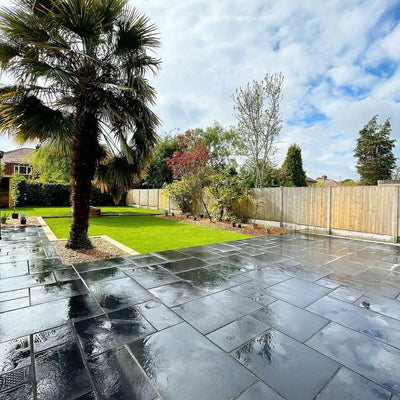
Modern porcelain manufacturing can replicate virtually any natural material – limestone, marble, granite, wood, concrete – with photographic accuracy. You get the aesthetic you want without the maintenance headaches or limitations of the real thing.
Want a marble-effect patio that won't stain when red wine gets spilled? Porcelain.
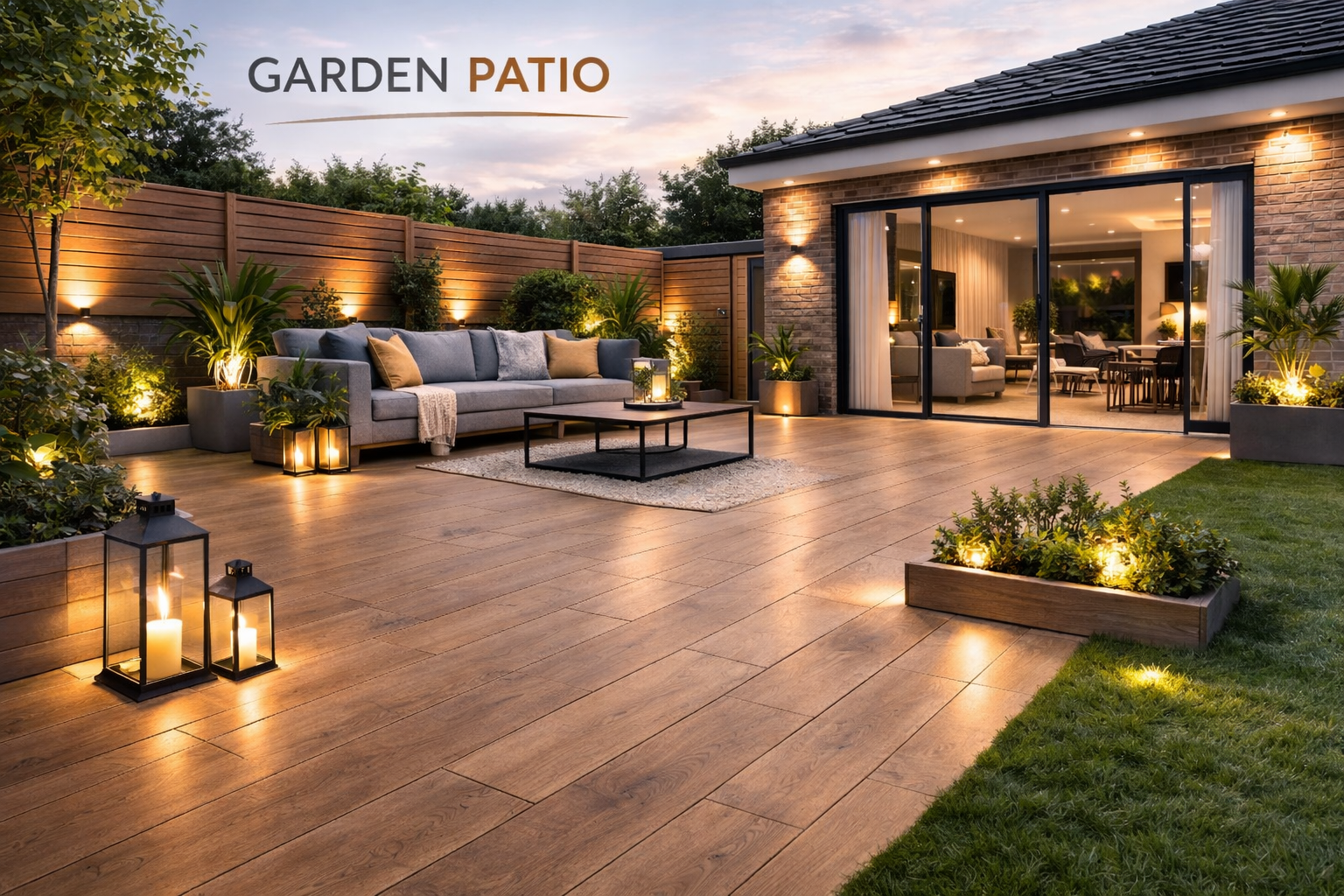
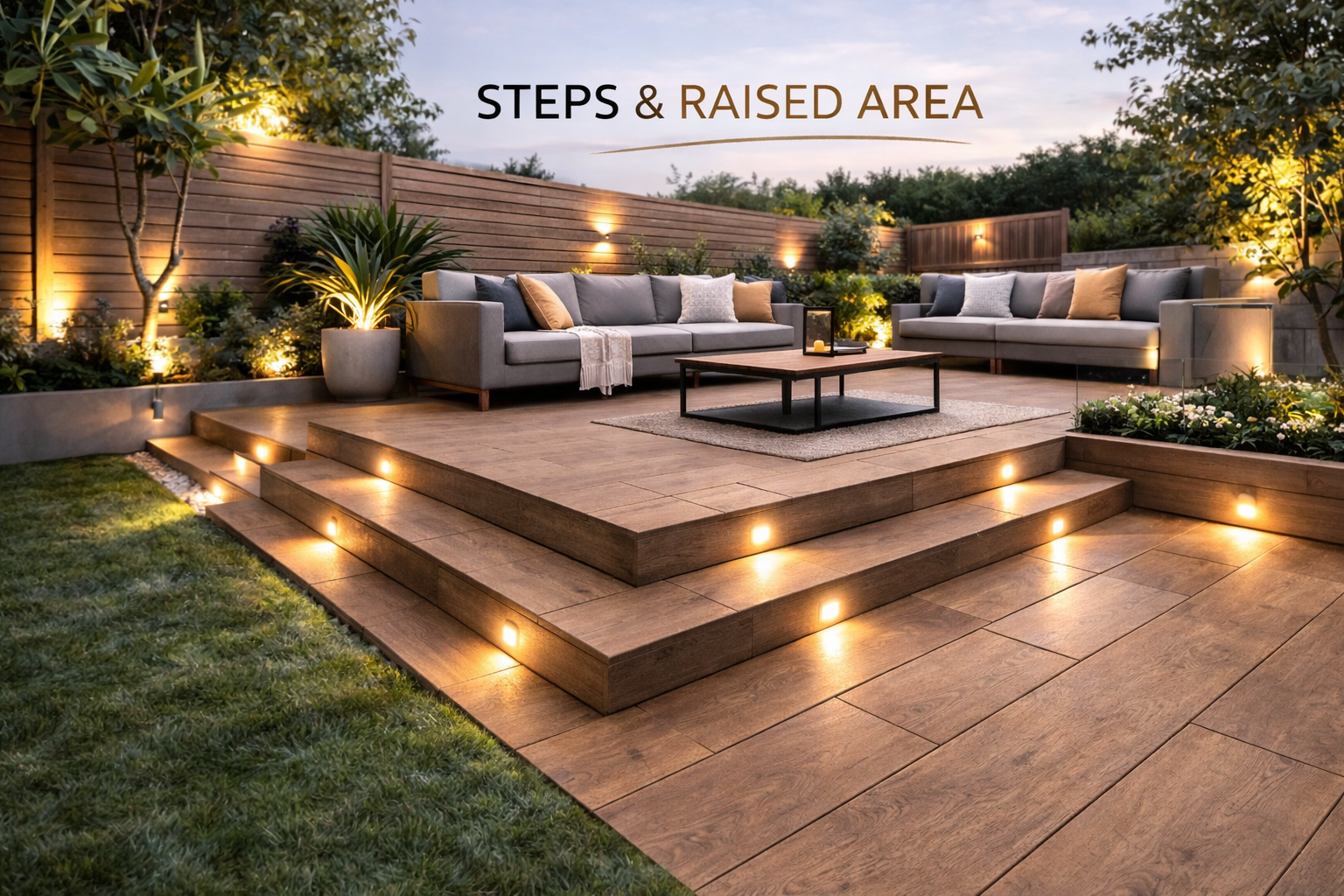
Fancy the look of weathered oak decking but don't want the splinters, rot, or constant oiling? Wood-effect porcelain.
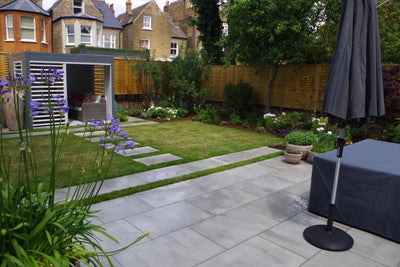
After something sleek and contemporary in large-format paving slabs? Porcelain delivers that better than any alternative.
The UK Climate Test
I'm always suspicious of materials that work brilliantly in Mediterranean climates but fall apart in Manchester. Porcelain passes the UK weather test with flying colours.
It handles:
- Heavy rain without pooling or staining
- Frost and ice without cracking
- Temperature swings from -10°C to 30°C
- UV exposure without fading
- Snow, salt, and general British grimness
The slip-resistance is engineered into the surface too. R11 rated porcelain gives you excellent grip even when wet – crucial for areas around pools, near doorways, or anywhere children are running about.
Investment vs. Cost
Let's talk numbers honestly. Premium porcelain isn't cheap. You'll pay £35-65+ per square metre depending on the range, compared to £20-35 for Indian sandstone or £15-25 for concrete slabs.
But here's the calculation that matters: lifetime cost.

Porcelain paving typically lasts 50+ years with minimal maintenance.
Natural stone might need re-sealing every 2-3 years (£200-400 each time for an average patio). It may develop stains requiring professional cleaning. Individual slabs might crack and need replacing.
Cheap concrete slabs might last 10-15 years before they look shabby and need replacing entirely.
When you factor in replacement costs, maintenance, and the impact on property value, premium porcelain often works out cheaper over a 20-year period.
Design Considerations That Actually Matter
If you're committing to porcelain paving, here's what I'd focus on:
Slab size – larger formats (900x600mm or 1200x600mm) create a more contemporary, spacious feel with fewer grout lines. Smaller formats suit traditional or cottage-style properties better.
Thickness – 20mm is standard for domestic patios. Consider 30mm for driveways or high-traffic areas.
Surface finish – textured surfaces provide better slip resistance but show dirt more. Honed finishes are easier to clean but can be slippery when wet.
Colour selection – lighter colours make small gardens feel larger but may show dirt more readily. Darker tones create drama but can get uncomfortably hot in direct sun.
Where Porcelain Makes Most Sense
Not every application demands premium porcelain. Here's where it genuinely excels:
- Contemporary home designs where clean lines and consistency matter
- High-traffic areas like driveways, front paths, commercial entrances
- Pool surrounds where water resistance and slip-resistance are critical
- Roof terraces and balconies where weight and drainage matter
- Shaded areas where natural stone might develop algae or moss
Where You Might Choose Alternatives
I'm not going to pretend porcelain is perfect for everything. Large country gardens sometimes look better with rustic natural stone. Period properties might suit reclaimed materials more appropriately. Budget projects might justify good-quality Indian sandstone over entry-level porcelain.
The key is matching the material to the project honestly, not forcing porcelain into every situation.
Installation Matters as Much as Material
Here's something that frustrates me: seeing premium porcelain installed poorly.
You can spend £3,000 on beautiful paving slabs and completely ruin them with:
- Inadequate sub-base preparation
- Incorrect adhesive or grout
- Poor drainage planning
- Rushed installation with inconsistent levels
Porcelain requires professional installation. The slabs are denser and heavier than natural stone, they need specific adhesives, and the joints must be done properly. This isn't a DIY weekend project unless you really know what you're doing.
Budget 30-40% of your material cost for professional installation. It's worth it.
The Verdict
Premium porcelain paving represents genuine value if you're investing in your outdoor space for the long term. It's not the cheapest option upfront, but it's arguably the smartest choice for durability, maintenance, and lasting aesthetic appeal.
Your home's exterior deserves the same thoughtful investment as your interior. Quality porcelain paving delivers on that promise – creating outdoor spaces that enhance your property value, extend your living area, and genuinely improve how you use and enjoy your home.
Just make sure you're buying properly graded material and using skilled installers. The difference between premium porcelain and budget alternatives isn't just price – it's decades of performance.