





Sawn vs Honed Paving UK - Complete Finish Guide & Comparison
When browsing natural stone paving, you'll encounter two terms repeatedly: "sawn finish" and "honed finish." Both describe smooth surface treatments that differ fundamentally from traditional riven (naturally textured) paving, but they're not interchangeable. Sawn finish shows visible saw blade marks creating subtle linear texture, while honed finish delivers genuinely smooth matte surface with no visible tooling marks. These seemingly minor differences create measurably different slip resistance, visual appearance, and practical performance in UK weather conditions.
Understanding which finish suits your project matters because the choice affects safety (wet-weather slip resistance), aesthetics (contemporary smooth vs subtly textured), maintenance (smooth surfaces show dirt differently than textured), and even material options (some stones hone beautifully while others are better sawn). Choose incorrectly and you might end up with a slippery pool surround, a patio that shows every footprint, or an aesthetic that clashes with your property style.
This guide explains everything you need to know about sawn versus honed paving finishes for UK gardens - from understanding how each finish is created through to slip resistance comparisons, typical applications, material suitability, maintenance requirements, and practical decision-making guidance. Whether you're a homeowner planning a patio or a landscaper specifying materials for client projects, you'll find the information needed to choose the right finish with confidence.
What Is Sawn Finish Paving?
Sawn finish is created by cutting natural stone slabs using diamond-tipped gang saws - industrial machines with multiple parallel blades that slice through large stone blocks simultaneously. The saw blades leave characteristic linear striations (fine parallel lines) visible on the finished surface. This texture is subtle - you can feel it with your hand but it's not dramatically rough - and creates a semi-smooth appearance that sits between traditional riven texture and truly smooth honed finish.
Key characteristics of sawn finish:
Visible saw marks: Look closely and you'll see fine parallel lines running across the surface, typically 0.5-2mm apart depending on saw blade spacing. These marks are permanent and intentional - they're what defines sawn finish.
Subtle texture: The surface feels smooth to touch but not glassy. Run your hand across it and you detect gentle ridges from the saw marks. This provides mechanical grip without creating the pronounced texture of riven paving.
Matte appearance: Sawn surfaces don't reflect light the way polished or honed finishes can. The saw marks scatter light, creating matte appearance even on naturally reflective stones like limestone.
Consistent surface plane: Unlike riven paving (which has natural undulations), sawn surfaces are mechanically flat. This makes them easier to clean, more comfortable for furniture, and suitable for contemporary aesthetics requiring clean lines.
Typical slip resistance: R10 rating when dry, R9-R10 when wet. The saw marks provide some mechanical grip but less than heavily textured finishes. Adequate for most patio applications but borderline for pool surrounds or high-traffic commercial areas.
Sawn finish works particularly well for sandstone and limestone where the stone's structure tolerates the mechanical sawing process without excessive chipping or flaking. Granite can be sawn but typically receives honed or polished finish instead because granite's extreme hardness makes sawing more challenging.

What Is Honed Finish Paving?
Honed finish is created through progressive grinding and polishing using increasingly fine abrasive pads. The process starts with coarse grinding to flatten the surface, then progresses through medium and fine grades until the surface is smooth and matte. The key difference from polished finish: honing stops before the final ultra-fine polishing that creates reflective gloss. This delivers smooth surface without the mirror-like shine (and associated slipperiness when wet).
Key characteristics of honed finish:
No visible tooling marks: The grinding process removes all saw marks, tool marks, and surface irregularities. The finished surface is genuinely smooth with no directional texture.
Smooth to touch: Unlike sawn finish (which has subtle ridges), honed surfaces feel smooth when you run your hand across them. The texture is consistent in all directions.
Matte to satin appearance: Honed finish has slight sheen - not mirror-like gloss but more light reflection than sawn finish. The degree of sheen depends on how fine the final abrasive grade was.
Reveals stone character: Because the surface is smooth and flat, you see the stone's natural colour and crystalline structure clearly. Any fossils, veining, or colour variation becomes more visible than with textured finishes.
Slip resistance: R9-R10 rating typically. Honed surfaces are smoother than sawn, which reduces mechanical grip, but the matte finish (not glossy polished) maintains adequate friction for most applications. For pool surrounds or wet areas, specify R11-rated honed products or add anti-slip treatment.
Honed finish works exceptionally well for limestone and granite where the stone's density and consistent structure allow smooth finishing without surface degradation. Sandstone can be honed but often shows better results with sawn finish because sandstone's layered structure sometimes flakes when honed too aggressively.
Visual & Textural Comparison: How They Actually Look Different
Surface Appearance
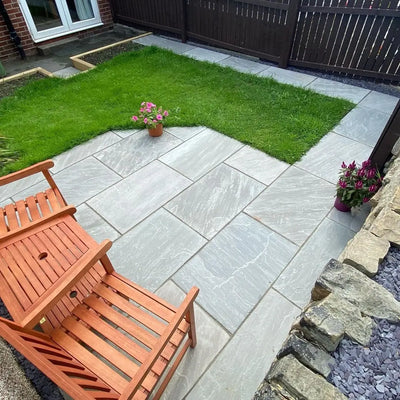
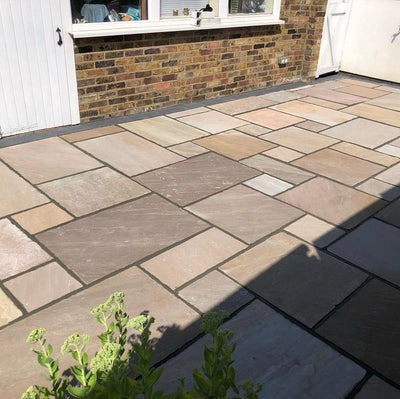
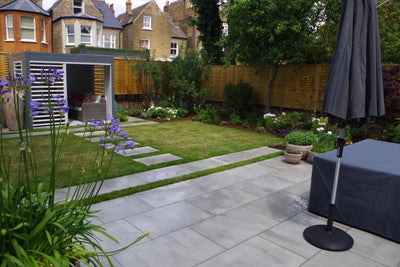
Sawn finish shows subtle linear pattern from saw blade marks. In certain lighting (particularly low-angle sunlight), these marks become more prominent, creating gentle striped effect across the surface. This adds visual interest and prevents the "flat" appearance some find sterile in perfectly smooth finishes.
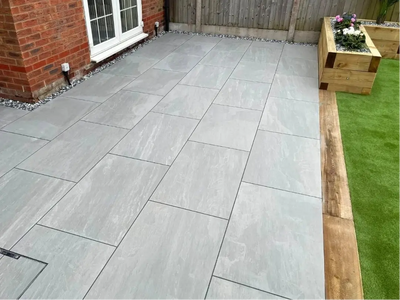
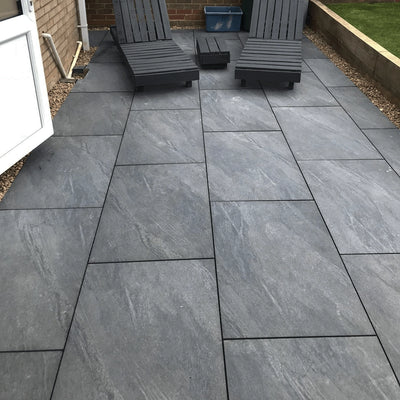
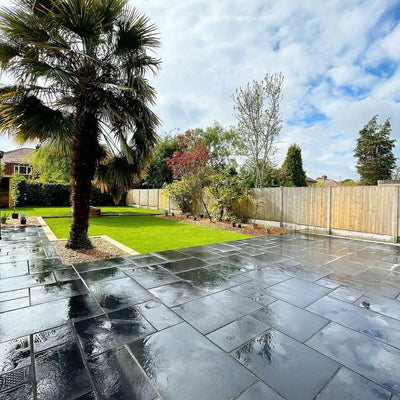
Honed finish appears uniformly smooth with no directional pattern. The surface reads as a single consistent plane, emphasising the stone's natural colour and any veining or fossil detail. This creates cleaner, more minimalist aesthetic.
Touch & Feel
Sawn finish feels like fine corduroy - you can detect the parallel ridges but they're subtle. Bare feet register the texture but don't find it uncomfortable. Furniture legs sit stably without rocking.
Honed finish feels like smooth eggshell - completely uniform in all directions with very slight coolness from the stone. Bare feet find it comfortable. Furniture slides more easily than on textured finishes (advantage for rearranging, potential disadvantage for stability on slopes).
Colour Presentation
Sawn finish slightly mutes colour because the saw marks scatter light. Blues appear slightly greyer, greys slightly softer, blacks less intense. The effect is subtle but measurable.
Honed finish reveals the stone's true colour more accurately because the smooth surface allows light to penetrate and reflect from deeper in the stone. Blues appear richer, greys more nuanced, blacks deeper.
Wet vs Dry Appearance
Both finishes darken when wet (all natural stone does), but honed finish shows more dramatic colour change because water fills the microscopic surface texture more completely. Wet honed limestone can appear 2-3 shades darker than dry; wet sawn finish typically 1-2 shades darker.

Slip Resistance Comparison: Safety in UK Weather
Slip resistance is measured using R-rating system (German DIN 51130 ramp test) and PTV (Pendulum Test Value). Higher ratings mean safer in wet conditions.
Sawn Finish Slip Resistance
Typical rating: R10 (some products R9)
PTV: 30-40 typically
The parallel saw marks provide directional grip - best traction perpendicular to the marks, slightly less parallel to them. In wet conditions, water channels along the saw marks rather than creating continuous film, which helps maintain some friction.
Adequate for:
- Patios (covered and uncovered)
- Garden paths
- Light-traffic commercial areas
- Driveways (where tyre tread provides additional grip)
Borderline for:
- Pool surrounds (unless treated with anti-slip coating)
- Ramps or sloped areas
- High-traffic commercial areas in wet climates
Honed Finish Slip Resistance
Typical rating: R9 (some premium products R10)
PTV: 25-35 typically
The smooth surface provides less mechanical grip than sawn finish. When wet, water can create thin film that reduces friction. However, the matte finish (not polished gloss) maintains adequate grip for most domestic applications.
Adequate for:
- Covered patios and conservatory extensions
- Indoor-outdoor transition areas
- Dry-climate applications
- Contemporary patios with good drainage
Not recommended for:
- Uncovered pool surrounds (without anti-slip treatment)
- Wet rooms or shower areas
- Steep slopes or ramps
- Areas with poor drainage
Important Note: Some manufacturers produce R11-rated honed finishes using specialized grinding techniques or subtle texturing. If slip resistance is critical, verify the specific product's R-rating rather than assuming all honed finishes are R9.

Which Materials Work Best with Each Finish?
Materials That Excel with Honed Finish:
Limestone (Kota Blue, Kadapa Black, Tandur Grey): Limestone's dense, consistent structure allows beautiful honing that reveals the stone's colour depth and any fossils or veining. Honed limestone is the classic choice for contemporary patios and pool surrounds.
Granite (Silver Grey): Granite's extreme hardness and crystalline structure hone to stunning smooth finish that showcases the natural sparkle from mica and quartz crystals. Honed granite combines durability with sophisticated appearance.
Materials That Work Better with Sawn Finish:
Sandstone (Kandla Grey, Raj Green, Rippon Buff): Sandstone's layered sedimentary structure often performs better with sawn finish. Aggressive honing can cause surface flaking in some sandstone types. Sawn finish provides smooth appearance while respecting the stone's natural structure.
Slate (Rustic Slate): Slate's natural cleavage planes make honing challenging - the stone wants to split along layers rather than grind smooth. Sawn finish or natural riven texture suit slate better.
Materials That Work with Both:
Some limestones (depending on quality and density) work with either finish. Higher-density limestone hones beautifully; lower-density limestone may perform better sawn.
Some granites can be sawn (though typically honed or flamed instead) depending on desired aesthetic.

Typical Applications: When to Choose Each Finish
Sawn Finish Applications:
Contemporary patios wanting subtle texture: When you want smooth modern appearance but need better slip resistance than honed provides. Sawn finish bridges the gap between riven and honed.
Sandstone installations: Most smooth sandstone products use sawn finish because it suits the stone's structure. Choose sawn when you want Kandla Grey or Raj Green in smooth format.
Budget-conscious smooth paving: Sawn finish typically costs less than honed (requires less processing) while still delivering contemporary smooth aesthetic.
Areas needing directional drainage: The saw marks create subtle channels that help water drain, particularly useful on large flat surfaces.
Honed Finish Applications:
Ultra-contemporary minimalist designs: When the aesthetic demands genuinely smooth surfaces with clean matte appearance. Honed finish delivers the refined look contemporary architecture requires.
Limestone and granite installations: These materials hone beautifully, revealing their natural character. Choose honed to showcase stone quality and colour depth.
Indoor-outdoor transitions: Honed finish coordinates well with interior flooring (tiles, polished concrete) creating seamless flow between inside and outside.
Pool surrounds (with caution): Honed limestone works well around pools IF you specify R11-rated products or apply anti-slip treatment. Never use standard R9 honed finish around pools without treatment.
Feature areas and entertaining spaces: Where barefoot comfort and sophisticated appearance matter more than maximum slip resistance. Honed finish feels wonderful underfoot.
Maintenance Requirements: How They Clean & Age
Sawn Finish Maintenance
Easier aspects:
- The subtle texture helps hide minor dirt and organic staining
- Saw marks trap less debris than deep riven texture
- Power washing is effective (texture provides grip for cleaning action)
Challenging aspects:
- Organic growth (algae, moss) can establish in the saw mark grooves, particularly in shaded damp areas
- Staining shows more obviously than on heavily textured riven finish but less than honed
- Requires standard sealing (every 3-4 years) for stain protection
Recommended cleaning: Quarterly pressure wash (medium setting), annual deep clean with appropriate stone cleaner, re-seal every 3-4 years with penetrating sealer.
Honed Finish Maintenance
Easier aspects:
- Smooth surface is easiest to clean - dirt and debris don't get trapped in texture
- Sweeping and hosing are highly effective for routine maintenance
- Stain removal is simpler because contaminants sit on surface rather than penetrating texture
Challenging aspects:
- Every mark shows more obviously - footprints, water spots, and stains are visible until cleaned
- Smooth surface can show scratching (though less critical outdoors than indoors)
- May need more frequent cleaning to maintain pristine appearance
- Requires sealing (every 2-3 years) because smooth surface makes staining more visible
Recommended cleaning: Weekly sweeping, fortnightly hosing, quarterly deep clean with neutral pH cleaner, re-seal every 2-3 years with penetrating sealer.
Aging Characteristics
Both finishes develop patina over time as natural weathering occurs. Sawn finish ages more gracefully in British climate - the subtle texture doesn't show weathering as prominently. Honed finish may show more visible aging (slight roughening of surface from weathering) but maintains its essential smooth character.

Cost Comparison: Which Finish Costs More?
Sawn Finish Pricing
Sawn finish typically costs £18-28/m² for materials depending on stone type:
- Sawn Kandla Grey sandstone: £21-24/m²
- Sawn Tandur Grey limestone: £24-28/m²
- Sawn finish generally costs 10-20% less than honed equivalent
Why cheaper: Sawing is single-process step. Once the stone is cut to thickness, the sawn surface is the finished surface. No additional grinding or polishing required.
Honed Finish Pricing
Honed finish typically costs £26-38/m² for materials depending on stone type:
- Honed Kota Blue limestone: £28-32/m²
- Honed Kadapa Black limestone: £30-35/m²
- Honed Silver Grey granite: £35-42/m²
- Honed finish costs 10-20% more than sawn equivalent
Why more expensive: Honing requires multiple grinding and polishing steps after initial sawing. More processing time and consumable materials (abrasive pads) increase cost.
Installation Cost Difference
Installation labour costs are essentially identical for both finishes - £25-35/m² professional installation. The finish type doesn't significantly affect laying time or difficulty.
Total Project Comparison (30m² patio example):
Sawn limestone patio: £1,650-2,100 all-in (£55-70/m²)
Honed limestone patio: £1,950-2,550 all-in (£65-85/m²)
Difference: £300-450 premium for honed finish
Contemporary vs Traditional Aesthetics
Sawn Finish Aesthetic Character
Best suited for:
- Contemporary properties wanting smooth paving with subtle character
- Transitional designs (not ultra-modern, not traditional)
- Scandinavian-influenced minimalism with natural materials
- Properties built 1990-2010 (transitional architectural period)
The subtle saw mark texture prevents the "too smooth" appearance some find sterile while still delivering clean contemporary lines. This makes sawn finish versatile across design styles.
Honed Finish Aesthetic Character
Best suited for:
- Ultra-contemporary minimalist designs
- Architectural statement properties
- Indoor-outdoor living spaces requiring design continuity
- Modern properties built after 2010
- Sophisticated urban gardens
Honed finish delivers the refined smooth appearance contemporary architecture demands. The matte surface avoids polished stone's dated connotations while providing clean minimal aesthetic.
Neither Finish Suits:
Traditional cottage gardens, period properties, rustic aesthetics, or deliberately aged character schemes. For these, choose riven finish instead - the natural texture and variation create appropriate character.
Which Finish Should You Choose? Decision Framework
Choose Sawn Finish When:
- Using sandstone (Kandla Grey, Raj Green, Rippon Buff)
- Wanting smooth contemporary appearance at lower cost
- Needing better slip resistance (uncovered patios, areas near pools)
- Working with transitional or varied architectural styles
- Budget-conscious but wanting smooth finish
- Preferring low-maintenance appearance that hides minor marks
Choose Honed Finish When:
- Using limestone or granite (materials that hone beautifully)
- Creating ultra-contemporary minimalist design
- Indoor-outdoor transition requires refined finish
- Pool surround with R11-rated honed product
- Feature areas where sophisticated appearance is priority
- Barefoot comfort and smooth feel matter
Choose Neither (Riven Instead) When:
- Traditional property styles (cottage, period, rustic)
- Deliberately aged or characterful aesthetics
- Maximum slip resistance required
- Budget is very constrained (riven typically costs less)
- Wanting natural variation and texture
Common Misconceptions About Sawn vs Honed Finishes
Myth: "Honed finish is the same as polished"
Reality: Honed is matte/satin finish; polished is glossy reflective. Honed stops before the final ultra-fine polishing that creates mirror shine. For outdoor paving, never use polished finish (dangerously slippery when wet).
Myth: "Sawn finish is rough/uncomfortable"
Reality: Sawn finish is smooth enough for bare feet and furniture. The saw marks are subtle texture, not rough abrasive surface.
Myth: "Honed finish is too slippery for patios"
Reality: R9-R10 honed finishes are adequate for most domestic patios with good drainage. They're unsuitable for pool surrounds or wet areas without R11 rating or anti-slip treatment.
Myth: "Only modern properties can use honed/sawn finishes"
Reality: While smooth finishes suit contemporary designs best, they can work in transitional spaces and even some period properties if specified thoughtfully. It's about overall design context, not building age alone.
Available Sawn & Honed Products at Universal Paving
Sawn Finish Products:
- Kandla Grey Sandstone (smooth sawn)
- Raj Green Sandstone (smooth sawn)
- Rippon Buff Sandstone (smooth sawn)
- Tandur Grey Limestone (sawn available)
Honed Finish Products:
- Kota Blue Limestone (honed)
- Kadapa Black Limestone (honed)
- Tandur Grey Limestone (honed)
- Silver Grey Granite (honed available)
Order £5 samples to see and feel the actual finish differences in your garden location before committing to full order. Photos cannot fully convey the textural distinctions between sawn and honed finishes.
Get Expert Finish Selection Advice
Choosing between sawn and honed finishes affects your patio's appearance, safety, and maintenance for decades. If you're unsure which finish suits your application, property style, or material choice, call 07480 959706 to speak with our team.
We can advise on:
- Which finish works best with your chosen stone type
- Slip resistance requirements for your specific application
- Aesthetic suitability for your property style
- Cost implications of finish choice
- Maintenance expectations for each finish
- Sample selection to compare finishes
Order £5 samples showing both sawn and honed finishes to compare texture, appearance, and slip resistance in your actual outdoor conditions.
Free UK mainland delivery on all orders.