





Sawn & Honed Sandstone Explained: What You're Actually Paying For (UK Guide)
Look, here's the thing nobody tells you when you start researching paving: sawn and honed sandstone costs roughly £5/m² more than riven sandstone from the exact same quarry, in the exact same colour. That's about 20-25% premium.
So what are you actually paying for? Is it just marketing fluff to justify higher prices, or does that extra processing genuinely deliver value that makes sense for your project?
This isn't a sales pitch convincing you smooth is always better—it's not. This is an honest explanation of what "sawn and honed" actually means in processing terms, what that additional work costs at the quarry, where the real-world benefits show up in your garden, and when that premium makes sense versus when you should just buy standard riven stone and pocket the savings.
At Universal Paving, we sell both finishes. Sometimes customers choose smooth when riven would've worked better, and sometimes they choose riven when smooth would've genuinely transformed the project. This guide helps you make the right choice for your specific situation.

The Two-Step Process: Sawn + Honed
Sawn and honed sandstone goes through two distinct processing stages that standard riven sandstone doesn't. Each adds cost, but each also delivers specific benefits.
Stage 1: Sawing (Cutting)
Natural sandstone comes out of the quarry in huge blocks weighing several tonnes. To create individual paving slabs, these blocks need cutting down to size.
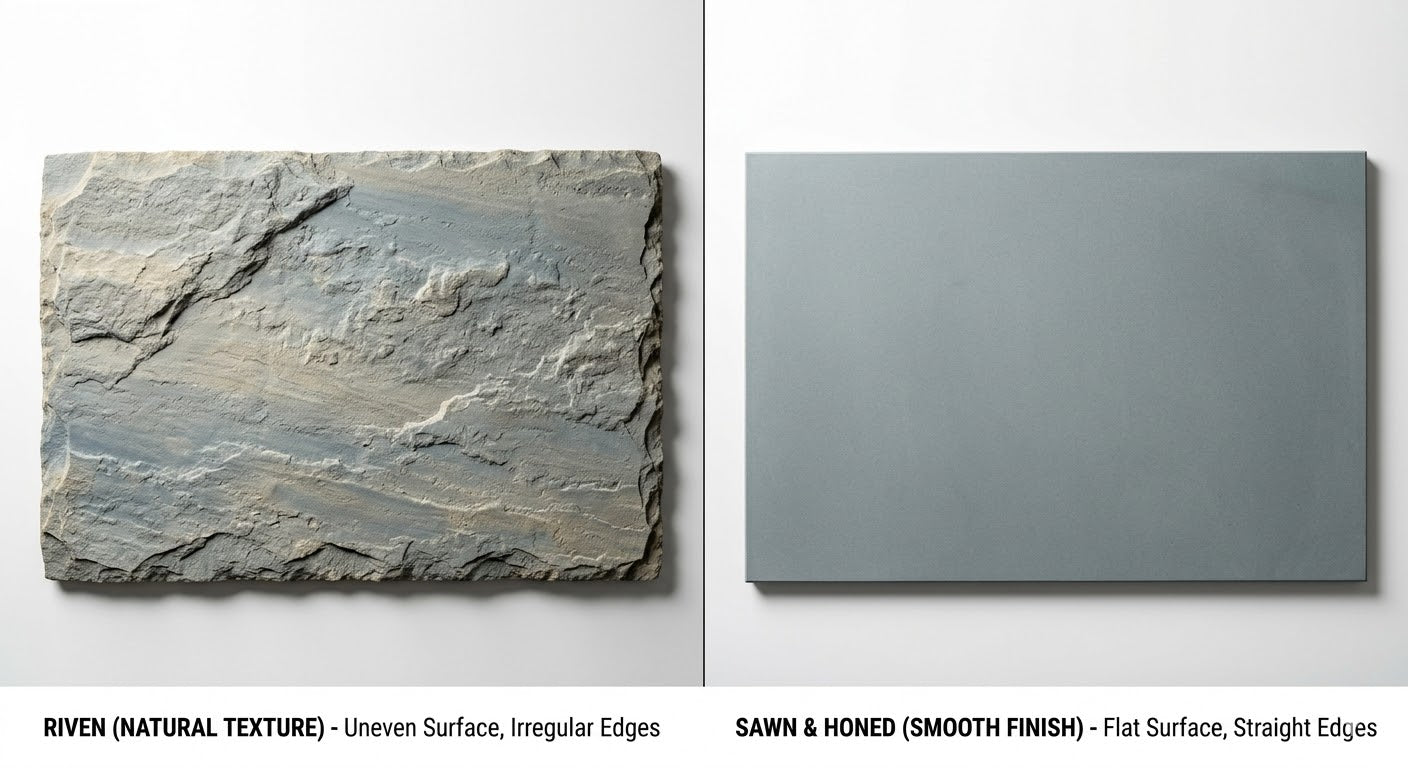
Standard riven sandstone: The blocks are split along natural cleavage planes using hand tools (chisels, wedges). This creates the traditional riven texture—uneven surface, variable edges, natural splits following the stone's grain. Fast, low-cost, labour-intensive but low-tech.
Sawn sandstone: The blocks are cut with industrial diamond saws. Massive circular saw blades slice through the stone creating perfectly straight edges and calibrated thickness. Slow, expensive, requires specialist machinery and significant energy.
What sawing delivers:
- Straight edges (90-degree angles, no waviness)
- Calibrated thickness (20mm ±2mm variation, versus 18-25mm on riven)
- Uniform slab dimensions (900x600mm is actually 900x600mm, not 890x610mm)
- Square corners for tight jointing
The cost: Industrial sawing equipment is expensive to run. Diamond blades wear out and need replacing. Processing time per block increases dramatically. This alone adds £2-3/m² to production costs.

Stage 2: Honing (Smoothing)
After sawing, the stone surface is still relatively rough—sawn texture shows circular saw marks and feels coarse.
Honing process: The sawn slabs pass through industrial honing machines fitted with progressively finer abrasive pads. Think of it like sanding wood, but with stone. Multiple passes smooth the surface whilst maintaining subtle texture for slip resistance.
What honing delivers:
- Smooth, refined surface (not polished mirror-finish, but noticeably smoother than riven)
- Consistent texture across all slabs
- Stone colour appears slightly lighter and more uniform
- Comfortable underfoot for barefoot use
The cost: Honing machinery is expensive. Abrasive pads wear down and need frequent replacement. Multiple passes required per slab. Additional time and energy. This adds another £1.50-2/m² to production costs.
Total processing premium: £3.50-5/m² compared to standard riven stone. That's the actual cost difference at the quarry before markup, transport, or profit.

Real UK Pricing: What You'll Actually Pay
Let's look at actual Universal Paving prices for Kandla Grey—same stone, same quarry, different processing:
Kandla Grey Riven (Standard Natural Finish):
- 900x600mm slabs: £21.85/m²
- Patio pack (mixed sizes): £20.99/m²
- 600x600mm slabs: £21.81/m²
Kandla Grey Sawn & Honed (Smooth Finish):
- 900x600mm slabs: £26.79/m²
- Patio pack (mixed sizes): £24.75/m²
- 600x600mm slabs: £26.08/m²
The difference: £4.94/m² for 900x600 format (23% premium), £3.76/m² for patio packs (18% premium).
For a typical 25m² patio:
- Riven: £546 (based on 900x600 pricing)
- Smooth: £670 (based on 900x600 pricing)
- Difference: £124
That's the real cost you're weighing. Is £124 worth it for 25m² of premium-processed stone? Depends what you're actually getting for that money.

The Installation Advantage: Why Installers Prefer Sawn & Honed
Here's something suppliers don't always mention: sawn and honed sandstone is significantly easier to install than riven stone. That difference matters both for professional landscapers (faster job = lower labour cost) and DIY installers (easier means better results).
Straight Edges = Cleaner Joints
Riven sandstone has naturally irregular edges. When you lay two slabs side-by-side, achieving consistent 10mm joints requires constant adjustment. Slabs might be 905mm one end, 895mm the other. Edges curve slightly. Corners aren't perfectly square.
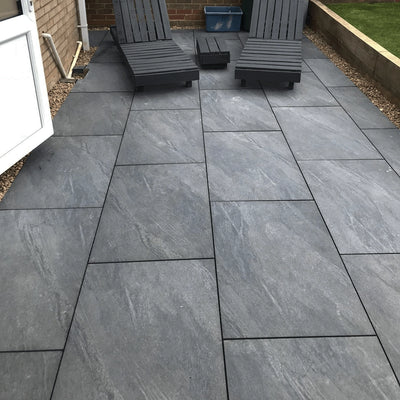
Sawn sandstone has laser-straight edges. Every 900x600 slab is actually 900x600mm (within 2-3mm). Joints stay consistent. Layout looks intentional, geometric, crisp.
Real impact: Professional installers report 20-30% faster laying time with sawn stone versus riven. For DIY, that's the difference between frustration and confidence.
Calibrated Thickness = Level Surface
Riven sandstone typically varies 18-25mm thick. Some slabs are 19mm, others 24mm. When you're creating a level patio, every thickness variation requires bedding mortar adjustment. Thicker slabs need less mortar, thinner slabs need more. Get it wrong, and you've got lips between slabs.
Sawn sandstone is calibrated to 20mm ±2mm. Nearly every slab is 19-21mm. Bedding mortar depth stays consistent. Level patios are far easier to achieve.
Real impact: Fewer lippage issues, less rework, better finished results—especially important if you're laying it yourself.
The Labour Offset
If you're hiring a landscaper, the easier installation of sawn sandstone typically saves 2-4 hours on a 25m² patio. At £150-200/day labour rates, that's £75-150 saved on installation.
Remember that £124 material premium for smooth versus riven? Installation savings recover £75-150 of it. The actual net cost difference shrinks dramatically—or even disappears entirely if your installer quotes fixed price per m².

The Aesthetic Difference: Contemporary vs Traditional
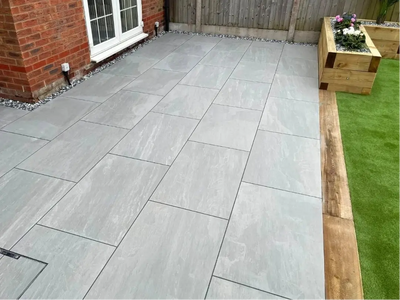
This is subjective, but it matters. Sawn and honed sandstone reads visually different than riven stone—even in photos, definitely in person.
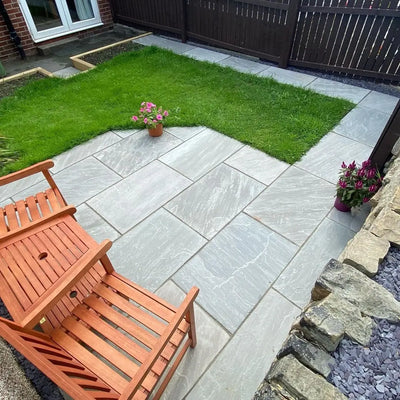
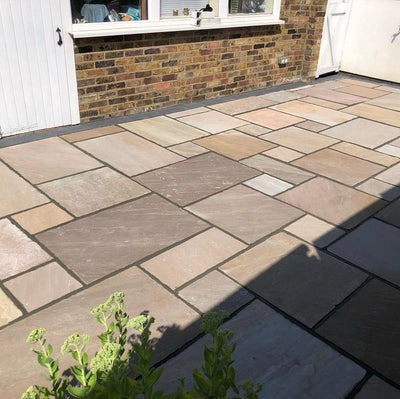
Riven sandstone aesthetic:
- Natural, rustic, traditional
- Texture variation creates shadow play
- Organic, irregular, cottage garden feel
- Hides minor installation imperfections
- Ages with character (patina develops unevenly)
Sawn & honed sandstone aesthetic:
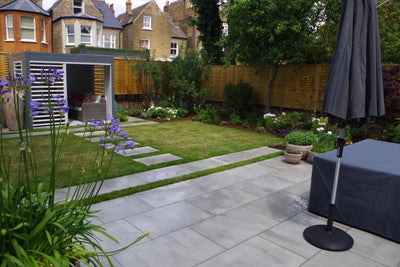
- Contemporary, refined, architectural
- Smooth surface reflects light more evenly
- Geometric precision, modern minimalism
- Shows installation imperfections (demands higher standard)
- Ages gracefully (patina develops uniformly)
Neither is objectively better—they suit different design intentions.
Smooth works brilliantly for:
- Modern new-build gardens
- Minimalist contemporary designs
- Gardens with modern furniture (metal, glass, clean lines)
- Properties with architectural features (large windows, flat roofs)
- Urban courtyard spaces
Riven works brilliantly for:
- Traditional cottage gardens
- Period properties (Victorian, Edwardian)
- Rustic, country aesthetics
- Gardens prioritising natural, organic feel
- Properties with traditional features (sash windows, pitched roofs)
Real example: Customer in Leeds bought Kandla Grey riven for a modern new-build property. Looked fine, but never quite clicked aesthetically—the rustic texture fought against the contemporary architecture. They later added smooth Kandla Grey stepping stones through the lawn, and suddenly it worked. The smooth finish matched the building's clean lines.
Would've been better choosing smooth from the start.

The Barefoot Factor: Comfort Underfoot
This rarely gets discussed, but it's genuinely significant if you use your patio barefoot—which many UK families do during summer months.
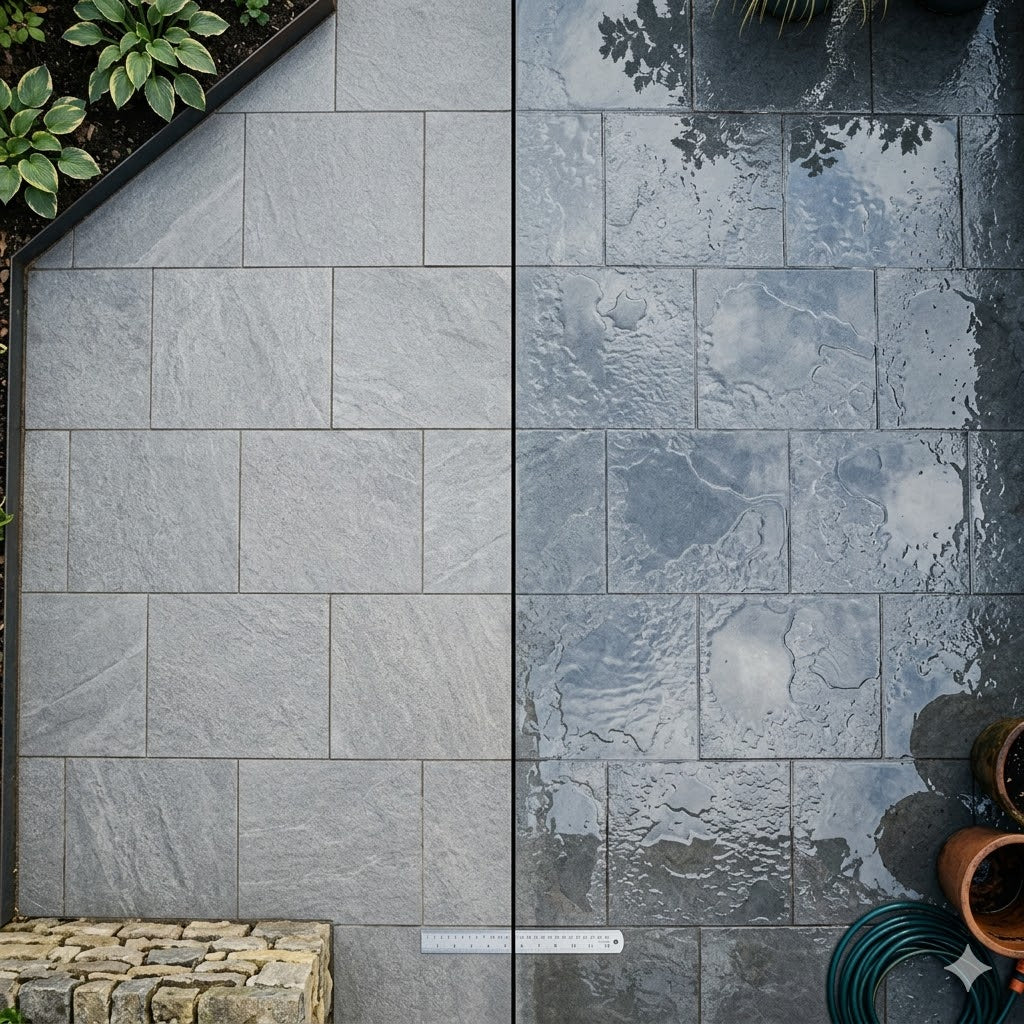
Riven sandstone has pronounced texture. Peaks, valleys, uneven surface. It's not uncomfortable exactly, but it's definitely felt. Some people find it massages their feet pleasantly. Others find it mildly irritating after 20 minutes standing around the BBQ.
Sawn and honed sandstone feels smooth. Not polished-tile smooth—there's still subtle texture for grip—but noticeably more comfortable for bare feet. Walk across it, stand on it, kids run across it—all more pleasant on smooth finish.
Real feedback from customers:
- "The smooth Kandla Grey feels wonderful barefoot—we actually use the patio more because it's comfortable to walk on without shoes"
- "Didn't think the barefoot thing would matter, but it genuinely does. Summer evenings we're out there without shoes all the time"
If you're installing paving around a pool, or if your family uses the garden barefoot regularly, smooth finish delivers real quality-of-life improvement worth considering.

Furniture Stability: No More Wobbling Tables
Here's a practical benefit nobody mentions in marketing materials: furniture sits stable on smooth sandstone.
Riven texture creates uneven contact points. A table leg resting on a peak makes contact; the same leg on a valley doesn't. Result: wobbling tables, rocking chairs, unstable outdoor dining.
You can fix it with shims, furniture pads, strategic positioning—but it's faff.
Smooth sandstone provides level, consistent surface. Table legs make even contact. Chairs don't rock. Outdoor furniture just... works.
This matters if you're creating:
- Outdoor dining areas
- Lounge spaces with sofas/chairs
- Wheelchair-accessible areas (wheels roll smoothly)
- Spaces for elderly relatives (trip hazard reduced)
£124 premium suddenly feels reasonable if it means stable furniture and safer mobility for the next 25+ years.

Slip Resistance: Debunking the Myth
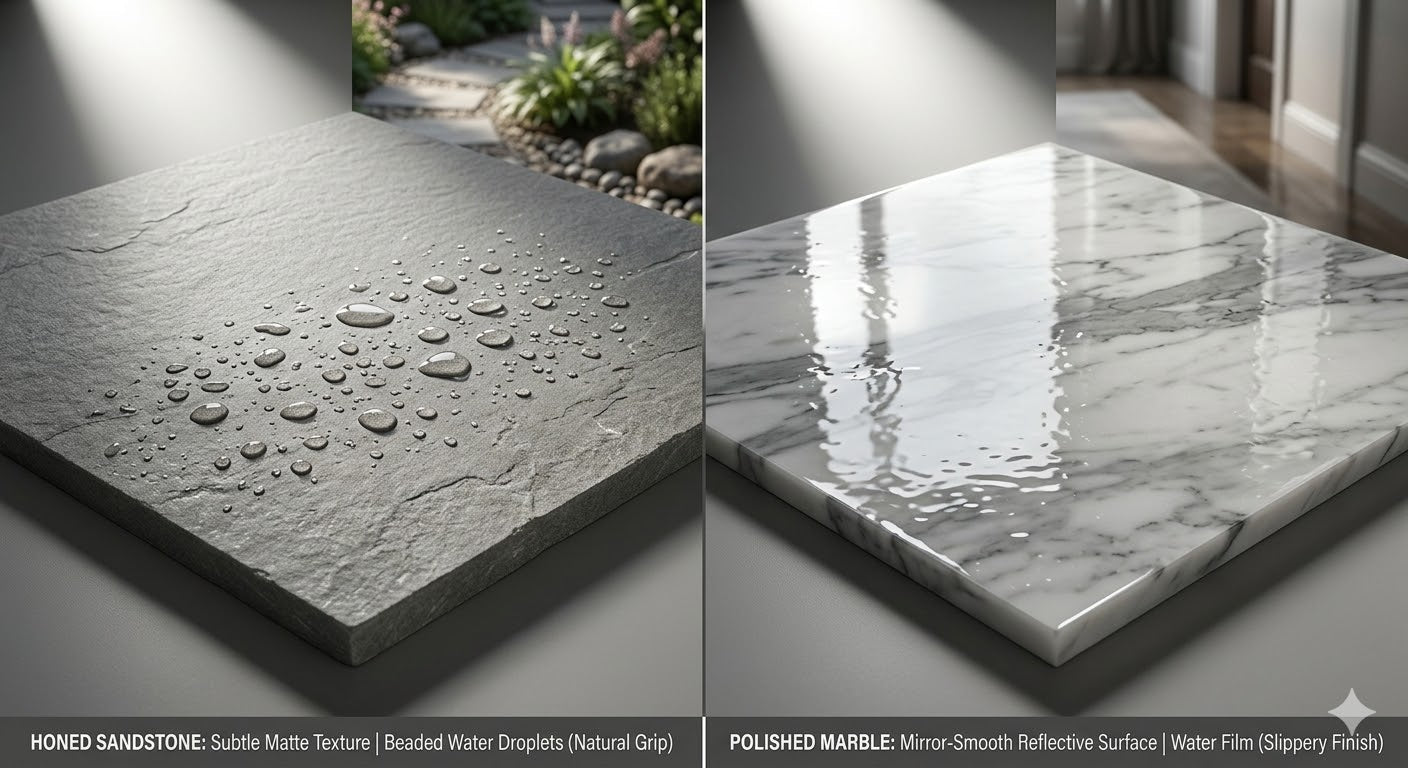
Let's address this directly because it causes genuine concern: sawn and honed sandstone is NOT dangerously slippery when wet.
The honing process creates smooth finish, but it's not polished. There's still texture—subtle, refined, but present. That texture provides slip resistance.
All our smooth sandstone carries natural slip resistance suitable for outdoor use. We wouldn't sell it for UK patios if it was unsafe.
The confusion: "Smooth" sounds like bathroom tiles or polished marble—which ARE slippery when wet. Honed sandstone is different. Think of it as "refined texture" rather than "no texture."
Real-world performance:
- Safe for barefoot use when wet
- Suitable grip in UK rain
- Children can run safely
- Elderly relatives can walk confidently
Where extra caution applies:
- Shaded north-facing areas (algae develops faster)
- Under trees (organic debris reduces grip)
- Near water features (constant moisture)
These are the same caution areas for riven sandstone. Smooth finish doesn't create new slip risks—but proper cleaning and maintenance matters for any outdoor paving.
Maintenance Reality: Easier or Harder?
Smooth sandstone is genuinely easier to keep clean than riven stone. Here's why.
Riven texture:
- Deep valleys trap dirt, leaves, organic debris
- Moss and algae settle into crevices
- Pressure washing needs careful angle to reach texture valleys
- Scrubbing requires stiff brush to penetrate texture
Smooth finish:
- Dirt sits on surface rather than lodging in texture
- Sweeping removes most debris easily
- Pressure washing cleans evenly
- Light scrubbing achieves good results
Cleaning time comparison:
- 25m² riven patio: 2-3 hours for thorough clean
- 25m² smooth patio: 1-1.5 hours for same result
Over 20-year lifespan, that's 20-40 hours saved on maintenance. Value that however you want—but it's a real difference.
Sealing: Neither riven nor smooth requires sealing (despite what some suppliers claim). Sandstone is naturally weather-resistant. Sealing creates more maintenance, not less.
When Smooth ISN'T Worth the Premium
Let's be honest about situations where sawn and honed sandstone doesn't justify the extra cost:
1. Traditional Period Properties
If you own a Victorian terrace, Edwardian semi, or traditional cottage, riven sandstone likely suits the property better. The rustic texture complements period architecture. Smooth finish can look out of place—too contemporary for the building's character.
Save the money. Buy riven.
2. Heavily Planted Cottage Gardens
If your garden aesthetic is informal, organic, densely planted with traditional borders, riven stone works perfectly. The natural texture fits the style. Smooth finish might feel too formal, too architectural.
Save the money. Buy riven.
3. Budget-Constrained Projects
If £124 extra for 25m² patio genuinely stretches your budget uncomfortably, riven sandstone delivers 95% of the same functional benefits. It's still natural stone. Still frost-resistant. Still lasts 25+ years. Still looks good.
The aesthetic difference matters, but it's not worth financial stress.
Save the money. Buy riven.
4. Hidden or Low-Use Areas
Side paths, back garden access routes, utility areas—these don't need premium finish. Nobody's examining the stone closely. Riven works fine and saves money for more visible areas.
Save the money. Buy riven.
When Smooth IS Absolutely Worth It
Conversely, situations where the premium justifies itself completely:
1. Modern New-Build Properties
Contemporary architecture demands contemporary paving. Clean lines, architectural precision, modern materials—smooth sandstone matches this aesthetic perfectly. Riven looks wrong.
Worth every penny of the premium.
2. Outdoor Living Rooms
If you're creating a genuine outdoor room—dining area, lounge space, entertaining zone with significant furniture—the stability and comfort of smooth finish matters enormously.
Worth it for daily quality-of-life improvement.
3. Pool Surrounds and Barefoot Areas
Anywhere people walk barefoot regularly, smooth finish delivers tangible comfort advantage.
Worth it for user experience.
4. Wheelchair or Mobility Aid Access
Smooth, level surface makes wheelchair navigation dramatically easier. This isn't luxury—it's accessibility.
Worth it for genuine functional need.
5. High-Visibility Showcase Areas
Front entrance, main patio, areas guests see first—these are your garden's statement. Premium finish creates premium impression.
Worth it for impact and pride.
The Material Mix Strategy
Here's the smart approach many customers use: combine both finishes strategically.
Main patio: Smooth finish (high-use, highly visible)
Pathways: Riven finish (lower priority, cost saving)
Driveway edging: Riven setts (traditional detail)
Example project breakdown for 40m² total:
- 25m² main patio in Kandla Grey smooth: £670
- 15m² side path in Kandla Grey riven: £328
- Total: £998
Versus:
- 40m² all smooth: £1,072 (£74 more)
- 40m² all riven: £874 (£124 less)
The mixed approach gives you premium finish where it matters most, whilst managing overall budget sensibly.
Other Smooth Sandstone Colours at Universal Paving
Kandla Grey is our most popular smooth sandstone, but we stock other colours in sawn and honed finish:
Fossil Mint Smooth 900x600mm - £26.24/m²
- Pale grey-green tones
- Sophisticated, cool aesthetic
- Contemporary gardens
- Pairs beautifully with planting
Camel Dust Smooth 900x600mm - £28.99/m²
- Warm beige-buff tones
- Lighter than Rippon Buff
- Mediterranean feel
- Modern cottage style
Rippon Buff Smooth Patio Pack - £24.74/m²
- Traditional warm buff tones
- Most affordable smooth option
- Versatile colour
- Works traditional or modern
All carry the same sawn and honed processing—straight edges, calibrated thickness, refined smooth finish.
The Bottom Line: What Are You Actually Buying?
When you pay £4-5/m² premium for sawn and honed sandstone over riven, here's the itemised value:
Tangible benefits:
- Straight edges: Easier installation, cleaner joints, geometric precision
- Calibrated thickness: Level surface, fewer installation problems
- Smooth finish: Barefoot comfort, furniture stability, easier cleaning
- Contemporary aesthetic: Matches modern architecture
Installation savings:
- 20-30% faster professional installation (£75-150 labour saving)
- Easier DIY with better results
- Less wastage from consistent sizing
Long-term value:
- Easier maintenance (20-40 hours saved over 20 years)
- Consistent aging and patina development
- Furniture remains stable (no wobbling tables)
- Accessibility advantages (wheelchair/mobility friendly)
Net cost after installation savings:
- Material premium: £124 for 25m²
- Installation saving: £75-150
- Actual net cost: £0-50 (or even net saving with efficient installer)
When you frame it that way, sawn and honed sandstone isn't expensive—it's delivering genuine value through processing quality, installation efficiency, and long-term benefits.
The question isn't "Is smooth worth £124 more?"
The question is "Does smooth suit my property, my lifestyle, and my design vision?"
If the answer is yes, that £124 (or actual net £0-50 after labour savings) is money well spent. If the answer is no, riven sandstone delivers 95% of the same functional benefits at lower cost.
Browse Universal Paving's smooth sandstone range:
- Kandla Grey smooth: Contemporary grey, most popular
- Fossil Mint smooth: Cool grey-green, sophisticated
- Camel Dust smooth: Warm beige, Mediterranean feel
- Rippon Buff smooth: Traditional buff, versatile
Need advice on smooth vs riven for your project?
- Phone: 07480 959706
- Samples available: £5, delivered 5-7 days
- Free UK delivery on all paving orders
- Monday-Friday 8am-5:30pm, Saturday 9am-3pm
Understanding what you're paying for makes the choice clear. Sawn and honed sandstone delivers real processing value, genuine functional benefits, and distinctive aesthetic qualities. Whether that suits your specific project is your decision—but at least now you know exactly what you're buying.