






Is Smooth Sandstone Too Slippery? UK Safety & Slip Resistance Guide
Right, let's tackle the question that stops more smooth sandstone sales than price ever does: "But won't it be dangerous when wet?"
Fair concern. "Smooth" sounds slippery. Your brain immediately pictures polished bathroom tiles or wet marble flooring—surfaces where one wrong step sends you skating across the room.
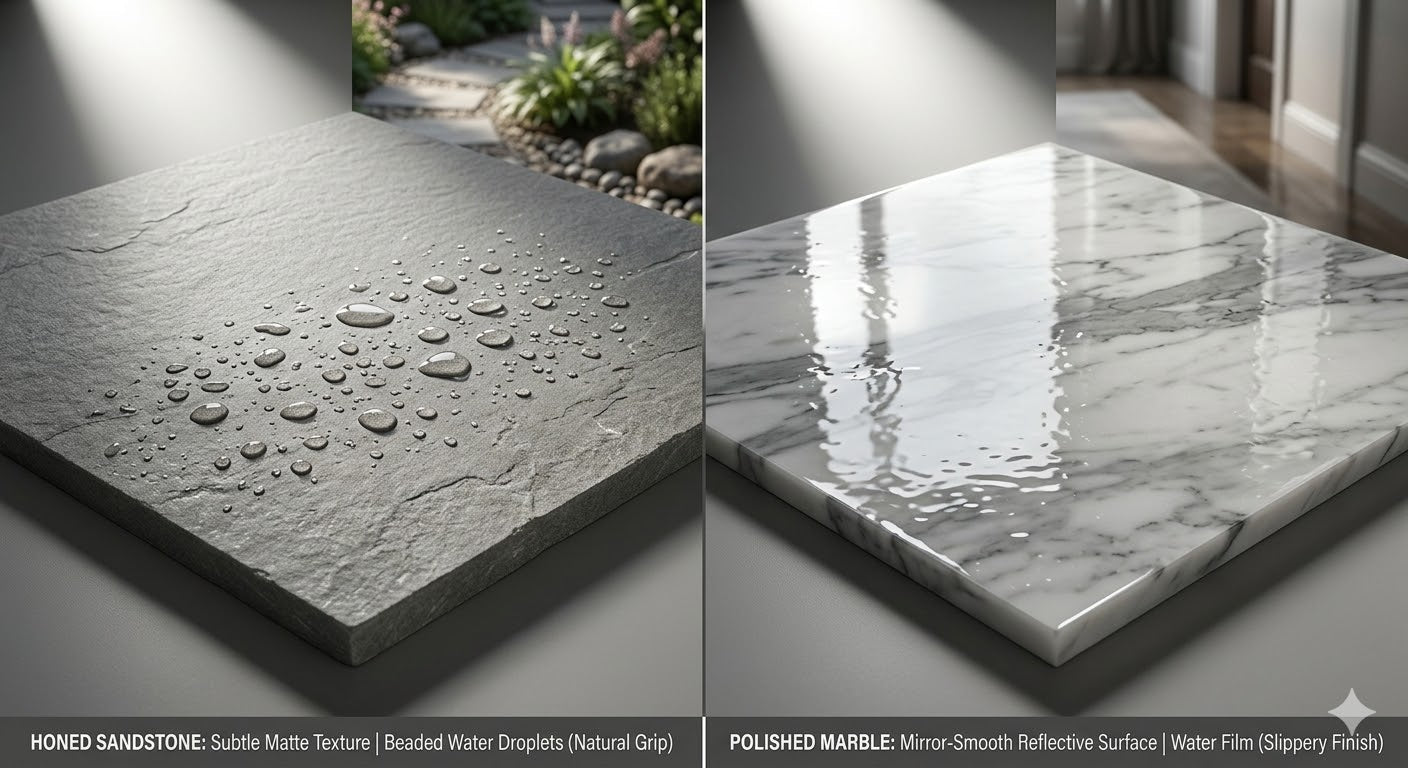
Here's what you actually need to know: smooth sandstone and polished tiles are completely different surfaces. One is honed natural stone with substantial texture. The other is mirror-polished manufactured material. Calling them both "smooth" creates dangerous confusion.
This isn't a sales pitch. This is an honest explanation of what "smooth" actually means in sandstone terms, how slip resistance works, what the real risks are in UK weather, and when you genuinely should choose a different finish for safety reasons.
At Universal Paving, we sell smooth sandstone, riven sandstone, and textured anti-slip sandstone. All three are safe when properly specified. Understanding the actual differences helps you choose correctly.

The Terminology Problem: "Smooth" Doesn't Mean Polished
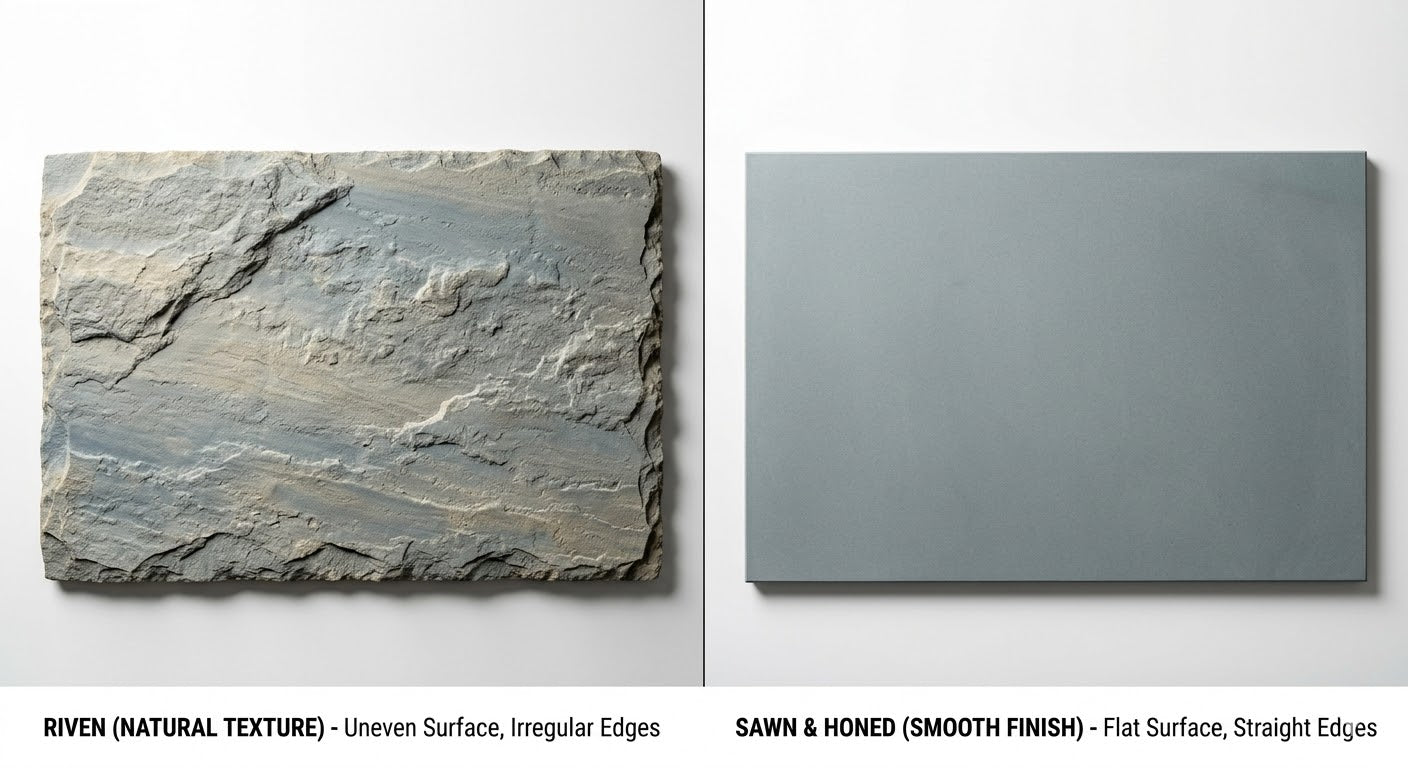
The confusion starts with language. In the paving industry, "smooth" refers to the manufacturing process—specifically, that the stone has been honed rather than left naturally riven. But "honed" and "polished" are not the same thing.
Polished stone (like indoor marble tiles):
- Mirror-smooth surface with zero texture
- Reflective finish, genuinely slippery when wet
- NOT suitable for UK outdoor use
- NOT what we're talking about
Honed sandstone (what suppliers call "smooth"):
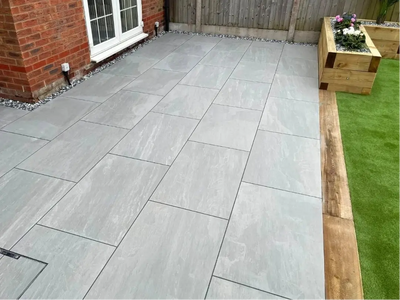
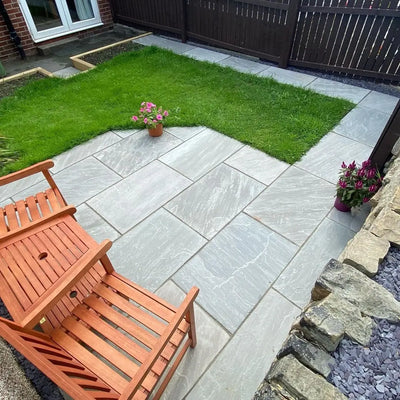
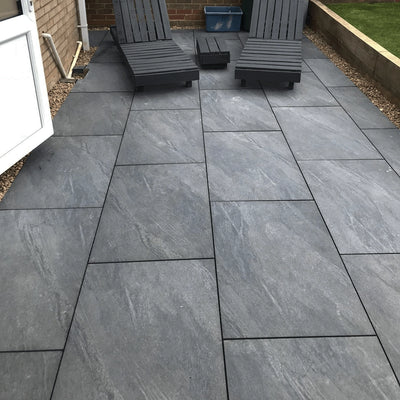
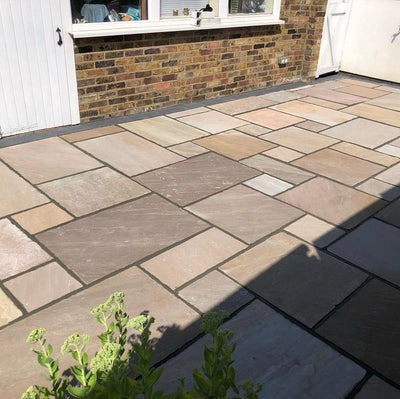
- Refined surface with subtle but definite texture
- Matte appearance with slight sheen (not reflective)
- Natural slip resistance maintained
- Suitable for UK outdoor use
- THIS is smooth sandstone
Think of furniture finishes. Polished wood has mirror gloss. Honed wood has satin sheen. Both feel smooth to your hand, but one has way more texture.
The critical distinction: Smooth sandstone is honed, not polished. That difference is everything for slip safety.
How Honing Creates Texture
When sandstone is processed, it goes through two stages:
Stage 1: Diamond sawing creates straight edges but leaves rough circular saw marks on the surface. Stone feels coarse and gritty.
Stage 2: Honing uses machine-mounted abrasive pads in progressive passes (like sanding wood) to smooth the surface. Multiple passes with finer grit remove saw marks and even out the finish.
Critical point: Honing stops well before reaching polished finish. The final pass leaves subtle texture—microscopic peaks and valleys that create friction for shoe soles.
What you feel:
- Run your hand across it: feels smooth
- Look closely: you can see subtle texture variation
- Press hard: you feel slight grain, not glassy surface
- Get it wet: texture remains, doesn't become slippery
That retained texture provides slip resistance. Water can't create a continuous film between shoe and stone because texture breaks it up.

Natural Slip Resistance: What Smooth Sandstone Delivers
Unlike porcelain (which carries R9-R13 ratings), natural sandstone is described as having "natural slip resistance"—the stone's inherent texture and mineral composition provide grip without additional treatment.
How smooth sandstone creates grip:
- Mineral texture: Sandstone is sand grains bonded together. Even when honed, those grain boundaries create microscopic texture.
- Surface porosity: Unlike glazed porcelain, sandstone is slightly porous. Water absorbs rather than sitting in continuous film.
- Honed finish retains peaks: Smoothing high points doesn't eliminate them. These peaks contact shoe soles.
Real-world performance:
- Safe for barefoot use when wet
- Adequate grip in UK rain for normal walking
- Children can run safely with normal caution
- Elderly relatives can walk confidently
- Suitable for most residential patios
What it's NOT:
- Not "high-grip" anti-slip like textured finishes
- Not suitable for steep ramps or slopes
- Not ideal for constant wetness (pool edges)

UK Weather Reality: When Grip Reduces
Smooth sandstone provides adequate slip resistance in normal conditions. But certain situations reduce grip:
1. Algae and Biofilm (Main Culprit)
Microscopic algae and bacterial biofilm settle on stone within weeks. In damp UK conditions—especially north-facing patios, shaded areas, or poor drainage—this develops rapidly.
The problem: Biofilm is invisible at first but dramatically reduces wet grip. It creates a slick layer between stone and shoes.
Where it develops fastest:
- North-facing patios (limited sun)
- Under tree canopies (organic debris)
- Near water features (persistent moisture)
- Poorly drained areas (water pooling)
Solution: Quarterly cleaning prevents buildup. Pressure wash removes biofilm, grip returns immediately.

2. Leaf Litter and Organic Debris
Autumn leaves on smooth sandstone create slippery conditions. Wet leaves on any surface are sketchy—on smooth finish they're particularly problematic because refined surface doesn't trap debris like riven texture.
High-risk period: October-December
Solution: Weekly sweeping during leaf-fall season
3. Soap Residue from Cleaning
Pressure-washing with detergent without thorough rinsing leaves soap film that creates slippery surface for days.
Mistake: Using washing-up liquid or car shampoo—these don't rinse clear on porous stone.
Solution: Use outdoor paving cleaner or just warm water with stiff brush. If using detergent, rinse multiple times.
4. Ice and Frost
Any outdoor surface becomes slippery when iced. Smooth sandstone isn't magically better—it's similar to riven sandstone, better than porcelain (absorbs less water), worse than textured anti-slip.
Solution: Salt, grit, or de-icing products work fine on sandstone.

The Barefoot Test: Check Before You Buy
Order a sample from Universal Paving (£5, delivered 5-7 days):
- Place outdoors on flat surface
- Hose it down until soaking wet
- Step onto wet stone barefoot
- Try gentle sliding motion
What you should feel:
- Immediate texture contact (not glassy)
- Confident grip (foot doesn't slide easily)
- Comfortable surface (not rough)
Red flags:
- Foot slides with minimal pressure
- Feels like wet bathroom tiles
- No texture sensation
If it feels unsafe barefoot when wet, trust that and choose riven or textured. But most people are pleasantly surprised—the texture is definitely there.
Comparing the Three Finishes
Smooth (Sawn & Honed) - £24-28/m²
Grip: Good for normal UK weather
Barefoot: Very comfortable
Best for: Contemporary patios, outdoor living areas
Choose when: Modern aesthetics, furniture stability matters, barefoot comfort priority
Avoid when: Steep slopes, constantly wet areas, maximum grip needed
Riven (Natural Split) - £20-23/m²
Grip: Better than smooth (more texture)
Barefoot: Adequate but less comfortable
Best for: Traditional gardens, cottage aesthetics
Choose when: Traditional property, natural rustic look, budget-conscious
Avoid when: Modern design, barefoot comfort crucial, furniture placement
Textured Anti-Slip - £26-28/m²
Grip: Excellent (highest grip)
Barefoot: Less comfortable (aggressive texture)
Best for: Pool surrounds, slopes, commercial areas
Choose when: Maximum safety priority, elderly users, constantly wet
Avoid when: Barefoot use, contemporary aesthetics, furniture areas
Maintenance: Keeping Smooth Sandstone Safe
The biggest factor in slip safety isn't the finish—it's maintenance. Clean stone grips well. Neglected stone develops biofilm.
Quarterly Deep Clean
Every 3-4 months:
- Sweep clear of debris
- Apply outdoor paving cleaner
- Scrub with stiff brush
- Rinse thoroughly until clear
- Allow 24-48 hours to dry
Cost: £10-20 for cleaner (lasts multiple uses)
Time: 1-2 hours
Result: Removes biofilm, restores original grip
Problem Areas Need Extra Attention
North-facing sections: Clean every 6-8 weeks (not quarterly)
Under trees: Weekly sweeping, monthly scrub during growing season
Near water features: Fortnightly cleaning recommended
Shaded areas: 6-8 week cleaning cycle
When Smooth Sandstone Is Genuinely Unsafe
Be honest about situations where smooth creates real concerns:
1. Steep Slopes (Over 5° Incline)
Water runoff plus gravity equals marginal grip.
Safe maximum: 1:20 slope
Above that: Choose riven or textured
2. Constantly Wet Areas
Pool surrounds, fountain edges, irrigation overspray—anywhere wet 50%+ of time.
Choose textured anti-slip sandstone or R11 porcelain instead.
3. Commercial High-Traffic
Restaurants, cafés, public walkways see constant traffic including inappropriate footwear.
Domestic: Smooth is fine
Commercial: Choose textured or porcelain
4. Steps and Level Changes
Steps demand confident footing. Smooth works but riven provides extra reassurance.
Compromise: Riven step treads, smooth patio surface
Real Customer Experiences
Positive (majority):
"We were worried about smooth Kandla Grey being slippery, but it's absolutely fine. Even when wet, we feel perfectly confident. The kids run around without issues." - Sarah, Leeds
"Barefoot in summer it's wonderful. When it rains, there's texture you can feel. Not concerned about slip at all." - Mike, Bristol
Concerns (small minority):
"Feels a bit slippery in one shaded corner that stays damp. Main patio is fine, just that section under the tree. Should've chosen riven for that bit." - David, Manchester
"Second year got algae buildup and felt less grippy. Power-washed thoroughly and it's back to normal. Learned I need to clean more often." - Emma, Glasgow
Pattern: Slip concerns trace to maintenance gaps (biofilm) or specific problem areas (persistent shade, poor drainage). Stone itself performs well when maintained.
The Honest Risk Assessment
Smooth sandstone, properly maintained, normal residential use:
- Risk of slip injury: Very low
- Comparable to: Standard paving, concrete
- Higher risk than: Textured finishes
- Lower risk than: Polished tiles, wood decking
Smooth sandstone, poorly maintained (biofilm), wet:
- Risk of slip injury: Moderate
- Main issue: Maintenance failure, not material
Smooth sandstone, wrong application (steep slope, constant wet):
- Risk of slip injury: High
- Wrong material for application
Bottom line: Specification and maintenance matter far more than inherent properties. Install correctly, maintain properly, and it's genuinely safe.
The Verdict: Is Smooth Sandstone Too Slippery?
No—but with important caveats.
Smooth sandstone is honed natural stone with substantial texture providing adequate slip resistance for normal UK residential outdoor use. It is NOT polished, NOT mirror-smooth, NOT comparable to glazed tiles.
Choose smooth sandstone confidently if:
- ✅ Normal residential patio (level surface)
- ✅ Willing to clean quarterly
- ✅ Contemporary aesthetic desired
- ✅ Barefoot comfort matters
- ✅ Furniture stability important
Choose different finish if:
- ❌ Steep slopes or ramps
- ❌ Pool surrounds or constantly wet
- ❌ Commercial liability concerns
- ❌ Heavily shaded permanent damp
- ❌ Unwilling to maintain cleaning
- ❌ Maximum possible grip required
For 90% of UK residential patios—level surfaces, normal use, regular maintenance—smooth sandstone delivers perfectly adequate safety alongside aesthetic and comfort advantages.
Browse Universal Paving's sandstone finishes:
- Smooth (sawn & honed): Contemporary refined finish
- Riven (natural split): Traditional rustic texture
- Textured anti-slip: Enhanced grip for wet areas
Need advice on which finish suits your project?
- Phone: 07480 959706
- Samples available: £5, delivered 5-7 days
- Free UK delivery on all paving orders
- Monday-Friday 8am-5:30pm, Saturday 9am-3pm
The slip concern is understandable—"smooth" sounds scary. But understanding what it actually is (honed, not polished) and how to maintain it safely should give you confidence to choose the finish that genuinely suits your project.