







Porcelain Step Edging UK: Complete Guide to Bullnose Steps & Risers
Garden steps connect different levels of outdoor space while creating focal points that define your landscape design. But the difference between steps that look professionally finished and those that appear unfinished often comes down to one critical detail: the step edging. Porcelain bullnose step edging transforms standard paving into purpose-built outdoor stairs with rounded, safe front edges and integrated riser faces that deliver both visual polish and practical safety.
If you're planning garden steps, raised patios, or multi-level terracing, understanding porcelain step edging matters. The bullnose (rounded front edge) prevents the sharp corner damage that plagues standard paving used for steps, the anti-slip R11 surface rating provides proper wet-weather safety, and the integrated riser creates clean vertical definition impossible with separate coping and paving combinations.
This guide covers everything you need to know about porcelain bullnose step edging for UK gardens - from understanding what differentiates step-specific porcelain from standard paving through to colour selection, size options, installation requirements, and design patterns that work in British outdoor spaces. Whether you're a homeowner planning a garden redesign or a landscaper specifying materials for client projects, you'll find the practical information needed to create safe, durable, and visually striking outdoor steps.
What Is Porcelain Bullnose Step Edging?
Porcelain bullnose step edging is purpose-manufactured outdoor tile specifically designed for garden steps, raised patios, and level changes. Unlike standard paving slabs (which have square 90-degree edges on all four sides), bullnose step edging features a rounded front edge and typically includes an integrated vertical riser face.
Key structural features:
Bullnose front edge: The front edge is rounded (radiused) rather than sharp 90-degree angle. This radius prevents corner chipping from foot traffic and equipment impact, creates safer step nosing for foot placement, and delivers the polished appearance expected from professional step installations.
Integrated riser: Most bullnose step pieces include a vertical face (the riser) that extends downward from the step tread. Standard heights are 150mm, 200mm, or 450mm depending on application. This integrated design means one piece creates both the horizontal tread surface and vertical riser face, eliminating the need for separate copings and facings.
20mm thickness: UK porcelain step edging is manufactured at 20mm thickness - the standard for outdoor porcelain paving. This provides the structural strength for pedestrian traffic and proper installation on mortar beds or pedestals.
R11 anti-slip rating: The surface texture is specifically engineered to achieve R11 anti-slip certification - critical for step safety in wet British weather. This isn't decorative texture but functional surface treatment that prevents slipping even when wet.

Why Choose Porcelain Over Natural Stone for Step Edging?
Durability Under Impact
Step nosings (front edges) experience concentrated wear from foot traffic, equipment (wheelbarrows, mowers), and winter frost. Porcelain's low porosity (under 0.5% water absorption) means freeze-thaw cycles cannot crack the material the way they can with sandstone or limestone step edging. The rounded bullnose design distributes impact forces rather than concentrating them at sharp corners, further protecting against chipping.
Natural stone step edging (sandstone, limestone) can work beautifully but requires more careful handling and shows wear over 10-15 years, particularly at the vulnerable front edge. Porcelain maintains crisp appearance indefinitely with basic cleaning.
Consistent Anti-Slip Performance
All porcelain bullnose step edging carries R11 anti-slip certification, meaning it has been independently tested and verified for slip resistance even when wet. This rating remains constant across the product's lifespan - the texture doesn't wear smooth the way some natural stone finishes can.
Natural stone steps rely on inherent surface texture (riven sandstone, honed limestone) which performs adequately when clean but can become slippery when covered with algae, moss, or organic debris. Porcelain's engineered surface resists organic growth and maintains grip even in neglected conditions.
Zero Maintenance Requirements
Porcelain requires no sealing, ever. The material is impervious to oil stains, wine spills, moss growth, and efflorescence (white salt deposits). Clean with water and mild detergent once or twice annually, and the steps look pristine.
Natural stone steps need periodic sealing (every 2-4 years), regular moss treatment, and stain management. For busy homeowners or commercial installations, this maintenance overhead makes porcelain the pragmatic choice.
Colour Consistency
Porcelain delivers batch-to-batch colour consistency impossible with natural stone. If you need to match existing steps five years later or add sections to completed installations, porcelain replacements integrate seamlessly. Natural stone varies between quarry batches, making future matching difficult.
When Natural Stone Might Be Better
Natural stone creates authentic period character impossible to replicate with porcelain. For Listed buildings, conservation areas, or deliberately traditional cottage gardens, sandstone or limestone step edging may be architecturally appropriate despite higher maintenance. Porcelain excels in contemporary settings, modern properties, and situations prioritising performance over heritage character.
Size Options: 900x450mm Steps vs 900x300mm Copings
Porcelain bullnose edging comes in two primary UK formats, each serving different applications.
900x450mm Bullnose Steps & Risers
The 900x450mm format is the full step tread piece - 900mm wide (the run across the step width) and 450mm deep (from front edge to back). This dimensions provides proper tread depth for comfortable foot placement while the integrated riser (typically 150-200mm vertical face) creates the front edge and step definition.
Typical applications:
- Main garden steps (3-8 risers)
- Raised patio step access
- Terrace level changes
- Pool surround stepped areas
- Formal entrance steps
The 450mm depth means each step provides adequate foot placement space (minimum 300mm depth required by UK building regs for domestic external steps, though garden steps aren't strictly regulated). The front portion overhangs the riser below, creating the classic step profile with weather drip edge.
Installation note: These are laid on full mortar bed with the back edge supported by the upper level paving or sub-base, and the integrated riser facing downward over the lower level.
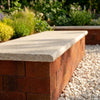
The 900x300mm format serves as coping (wall cap) or shallow step edging where full 450mm depth isn't needed. The 300mm depth works for low walls, retaining wall caps, or step transitions where the tread depth is created by adjacent paving rather than the bullnose piece itself.
Typical applications:
- Low retaining wall copings
- Raised bed edging
- Single-step level changes (where 450mm depth is excessive)
- Pool edge copings
- Feature wall cappings
Think of the 300mm format as decorative/protective coping that happens to have bullnose front edge, versus the 450mm format which is structural step tread.

Colour Selection Guide: Which Porcelain Step Edging Suits Your Garden?
Porcelain bullnose step edging is available in the core UK colour palette: greys, whites, blacks, and stone-effect tones. Colour choice should coordinate with main patio paving while potentially creating intentional contrast for visibility and design emphasis.
Consistent mid-grey with subtle charcoal toning - the UK's most popular porcelain colour. Kandla Grey works with virtually any property style from ultra-modern to traditional. The neutral tone doesn't show dirt as readily as white or create harsh contrast like black.
Best for: Modern properties, contemporary gardens, matching Kandla Grey main patio paving, situations wanting clean neutral aesthetic without stark white.
Pairs well with: Kandla Grey patio paving (seamless integration), Earthcore Grey darker paving (tonal step definition), white or black paving (grey steps as transitional element).
Quartz White & Himalayan White (Clean Whites)
Bright clean white (Quartz) or slightly warmer off-white (Himalayan). White step edging creates maximum visual definition and light-reflective quality, particularly valuable for shaded gardens or evening use with lighting. Shows dirt more readily than grey but delivers crisp architectural impact.
Best for: Coastal properties, Mediterranean-style gardens, ultra-contemporary minimalist design, situations wanting maximum visual step definition, pairing with dark patio paving for dramatic contrast.
Pairs well with: Black or dark grey paving (maximum contrast), other white paving (seamless integration), stone-effect paving (white steps as clean accent).
Earthcore Grey (Dark Charcoal)
Deep charcoal grey with subtle texture variation. Earthcore creates sophisticated moody aesthetic and hides dirt/marks better than lighter colours. The darker tone recedes visually, making steps less prominent as features - useful when you want level changes functional rather than decorative focal points.
Best for: Modern industrial aesthetic, urban gardens, situations wanting steps to blend rather than contrast, pairing with light paving where dark steps won't create trip hazard (they're visible but subtle).
Pairs well with: Light grey or white paving (step definition without harsh contrast), other dark paving (tonal integration), mixed grey paving (steps as darker accent).
True deep black with consistent colour. Anthracite creates maximum architectural drama and works brilliantly in high-design contemporary gardens. The dark colour absorbs heat (advantage in UK: steps dry faster; disadvantage in hot climates: surface can be uncomfortable barefoot).
Best for: Ultra-modern properties, architectural statement gardens, sophisticated urban spaces, situations wanting steps as bold design features rather than subtle transitions.
Pairs well with: White or very light paving (maximum contrast and definition), other black paving (seamless integration), mixed paving (black steps as grounding element).

Design Patterns: How to Use Step Edging in UK Gardens
Straight Flight Garden Steps
The classic application: straight steps connecting two level areas (patio to lawn, terrace to garden, house level to lower garden). Use bullnose edging for each tread with the back portion supported by the upper level. Risers can be uniform height (comfortable 150-175mm) or varied where ground slope dictates.
Design tip: Keep riser heights consistent within each flight (even if different flights have different riser heights). Inconsistent riser heights within one flight create trip hazards - the human gait expects uniform steps.
Curved or Radius Steps
Curved steps create softer transitions and suit period properties or cottage garden styles. Standard rectangular bullnose edging can be used for gentle curves by angling each piece slightly (works for radii over 3m). Tighter curves require cutting and mitring the pieces or specifying curved step edging.
Practical note: Curved steps require significantly more skilled installation than straight steps. Budget accordingly for specialist labour.
Single-Step Level Changes
For modest level changes (150-200mm), a single step often suffices. This is where the 900x300mm coping format works well - it provides the bullnose safety feature without excessive tread depth that would protrude unnecessarily into adjacent paving.
Raised Patio Step Access
When building raised patios (150-450mm above surrounding garden), step access is essential. Typically 1-3 steps depending on height. The bullnose edging creates the formal entrance while matching the main patio paving material.
Design tip: Position steps centrally or at natural approach paths. Side-positioned steps feel secondary and create awkward circulation.
Terraced Gardens with Multiple Flights
For steeply sloped gardens, multiple step flights separated by landing terraces create manageable transitions. Each flight uses bullnose edging, with landing terraces in matching paving. This creates rhythm and visual interest while managing significant level changes safely.
Building reg note: UK domestic garden steps aren't strictly regulated, but following building reg guidance (max 12 risers per flight, min 400mm landings between flights) creates safe, comfortable circulation.

Installation Essentials: What Makes Porcelain Steps Safe & Durable
Foundation Requirements
Porcelain bullnose edging requires solid, stable foundation because concentrated loads occur at step edges. Unlike patio paving (which distributes loads across large area), step treads concentrate impact at the nosing where foot traffic lands.
Correct installation:
- 100-150mm compacted MOT Type 1 sub-base beneath entire step area
- 40-50mm full mortar bed (5:1 sharp sand to cement)
- Each piece fully bedded (no spot bedding)
- Back edge supported by upper level paving or haunching
- Front edge cantilevered slightly (20-30mm) to create drip edge
Edge Support & Cantilever
The integrated riser means the bullnose piece projects forward over the lower level, creating cantilever. This is deliberate (creates weather drip edge and classic step profile) but requires proper support. The back 2/3 of each tread must be solidly bedded and supported; the front 1/3 cantilevers.
Common installation mistake: Insufficient back-edge support causes the step to pivot when weight is applied at the front edge. The mortar bed alone isn't enough - the upper paving level or concrete haunching must support the back edge.
Riser Alignment
Risers should align vertically (check with plumb line or spirit level). Risers that lean backward or forward look unprofessional and can create water pooling or trip hazards.
Jointing
Joints between adjacent bullnose pieces should be 3-5mm, filled with appropriate pointing compound. Resin-based jointing compounds perform better than sand for steps because they resist washout and weed growth.
R11 Anti-Slip: What It Actually Means
R11 is a German DIN 51130 ramp test rating. The test measures how steep an incline can be before test subjects slip while wearing safety boots on the wet surface. R11 means the surface remains non-slip up to 27-degree incline when wet.
For context:
- R9 (19-degree): minimum for indoor wet areas
- R10 (24-degree): standard for commercial kitchens
- R11 (27-degree): appropriate for external steps and ramps
- R12 (35-degree): industrial/specialist applications
R11-rated porcelain bullnose edging means you're using material tested and certified for external step applications. This isn't marketing claim but verified performance standard.
When Bullnose Edging Isn't the Right Solution
Very Low Level Changes (Under 100mm)
For changes under 100mm, ramps or gradual slopes often work better than steps. A single 75mm step creates trip hazard because it's not visually prominent enough and doesn't match expected step height.
Alternative: Create gradual ramp or bring both levels into alignment with additional fill.
Tight Spaces with Limited Depth
If available depth is under 400mm (from front edge to back support point), full 450mm bullnose treads may not fit. You can use 300mm coping format but this creates shallow tread depth suitable only for very low-use situations.
Alternative: Redesign the level change to provide adequate tread depth, or use alternative materials like sleeper steps.
Period Properties Requiring Authentic Materials
Listed buildings or conservation areas may require natural stone for architectural authenticity. Porcelain, despite quality, cannot replicate the patina and character of aged stone.
Alternative: Use sandstone or limestone step edging with traditional detailing.
Budget-Constrained Projects
Porcelain bullnose edging costs more per linear metre than standard paving used as step edges. For basic functional steps where appearance isn't critical, standard paving with steel or aluminium nosing strips provides adequate safety at lower cost.
Alternative: Use standard paving with added safety nosing, though appearance won't match purpose-built step edging.

Combining Bullnose Steps with Main Patio Paving
Colour Matching Strategy
Seamless integration: Use bullnose edging in the same colour as main patio paving. Kandla Grey steps with Kandla Grey patio creates unified cohesive design where steps blend naturally rather than standing out as separate elements.
Intentional contrast: Use bullnose edging in contrasting colour to main paving. White steps with dark grey patio creates clear visual definition - useful for safety (steps are unmistakably visible) and design impact.
Tonal variation: Use bullnose edging one shade lighter or darker than main paving. This creates subtle definition without harsh contrast.
Format Coordination
If your main patio uses 900x600mm or 600x600mm porcelain paving, the 900x450mm bullnose steps coordinate naturally because they share the 900mm dimension. This creates visual rhythm and makes installation planning simpler.
Mixed Material Approaches
Some designers use porcelain bullnose steps with natural stone paving (or vice versa). This can work but requires careful colour and texture coordination. Generally, stick to one material family across paving and steps for cohesive appearance.
Safety Considerations for UK Garden Steps
Anti-Slip Rating Matters
The R11 anti-slip certification isn't optional nice-to-have for external steps - it's fundamental safety requirement. Steps without adequate slip resistance become dangerous in rain, frost, or algae growth.
Porcelain bullnose edging includes R11 rating standard across all colours. This performs consistently throughout the product's lifespan without degradation.
Visibility in Low Light
Dark steps (Anthracite Black, Earthcore Grey) can create visibility issues at dusk or in shaded areas. If your steps are used in evening or are permanently shaded, consider lighter colours or adding integrated LED step lighting.
Consistent Riser Heights
UK building regs for domestic stairs allow 150-220mm riser height. The important safety factor is consistency - all risers within one flight should be within 10mm of each other. Variable riser heights cause trips because the gait pattern expects uniform heights.
Handrails for Longer Flights
Flights with 4+ risers benefit from handrails for safety and accessibility. While not legally required for domestic garden steps, handrails help elderly users, children, and anyone carrying items.
Maintenance: What Porcelain Step Edging Actually Requires
Routine Cleaning
Sweep steps weekly to remove leaves, dirt, and organic debris that can harbour moisture and encourage algae. Pressure wash (low setting) quarterly to remove accumulated grime. The R11 texture traps dirt more readily than smooth paving, so regular cleaning maintains both appearance and slip resistance.
No Sealing Required
Unlike natural stone steps (which need sealing every 2-4 years), porcelain requires zero sealing. The material is fully vitrified and impervious to moisture, stains, and organic growth without treatment.
Algae and Moss Management
Even R11 porcelain can develop algae or moss in permanently damp shaded conditions. Treat with appropriate patio cleaner (avoiding acid-based cleaners which can etch some porcelain finishes). Prevention is better: improve drainage, increase sunlight exposure where possible, or accept regular cleaning as part of maintenance.
Joint Maintenance
Resin-based jointing compounds last 8-12 years. Sand jointing may need topping up every 2-4 years as material washes out. Check joints annually and refill eroded areas to prevent water ingress beneath steps.
Lifespan Expectation
Properly installed porcelain bullnose step edging should provide 40+ years service with basic maintenance. The material itself is essentially permanent - any failures would be installation-related (inadequate support, poor mortar bedding) rather than material degradation.
Porcelain Step Edging Colours at Universal Paving
Our porcelain bullnose step edging range includes:
Available Colours:
- Kandla Grey (cool mid-grey, most popular)
- Quartz White (clean bright white)
- Himalayan White (warm off-white)
- Earthcore Grey (dark charcoal)
- Anthracite Black (deep black)
Available Sizes:
- 900x450mm (full step treads with integrated risers)
- 900x300mm (copings and shallow steps)
Standard Specifications:
- 20mm thickness (UK outdoor standard)
- R11 anti-slip rating (certified)
- Porosity <0.5% (frost-proof, stain-resistant)
- Sawn edges (precision fit)
Order £5 samples to see actual colour and texture in your garden location before committing to full quantities. Porcelain appears different in morning vs afternoon light and against different surrounding materials.
Get Expert Advice Before You Order
Garden steps involve structural installation and long-term safety implications. Getting the specification right matters. If you're unsure about size selection, colour choice, or installation requirements, call 07480 959706 to speak with our team.
We can advise on:
- Which size format suits your application
- Colour selection for your property style
- Quantity calculations for step flights
- Installation best practices
- Finding qualified installers in your area
Order £5 samples to see porcelain colour, texture, and R11 anti-slip surface in your actual garden before committing to full order.
Free UK mainland delivery on all orders.


