







How to Clean Indian Sandstone Paving: The Complete Guide
Key Takeaways
• Pressure washer: max 1,500 PSI, wide fan nozzle, 30cm distance — higher pressure damages the stone
• Never use acid-based cleaners on sandstone — causes permanent orange staining
• Algae and moss: remove with a dedicated paving cleaner (not bleach or washing up liquid)
• Oil stains: apply absorbent powder immediately, then poultice overnight
• Clean annually in spring before summer use for best results
Indian sandstone is a low-maintenance material, but it does get dirty. Algae, moss, lichen, leaf stains, oil spills, mortar splashes, rust marks — they all show up eventually. The good news is that almost everything can be cleaned off safely. The bad news is that the wrong cleaning method can cause more damage than the dirt itself. This guide covers every common cleaning scenario, the right approach for each, and the mistakes that ruin sandstone.
Routine cleaning — what you should do every year
Most sandstone patios only need a basic clean once or twice a year. Spring is ideal — you're clearing the winter debris before the outdoor season starts.
Warm soapy water and a stiff brush
Fill a bucket with warm water and a squirt of washing-up liquid. Scrub the patio with a stiff-bristled brush (not wire — nylon or polypropylene). Work in sections, scrubbing along the natural grain of the stone where visible. Rinse with clean water from a garden hose.
This handles general dirt, light algae, pollen film, and surface grime. It's the safest method and the one you should try first before reaching for anything stronger.
How often? Once in spring and optionally once in autumn after leaf fall. If your patio is in full sun and doesn't get much organic debris, once a year is enough. Shaded patios that collect leaves and moisture may benefit from twice-yearly cleaning.
Pressure washing Indian sandstone
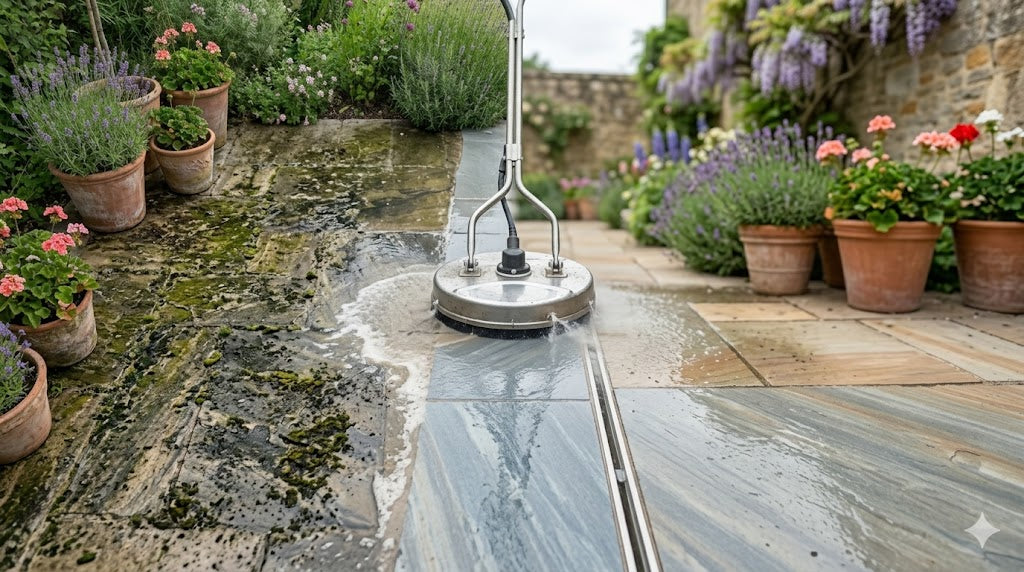
Pressure washers are the fastest way to clean a patio, but they're also the fastest way to damage one. Indian sandstone is softer than concrete or porcelain, and an aggressive pressure washer will strip the surface, open the pores, and leave visible marks that are impossible to reverse.
How to pressure wash sandstone correctly
Nozzle: Use a wide fan nozzle (25° or 40°) or a flat surface cleaner attachment. Never use a pencil jet (0°) or turbo nozzle on sandstone — these concentrate too much force on a single point.
Distance: Hold the lance at least 300mm (12 inches) from the surface. Closer than that and you risk stripping the stone face.
Pressure: Keep below 120 bar (1,750 PSI) for riven sandstone. Sawn sandstone is denser but still benefits from lower pressure settings.
Technique: Work in overlapping sweeps, moving with the grain of the stone. Don't dwell on one spot. Keep the lance moving at all times.
The most common pressure washing mistake: using a pencil jet at close range because "it's quicker." It is quicker — and it strips the surface layer off the stone, leaving pale, rough patches that collect dirt faster than the original surface. Once the surface is stripped, it cannot be repaired. The only fix is a replacement slab.
Consider a flat surface cleaner. These attachments (around £30–60) fit onto your pressure washer and use a spinning bar inside a shroud. They clean evenly without the risk of jet marks. If you're going to pressure wash sandstone regularly, this is the single best investment you can make.
You might also find useful
How to Seal Indian Sandstone — Impregnating vs Surface Sealers →
Algae and moss removal
Green algae and moss are the most common issue on sandstone patios, especially in shaded or north-facing gardens where moisture lingers. They're not damaging the stone — but they're slippery and unsightly.
Algae and moss treatment
Step 1: Scrape off thick moss with a stiff brush or flat scraper. Get the bulk off before applying any product.
Step 2: Apply a proprietary patio algae and moss remover. Look for products specifically labelled safe for natural stone (not just "patio cleaner" — some contain acids). Follow the dilution instructions on the bottle.
Step 3: Leave for the recommended contact time (usually 15–30 minutes). Don't let it dry on the surface.
Step 4: Scrub with a stiff brush and rinse thoroughly with clean water.
Step 5: For prevention, apply an algae inhibitor after cleaning. These products discourage regrowth for 6–12 months.
Never use bleach on Indian sandstone. Household bleach (sodium hypochlorite) can discolour sandstone permanently — causing yellowing or pale patches that won't fade. Some patio cleaners contain diluted bleach — always check the label and look for "safe for natural stone" specifically.
Stain-by-stain guide
Oil and grease
Barbecue drippings, cooking oil, engine oil. Act quickly — the longer oil sits on unsealed sandstone, the deeper it penetrates. Blot (don't rub) the excess, then cover the stain with an absorbent material (cat litter, flour, or baking soda) and leave for several hours to draw out the oil. Sweep up and wash with warm soapy water. For deep oil stains, a specialist stone degreaser may be needed.
Leaf stains and tannin
Autumn leaves left sitting on damp sandstone leave dark brown tannin stains. Prevention is the best approach — sweep leaves regularly. For existing stains, a diluted proprietary stone cleaner will usually lift them. Stubborn tannin stains may need a poultice (a paste of cleaning product left on the stain under plastic wrap for 24 hours).
Rust
Rust stains come from metal garden furniture, iron-rich fertiliser runoff, or occasionally from the stone itself (sandstone contains natural iron oxide that can oxidise on cut surfaces). Use a specialist rust remover designed for natural stone — never a general-purpose rust remover, as these are typically acid-based and will etch sandstone.
Cement and mortar
Dried mortar from installation or repointing. This is one of the hardest stains to remove from sandstone. If it's still fresh, scrape and wash immediately. If it's dried, careful mechanical removal with a wooden or plastic scraper is the safest approach. Chemical mortar removers exist but most are acid-based — if you use one, test on a hidden area first and neutralise with plenty of water afterwards.
Never use hydrochloric acid (brick acid) on Indian sandstone. It reacts with the iron content in the stone and causes permanent orange/yellow discolouration. This is the single most common cleaning mistake that ruins sandstone patios beyond repair. Some builders use brick acid out of habit — if you're having your patio professionally installed, make sure your contractor knows this.
White staining (efflorescence)
White crystalline deposits on the surface, usually appearing in the first few months after installation. This is efflorescence — mineral salts carried to the surface by moisture evaporating through the stone. It's cosmetic, not structural, and it almost always fades naturally over time as the mortar bed fully cures. Brushing with a dry stiff brush speeds the process. Do not use acid to remove efflorescence — it makes it worse.
Products to avoid
Indian sandstone is a sedimentary rock with natural porosity and iron content. Several common cleaning products react badly with it:
Hydrochloric acid (brick acid) — causes permanent orange/yellow staining from iron reaction. Never use on sandstone.
Household bleach — can cause yellowing or pale patches. Not safe for natural stone even in dilute form.
Acid-based patio cleaners — check the label. If it contains hydrochloric, phosphoric, or muriatic acid, don't use it on sandstone. Look for pH-neutral or alkaline cleaners marked "safe for natural stone."
Wire brushes — scratch the surface and leave metal traces that can rust and stain. Use nylon or polypropylene bristle brushes only.
Turbo nozzle / pencil jet — strips the surface layer from the stone. Use fan nozzles or flat surface cleaners only.
Sealed vs unsealed — does it affect cleaning?
If your sandstone has been treated with an impregnating sealer, cleaning is easier because stains sit on the surface rather than penetrating the pores. Warm soapy water handles most things. The sealer doesn't make the stone bulletproof — oil and red wine will still stain if left for hours — but it gives you a much longer window to clean up before permanent marking occurs.
If your sandstone is unsealed, you need to act faster on spills and you may need stronger cleaning products for established stains. Unsealed stone also develops algae and moss more readily because the porous surface gives organic growth something to grip onto.
Whether to seal or not is a separate decision — we cover it in detail in our guide to sealing Indian sandstone.
Need new paving?
Browse our full range of Indian sandstone — all in stock at our Nottingham warehouse with free UK mainland delivery.
Browse Sandstone Order SamplesFrequently asked questions
Can I use a pressure washer on Indian sandstone?
Yes, but carefully. Use a wide fan nozzle or flat surface cleaner, keep pressure below 120 bar, hold the lance at least 300mm from the surface, and keep it moving. Never use a pencil jet or turbo nozzle — these strip the stone surface permanently.
How do I remove green algae from sandstone?
Scrape off thick growth with a stiff brush, then apply a patio cleaner specifically labelled safe for natural stone. Scrub and rinse thoroughly. For prevention, apply an algae inhibitor after cleaning. Avoid bleach-based products.
Why has my sandstone turned orange after cleaning?
This is almost always caused by acid-based cleaners (particularly brick acid / hydrochloric acid) reacting with the natural iron content in sandstone. Unfortunately this is usually permanent. Prevention is the only solution — never use acid products on sandstone.
How often should I clean my sandstone patio?
Once or twice a year is enough for most patios. A spring clean to clear winter debris is the minimum. If your patio is shaded and prone to moss, an autumn clean after leaf fall helps too. Beyond that, just deal with spills as they happen.
Can I use Jeyes Fluid on sandstone?
Jeyes Fluid is commonly used on patios but it can discolour lighter sandstones. Test on a hidden area first. For a safer alternative, use a product specifically designed for natural stone cleaning.


