






Sandstone Cobbles vs Setts: Which Size for Your UK Garden? (Complete Guide)
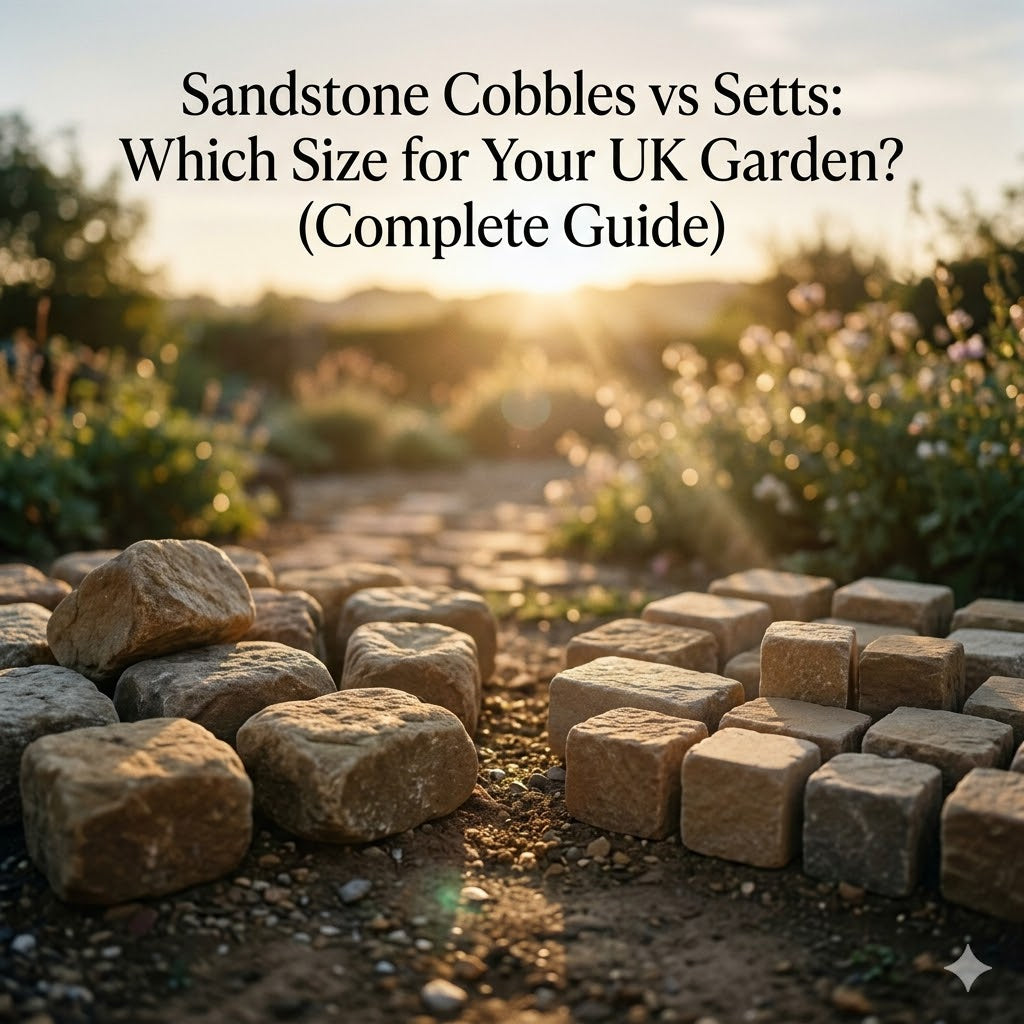
Right, you've decided on sandstone cobbles or setts for your driveway edging, garden border, or pathway—but now you're staring at product pages wondering what the actual difference is between 100x100mm cobbles and 200x100mm setts, and which one you actually need.
Let me be blunt: most suppliers don't explain this properly. They throw technical specs at you (handcut vs tumbled, 40-50mm thickness) without telling you what actually matters—which size works for your specific project, how much more work each size creates, and what the finished result looks like in a real UK garden.
This is the guide nobody else writes. Let's sort out cobbles vs setts, cover the practical differences that affect your project, and help you buy the right product first time.

The Basic Difference: Size
Here's what you're actually choosing between:
Sandstone Cobbles (100x100mm):
- Square format: 100mm x 100mm
- Thickness: typically 40-50mm (some 40-60mm)
- Smaller, more numerous pieces
- Traditional "cobblestone" aesthetic
- Rectangular format: 200mm x 100mm
- Thickness: typically 40-50mm
- Larger, fewer pieces needed
- More contemporary brick-sized look
That's it. Same materials (Kandla Grey, Raj Green, Fossil Mint sandstone). Same finishes available (handcut, tumbled). Same thickness options. The only real difference is the footprint size of each individual piece.
But that size difference creates massive practical implications for installation, cost, visual impact, and suitability for different applications.
Coverage Math: How Many Pieces?
Let's get specific about what "more pieces" actually means in practice.
For 1m² coverage:
100x100mm Cobbles:
- 100 individual pieces per m²
- More joints to fill
- More individual pieces to handle during installation
- Tighter, busier visual pattern
200x100mm Setts:
- 50 individual pieces per m²
- Half as many joints
- Half as many pieces to lay
- Cleaner, more streamlined appearance
Real project example: 10-meter driveway edge (both sides), 300mm wide border:
With 100x100mm cobbles:
- Total area: 6m² (10m x 0.3m x 2 sides)
- Pieces needed: 600 cobbles
- Installation time: 6-8 hours (experienced DIY)
With 200x100mm setts:
- Total area: 6m² same
- Pieces needed: 300 setts
- Installation time: 4-6 hours
The setts give you the same visual border definition with half the faff. But is that always better? Not necessarily.

Best Uses for 100x100mm Cobbles
The smaller cobbles excel in specific applications where their size is an advantage rather than a limitation.
**1. Curved Driv
eway Edging**
Cobbles follow curves significantly better than setts. The smaller format means you can create tight radiuses without awkward gaps or excessive cutting.
Example: Semi-circular driveway in Essex with Kandla Grey cobbles (£40/m² for setts, £43.22/m² for cobbles at Universal Paving). The 100x100mm format created smooth curves around the turning circle. Attempting the same with 200x100mm setts would have required constant cutting or left visible gaps.
2. Decorative Garden Features
Small-scale decorative work—around tree bases, water features, raised planters—looks better with the finer scale of cobbles. The 200x100mm setts can look too chunky and industrial in delicate garden settings.
3. Traditional Cottage Aesthetics
If you're renovating a period property or creating an authentic cottage garden aesthetic, the smaller cobbles deliver that genuine historical look. The 200x100mm setts read as more contemporary regardless of the stone colour.
4. Areas Requiring Intricate Patterns
Fan patterns, circular features, complex geometric layouts—all work better with the smaller unit size. More pieces = more design flexibility.
When cobbles make sense:
- Curved lines and radiuses
- Small decorative areas (<5m²)
- Period property restoration
- Pattern-intensive designs
- Garden feature work

Best Uses for 200x100mm Setts
The larger setts are the workhorse format for most UK driveway and garden projects. Here's where they dominate:
1. Straight Driveway Edging
This is the number one use case. Most UK driveways have reasonably straight edges, maybe gentle curves at the entrance. The 200x100mm format lays quickly, creates clean lines, and the larger format suits the scale of a driveway.
Cost reality for 10m straight driveway edge (both sides, 300mm wide):
- Kandla Grey Setts 200x100mm: 6m² x £40/m² = £240
- Installation: £180-240 (2-3 hours professional rate)
- Total: £420-480
Same job with 100x100mm cobbles adds 2-3 hours installation time = £60-90 extra labour for identical visual result on a straight edge. Not worth it.
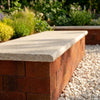
2. Patio Borders
Framing a large patio (20m+ perimeter) with 100x100mm cobbles creates fussy, over-busy edging that fights with the main paving. The 200x100mm setts provide clean definition without visual competition.
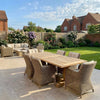
Example: Nottingham garden with Raj Green sandstone patio (riven 900x600mm) bordered with Raj Green setts 200x100mm (£42.77/m² at Universal Paving). The sett border provides tonal consistency with the patio whilst the larger format prevents the edge from looking cluttered.
3. Pathways
Garden pathways 600-900mm wide work brilliantly with 200x100mm setts laid in herringbone or stretcher bond patterns. The cobbles create pathways that feel overly decorative and slow to navigate visually.
4. Steps & Level Changes
Using setts to edge steps or define level changes provides clear, safe visual markers. The larger format creates obvious transition lines. Cobbles can look bitty and confuse the step edge.
When setts make sense:
- Straight or gentle curves
- Large-scale projects (10m+)
- Patio borders
- Pathways
- Step edging
- Contemporary or minimalist gardens
- Fast installation priority
Handcut vs Tumbled: Does It Matter?
Both cobbles and setts come in handcut or tumbled finishes. Here's the honest difference:
Handcut:
- Sharper, crisper edges
- More uniform appearance
- Slight
ly cheaper (e.g., Kandla Grey handcut setts £40/m² vs tumbled £40.55/m²)
- Contemporary aesthetic
- Tighter joints possible
Tumbled:
- Softer, rounded edges
- More "aged" appearance
- Slightly pricier
- Traditional cottage aesthetic
- Wider joints (rounded edges don't butt as tightly)
Practical impact: Minimal. This is 95% aesthetic preference, 5% practical difference. Don't overthink it.
My take: Handcut for modern/contemporary gardens and crisp driveway edges. Tumbled for period properties and cottage gardens. Either works fine for most UK applications.
Colour Choices: Kandla Grey, Raj Green, Fossil Mint
All three colours available at Universal Paving work well for cobbles and setts. Your choice depends on matching or contrasting with existing paving.

Kandla Grey (Setts £40/m², Cobbles £43.22/m²):
- Cool blue-grey tones
- Works with: grey porcelain, contemporary designs, modern houses
- Best for: clean, minimalist aesthetics
- Least colour variation = most uniform appearance

Raj Green (Setts £42.77/m², Cobbles £43.22/m²):
- Warm multicolour (greens, browns, greys, plums)
- Works with: traditional sandstone patios, period properties, warm-toned houses
- Best for: cottage gardens, rustic aesthetics
- Most colour variation = natural, organic look

Fossil Mint (Setts £42.75/m², Cobbles £43.22/m²):
- Pale green-grey with subtle fossil markings
- Works with: contemporary gardens, light-toned paving, minimalist designs
- Best for: sophisticated modern gardens
- Moderate colour variation
Matching vs contrasting:
- Tonal matching (Kandla Grey cobbles with Kandla Grey patio): Creates cohesive, seamless look. Safest choice.
- Deliberate contrast (Raj Green setts with Kandla Grey porcelain): Creates intentional definition. Bold but works.
- Accidental mismatch (Fossil Mint cobbles with Raj Green patio): Looks confused and unintentional. Avoid.
Installation Complexity: DIY Reality
Can you DIY cobbles and setts? Yes. Should you? Depends on the scale and your patience.
DIY-friendly scenarios:
- Straight driveway edges under 15m
- Simple garden borders
- Small decorative features (<5m²)
- Setts (200x100mm) over cobbles (100x100mm)
Get a professional for:
- Curved driveways over 20m
- Complex patterns
- Large areas (20m²+)
- Jobs requiring perfect levels (steps, ramps)
- Cobbles in any significant quantity
Installation method (both sizes):
- Excavate to depth (typically 150mm total)
- Compact MOT Type 1 sub-base (100mm)
- Lay 30-50mm concrete bed
- Bed cobbles/setts into wet concrete
- Check levels constantly
- Joint with kiln-dried sand or resin-based compound
Time reality for 6m² driveway edge:
- Professional: 3-4 hours (setts), 5-6 hours (cobbles)
- Competent DIY: 6-8 hours (setts), 10-12 hours (cobbles)
- First-timer DIY: 10-12 hours (setts), 15-18 hours (cobbles)
The cobbles aren't technically harder—just more time-consuming because there are literally twice as many pieces to handle and level individually.
Cost Comparison: Materials + Labour
Let's be realistic about total project costs including both materials and typical installation.
Scenario: 10m driveway edge, both sides, 300mm wide border (6m² total)
Option 1: Kandla Grey Setts 200x100mm Handcut
- Materials: 6m² x £40/m² = £240
- Professional installation: £180-240
- Total: £420-480
Option 2: Kandla Grey Cobbles 100x100mm Handcut
- Materials: 6m² x £43.22/m² = £259
- Professional installation: £240-300 (longer install time)
- Total: £499-559
Option 3: Raj Green Setts 200x100mm Handcut
- Materials: 6m² x £42.77/m² = £257
- Professional installation: £180-240
- Total: £437-497
Option 4: Fossil Mint Setts 200x100mm Handcut
- Materials: 6m² x £42.75/m² = £257
- Professional installation: £180-240
- Total: £437-497
The pattern: Cobbles cost more in materials AND labour for identical coverage. Unless the smaller format is essential for curves or decorative work, setts offer better value.
Maintenance Reality
Both cobbles and setts require similar maintenance, but the joint quantity difference matters.
Annual maintenance:
- Brush/blow debris from joints (spring)
- Top up joint sand if needed (every 2-3 years for sand jointing)
- Pressure wash if desired (autumn)
- Re-seal (optional, every 3-5 years)
Joint maintenance difference:
- Cobbles: 200 linear meters of joints per 1m²
- Setts: 100 linear meters of joints per 1m²
Double the joints = double the weed potential, double the joint sand to top up, double the cleaning faff. Not a dealbreaker, but worth knowing.
Weed prevention tip: Use resin-based jointing compound (Easyjoint, around £50-55 at Universal Paving) instead of traditional kiln-dried sand. Locks in place, resists weeds, lasts 10+ years. Worth it for any project over 10m².
When to Mix Sizes
Sometimes combining 100x100mm cobbles with 200x100mm setts creates the best solution.
Smart combinations:
Curved driveway with straight sections:
- Use cobbles for the curves (100x100mm)
- Use setts for the straight runs (200x100mm)
- Reduces overall cobble count whilst handling curves properly
Patio with decorative feature:
- Frame main patio with setts (200x100mm) for clean edges
- Create small decorative circle/fan pattern with cobbles (100x100mm) as focal point
- Best of both formats
Pathway with curved entrance:
- Entrance curve in cobbles
- Main pathway run in setts
- Practical and cost-effective
Don't mix them randomly within the same border or pathway—looks messy and unintentional.
The Bottom Line: Which Should You Buy?
Choose 100x100mm Cobbles if:
- You have tight curves or radiuses
- Project area is small (<10m²)
- You're creating intricate decorative patterns
- Period property requiring authentic traditional look
- Garden feature work around trees/planters
Choose 200x100mm Setts if:
- Straight or gentle curves only
- Driveway edging (most common use)
- Large patio borders
- Garden pathways
- You want faster installation
- Contemporary or minimalist aesthetic
- Budget matters (lower total cost)
For most UK driveway and garden projects, 200x100mm setts are the right choice. Faster to lay, lower total cost, cleaner contemporary look, and perfectly adequate for 90% of applications.
The cobbles are brilliant for their specific use cases—but those use cases represent maybe 10-15% of typical UK garden projects.
Where to Buy: Universal Paving
Universal Paving stocks the full range of sandstone cobbles and setts with competitive UK pricing:
Current prices (inc. VAT):
- Kandla Grey Setts 200x100mm Handcut: £40/m²
- Kandla Grey Setts 200x100mm Tumbled: £40.55/m²
- Raj Green Setts 200x100mm Handcut: £42.77/m²
- Raj Green Setts 200x100mm Tumbled: £42.77/m²
- Fossil Mint Setts 200x100mm Handcut: £42.75/m²
- Raj Green Cobbles 100x100mm Handcut: £43.22/m²
- Fossil Mint Cobbles 100x100mm Handcut: £43.22/m²
Delivery: Free UK mainland delivery (3-5 working days) Samples: Available (small charge, delivered 5-7 days) Contact: 07480 959706
Order samples if you're unsure about colour matching or want to see handcut vs tumbled finishes in person. Far better to spend £5-10 on samples than buy 6m² of the wrong colour.