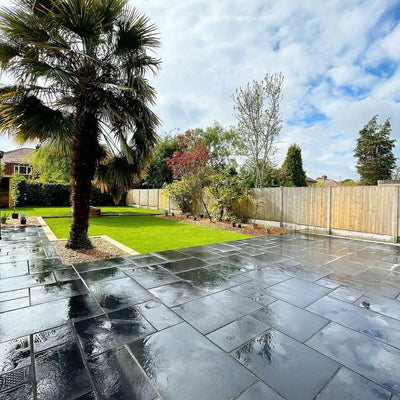







Kandla Grey Porcelain 900x600 Design Ideas: 10 Stunning UK Patio Layouts
Right, you've decided on Kandla Grey porcelain 900x600. Smart choice. But now you're staring at your garden thinking "how do I actually lay this out?" and scrolling through Pinterest at 11pm getting more confused by the minute.
Here's the thing about design inspiration online—half of it's from California gardens three times the size of yours, and the other half looks gorgeous but would cost a fortune to install. What you actually need are practical, achievable layouts that work for real UK gardens.
That's what this is. Ten proper design ideas using Kandla grey porcelain 900x600, scaled for British gardens, realistic budgets, and our slightly questionable weather. Let's sort your patio out.

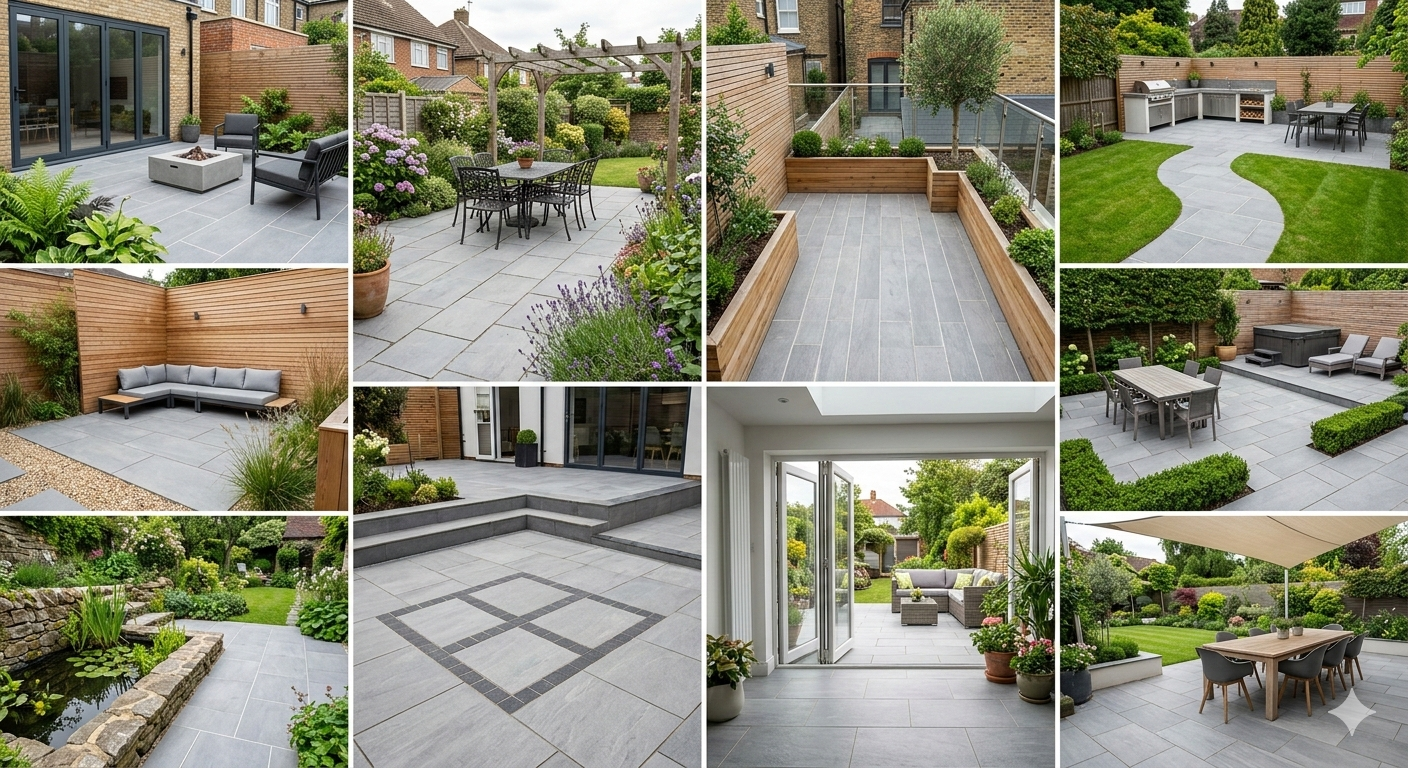
1. The Classic Brick Bond Patio
Best for: Traditional and modern homes, medium to large gardens (25-50m²)
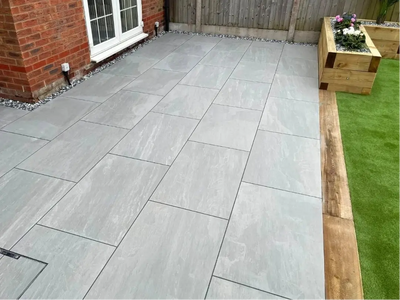
This is your safe bet that never looks dated. Lay the 900x600mm slabs in a running bond pattern—each row offset by 450mm (half the slab length). Think brick wall pattern, but horizontal.
Why it works: The offset creates visual flow that makes spaces feel larger. Your eye follows the lines rather than stopping at rigid grid patterns. Works brilliantly for rectangular patios extending from bi-fold doors.
Design tip: Run the bond direction along your garden's longest dimension. Got a long narrow garden? Lay the pattern lengthways to visually extend the space even further.
Furniture pairing: Contemporary rattan sets in grey or natural tones. Keep it simple—the paving provides enough visual interest without competing patterns.
Cost for 30m²: Materials around £586 + 10% wastage = £645. Installation £1,500-2,000. Total: roughly £2,145-2,645.
2. The Modern Stack Bond Grid
Best for: Contemporary new-builds, minimalist aesthetics, entertaining spaces
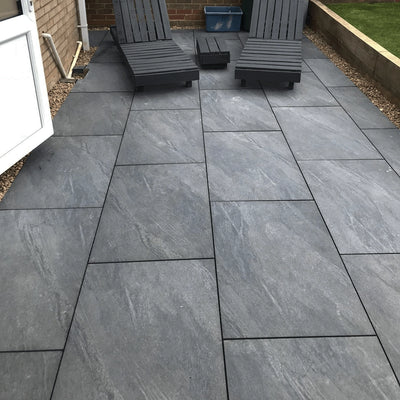
Pure grid pattern—slabs laid in perfectly straight rows both horizontally and vertically. Very now, very clean, very Instagram-worthy.
Why it works: Creates maximum visual impact with minimal fuss. The consistent grey tones of Kandla grey porcelain paving look properly expensive in this layout. Fewer grout lines running in one direction make the space feel bigger.
Design warning: This layout shows every imperfection. If your installation's even slightly wonky, it'll be obvious. Either get a pro or be extremely precise with your levels.
Furniture pairing: Black metal furniture, geometric planters, architectural plants like bamboo or phormium. Keep lines clean and modern.
Best application: L-shaped patios wrapping around modern extensions. The grid continues around corners beautifully.

3. The Mixed Orientation Contemporary
Best for: Breaking up large areas, adding visual interest without complexity
Alternate the slab orientation—some laid portrait (600mm wide), others landscape (900mm wide). Creates subtle pattern variation without needing multiple sizes.
Why it works: Your eye moves around the space differently. Great for larger patios (40m²+) where solid brick bond might feel repetitive. Still uses single-size slabs, so no complicated cutting plans.
Design tip: Work in blocks—lay 3-4 slabs one way, then switch orientation for the next section. Random orientation looks messy; deliberate blocks look intentional.
Furniture pairing: Mix of seating zones. Dining area one end, lounging area the other. The varied pattern helps define different functional spaces.
Cost consideration: Slightly more wastage (around 12% instead of 10%) due to orientation changes, but material costs stay similar.
4. The Garden Pathway Extension
Best for: Connecting spaces, small to medium gardens, creating flow
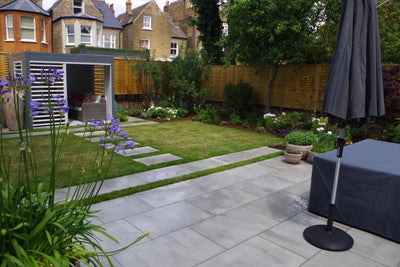
Main patio in brick bond, then extend a pathway using the same 900x600mm slabs laid lengthways. Path width: 3 slabs (1800mm) for comfortable walking, or 2 slabs (1200mm) for tighter spaces.
Why it works: Visual continuity from patio to path to shed/garden room. Using identical material throughout makes gardens feel larger and more cohesive. The 900x600 porcelain paving size is perfect for pathways—not too wide, not fussy.
Design tip: Border the path with gravel or planting to define edges. Kandla grey looks stunning against white gravel or dark slate chippings.
Practical benefit: Proper hard pathway means no muddy feet tracking through the house. Properly installed porcelain handles year-round foot traffic without issues.
Material efficiency: Minimal cutting needed—just lay slabs end-to-end for straight paths.

5. The Raised Patio with Steps
Best for: Sloped gardens, creating levels, adding architectural interest
Use Kandla grey porcelain 900x600 for both the raised patio surface and step treads. Creates a cohesive look while solving level-change challenges.
Why it works: The 900mm width is perfect for step treads—wide enough for comfortable foot placement, not so wide it wastes material. Built-in steps using matching porcelain look incredibly high-end.
Design consideration: You'll need porcelain bullnose pieces or metal edging for step fronts. Budget an extra £150-300 for step accessories.
Safety essential: Ensure R11 slip rating maintained on steps—crucial for wet weather safety. Kandla grey's textured finish provides this naturally.
Furniture pairing: Built-in seating along the raised level edge. Creates a amphitheater effect perfect for entertaining.
6. The Courtyard Combo (Porcelain + Gravel)
Best for: Small gardens, low-maintenance designs, contemporary courtyards
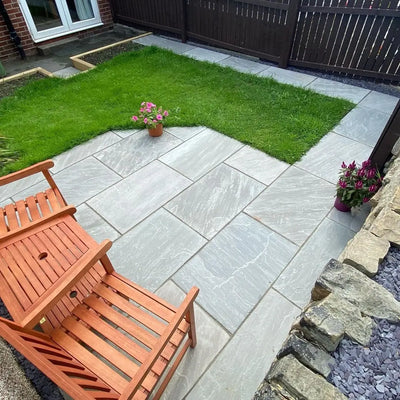
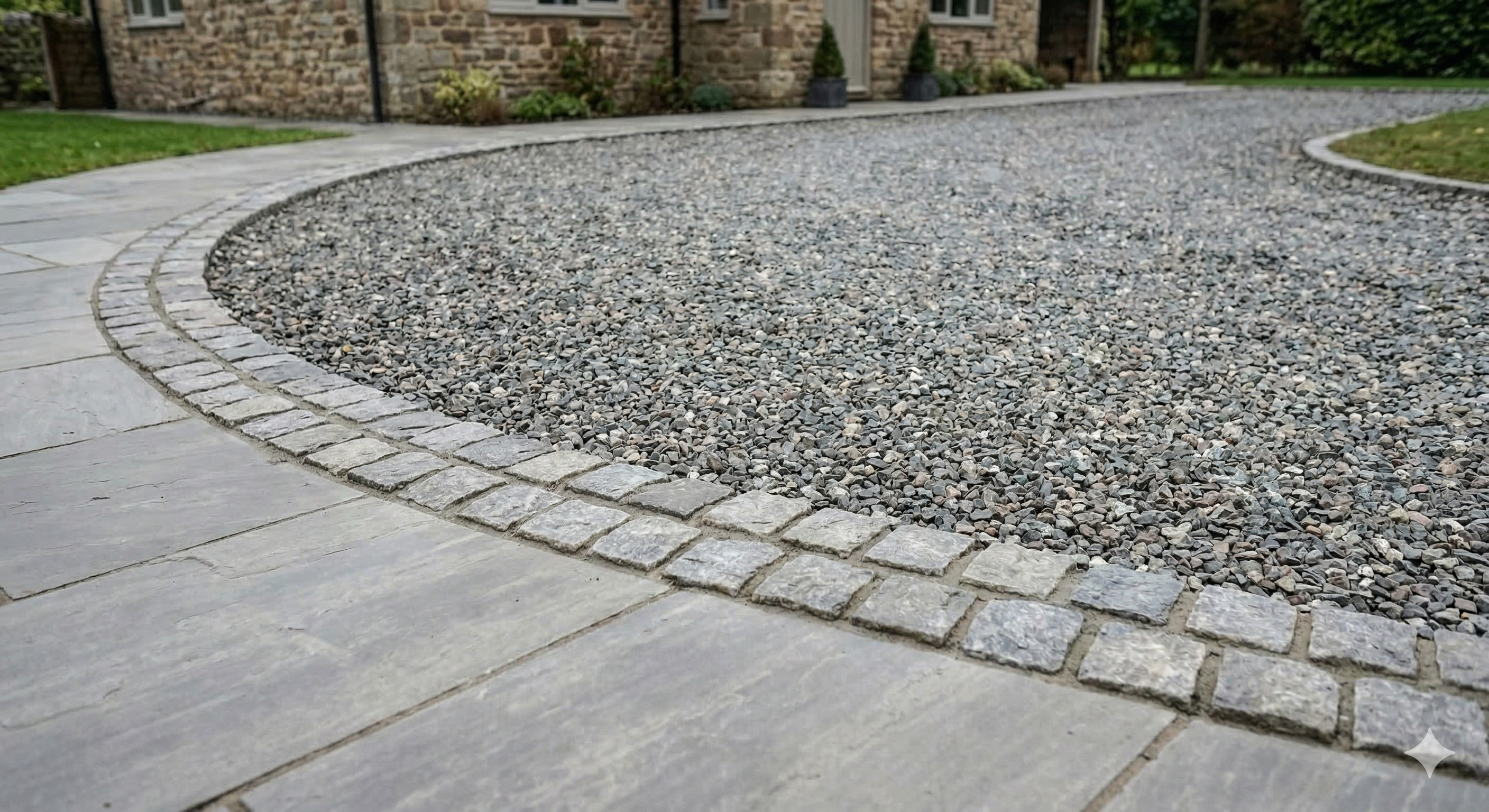
Central porcelain paved area (15-20m²) surrounded by gravel borders with architectural planting. Uses less porcelain, reduces costs, adds texture variation.
Why it works: The grey tones of Kandla porcelain transition beautifully into slate grey or white gravel. Creates defined "outdoor room" feeling in compact spaces.
Design ratio: Roughly 60% porcelain, 40% gravel works visually. Allows decent usable paved area while maintaining interest.
Planting suggestions: Grasses (Stipa, Miscanthus), evergreen structure (box balls, pittosporum), occasional color (Verbena bonariensis).
Cost saving: 20m² porcelain instead of 30m² saves around £200 on materials plus installation costs. Gravel's cheap and easy to lay yourself.
Maintenance benefit: Gravel's permeable—helps with drainage in smaller enclosed spaces.

7. The Diagonal Drama
Best for: Square or nearly-square gardens, making spaces feel larger
Lay your 900x600mm slabs at 45° to the house/boundaries. Sounds complicated but creates brilliant visual expansion.
Why it works: Diagonal lines trick the eye into seeing more space. The pattern draws attention across the garden rather than stopping at boundaries.
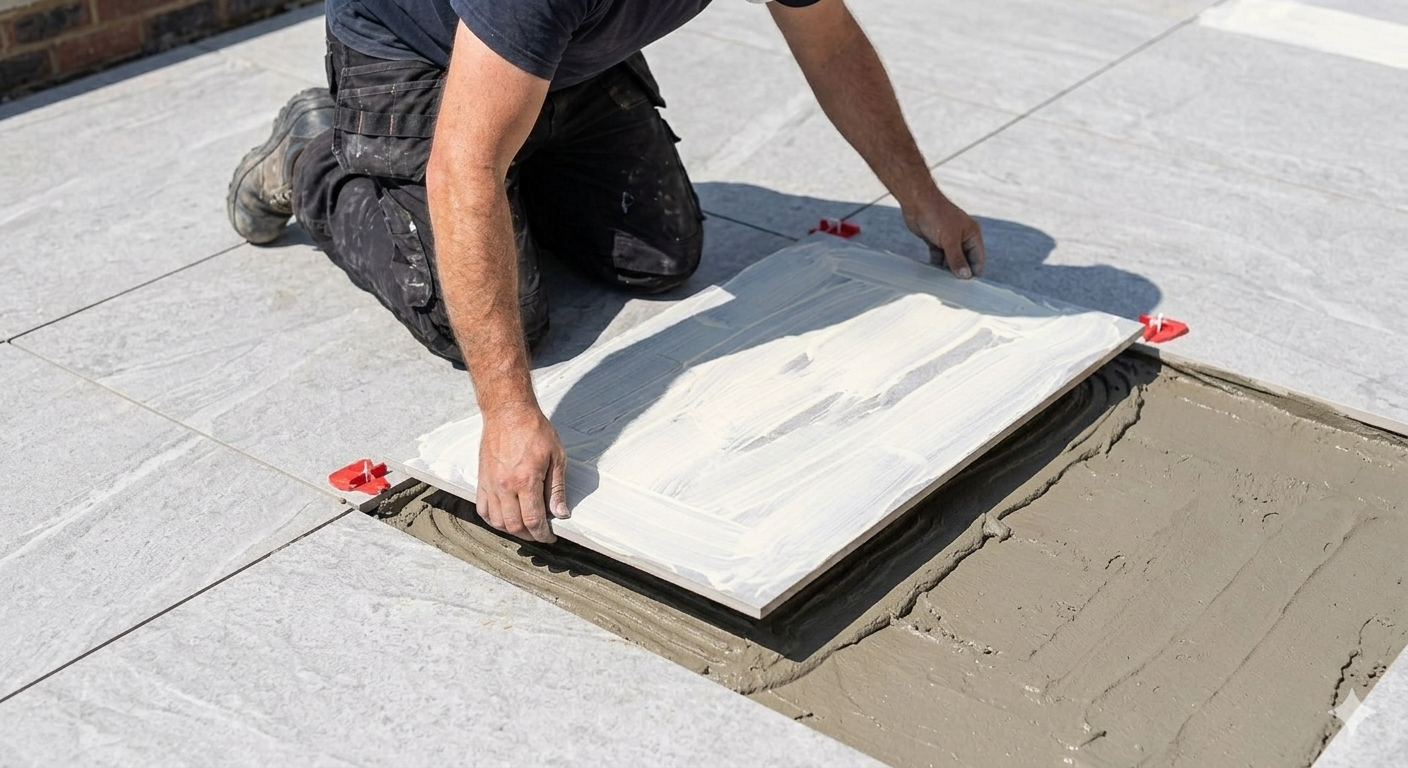
Installation reality: More cutting required at all edges. Expect 15-20% wastage instead of 10%. You'll need confident wet-cutting skills or a patient installer.
Design tip: Start from the center point and work outward. This ensures your pattern centers on the main viewing angle from the house.
Best use case: Gardens that are almost square (like 6m x 7m). Rectangular gardens don't benefit as much from diagonal laying.
8. The Entertainer's Zone (Multi-Level)
Best for: Large gardens (50m²+), keen entertainers, BBQ/outdoor kitchen areas
Create distinct zones at slightly different levels—dining area, cooking zone, lounging area—all using Kandla grey porcelain 900x600 for continuity.
Why it works: Different levels define spaces without walls or fences. The consistent porcelain ties everything together visually while level changes create interest.
Practical zones:
- Lower level: Sunken lounging area with built-in seating (30-40cm drop)
- Main level: Dining and general circulation
- Raised level: BBQ/outdoor kitchen (easier on your back, better cooking height)
Furniture investment: Worth spending here—quality outdoor sofa, proper dining set, built-in BBQ station. The porcelain provides the premium backdrop.
Realistic budget: £4,000-6,000 all-in including materials, installation, level changes, and basic landscaping.
9. The Side Return Transformation
Best for: Victorian/Edwardian terraces, narrow side passages, maximizing usable space
Turn that wasted 2m-wide side passage into usable space with 900x600mm Kandla grey porcelain. The slab width fits perfectly—just 2 slabs across (1200mm paved width).
Why it works: Porcelain's low-maintenance properties essential for narrow spaces that are awkward to access for cleaning. The grey tones reflect light in what's often a darker area.
Design enhancement: Continue the same porcelain from side return into back garden patio—creates seamless flow and makes the whole space feel connected.
Practical benefit: Proper paved side access means you can actually use it—bin storage, bike storage, access to rear garden without tracking mud through the house.
Material efficiency: Minimal waste—900x600mm slabs fit standard UK side return widths perfectly. Often need just 8-12m² of material.
10. The Porcelain + Planting Mix
Best for: Garden lovers, softening contemporary materials, year-round interest
Lay Kandla grey porcelain 900x600 in sections with deliberate planting gaps. Not accidental gaps—designed spaces for low-growing plants or grasses.
Pattern idea: Every 3rd or 4th slab, leave a 600x600mm gap. Fill with soil and plant with thyme, sedum, or ornamental grasses.
Why it works: Softens the contemporary porcelain aesthetic. Planting provides seasonal color and scent. The grey porcelain backdrop makes plants pop visually.
Plant suggestions (UK hardy):
- Thyme varieties (creeping, scented, handles light foot traffic)
- Sedum (year-round structure, flowers late summer)
- Hakonechloa (Japanese forest grass, gorgeous movement)
- Armeria (sea thrift, pink pompom flowers)
Maintenance reality: Plants in paving need occasional watering during dry spells and annual tidying. Still far less work than lawn.
Design tip: Keep planting gaps to one section—don't scatter them randomly. Deliberate cluster looks designed; random gaps look like you ran out of slabs.
Choosing Your Layout: Practical Considerations
Garden size matters:
- Small (under 20m²): Stick to simple patterns—brick bond or stack grid
- Medium (20-40m²): You can play with orientation changes or diagonal
- Large (40m²+): Multi-level or mixed zones work brilliantly
Your skill level:
- Confident DIYer: Brick bond, stack grid, pathway extension
- Experienced: Mixed orientation, diagonal, courtyard combo
- Hire a pro: Multi-level, raised steps, complex curves
Budget reality:
- Tightest budget: Simple brick bond uses least material waste
- Mid-range: Mixed patterns, pathway extensions
- Splash out: Multi-level zones, integrated steps, planting gaps
Maintenance preference:
- Zero maintenance: Simple full-porcelain layouts
- Some maintenance: Porcelain + gravel combos
- Garden lovers: Porcelain + planting mix
Making It Work for YOUR Garden
Test your layout: Before ordering materials, mark out your pattern with spray paint or string lines. Live with it for a few days. Does the dining table actually fit? Can you access the shed? Does the lounger placement work?
Consider sun direction: Where does sun hit at different times? Position seating areas accordingly. Kandla grey porcelain doesn't get scorching hot like dark slate, but still consider orientation.
Existing features: Got a nice tree? Design around it rather than fighting it. The 900x600mm size is flexible enough to work around obstacles.
Future-proofing: Might you extend the house? Add a garden room? Design your patio layout to accommodate future changes.
Ready to Create Your Perfect Patio?
Every garden's different, but Kandla grey porcelain 900x600 gives you the flexibility to create something that actually works for YOUR space.
Order free samples from Universal Paving UK first. See the colour in your actual garden light. Lay a few sample slabs out to check the scale feels right.
Buy Kandla grey porcelain 900x600 at £19.55/m² inc. VAT with free UK delivery. Premium quality, R11 slip-resistant, 20mm thickness—exactly what professional landscapers use.
Need help with quantities? Call 0115 646 3218. Our team can help calculate exactly how many slabs you need for your specific layout, including wastage allowance.
Browse our full porcelain paving collection for complementary materials—edging, steps, borders—to complete your design vision.
Stop overthinking it. Pick a layout that suits your garden size and skill level. Order your materials. Get it laid properly. Then actually enjoy your garden instead of just planning it.
Let's get it sorted.